
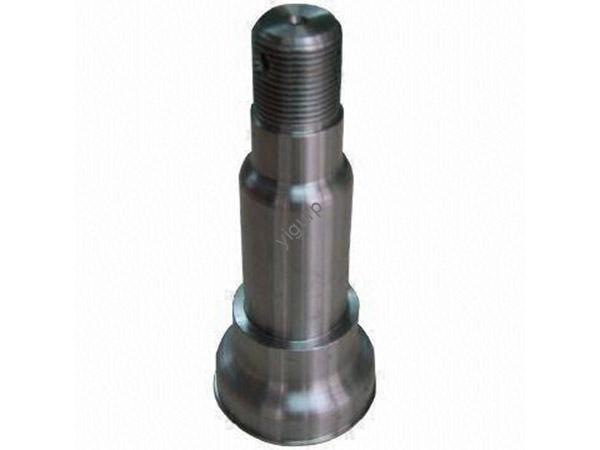
When you are designing stamping dies, cold extrusion punches, or shearing blades, the material you choose directly determines how many parts you can make before the tool fails. EN 1.2344 tool steel is engineered specifically for these demanding cold working applications. It offers a balance of hardness, wear resistance, and toughness that prevents the two most common failure modes: cracking and premature wear. In this guide, I will walk you through its properties, where it excels, and how to decide if it is the right fit for your tooling project based on real manufacturing experience.
Introduction
Cold working tool steel is a specialized category. Unlike structural steel that supports loads, tool steel must withstand intense localized pressure, friction, and repeated impact—all at room temperature. EN 1.2344, also known as DIN 1.2344 or AISI H11 in some classifications, belongs to the chromium-molybdenum-vanadium family. It was developed to provide high toughness without sacrificing wear resistance. Over the years at Yigu Rapid Prototyping, I have worked with toolmakers who struggled with dies that cracked after 50,000 strokes or extrusion punches that wore out in weeks. Switching to EN 1.2344 often solved these problems by addressing the root cause: the material’s inability to handle the combined stresses of cold working.
What Makes EN 1.2344 Different?
The performance of EN 1.2344 comes down to its carefully balanced chemistry and the heat treatment that follows. It is not the hardest tool steel available, but its combination of properties makes it exceptionally reliable for cold working tools.
The Chemistry Behind the Performance
The alloying elements in EN 1.2344 are chosen to create a fine, uniform microstructure that resists both wear and cracking.
| Element | Content Range (%) | Why It Matters for Cold Working |
|---|---|---|
| Carbon (C) | 0.38 – 0.45 | Provides the base hardness and forms wear-resistant carbides. |
| Chromium (Cr) | 4.80 – 5.50 | Adds hardenability and supports carbide formation for wear resistance. |
| Molybdenum (Mo) | 1.20 – 1.60 | Increases toughness and helps the steel harden evenly through thick sections. |
| Vanadium (V) | 0.80 – 1.20 | Forms hard vanadium carbides that resist abrasive wear from metal sheets. |
| Silicon (Si) | 0.80 – 1.20 | Enhances strength and resistance to oxidation during heat treatment. |
| Manganese (Mn) | 0.20 – 0.40 | Improves hardenability while reducing brittleness. |
A toolmaker I worked with in the Midwest was producing stamping dies for automotive brackets. Their original material was a high-carbon steel that held hardness well but cracked unpredictably. They switched to EN 1.2344. The higher vanadium content provided similar wear resistance, while the molybdenum and chromium improved toughness. Die life went from 80,000 strokes to over 200,000 strokes with no cracking.
Mechanical Properties That Matter for Tools
For cold working tools, three mechanical properties are critical: hardness, toughness, and wear resistance. EN 1.2344 delivers a practical balance.
- Hardness (HRC): 52 – 56 after proper heat treatment. This is hard enough to resist wear from stamping and forming but not so hard that the tool becomes brittle.
- Impact Toughness: ≥ 35 J (Charpy V-notch at room temperature). This is significantly higher than many other tool steels, meaning it can absorb sudden shocks without cracking.
- Tensile Strength: ≥ 1800 MPa. This allows the tool to withstand the high pressures generated during cold extrusion and heavy stamping.
- Fatigue Strength: ~700 MPa at 10 million cycles. This is essential for high-production tools that run continuously.
Where Does EN 1.2344 Deliver the Most Value?
This material is a workhorse for cold working applications. It performs best in tools that face a combination of pressure, impact, and sliding wear.
Stamping and Blanking Dies
Stamping dies punch or cut shapes from metal sheets. The die experiences repeated impact as it shears the material, and the cutting edges wear over time.
Case Study: A European automotive supplier was stamping electrical contacts from copper sheet. Their existing carbon steel dies were cracking after 50,000 parts. They switched to EN 1.2344 for the dies. The new dies achieved 180,000 parts before any significant wear. The higher toughness eliminated the cracking issue, and the vanadium carbides provided consistent edge retention. Downtime for die changes dropped by over 60%.
Cold Extrusion Punches
Cold extrusion pushes a metal blank through a die to form a shape, like a bolt or a sleeve. The punch experiences extremely high compressive and tensile stresses.
A Korean manufacturer was producing aluminum bolts using cold extrusion. Their existing punches were failing due to fatigue after about 100,000 cycles. They redesigned the punches using EN 1.2344 with a tempered hardness of HRC 54. The new punches achieved over 200,000 cycles before showing signs of wear. The material’s high tensile strength and fatigue resistance handled the cyclic pressure, and the toughness prevented the punch tip from cracking.
Shearing and Trimming Blades
Shearing blades cut metal sheets or bars. They require a sharp edge that resists chipping and maintains its geometry over thousands of cuts.
Case Study: A U.S. metal fabrication shop was using standard alloy steel blades for cutting 3/8-inch steel plate. The blades needed sharpening every two weeks. They switched to EN 1.2344 blades with a nitrided surface treatment. The new blades lasted three months between sharpening, a 6x improvement. The combination of the base material’s toughness and the surface hardness from nitriding provided both chip resistance and wear resistance.
How Is EN 1.2344 Processed into Tools?
The properties of EN 1.2344 are fully realized only through proper processing. The steps from raw material to finished tool are critical.
Forging and Initial Shaping
The steel is typically supplied in the annealed condition, which is soft and machinable. For larger tools, forging is used to shape the material and refine the grain structure. Forging is done at 1050–1150°C. This step is important because it aligns the grain flow with the tool’s geometry, improving strength and toughness in the directions that matter most.
The Heat Treatment Cycle
Heat treatment is where EN 1.2344 gains its final properties. The standard cycle for cold working tools is:
- Annealing: Heat to 820–860°C and cool slowly. This softens the steel to about HRC 22–26, allowing for machining.
- Machining: All drilling, milling, and turning is done in the annealed state. Carbide tooling is recommended.
- Quenching: Heat to 1020–1060°C, hold for one to two hours, then quench in oil. This transforms the microstructure to martensite, achieving HRC 58–60.
- Tempering: Reheat to 200–300°C for one to three hours, then cool. This reduces brittleness and sets the final hardness to HRC 52–56.
The tempering temperature controls the final balance. Tempering at 200–250°C yields HRC 54–56 for maximum wear resistance. Tempering at 300°C yields HRC 52–54 for higher toughness. For a stamping die that sees impact, the lower hardness range is often the better choice.
Surface Treatments for Extended Life
After heat treatment, many tools receive surface treatments to further improve performance.
- Nitriding: Adds a hard surface layer (up to HRC 65) while maintaining the tough core. This is ideal for wear-intensive applications like cold extrusion punches.
- PVD Coatings: Coatings like TiCN or AlTiN reduce friction and increase surface hardness. They are commonly used on forming tools that contact abrasive materials.
How Does EN 1.2344 Compare to Other Materials?
Selecting the right tool steel requires understanding the trade-offs. Here is how EN 1.2344 stacks up against common alternatives.
Comparison with Other Tool Steels
| Material | Hardness (HRC) | Toughness | Wear Resistance | Best Application |
|---|---|---|---|---|
| EN 1.2344 | 52 – 56 | High | Good | Cold stamping, extrusion, shearing |
| EN 1.2080 (D2) | 58 – 62 | Moderate | Very High | Long-run dies with low impact |
| High-Speed Steel (HSS) | 60 – 65 | Low | Very High | High-speed cutting, not cold forming |
| Carbon Steel (1095) | 55 – 60 | Low | Moderate | Low-cost tools, short runs |
Key Insight: EN 1.2344 is the better choice when toughness matters. If your tool will see impact or shock loading—such as a stamping die hitting a metal sheet—EN 1.2344’s higher toughness prevents cracking. If your tool only sees sliding wear with no impact, a harder grade like EN 1.2080 may offer longer life.
Comparison with Stainless and Alloy Steels
- Versus Stainless Steel (e.g., 304): Stainless steel is not a tool steel. It lacks the hardness and wear resistance for tooling applications. EN 1.2344 is the correct choice for tools; stainless is for parts.
- Versus Alloy Steel (e.g., 4140): Alloy steel like 4140 can be used for simple tooling, but it lacks the carbide structure for wear resistance. EN 1.2344 will typically last 2–3x longer in demanding applications.
What Are the Cost Considerations?
EN 1.2344 is more expensive than standard carbon or alloy steels. However, the total cost of tooling is not just material cost. It includes machining, heat treatment, and downtime for replacements.
Example: A manufacturer was using a carbon steel stamping die that cost $800 to produce and lasted 50,000 parts. They switched to an EN 1.2344 die costing $1,200. The new die lasted 180,000 parts. Over the life of the tooling, they saved $1,600 in replacement costs and avoided three die-change downtimes. The higher upfront cost delivered significant long-term savings.
Conclusion
EN 1.2344 tool steel is a reliable choice for cold working applications that demand a balance of toughness, wear resistance, and hardenability. It is not the hardest tool steel, but its high toughness makes it resistant to cracking—a common failure mode in stamping, extrusion, and shearing tools. By selecting the appropriate heat treatment and considering surface treatments like nitriding, toolmakers can achieve long, predictable tool life. For projects where tool failure leads to costly downtime, EN 1.2344 is often the most cost-effective solution.
FAQ About EN 1.2344 Tool Steel
Can EN 1.2344 be used for hot working tools like forging dies?
No. EN 1.2344 is designed for cold working applications. While it contains molybdenum for some high-temperature stability, it lacks the red hardness required for continuous use above 400°C. For hot forging or die casting, choose a dedicated hot work tool steel like EN 1.2343 or H13.
What is the optimal tempering temperature for stamping dies?
For stamping dies that experience impact, temper at 200–250°C to achieve HRC 54–56. For applications requiring maximum toughness—such as dies for thick or hard metals—temper at 300°C to achieve HRC 52–54. Always temper immediately after quenching to prevent cracking.
Is EN 1.2344 difficult to machine?
In the annealed condition (HRC 22–26), EN 1.2344 machines similarly to other alloy steels. Use carbide tooling and maintain consistent feeds and speeds. All machining should be completed before heat treatment. After quenching and tempering, the steel becomes too hard for standard machining.
How does EN 1.2344 compare to D2 tool steel for stamping applications?
D2 (EN 1.2080) offers higher wear resistance and hardness but lower toughness. Choose EN 1.2344 for dies that see impact or shock loading, where cracking is a risk. Choose D2 for long-run dies that cut thin, soft materials with minimal impact.
Discuss Your Projects with Yigu Rapid Prototyping
Selecting the right tool steel for cold working applications requires balancing hardness, toughness, and wear resistance based on your specific process. At Yigu Rapid Prototyping, we work with toolmakers and product engineers to optimize material selection and processing for stamping dies, extrusion tools, and custom tooling. Whether you need a prototype tool to validate a design or a production die for high-volume runs, we can help you navigate the trade-offs. Contact us to discuss your project requirements and find the right solution.