
Our CNC Water Jet Cutting Services
Elevate your manufacturing projects with our premium CNC Water Jet Cutting machining services—the ultimate solution for precise, versatile, and eco-friendly cutting.
Whether you’re working with metals, stone, glass, or composites, we deliver exceptional precision cutting with minimal heat impact, no tool wear, and tailored solutions for industries like aerospace, automotive, and medical devices. Experience the power of cold cutting technology to bring your designs to life efficiently and cost-effectively!
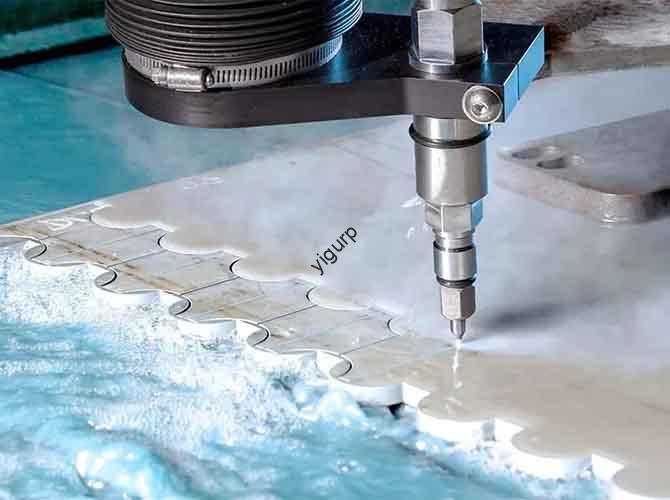
What Is CNC Water Jet Cutting?
CNC machining Water Jet Cutting is a advanced technology that uses a high-pressure stream of water (often mixed with abrasive particles) to cut, shape, or engrave a wide range of materials. Unlike heat-based cutting methods, it relies on the force of water to slice through materials—making it ideal for heat-sensitive substrates.
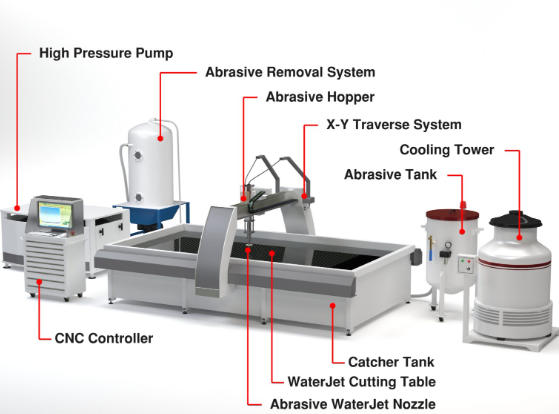
At its core, the process overview is simple: A high-pressure pump (generating up to 90,000 PSI) forces water through a tiny nozzle (as small as 0.1mm in diameter). For hard materials like metal or stone, abrasive particles (such as garnet) are added to the water stream to enhance cutting power; for soft materials like rubber or foam, a pure water jet (no abrasives) works perfectly.
To explain “how it works” in plain terms: Think of a super-strong water hose that’s guided by a computer. The CNC (Computer Numerical Control) system follows pre-programmed designs, moving the water jet nozzle with extreme accuracy to cut through materials—leaving clean, smooth edges. This is the essence of water jet basics: using water’s force, not heat, to achieve precise cuts.
Our CNC Water Jet Cutting Capabilities
We offer comprehensive cutting capabilities to meet the diverse needs of different industries. Below is a detailed breakdown of our key capacities, including maximum material thickness, material size limits, precision levels, custom cutting, and tolerance achievements:
| Capability | Specification |
| Maximum Material Thickness | – Metals: Up to 300mm (stainless steel), 250mm (aluminum), 150mm (titanium), 200mm (brass) |
| | – Non-Metals: Up to 500mm (stone/granite), 100mm (glass), 200mm (composites), 300mm (plastics) |
| | – Special Materials: Up to 100mm (ceramics), 150mm (rubber) |
| Material Size Limits | Standard: 4000mm x 2000mm; Custom large-format: Up to 6000mm x 3000mm (with specialized setups) |
| Precision Levels | ±0.1mm for metals; ±0.2mm for non-metals; ±0.15mm for special materials |
| Custom Cutting | – Complex 2D/3D designs (compatible with CAD/CAM files: DXF, DWG, STL, AI) |
| | – Low-volume prototypes (1–100 units) to high-volume production (50,000+ units/month) |
| | – Intricate shapes, holes (down to 1mm diameter), and beveled cuts (0–45 degrees) |
| Tolerance Achievements | Consistent ±0.05mm tolerance for critical parts (e.g., aerospace components); meets ISO 2768 medium standards |
Whether you need a single custom part or mass-produced components, our capabilities scale to match your project requirements without sacrificing quality.
The CNC Water Jet Cutting Process
Our step-by-step process is designed to ensure accuracy, efficiency, and consistency from start to finish. Each phase is closely monitored to meet your exact specifications:
- Design and Preparation: We start by reviewing your design files (CAD, DXF, etc.) or collaborating with you to create a design. Our team checks for feasibility—ensuring the design aligns with the chosen material’s properties and your cutting goals (e.g., thickness, precision).
- Programming the CNC: Once the design is finalized, our engineers convert it into a CNC-compatible program. The program defines the nozzle’s path, cutting speed, water pressure, and whether abrasives are needed (for abrasive water jet cutting).
- Setup and Calibration: The material is secured to the cutting bed (to prevent movement during cutting). We calibrate the water pressure (adjusting from 30,000 to 90,000 PSI based on material hardness), align the nozzle, and load abrasives (if required). A test cut (on scrap material) ensures all settings are correct.
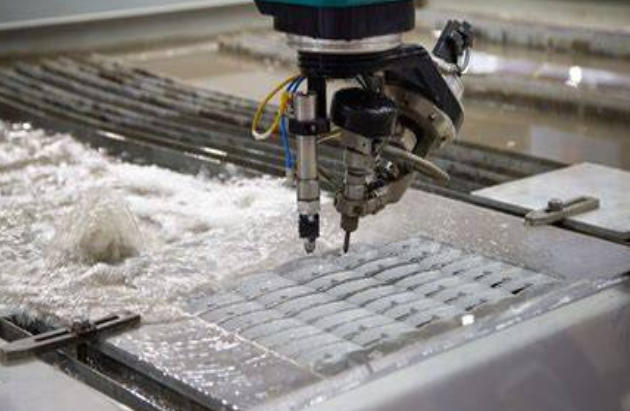
- Cutting Execution: The CNC system takes control—moving the nozzle along the programmed path. For hard materials like stainless steel, the abrasive water jet (water + garnet) slices through efficiently; for soft materials like rubber, the pure water jet delivers clean cuts without damage.
- Post-Cutting Inspection: After cutting, each part undergoes thorough inspection. We check dimensions (using calipers, micrometers, and CMMs), edge quality, and adherence to tolerance requirements. Parts that pass move to finishing; any deviations are corrected immediately.
Materials We Work With
CNC Water Jet Cutting is renowned for its versatility—able to cut almost any material, from hard metals to fragile glass. Below is a breakdown of our supported materials, along with their key properties and ideal uses:
| Material Category | Examples | Key Properties | Ideal Applications |
| Metals | Stainless Steel | Corrosion-resistant, strong | Aerospace components, medical devices, kitchen equipment |
| | Aluminum | Lightweight, heat-conductive | Automotive parts, electronics enclosures, architectural frames |
| | Titanium | High strength-to-weight ratio, biocompatible | Medical implants, aerospace engine parts |
| | Brass | Malleable, conductive | Electrical components, decorative parts, valves |
| Non-Metals | Stone (Granite/Marble) | Durable, aesthetically pleasing | Countertops, architectural facades, monuments |
| | Glass | Transparent, brittle | Custom glass partitions, decorative panels, electronics screens |
| | Composite Materials | Lightweight, high strength | Racing car bodies, aerospace structures, wind turbine blades |
| | Plastics | Versatile, cost-effective | Packaging, consumer goods, industrial components |
| Special Materials | Ceramics | Heat-resistant, hard | Engine parts, electrical insulators, medical tools |
| | Rubber | Elastic, shock-absorbent | Gaskets, seals, automotive bushings, industrial hoses |
We also regularly test new materials—if you have a specialty substrate in mind, contact our team to discuss cutting feasibility!
Tolerances & Quality Assurance
Tolerances and accuracy standards are critical to our service—we understand that even small deviations can compromise part performance. Our precision levels and tolerance ranges are tailored to your material and application, backed by rigorous measurement techniques and quality control processes:
| Material | Standard Tolerance | Tight-Tolerance Option | Accuracy Standard Used | Measurement Technique |
| Stainless Steel | ±0.15mm | ±0.05mm | ISO 2768 Medium, ASME Y14.5 | CMM (Coordinate Measuring Machine) |
| Aluminum | ±0.15mm | ±0.08mm | ISO 2768 Medium, ASME Y14.5 | CMM + Digital Calipers |
| Titanium | ±0.20mm | ±0.10mm | ISO 2768 Medium, AMS 2750 | CMM + Laser Micrometer |
| Stone (Granite) | ±0.30mm | ±0.15mm | ISO 12472, ASTM C971 | Digital Level + Calipers |
| Glass | ±0.25mm | ±0.12mm | ISO 1288-1, ASTM C1036 | Optical Comparator + Calipers |
| Ceramics | ±0.20mm | ±0.10mm | ISO 8688-1, ASTM C242 | CMM + Profilometer |
Our quality control processes include:
- Pre-cut material inspection (checking thickness, flatness, and purity to ensure it meets project requirements).
- In-process monitoring (real-time tracking of cutting speed, water pressure, and nozzle alignment via CNC software).
- Post-cut inspection (100% of parts are measured; critical parts undergo additional testing, such as stress tests for metal components).
Documentation (we provide a detailed quality report with every order, including measurement data, inspection results, and compliance with industry standards).
Key Advantages of CNC Water Jet Cutting
Compared to traditional cutting methods (like laser cutting, plasma cutting, or sawing), CNC Water Jet Cutting offers unique benefits that make it ideal for diverse applications. Below are its top advantages:
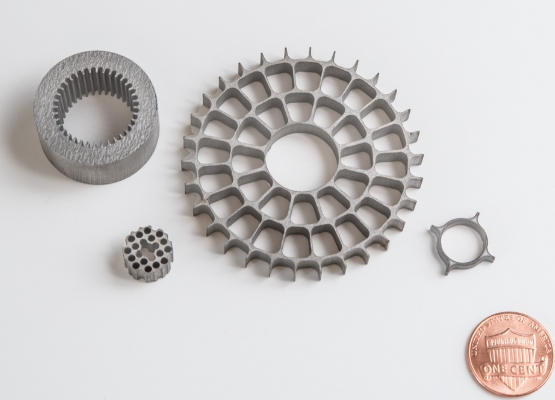
- Precision Cutting: With tolerances as tight as ±0.05mm, parts fit together seamlessly—reducing assembly time and waste, especially for complex designs.
- Cold Cutting Process: Unlike heat-based methods, it produces no heat during cutting—eliminating the Heat Affected Zone (HAZ) (the area of material damaged by heat). This is critical for heat-sensitive materials like titanium, glass, and composites.
- Minimal Heat Affected Zone (HAZ): No HAZ means no warping, cracking, or changes in material properties—ensuring parts retain their original strength and durability.
- Versatility: It cuts almost any material (metals, stone, glass, rubber, composites)—so you can use one service for all your cutting needs, from automotive parts to art sculptures.
- No Tool Wear: The water jet nozzle (made of diamond or ruby) lasts for thousands of cuts, and abrasives are replaceable at low cost—reducing tool replacement expenses compared to saws or drills.
- Environmentally Friendly: It uses water and natural abrasives (like garnet, which is recyclable) — no toxic fumes, slag, or hazardous waste. Water is also recycled in our closed-loop system, reducing consumption by 80%.
- Cost-Effectiveness: Minimal waste (narrow kerf width of 0.1–0.5mm) reduces material costs. No tool changes (one setup works for all materials) and low maintenance also lower labor and operational costs.
Industry Applications
CNC Water Jet Cutting is widely used across industries due to its versatility, precision, and cold cutting advantage. Here are its most common applications:
| Industry | Common Uses |
| Aerospace | Titanium engine parts, composite wing panels, aluminum structural components (no HAZ ensures part strength) |
| Automotive | Custom body panels, rubber gaskets, glass windows, brass electrical components |
| Electronics | Precision-cut circuit board substrates (glass/ceramic), plastic casings, metal heat sinks |
| Architectural | Granite/marble countertops, glass partitions, decorative metal/stone facades, stainless steel railings |
| Medical Devices | Titanium implants (biocompatible, no HAZ), stainless steel surgical tools, ceramic insulators |
| Industrial Manufacturing | Heavy-duty steel components, composite machine parts, rubber seals, plastic packaging molds |
| Art and Sculpture | Intricate stone/metal sculptures, glass art, custom wood (pure water jet avoids burning) |
| Glass Processing | Custom-shaped glass for buildings, electronics, and furniture (clean cuts without cracking) |
For example, in the medical industry, our water-cut titanium implants meet FDA standards for biocompatibility—thanks to the cold cutting process that preserves the metal’s natural properties. In aerospace, our composite cuts help reduce aircraft weight, improving fuel efficiency.