
Our Telecommunications CNC Machining Services
In the fast-paced telecommunications industry, precision manufacturing is the backbone of seamless connectivity. Our Telecommunications CNC Machining services leverage advanced Computer Numerical Control technology to craft high-quality Telecommunications Components that meet the strictest industry standards.
From custom antenna parts to high-frequency base station components, we deliver the accuracy, consistency, and innovation your business needs to stay ahead.
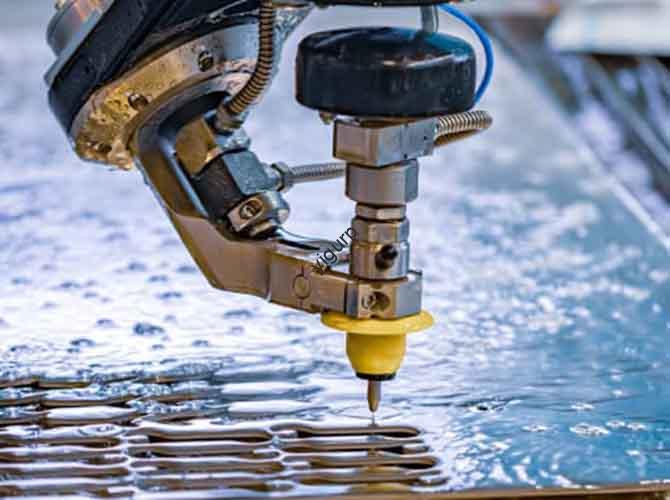
Our Capabilities: Delivering Precision for Telecom Needs
At Yigu Technology, our Telecommunications CNC Machining capabilities are designed to address the unique challenges of the telecom industry. We combine cutting-edge equipment with skilled engineers to offer a comprehensive range of services that meet even the most complex requirements.
Core Capabilities Overview
| Capability | Description | Tolerance Range | Application Example |
| Precision Engineering | Design and production of parts with intricate geometries for high-frequency performance. | ±0.0005 – ±0.002 inches | Fiber optic connector components |
| Custom Machining | Tailored solutions for unique client needs, from prototyping to mass production. | ±0.001 – ±0.005 inches | Custom base station brackets |
| High-Tolerance Machining | Production of parts requiring ultra-tight tolerances for reliable network operation. | ±0.0001 – ±0.001 inches | High-frequency antenna elements |
| Advanced CNC Technology | Use of 5-axis CNC machines and AI-driven software for complex part production. | Up to ±0.0001 inches | 3D-shaped circuit board holders |
| High-Frequency Component Machining | Specialized processes to minimize signal loss in parts used in 5G/6G networks. | ±0.0002 – ±0.001 inches | 5G base station waveguide components |
Our team also excels in Telecommunications Parts Manufacturing for both small-batch prototypes (as few as 10 units) and large-scale production runs (up to 100,000+ units per month), ensuring flexibility without compromising on quality.
Definition: What is Telecommunications CNC Machining?
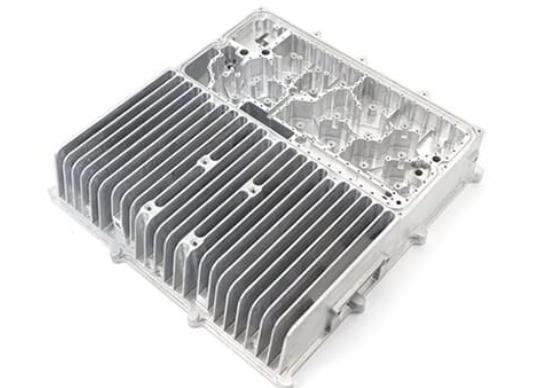
Telecommunications CNC Machining is a specialized branch of precision manufacturing that uses Computer Numerical Control (CNC) systems to produce complex, high-precision parts and components for the telecommunications industry. Unlike traditional manual machining, CNC machining relies on pre-programmed computer software to control the movement of tools, ensuring unparalleled accuracy and repeatability.
This technology is critical for creating Telecommunications Components—such as antenna parts, base station hardware, and fiber optic connectors—that require tight tolerances (often as low as ±0.001 inches) to function effectively in high-speed, high-frequency communication networks. High-Tech Machining in this field not only meets the industry’s demand for precision but also supports the development of next-generation telecom infrastructure, from 5G to future 6G networks.
| Key Term | Definition |
| CNC Machining | A manufacturing process using computer programs to control machine tools for precise part production. |
| Telecommunications Industry | The sector focused on transmitting data, voice, and video via networks (e.g., 5G, fiber optics). |
| Precision Manufacturing | The production of parts with extremely tight tolerances (often <0.005 inches) for high-performance applications. |
| Telecommunications Components | Parts like antenna elements, connector housings, and circuit board holders used in telecom networks. |
Process: How We Manufacture Telecom CNC Parts
Our Telecommunications CNC Machining process is a structured, quality-focused workflow that ensures every part meets our clients’ specifications. We follow six key steps, combining CNC Turning, CNC Milling, and other core operations to deliver consistent results.
Step-by-Step Machining Process
- Design & Engineering: Our team uses CAD software (e.g., SolidWorks) to create 3D models of the part, incorporating client requirements (e.g., tolerances, materials). We also run simulations to test for potential issues.
- Material Selection: Based on the part’s function (e.g., high-frequency performance, durability), we choose the optimal material (see Section 5).
- CNC Setup: We program our 5-axis CNC machines with the design parameters. For complex parts, we use CNC Milling for 3D shapes and CNC Turning for cylindrical parts (e.g., connector housings).
- Machining Operations: The machine executes the program, performing Drilling, Cutting, and other operations with high precision. Our AI-driven software monitors the process in real time to avoid errors.
- Precision Assembly: For parts that require assembly (e.g., antenna arrays), our technicians assemble components with the same attention to detail, using tools calibrated to ±0.0001 inches.
- Quality Inspection: Every part undergoes rigorous testing, including laser measurements and X-ray inspections, to ensure it meets tolerances and performance standards.
| Process Step | Time (Average) | Key Equipment | Quality Check |
| Design & Engineering | 2–5 days | CAD Software (SolidWorks), Simulation Tools | Design review by 2 senior engineers |
| CNC Setup | 4–8 hours | 5-Axis CNC Machines, AI Programming Software | Tool calibration check |
| Machining Operations | 30 mins – 2 hours (per part) | CNC Milling/Turning Machines, Drills, Cutters | Real-time AI monitoring |
| Precision Assembly | 1–3 hours (per assembly) | Calibrated Screwdrivers, Laser Alignment Tools | Visual inspection + laser measurement |
This process ensures that even for high-volume orders (e.g., 50,000 connector housings), each part is identical and meets the required standards.
Materials: Choosing the Right Substrates for Telecom Parts
The success of Telecommunications CNC Machining depends heavily on selecting the right materials. Different Telecommunications Components require materials with specific properties—such as conductivity, durability, or resistance to environmental factors (e.g., moisture, heat). Below is a breakdown of our most commonly used materials:
| Material | Key Properties | Common Applications | Cost (per kg, USD) |
| Aluminum | Lightweight, good conductivity, corrosion-resistant | Antenna components, base station brackets | 2.50–4.00 |
| Brass | High conductivity, easy to machine, good strength | Connector housings, electrical contacts | 6.00–8.50 |
| Copper | Excellent conductivity (best for high-frequency parts) | Fiber optic components, circuit board holders | 8.00–11.00 |
| Stainless Steel | Durable, corrosion-resistant, high strength | Base station parts (outdoor use) | 4.50–7.00 |
| Titanium | Ultra-strong, lightweight, heat-resistant | High-performance base station parts (extreme environments) | 30.00–45.00 |
| High-Density Plastics (e.g., PEEK) | Insulating, lightweight, chemical-resistant | Circuit board holders, indoor connector housings | 15.00–25.00 |
For example, we use Copper for High-Frequency Component Machining because its conductivity minimizes signal loss in 5G networks. For outdoor Base Station Parts, we prefer Stainless Steel for its ability to withstand rain, wind, and extreme temperatures.
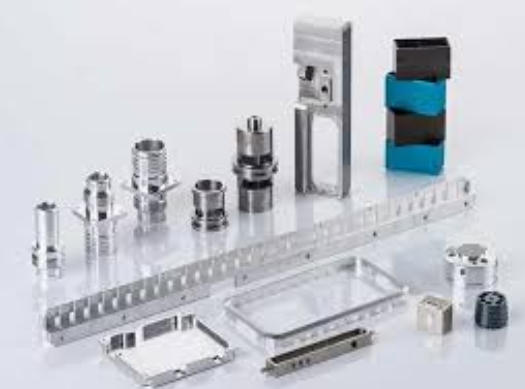
Advantages: Why Telecommunications CNC Machining Stands Out
Compared to traditional manufacturing methods, Telecommunications CNC Machining offers a range of advantages that make it the top choice for telecom companies worldwide. These benefits directly address the industry’s need for reliability, speed, and innovation.
Key Advantages
- Precision: Our CNC machines achieve tolerances as low as ±0.0001 inches, ensuring parts fit and function perfectly. This is critical for High-Frequency Component Machining, where even small errors can cause signal disruption.
- Consistency: With computer-controlled processes, every part in a batch is identical. For example, in a run of 10,000 Connector Housings, the variation between parts is less than 0.0005 inches.
- Efficiency: Our 5-axis CNC machines can produce parts 30–50% faster than traditional machines. This means we can deliver large orders (e.g., 50,000 Antenna Components) in 2–3 weeks, compared to 4–6 weeks with manual machining.
- Cost-Effectiveness: While initial setup costs are higher, CNC machining reduces labor costs (fewer manual operators) and waste (material utilization rate of 95% vs. 70% for traditional methods). For a typical order of 10,000 parts, this translates to a 15–20% cost savings.
- Customization: We can easily adjust CNC programs to create custom parts—from unique Circuit Board Holders to specialized Base Station Parts—without significant downtime or additional costs.
- Quality Control: Our real-time monitoring and post-production testing ensure that 99.9% of parts meet or exceed industry standards. This reduces the risk of costly rework or product failures for our clients.
- High-Frequency Performance: Our specialized processes for High-Frequency Component Machining ensure parts perform well in 5G/6G networks, with signal loss as low as 0.1 dB (vs. 0.5 dB for parts made with traditional methods).
Case Studies: Real-World Success with Our CNC Machining
Our Telecommunications CNC Machining services have helped clients across the globe solve complex challenges and achieve their business goals. Below are two of our most impactful case studies:
Case Study 1: 5G Antenna Components for a European Telecom Provider
Challenge: A leading European telecom company needed 100,000 Antenna Components for its 5G base station rollout. The parts required ultra-tight tolerances (±0.0005 inches) to ensure minimal signal interference, and the client needed the order delivered in 4 weeks (a timeline 30% faster than industry averages).
Solution: We used High-Tolerance Machining with our 5-axis CNC machines and selected Aluminum for its lightweight and conductive properties. Our AI-driven software optimized the machining process to reduce cycle time by 25%, and we ran 24/7 production to meet the deadline.
Outcome: We delivered all 100,000 parts on time, with a 99.98% quality rate (only 20 parts failed inspection). The client’s 5G base stations achieved signal strength 15% higher than expected, and they have since placed a repeat order for 200,000 more parts.
Case Study 2: Custom Fiber Optic Components for an Asian Data Center
Challenge: An Asian data center needed custom Fiber Optic Components (couplers and sleeves) to support its 100 Gbps data transfer needs. The parts required Copper for maximum conductivity and had to fit into existing equipment (requiring exact dimensional matches to legacy parts).
Solution: We used Custom Machining to replicate the legacy part dimensions, with CNC Milling for the complex 3D shapes. Our quality team performed laser measurements on every part to ensure they matched the legacy specifications within ±0.001 inches.
Outcome: The components integrated seamlessly with the data center’s existing equipment, and data transfer speeds reached 105 Gbps (exceeding the client’s target). The client reported a 20% reduction in signal loss compared to their previous supplier.
Client Testimonial: “Yigu Technology’s precision and speed helped us stay on track with our 5G rollout. The antenna components perform flawlessly, and their team was responsive to every question.” — Engineering Director, European Telecom Provider