
Our Aerospace CNC Machining Services
Elevate your aerospace manufacturing with state-of-the-art Aerospace CNC Machining — where cutting-edge Computer Numerical Control merges with uncompromising Precision Engineering.
From high-performance turbine blades to durable landing gear, we deliver consistent quality, weight-optimized solutions, and rapid turnaround to power your aerospace innovation.
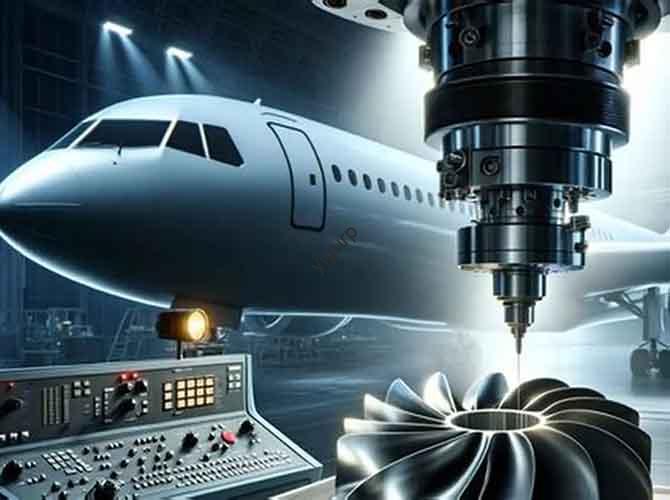
Our Capabilities: Empowering Aerospace Production
We take pride in our comprehensive range of capabilities, tailored to cover every phase of aerospace part manufacturing. Our advanced facilities and seasoned team ensure we deliver solutions that align with your unique requirements — from prototype development to large-scale production.
| Capability | Key Features | Application Scenarios |
| High-Precision Machining | Tolerances as tight as ±0.0005mm; ideal for mission-critical components | Turbine blades, avionics housing |
| Advanced CNC Equipment | 5-axis CNC mills, multi-tasking turning centers, and robotic workcells | Complex engine parts, wing structures |
| Custom Manufacturing | Tailored designs for commercial, military, and space applications | Specialized landing gear, satellite components |
| Quality Assurance | AS9100D certification; in-line Inspection and Testing with laser scanners and CMMs | All aerospace parts (compliance with FAA/EASA standards) |
| Rapid Prototyping | 2-4 day turnaround for prototypes; iterative design support | New aircraft model development, part upgrades |
| Production Capacity | 8,000+ high-precision parts per month; scalable for peak demand | Mass production of fasteners, airframe components |
| Technical Expertise | Team of 25+ engineers with 18+ years in aerospace CNC | Material selection, process optimization, defect troubleshooting |
Definition: What Is Aerospace CNC Machining?
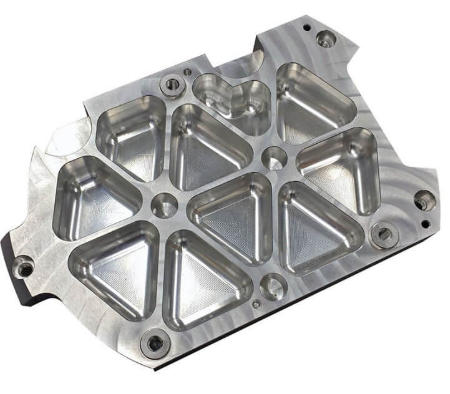
Aerospace CNC Machining is a specialized segment of Aerospace Manufacturing that utilizes Computer Numerical Control (CNC) systems to automate the production of critical aerospace components. Unlike conventional manual machining, this technology relies on pre-programmed software to control the movement of Cutting Tools (such as high-speed mills, turning centers, and grinders), guaranteeing exceptional accuracy in shaping and finishing materials.
At its core, this process combines Machining Technology and Metalworking principles to craft complex, high-precision parts that adhere to the stringent safety and performance standards of the aerospace industry. Whether it’s manufacturing intricate turbine blades or robust airframe components, Aerospace CNC Machining eliminates human error, enhances consistency, and scales production to meet the demands of aircraft and spacecraft manufacturers worldwide.
Process: The Step-by-Step Journey of Aerospace CNC Machining
Our Aerospace CNC Machining process is a meticulously planned sequence of steps, each designed to ensure uncompromising quality, efficiency, and compliance with aerospace standards. From concept to final assembly, we follow a rigorous workflow:
- Design and Simulation: Our engineers use advanced CAD (Computer-Aided Design) software to create 3D models of the part. We then run simulations (including finite element analysis) to test for potential issues (e.g., thermal stress, structural weakness) before machining begins.
- Material Selection: Based on the part’s function (e.g., heat resistance, weight requirements), we choose the optimal material (see Section 5). For example, turbine blades often use nickel-based alloys for high-temperature resistance, while airframe components use aluminum alloys for lightweight properties.
- CNC Programming: Our programmers convert the CAD model into G-code (the language of CNC machines), specifying tool paths, cutting speeds, and feed rates. This ensures the machine follows precise instructions to avoid errors.
- Machining Operations: The CNC machine executes the program, performing operations like milling (shaping complex surfaces), turning (creating cylindrical parts), and grinding (achieving fine finishes). Automated tool changers switch between cutting tools for multi-step processes, reducing downtime.
- Inspection and Testing: After machining, parts undergo rigorous testing. We use laser scanners to check dimensional accuracy, X-ray machines to detect internal defects, and fatigue tests to verify long-term durability. Parts that don’t meet standards are reworked or discarded.
- Finishing Processes: To enhance performance and longevity, parts receive finishing treatments such as anodizing (for corrosion resistance), plasma coating (for heat protection), or shot peening (for stress relief).
- Assembly Integration: Finally, machined parts are integrated into larger assemblies (e.g., engines, wings) or shipped as standalone components to our clients, with full documentation for compliance.
Materials: Choosing the Right Substrate for Aerospace Parts
The performance and safety of aerospace parts depend heavily on material selection. We work with a diverse range of high-performance materials, each chosen for its unique properties to match the part’s intended use in harsh aerospace environments.
| Material | Key Properties | Common Aerospace Applications |
| Aluminum Alloys | Lightweight, high strength-to-weight ratio, corrosion-resistant | Airframe components, wing spars, fuselage frames |
| Titanium Alloys | Ultra-strong, lightweight, heat-resistant (up to 600°C) | Landing gear, engine components, turbine blades |
| Stainless Steel | High corrosion resistance, durability, strength | Avionics housing, fasteners, exhaust systems |
| Nickel-Based Alloys | Exceptional high-temperature resistance (up to 1,200°C), creep resistance | Turbine blades, combustion chambers, rocket nozzles |
| Composite Materials (e.g., carbon fiber-reinforced polymer) | Ultra-lightweight, high strength, fatigue-resistant | Wing structures, fuselage sections, satellite panels |
| High-Temperature Alloys (e.g., Inconel) | Maintain strength at extreme temperatures, oxidation-resistant | Engine hot sections, turbine disks, heat shields |
| Magnesium Alloys | Lightest structural metal, good damping properties | Gearboxes, interior components, satellite frames |
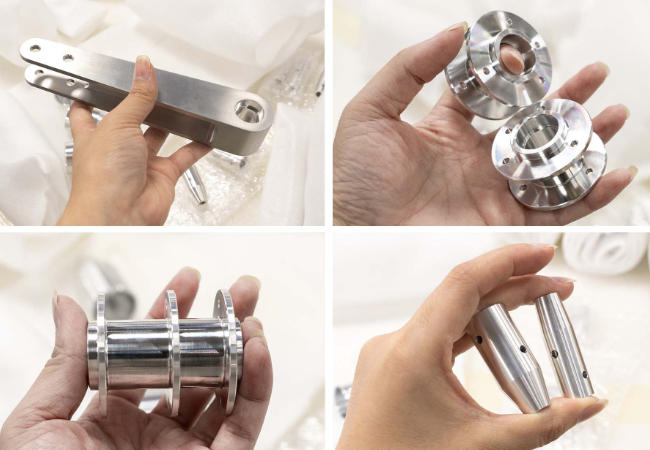
Advantages: Why Aerospace CNC Machining Outperforms Traditional Methods
Aerospace CNC Machining offers a range of benefits that make it the preferred choice for modern aerospace manufacturing. These advantages directly translate to safer, more efficient parts, lower costs, and faster production times.
- Precision and Accuracy: CNC machines achieve tolerances as tight as ±0.0005mm — far superior to manual machining. This is critical for parts like turbine blades, where even tiny deviations can reduce engine efficiency or cause failure.
- Consistency and Reproducibility: Once programmed, CNC machines produce identical parts every time. For example, a batch of 500 landing gear struts will have the same dimensions and quality — a level of consistency that manual machining cannot achieve.
- Cost-Effectiveness: While CNC equipment has higher upfront costs, it reduces long-term expenses. Automated processes cut labor costs, and fewer defects mean less waste (see Table 1). For high-volume production, CNC machining can lower per-unit costs by up to 25% compared to traditional methods.
- Time Efficiency: CNC machines operate 24/7 with minimal human intervention. A part that takes 10 hours to make manually can be produced in 3 hours with CNC — drastically reducing lead times. Our rapid prototyping service delivers parts in 2-4 days, accelerating product development.
- Customization: CNC programming is easily adjustable, allowing us to create custom parts for niche aerospace applications (e.g., military aircraft, satellites) without expensive retooling.
- Enhanced Durability: CNC machining creates parts with smooth, precise surfaces that reduce wear and fatigue. For example, CNC-machined titanium landing gear lasts 30% longer than those made with traditional methods.
- Reduced Weight: CNC machining enables the creation of complex, lightweight designs (e.g., hollowed-out structures) that traditional methods can’t achieve. This reduces aircraft weight, lowering fuel consumption by up to 15% — a key advantage in the aerospace industry.
Table 1: Cost and Waste Comparison (Per 500 Parts)
| Metric | Traditional Machining | Aerospace CNC Machining |
| Labor Cost | $15,000 | $4,500 |
| Material Waste | 300 lbs | 90 lbs |
| Defect Rate | 7% (35 defective parts) | 0.3% (1-2 defective parts) |
| Total Production Time | 14 days | 4 days |
Case Studies: Real-World Success with Our CNC Machining Solutions
Our clients across the aerospace industry have experienced significant benefits from our Aerospace CNC Machining services. Below are three standout case studies that showcase our expertise and ability to solve complex challenges.
Case Study 1: Turbine Blades for a Commercial Aircraft Engine Manufacturer
Challenge: A leading commercial aircraft engine maker needed to improve the performance and durability of their high-pressure turbine blades. The blades operated at 1,100°C and suffered from premature wear, reducing engine lifespan. They required blades with tighter tolerances (±0.001mm) and better heat resistance.
Solution: We used nickel-based alloy (Inconel 718) for the blades, known for its high-temperature resistance. Our 5-axis CNC mills machined the intricate airfoil shapes, and we implemented laser scanning for in-line inspection. We also added a plasma coating to enhance heat resistance.
Results:
- Turbine blade lifespan increased by 40% (from 5,000 flight hours to 7,000).
- Engine fuel efficiency improved by 8% due to optimized blade design.
- Defect rate dropped from 5% to 0.2%, saving the client $120,000 per year in rework costs.
- Client Testimonial: “The CNC-machined turbine blades transformed our engine performance — they’re more durable, efficient, and consistent than anything we’ve used before.” — Engine Design Director
Case Study 2: Lightweight Wing Structures for a Military Drone Maker
Challenge: A military drone manufacturer needed to reduce the weight of their drone’s wing structures to extend flight time. The existing aluminum wings were too heavy, limiting flight duration to 8 hours. They required wings that were 20% lighter while maintaining structural strength.
Solution: We switched to carbon fiber composite materials for the wings. Our CNC machines precision-cut the composite layers, and we used 3D simulation to optimize the wing’s internal structure (adding hollow ribs to reduce weight). We also integrated lightweight titanium fasteners.
Results:
- Wing weight reduced by 25% (exceeding the client’s 20% target).
- Drone flight time increased from 8 hours to 12 hours — a 50% improvement.
- The wings passed military-grade impact tests, proving structural integrity.
- The client secured a $5 million contract with the military, thanks to the extended flight capabilities.