
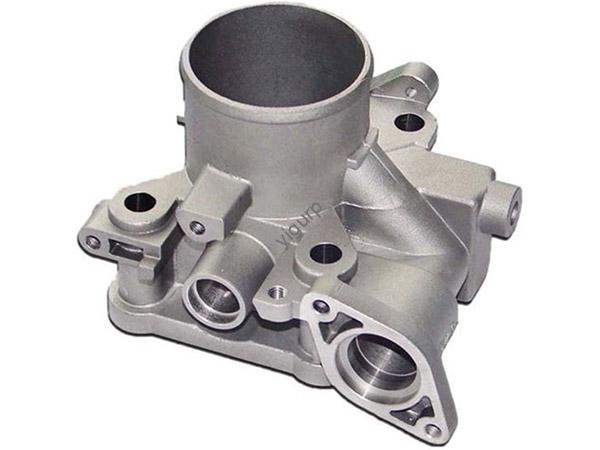
Hard steel is a broad category of high-hardness alloys engineered to provide exceptional wear resistance, strength, and durability. It is not a single material but a family of steels, including tool steels, high-speed steels, and wear-resistant grades, each optimized for specific demanding applications. What unites them is their ability to achieve high hardness (typically 55-70 HRC) through precise heat treatment, along with the toughness to resist impact and the fatigue resistance to withstand repeated stress. These materials are essential in industries such as mining, automotive, aerospace, and manufacturing, where components must survive constant abrasion, heavy loads, and high-stress cycles.
Introduction
For tools and components that must cut, shape, or endure constant friction, standard structural steels are simply not sufficient. They wear out quickly, leading to downtime, lost productivity, and high replacement costs. Hard steel was developed to address this. Through a combination of high carbon content and alloying elements like chromium, vanadium, and molybdenum, these steels can be heat-treated to achieve a very hard, wear-resistant surface. While this often comes at the expense of ductility, the right grade of hard steel can also be formulated to retain enough toughness for impact applications. Understanding the trade-offs between hardness, toughness, and wear resistance is key to selecting the right hard steel for a given application.
What Are the Key Properties of Hard Steel?
The performance of hard steel is defined by its chemical composition and the mechanical properties achieved through its manufacturing and heat treatment processes.
Chemical Composition
The specific alloying elements and their amounts determine the final properties of a hard steel grade.
| Element | Content Range (%) | Its Role in Performance |
|---|---|---|
| Carbon (C) | 0.60 – 1.50 | The primary hardening agent. Higher carbon content increases hardness and wear resistance. |
| Chromium (Cr) | 0.50 – 12.00 | Boosts wear resistance and, at higher levels, provides corrosion resistance. |
| Vanadium (V) | 0.10 – 1.00 | Refines grain structure, increasing toughness and red hardness (ability to retain hardness at high temperatures). |
| Molybdenum (Mo) | 0.20 – 1.00 | Enhances strength and fatigue resistance. |
| Tungsten (W) | 0.50 – 18.00 | Critical for red hardness in high-speed steel variants, allowing tools to cut at high speeds. |
| Manganese (Mn) | 0.50 – 1.50 | Improves hardenability and reduces brittleness. |
| Nickel (Ni) | 0.50 – 5.00 | Improves toughness and impact resistance. |
Mechanical Properties
The mechanical properties of hard steel are achieved after proper heat treatment (hardening and tempering).
| Property | Typical Range | Why It Matters |
|---|---|---|
| Hardness | 55 – 70 HRC | Provides excellent wear resistance and the ability to cut other materials. |
| Tensile Strength | 1800 – 3000 MPa | Withstands high pulling forces without breaking. |
| Yield Strength | 1500 – 2500 MPa | Resists permanent deformation under load. |
| Elongation | 5 – 15% | Low ductility is the trade-off for high hardness. |
| Impact Toughness | 10 – 50 J/cm² | Varies by grade; higher toughness is critical for impact applications like mining tools. |
| Red Hardness | Good to Excellent | Retains hardness at elevated temperatures (up to 600°C for high-speed steel), crucial for cutting tools. |
- Wear Resistance: This is the defining feature of hard steel. It stands up to abrasion from rocks, metal, and other hard materials, significantly extending part life.
- Corrosion Resistance: This varies. Low-chromium grades require surface protection, while high-chromium grades (10-12% Cr) offer good inherent rust resistance.
Where Is Hard Steel Used in the Real World?
Hard steel is used in a wide range of applications where durability and wear resistance are critical.
Cutting and Forming Tools
This is a primary application. Hard steel is used for tools that cut or shape other materials.
- Case Study: A construction company was using standard carbon steel drill bits for drilling into concrete. The bits dulled after just 20 holes, causing constant downtime.
- They switched to hard steel drill bits (62 HRC) with a TiAlN coating.
- The new bits lasted for 120 holes, a 500% improvement.
- Despite being 30% more expensive upfront, the hard steel bits saved $2,000 per month in replacement costs.
- Other applications include milling cutters, punches and dies, stamping tools, and molds.
Mining and Heavy Equipment
Mining equipment must withstand constant abrasion from rock and ore.
- Case Study: A mining operation was using standard alloy steel for crusher jaws. The jaws wore out every 3 months, requiring costly replacements and downtime.
- They installed hard steel crusher jaws (65 HRC) with a nitrided surface.
- Jaw life extended to 12 months, a 300% improvement.
- This reduced maintenance costs by $50,000 per year and eliminated unplanned downtime.
Automotive and Aerospace Components
Hard steel is used for components that must endure high stress, friction, and fatigue.
- Case Study: An automotive manufacturer experienced fatigue cracking in hard steel gears after 50,000 miles. Investigation revealed the gears were tempered at too high a temperature (550°C), resulting in a hardness of only 50 HRC.
- They adjusted the tempering process to 250°C, achieving a hardness of 60 HRC, and added a carburizing step.
- Gear life increased to 150,000 miles, a 200% improvement.
- Applications include gears, axle shafts, and brake rotors.
How Is Hard Steel Manufactured?
The manufacturing process for hard steel is designed to create a uniform, high-quality material that can be heat-treated to its final hardness.
Steelmaking and Forming
- Steelmaking: Hard steel is typically made in an Electric Arc Furnace (EAF) , allowing for precise control of the alloying elements.
- Forging and Rolling: Ingots are hot forged or rolled to shape. This refines the grain structure, which is essential for strength and toughness.
- Annealing: Before machining, the steel is annealed (softened) to a hardness of 20-30 HRC, making it easier to cut and shape.
Heat Treatment
This is the critical step that gives hard steel its properties.
- Hardening: The steel is heated to 850-1050°C and then rapidly cooled (quenched) in oil or water. This creates a very hard but brittle martensitic structure.
- Tempering: The hardened steel is then reheated to 150-600°C. This reduces brittleness while maintaining the desired hardness. Lower tempering temperatures (150-300°C) result in higher hardness (60-65 HRC) but lower toughness. Higher tempering temperatures (500-600°C) result in lower hardness (50-55 HRC) but higher toughness.
Finishing and Surface Treatment
- Machining and Grinding: After heat treatment, hard steel is finished using grinding with carbide or diamond wheels.
- Surface Treatment: To enhance performance, coatings like TiN (titanium nitride) or TiAlN (titanium aluminum nitride) are applied via PVD. These coatings reduce friction and extend tool life by 50-100%.
Hard Steel vs. Other Common Materials
Comparing hard steel to other materials helps clarify its role.
| Material | Hardness | Wear Resistance | Toughness | Relative Cost | Best For |
|---|---|---|---|---|---|
| Hard Steel | 55 – 70 HRC | Excellent | Moderate | Medium | Cutting tools, mining equipment, gears |
| High-Speed Steel (HSS) | 60 – 65 HRC | Good | Good | Medium-High | High-speed cutting tools (red hardness) |
| Carbide | 85 – 90 HRA | Superior | Poor (brittle) | Very High | High-speed machining of hard metals |
| Carbon Steel | 40 – 60 HRC | Poor | Good | Low | General purpose, non-critical applications |
Key Takeaway: Hard steel offers the best balance of high hardness, wear resistance, and toughness for a wide range of demanding applications. It is harder and more wear-resistant than high-speed steel but less brittle than carbide. For applications requiring extreme hardness and wear resistance with moderate impact resistance, hard steel is the standard choice.
Conclusion
Hard steel is a family of specialized materials engineered to provide exceptional wear resistance, high strength, and durability. Through precise control of chemistry and heat treatment, it can be tailored to meet the demands of a wide range of applications, from cutting tools and stamping dies to mining equipment and automotive gears. While it requires careful processing and is more expensive than standard steel, its ability to significantly extend service life and reduce downtime makes it a cost-effective investment for any application where wear and stress are the primary failure modes.
FAQ About Hard Steel
What is the difference between hard steel and high-speed steel (HSS)?
Hard steel is a broad category that includes many high-hardness alloys. High-speed steel (HSS) is a specific type of hard steel designed for red hardness—the ability to retain its hardness at high temperatures (up to 600°C). This makes HSS ideal for high-speed cutting tools. General hard steel grades may not have the same level of red hardness but can offer higher wear resistance or better toughness for specific applications.
Can hard steel be welded?
It is generally not recommended. The high carbon and alloy content of hard steel makes it prone to cracking during welding. If welding is unavoidable, it requires a specialized procedure, including preheating, the use of low-hydrogen electrodes, and post-weld heat treatment. For most applications, mechanical fastening or brazing is preferred.
How do I choose the right hard steel grade for my application?
The choice depends on the primary performance requirement:
- High wear resistance with moderate impact: Choose a high-carbon, high-chromium grade (e.g., D2) for dies and cutting tools.
- High toughness with good wear resistance: Choose a lower-carbon, chromium-molybdenum grade (e.g., A2 or O1) for impact tools and punches.
- High-speed cutting with red hardness: Choose a high-speed steel (e.g., M2) for drills and milling cutters.
- Extreme impact and abrasion: Choose a Hadfield manganese steel, which work-hardens under impact, for mining equipment like crusher jaws.
Discuss Your Projects with Yigu Rapid Prototyping
At Yigu Rapid Prototyping, we have extensive experience working with a wide range of hard steel grades for demanding applications. We understand that the key to success is not just the material, but the precision of the heat treatment and the finishing processes. We supply hard steel in various forms, including bars, plates, and custom-machined components. Our team can provide guidance on material selection, heat treatment protocols, and surface coating options to ensure your components achieve the optimal balance of hardness, toughness, and wear resistance. Whether you need cutting tools, mining equipment components, or precision dies, we are here to help. Contact us today to discuss your project requirements.