
Our Melamine Resin CNC Machining Services
At Yigu Technology, we excel in Melamine Resin CNC Machining—crafting high-precision, durable components for industries worldwide. By combining advanced CNC Machining technology with the exceptional properties of Melamine Resin (a top-tier thermosetting polymer), we deliver custom parts that boast superior heat resistance, chemical resistance, and dimensional stability.
Whether you need rapid prototyping, high-volume production, or tight-tolerance components, our ISO-certified processes and technical expertise ensure quality, reliability, and cost-effectiveness for every project.
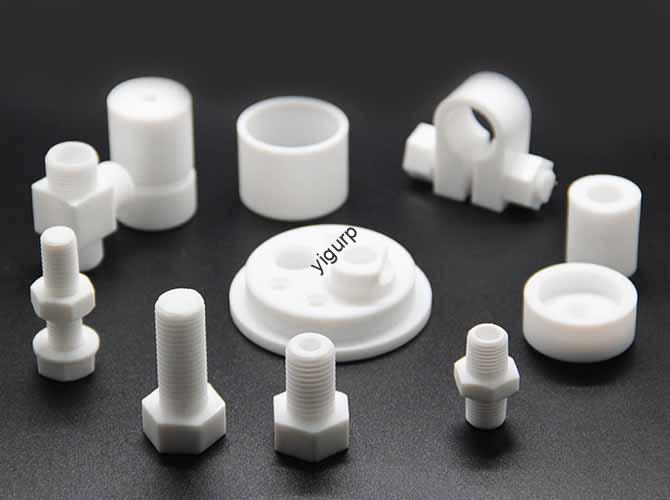
Our Capabilities: Precision & Versatility for Every Need
At Yigu Technology, our Melamine Resin CNC Machining capabilities are tailored to meet the evolving demands of modern manufacturing. We blend cutting-edge equipment with decades of industry experience to offer end-to-end solutions, from initial design consultation to final delivery.
Our core capabilities include:
- Precision Machining: Achieve tight tolerances (as low as ±0.003 mm) for critical components, ensuring alignment with your most exacting design requirements.
- Custom Parts: Create fully customized components—whether for one-of-a-kind prototypes or specialized end-use products—tailored to your unique specifications.
- High Volume Production: Scale seamlessly with automated workflows, capable of producing 15,000+ high-quality parts monthly without sacrificing precision.
- Prototyping: Accelerate your product development with fast prototyping (2-4 business days), allowing you to test, refine, and validate designs before full-scale production.
- Quality Control: Implement rigorous inspection protocols, including CMM (Coordinate Measuring Machine) testing and automated vision systems, to ensure every part meets ISO Certification standards (ISO 9001:2015 and ISO 13485 for medical applications).
- Technical Expertise: Our team of engineers provides guidance on material selection, design optimization, and machining techniques to reduce costs, improve performance, and avoid common manufacturing pitfalls.
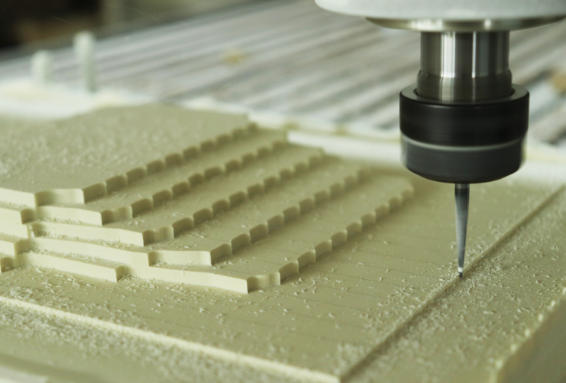
We take pride in our ability to adapt to diverse project needs—whether you’re a small business needing a handful of prototypes or a large enterprise requiring mass production.
Process: Step-by-Step Melamine Resin CNC Machining
The Melamine Resin CNC Machining process at Yigu Technology follows a structured, optimized workflow to ensure precision, efficiency, and consistency. Each step is designed to leverage Melamine Resin’s unique properties while minimizing waste and ensuring quality.
Step 1: Design Review & Programming
- Our engineering team reviews your CAD (Computer-Aided Design) files to confirm feasibility for CNC Machining, identifying potential improvements to enhance part performance or reduce machining time.
- Programming specialists create detailed G-code (machine instructions) tailored to Melamine Resin’s characteristics—adjusting cutting speeds, feed rates, and tool paths to prevent chipping and ensure smooth cuts.
Step 2: Material Preparation & Inspection
- Melamine Resin is sourced in high-quality pre-cured blocks or sheets, which undergo rigorous inspection to check for defects (e.g., bubbles, inconsistencies) that could impact machining quality.
- The resin is cut to rough “blank” dimensions (a process called blanking) to reduce machining time and minimize material waste.
Step 3: Machining Setup
- Setup technicians mount the resin blank on the CNC machine (e.g., 5-axis mill, lathe) using precision fixtures to ensure stability during machining.
- Tooling is selected based on the operation: carbide end mills for CNC Milling (ideal for complex shapes), high-speed steel drills for Drilling (for precise holes), and sharp turning tools for CNC Turning (for cylindrical parts).
Step 4: Core Machining Operations
Common machining techniques used for Melamine Resin include:
- CNC Milling: Creates intricate 3D shapes, slots, and pockets with exceptional accuracy—perfect for components like sensor housings or electrical insulators.
- CNC Turning: Produces cylindrical parts (e.g., bushings, shafts) by rotating the resin blank against a cutting tool, ensuring consistent diameter and smooth surfaces.
- Drilling: Creates holes with precise diameters and depths, critical for assembly and component integration.
- Cutting: Trims excess material to achieve the final part dimensions, with careful attention to avoid fraying or damaging the resin.
Step 5: Quality Inspection & Surface Preparation
- Parts undergo comprehensive dimensional checks using tools like micrometers, calipers, and CMMs to verify dimensional accuracy and adherence to tolerances.
Visual inspections ensure no surface defects (e.g., burrs, scratches) before moving to surface treatment.
Materials: Selecting the Right Melamine Resin for Your Project
Choosing the correct Melamine Resin grade is critical to the success of your CNC Machining project. At Yigu Technology, we offer a range of thermosetting plastics and composite materials to match your application’s unique needs, focusing on material properties that enhance performance and durability.
Below is a comparison of common Melamine Resin grades and their ideal applications:
| Resin Grade | Key Material Properties | Thermal Resistance | Recommended Applications |
| MF-100 (Standard) | High strength, good electrical insulation | 150°C | Electrical components, consumer goods (e.g., appliance parts) |
| MF-200 (High-Temp) | Enhanced heat resistance, low thermal expansion | 180°C | Aerospace components, automotive under-hood parts |
| MF-300 (Composite) | Reinforced with glass fiber, improved wear resistance | 170°C | Industrial equipment (e.g., gears, bearings), medical device housings |
| MF-400 (Chemical-Resistant) | Superior resistance to acids/bases | 160°C | Laboratory equipment, chemical processing components |
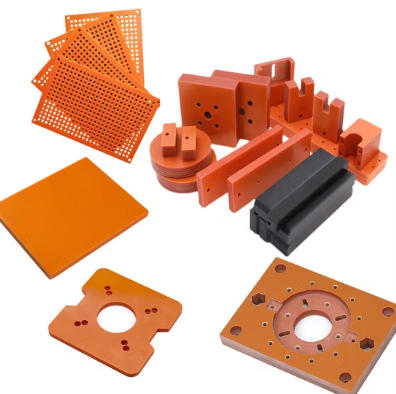
Our material selection process involves collaborating closely with you to understand your application’s requirements: temperature exposure, chemical contact, mechanical stress, and regulatory standards (e.g., medical-grade compliance). This ensures we recommend the optimal engineering polymer to balance performance, cost, and longevity.
Advantages: Why Melamine Resin CNC Machining Stands Out
Melamine Resin CNC Machining offers a range of advantages over other materials (e.g., metals, other plastics) and processes (e.g., injection molding), making it a top choice for diverse industries. Here are the key benefits:
- Exceptional High Temperature Resistance: With a heat deflection temperature of 150-180°C, Melamine Resin maintains its shape and strength in high-heat environments—ideal for automotive under-hood parts or aerospace components.
- Superior Chemical Resistance: It resists solvents, mild acids, and bases, making it suitable for parts exposed to harsh chemicals (e.g., laboratory equipment, chemical processing components).
- High Strength & Durability: With a flexural strength of 80-100 MPa, Melamine Resin rivals some metals, making it perfect for load-bearing parts like gears or mechanical components.
- Excellent Dimensional Stability: Its low coefficient of thermal expansion (25-40 μm/m·K) minimizes warping, ensuring parts fit consistently over time—critical for assembly and long-term performance.
- Strong Electrical Insulation: It acts as an effective electrical insulator, making it a top choice for electronics components (e.g., circuit board supports, switch housings).
- Cost-Effective for Complex Parts: CNC Machining of Melamine Resin is more affordable than metal machining for complex shapes, with lower material costs and reduced tool wear.
- Fast Turnaround for Small-to-Medium Batches: Unlike injection molding (which requires expensive molds), CNC Machining allows for quick production of prototypes or small batches—reducing lead times and development costs.
Applications Industry: Where Melamine Resin CNC Machining Excels
Melamine Resin CNC Machining is used across a wide range of industries, thanks to its versatility, durability, and precision. Below are key sectors and their common applications:
| Industry | Typical Applications | Key Benefits Utilized |
| Aerospace | Sensor housings, electrical insulators, interior components | High temperature resistance, lightweight |
| Automotive | Under-hood parts (e.g., sensor brackets), connector housings | Chemical resistance, dimensional stability |
| Electronics | Circuit board supports, switch housings, heat sinks | Electrical insulation, heat resistance |
| Medical Devices | Instrument housings, surgical tool handles, diagnostic equipment components | Biocompatibility (with coatings), precision |
| Industrial Equipment | Gears, bearings, pump components, valve bodies | Wear resistance, high strength |
| Consumer Goods | Appliance parts (e.g., coffee maker components), cosmetic packaging, toy parts | Aesthetic finish, cost-effectiveness |
| Laboratory Equipment | Beaker holders, chemical storage components | Chemical resistance, thermal stability |
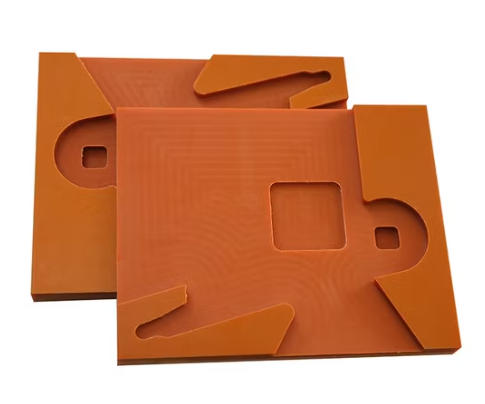
Each application leverages specific properties of Melamine Resin: aerospace parts prioritize heat resistance, while medical devices focus on biocompatibility and precision.
Case Studies: Real-World Success with Yigu Technology
Case Study 1: Aerospace Sensor Housing for High-Temp Environments
- Client: Global aerospace component manufacturer
- Challenge: Need for a lightweight, heat-resistant sensor housing that could withstand 175°C (common in aircraft engine bays) with tight tolerances (±0.005 mm) for sensor alignment.
- Solution: Selected MF-200 High-Temp Melamine Resin for its 180°C heat deflection temperature. Used CNC Milling to create the complex housing shape, with a protective silicone coating to enhance thermal stability.
- Result: 100% of parts met dimensional and performance requirements. The client reduced weight by 40% compared to metal alternatives, cutting fuel costs for their aircraft customers, and achieved a 20% reduction in production time.
Case Study 2: Medical Device Handle for Surgical Tools
- Client: Leading medical equipment supplier
- Challenge: Require a biocompatible, durable handle for a surgical tool that could withstand repeated sterilization (autoclaving at 134°C) and meet precision tolerances (±0.004 mm) for ergonomic fit.
- Solution: Chose MF-300 Composite Melamine Resin (glass fiber-reinforced for added strength) and applied a USP Class VI-approved biocompatible coating. Used CNC Turning to create the cylindrical handle, with polishing for a smooth, ergonomic surface.
- Result: Parts passed all biocompatibility and sterilization tests. The client reported a 30% increase in tool lifespan (due to the resin’s wear resistance) and received positive feedback from surgeons on the handle’s comfort.