
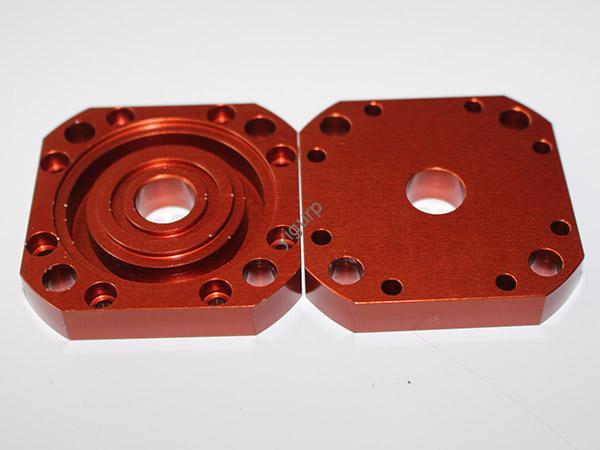
S235JR structural steel is a low-carbon, non-alloy steel defined by the European standard EN 10025-2. It is the most widely used structural steel in Europe and beyond, prized for its excellent balance of weldability, formability, and cost-effectiveness. With a minimum yield strength of 235 MPa, it is strong enough for a vast range of light to medium-load applications, from small building frames to general machinery parts. Its simple chemistry, with a carbon content of ≤0.21%, ensures it is easy to cut, bend, and weld using standard methods, making it the go-to material for countless cost-sensitive, practical projects.
Introduction
For the vast majority of construction and manufacturing projects, the material requirements are straightforward. It must be strong enough to do its job, easy to work with using standard tools and techniques, and affordable. High-strength or specialty steels can meet the first requirement, but they often come with higher costs and fabrication challenges. S235JR was developed to meet the core needs of the broadest range of applications. It is a simple, reliable material that is easy to source, simple to fabricate, and proven to perform reliably in thousands of applications. For engineers and fabricators who need a dependable, cost-effective material that is simple to work with, S235JR is the proven industry standard.
What Are the Key Properties of S235JR?
The performance of S235JR is defined by its simple chemistry and the consistent mechanical properties achieved through standard manufacturing processes.
Chemical Composition
As a non-alloy steel, its composition is tightly controlled to ensure good weldability and consistent mechanical properties.
| Element | Content Range (%) | Its Role in Performance |
|---|---|---|
| Carbon (C) | ≤ 0.21 | Provides strength while maintaining excellent weldability. |
| Manganese (Mn) | ≤ 1.60 | Enhances toughness and strength without reducing ductility. |
| Silicon (Si) | ≤ 0.55 | Acts as a deoxidizer and adds minor strength. |
| Sulfur (S) | ≤ 0.045 | Minimized to prevent brittleness and hot cracking. |
| Phosphorus (P) | ≤ 0.045 | Controlled to maintain ductility and cold resistance. |
Mechanical and Physical Properties
These properties are standardized under EN 10025-2, ensuring predictable performance.
| Property | Value Range | Why It Matters |
|---|---|---|
| Yield Strength | ≥ 235 MPa | Resists permanent deformation under typical structural loads. |
| Tensile Strength | 360 – 510 MPa | Provides a strong safety margin against failure. |
| Elongation | ≥ 25% | Offers excellent ductility for bending and forming. |
| Impact Toughness | ≥ 27 J at 20°C | Performs reliably in mild conditions, suitable for indoor and temperate applications. |
| Hardness | 100 – 150 HB | Soft enough for easy machining with standard tools. |
| Density | 7.85 g/cm³ | Standard for steel, simplifying design calculations. |
- Weldability: This is one of its standout features. It has excellent weldability with all standard methods (arc, MIG, TIG). For sections under 20mm thick, no preheating is required, which saves significant time and cost.
- Formability: It has excellent formability. It can be easily bent, rolled, or shaped into complex parts without cracking. It can be bent 180° without failure.
Where Is S235JR Used in the Real World?
S235JR is the backbone of countless construction, automotive, and manufacturing projects around the world. Its versatility and cost-effectiveness make it a universal choice.
Construction and Infrastructure
This is the primary application. S235JR is used for the structural frames of small buildings, pedestrian bridges, and industrial shelving.
- Case Study: A German construction firm used S235JR for a 2-story bakery in Berlin.
- The project had a tight 3-month deadline.
- The steel’s excellent weldability allowed the crew to assemble the steel frame in 8 days , compared to 12 days if they had used a higher-strength steel.
- Its yield strength (≥235 MPa) easily handled the 4 kN/m² floor loads from heavy ovens and inventory.
- The project saved €15,000 in material costs compared to using a higher-grade steel.
- Case Study: A Polish transportation authority used S235JR for an 8-meter village bridge. It handled 5-ton vehicle loads and required minimal maintenance over 12 years.
Automotive and Light Machinery
S235JR is used for non-critical automotive components and general machinery parts where high strength is not required.
- Case Study: A French automaker used S235JR for the rear subframe of a small hatchback.
- The subframe needed to be lightweight and cheap to produce.
- S235JR’s machinability reduced stamping defects by 25% .
- Its ductility allowed it to absorb minor collision energy without breaking.
- The automaker saved €6 per car . With 300,000 cars produced annually, this totaled €1.8 million in yearly savings.
- Case Study: A Turkish appliance brand used S235JR for refrigerator compressor shafts. The shafts handled 3000 rpm rotation and lasted 8 years with a simple anti-rust coating.
General Manufacturing
It is used for brackets, frames, and supports in countless industrial and consumer products.
How Is S235JR Manufactured?
The manufacturing process for S235JR is designed to produce large volumes of consistent, high-quality steel at a low cost.
Steelmaking and Forming
- Steelmaking: It is typically made in a Basic Oxygen Furnace (BOF) , which is efficient for large-scale production. The carbon content is precisely controlled to stay below 0.21%.
- Hot Rolling: This is the primary forming method. The steel is heated to 1100-1200°C and rolled into plates, beams, bars, and sheets. This process defines the final shape and refines the grain structure.
- Cold Rolling: For thinner, smoother sheets used in applications like automotive body panels, cold rolling is used after hot rolling.
Fabrication and Finishing
- Cutting: It is easily cut using oxy-fuel, plasma, or laser cutting.
- Bending: It can be bent using standard press brakes.
- Welding: It is easily welded using all standard methods without preheating for most sections.
- Corrosion Protection: For outdoor use, a protective coating is essential. Hot-dip galvanizing or epoxy paint systems are commonly used.
S235JR vs. Other Common Materials
Comparing S235JR to other materials helps clarify its role as the cost-effective, workable standard.
| Material | Yield Strength | Weldability | Relative Cost | Best For |
|---|---|---|---|---|
| S235JR | ≥ 235 MPa | Excellent | Low | Light structures, general parts, cost-sensitive projects |
| 1045 Carbon Steel | ≥ 330 MPa | Good | Higher | Higher-strength parts, shafts, gears |
| Q345 | ≥ 345 MPa | Good | Higher | Medium-stress structures, higher loads |
| 304 Stainless | ≥ 205 MPa | Good | Very High | Corrosive environments, food equipment |
| Aluminum (6061) | 276 MPa | Good | 2-3x Higher | Lightweight, non-load-bearing parts |
Key Takeaway: S235JR is the most cost-effective and easiest to work with among common structural materials. It is significantly cheaper than aluminum, stainless steel, and higher-strength steels. For projects where the highest strength is not required, and where ease of fabrication is a priority, S235JR is the most practical and economical choice.
Conclusion
S235JR structural steel is the undisputed workhorse of the global construction and manufacturing industries. Its combination of adequate strength, excellent weldability, and outstanding formability makes it the ideal material for a vast range of light to medium-duty applications. Its low cost and ease of fabrication allow projects to be completed on time and within budget. For any project that requires reliable structural performance without the need for specialized high-strength or corrosion-resistant alloys, S235JR is a proven, dependable, and cost-effective solution.
FAQ About S235JR Structural Steel
Can S235JR be used outdoors?
Yes, but it requires a protective coating. Uncoated, it will rust in rain or humid conditions. For outdoor applications like small bridges or garden structures, hot-dip galvanizing or a high-quality paint system is recommended to provide long-term corrosion protection.
Is S235JR suitable for welding without special equipment?
Yes. It has excellent weldability. For sections under 20mm thick, standard arc, MIG, or TIG welding can be used without preheating. This makes it ideal for on-site fabrication and repair work.
What is the main difference between S235JR and higher-strength steels like S355 or Q345?
The main difference is yield strength. S235JR has a minimum yield strength of 235 MPa, while S355 has 355 MPa (50% higher). S235JR is also less expensive and easier to work with. For most light to medium-load applications, S235JR is sufficient and more cost-effective. For heavier loads or longer spans, a higher-strength grade would be necessary.
Discuss Your Projects with Yigu Rapid Prototyping
At Yigu Rapid Prototyping, we have extensive experience supplying S235JR and other structural steels for a wide range of projects. We understand that for many applications, the simplicity and cost-effectiveness of this material are the top priorities. We supply S235JR in beams, plates, bars, and custom-cut shapes, with full mill test certificates. Our team can also provide guidance on welding procedures, forming, and corrosion protection strategies to ensure your project is a success. Whether you are building a small commercial building, fabricating light machinery, or manufacturing automotive components, we are here to help you find the most reliable and cost-effective solution. Contact us today to discuss your project requirements.