
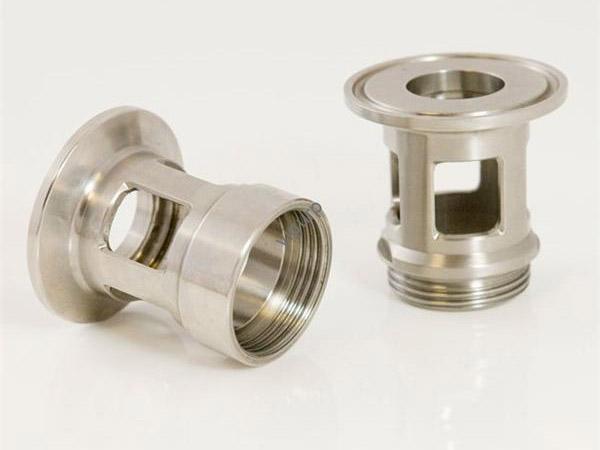
Hastelloy G3 is a high-performance nickel alloy that stands out for its ability to handle mixed acids, high temperatures, and aggressive industrial environments. This guide provides a complete, user-focused overview, moving from its core properties to real-world applications and manufacturing insights. Whether you’re an engineer, a project manager, or a procurement specialist, you’ll gain the practical knowledge needed to determine if this material is the right fit for your next demanding project.
Introduction
Selecting the wrong material for a corrosive environment can lead to costly downtime, frequent part replacements, and even safety hazards. For engineers facing challenges like mixed acid streams or high-temperature oxidation, the choice often comes down to a few specialized alloys. UNS N06985, commonly known as Hastelloy G3, is one such material. It’s not the cheapest option, but its unique combination of broad corrosion resistance and reliable mechanical strength often makes it the most cost-effective solution over a component’s lifetime. This article will guide you through everything you need to know about Hastelloy G3, from its chemical makeup to how it performs in the field.
What Makes Hastelloy G3’s Composition Special?
The alloy’s exceptional performance isn’t accidental. It’s the result of a carefully balanced chemical composition where each element plays a specific role.
The Role of Each Key Element
The table below breaks down the typical composition of Hastelloy G3 and explains the job of each component. This balance is what gives the alloy its versatility.
| Element | Content Range (%) | Key Functional Role |
|---|---|---|
| Nickel (Ni) | 48–58 | Provides the base. It ensures ductility and offers excellent resistance to stress corrosion cracking, a common failure in stainless steels. |
| Chromium (Cr) | 21–25 | Creates a protective oxide layer. It’s crucial for oxidation resistance at high temperatures and for fighting pitting in acidic liquids. |
| Molybdenum (Mo) | 6–8 | This is the heavy lifter for acid resistance. It significantly boosts the alloy’s ability to withstand strong acids like sulfuric and hydrochloric acid. |
| Iron (Fe) | 13–19 | Adds structural strength and stability to the nickel-chromium matrix without sacrificing the material’s flexibility. |
| Copper (Cu) | 1.5–2.5 | A specialized addition that further improves resistance to sulfuric acid and acidic brines, making G3 particularly adept in mixed-acid scenarios. |
The key takeaway is that this isn’t a simple stainless steel. It’s a high-molybdenum, copper-stabilized nickel alloy designed to tackle the most aggressive chemical environments.
What Are the Key Mechanical and Physical Properties?
Understanding the physical and mechanical traits of Hastelloy G3 is essential for designing reliable parts. These properties dictate how the material will behave under stress and heat.
Physical Properties for Design
For engineers, these physical characteristics matter for thermal and structural calculations:
- Density: 8.3 g/cm³. This makes it lighter than many other nickel superalloys, which can be an advantage for weight-sensitive components.
- Melting Range: 1330–1380°C (2425–2525°F). This high melting point ensures stability in high-heat industrial processes.
- Thermal Conductivity: 14.0 W/(m·K) at 20°C. It transfers heat evenly, which helps avoid localized hot spots that can lead to failure.
- Magnetic Properties: Non-magnetic. This is a critical feature for applications in medical equipment, electronics, or anywhere stray magnetism is a problem.
Mechanical Strength at Room Temperature
Hastelloy G3 is chosen for its balance of strength and formability. The values below are for the alloy in its annealed (softened) state, which is the most common condition for fabrication.
| Property | Value (Room Temperature) | What It Means for You |
|---|---|---|
| Tensile Strength | Min 650 MPa (94 ksi) | The maximum stress the material can withstand while being pulled apart. |
| Yield Strength | Min 275 MPa (40 ksi) | The stress point where the material begins to permanently deform. |
| Elongation | Min 45% (in 50 mm) | A measure of ductility. High elongation means the material can be bent or formed without cracking. |
| Fatigue Resistance | 220 MPa (10⁷ cycles) | It can withstand repeated cyclic loading, making it suitable for rotating parts like pump shafts. |
For a real-world perspective, we recently worked with a client designing a critical valve for a phosphoric acid plant. They initially considered a duplex stainless steel. However, the yield strength of Hastelloy G3, combined with its vastly superior corrosion resistance in their specific acid blend, allowed them to use a thinner valve wall. This not only met the pressure requirements but also reduced the overall weight and cost of the component compared to using a thicker, less corrosion-resistant material.
Where Is Hastelloy G3 Used in the Real World?
The true test of any material is how it performs in the field. Hastelloy G3’s versatility makes it a go-to solution across several demanding industries.
Chemical Processing Equipment
This is the alloy’s primary domain. It excels in equipment that handles mixed acids, which are notoriously difficult for standard materials.
- Case Example: A chemical manufacturer in Texas had 316L stainless steel agitators in a reactor processing a blend of sulfuric and hydrofluoric acid. The agitators showed severe corrosion pitting and needed replacement every 18 months. After switching to Hastelloy G3 for the new agitators, the same equipment has been running for over 5 years with no signs of corrosive degradation. This single change reduced their maintenance downtime by over 70%.
Oil and Gas Industry
In offshore and downhole applications, materials must resist not only corrosive fluids like sour gas (H₂S) but also the constant stress of high pressure and saltwater.
- Case Example: An offshore platform in the North Sea used super-duplex stainless steel for its wellhead components. They experienced failures due to chloride stress corrosion cracking. By retrofitting critical components with Hastelloy G3, the operator eliminated these cracking failures. The alloy’s resistance to both pitting and chloride attack ensured continuous, safe operation in one of the world’s harshest marine environments.
Pollution Control Systems
Environmental regulations often require systems that handle corrosive byproducts, such as in flue gas desulfurization (FGD) units in coal-fired power plants.
- Case Example: A power plant in the Midwest US was facing frequent shutdowns due to corrosion in its FGD scrubber nozzles. The acidic condensate was eroding and corroding the original alloy. After switching to Hastelloy G3 nozzles, the plant saw a threefold increase in nozzle lifespan, moving from annual replacements to replacements every three years, significantly cutting both material and labor costs.
How Do You Work with Hastelloy G3?
Successfully manufacturing components from Hastelloy G3 requires specific techniques. Its strength and work-hardening nature mean standard methods for carbon steel won’t work.
Key Manufacturing Considerations
- Welding: This alloy is considered readily weldable. However, to maintain its corrosion resistance, matching filler metals (like ERNiCrMo-19) are a must. It’s critical to clean the weld area thoroughly to remove any contaminants. Using Gas Tungsten Arc Welding (GTAW) is a preferred method for precision and control.
- Machining: One of the most important things to know is that Hastelloy G3 work-hardens quickly. If you use slow feed rates or let the tool rub instead of cut, you’ll harden the surface and ruin your cutting tools. The best practice is to use sharp, carbide tooling, maintain a rigid setup, and use a generous flow of coolant to keep the work zone cool.
- Heat Treatment (Annealing): To restore maximum corrosion resistance and ductility after welding or cold working, the material should be annealed. The process involves heating to 1065–1120°C (1950–2050°F) followed by rapid cooling, typically in water. This “solution annealing” process dissolves any harmful precipitates that could cause corrosion.
How Does Hastelloy G3 Compare to Other Alloys?
Choosing a material often comes down to a trade-off between performance and cost. The table below provides a direct comparison to help you make an informed decision.
| Material | Corrosion Resistance (Mixed Acids) | Tensile Strength (MPa) | Formability & Weldability | Relative Cost | Best Use Case |
|---|---|---|---|---|---|
| Hastelloy G3 | Excellent | 650 | Good | High | Mixed acids, sulfuric acid, stress corrosion cracking risk |
| Stainless Steel 316 | Poor | 515 | Excellent | Low | Mild environments, no chlorides or strong acids |
| Hastelloy C22 | Excellent | 690 | Good | Very High | Oxidizing chemicals, maximum versatility |
| Inconel 625 | Very Good (high temps) | 930 | Good | Very High | High-temperature strength, seawater applications |
| Titanium Grade 2 | Good (chlorides) | 340 | Fair | Very High | Seawater, chloride environments where weight is critical |
Key Takeaway: While materials like Inconel 625 offer higher raw strength, and Hastelloy C22 provides even broader oxidizing acid resistance, Hastelloy G3 hits a sweet spot. It offers superior resistance to mixed acids at a more accessible price point than the most exotic alloys and drastically outperforms common stainless steels, making it a cost-effective solution for many industrial corrosion problems.
Conclusion
For projects involving challenging conditions like mixed acids, high temperatures, and chloride-rich environments, UNS N06985 Hastelloy G3 represents a reliable, high-performance solution. Its carefully balanced composition provides a unique combination of corrosion resistance, mechanical strength, and manufacturability. While the initial material cost is higher than standard stainless steel, the extended service life—often three to five times longer—and reduced maintenance downtime make it a truly cost-effective choice. By understanding its properties, real-world applications, and proper fabrication techniques, you can confidently specify Hastelloy G3 to ensure the long-term success and safety of your critical equipment.
FAQ
What is the main advantage of Hastelloy G3 over standard 316 stainless steel?
The main advantage is its vastly superior resistance to mixed acids (like sulfuric and hydrochloric) and chloride stress corrosion cracking. Where 316 stainless steel might fail in months, Hastelloy G3 components can last for years, drastically reducing downtime and replacement costs.
Can Hastelloy G3 be welded without losing its corrosion resistance?
Yes, it is readily weldable. To maintain its corrosion resistance, you must use matching filler metals (e.g., ERNiCrMo-19) and ensure the weld area is perfectly clean. Post-weld annealing is often recommended to restore full corrosion resistance in the heat-affected zone.
Is Hastelloy G3 a good choice for high-temperature applications?
It offers good performance at elevated temperatures. It resists scaling in air up to 1000°C (1830°F) for short periods and maintains its mechanical properties up to about 700°C (1290°F). For extreme high-temperature strength, an alloy like Inconel 625 might be more suitable, but for combined heat and corrosion, G3 is an excellent choice.
How does the cost of Hastelloy G3 compare to other nickel alloys?
It is generally positioned in the mid-to-high cost range for nickel alloys. It is typically more expensive than Monel 400 but less expensive than high-end alloys like Hastelloy C22 or Inconel 625. Its cost-effectiveness comes from its performance, often providing the longest lifespan in mixed-acid environments, which translates to the lowest total cost of ownership.
Discuss Your Projects with Yigu Rapid Prototyping
Choosing the right material is only the first step. At Yigu Rapid Prototyping, we specialize in turning high-performance alloys like Hastelloy G3 into precision components. Our engineers understand the nuances of machining and fabricating these challenging materials. Whether you need a complex valve body, a custom heat exchanger, or a prototype to validate your design, we can provide expert guidance and reliable manufacturing to bring your project to life. Contact us today to discuss your specific application needs.