
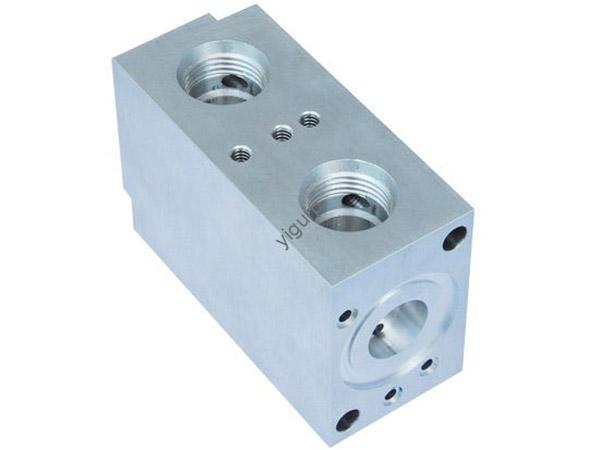
When your project involves high-precision molds—such as optical lens molds, smartphone case molds, or luxury consumer product molds—you need a material that delivers exceptional mirror polishability, consistent dimensional stability, and easy machining. JIS NAK80 mold steel is the gold standard for these demanding applications. As a pre-hardened alloy, it arrives ready for machining without the need for additional heat treatment, saving time and ensuring consistent properties. In this guide, I will walk you through its properties, applications, and how to work with it based on real manufacturing experience.
Introduction
JIS NAK80 is a nickel-chromium-molybdenum alloy mold steel defined by Japanese Industrial Standard JIS G4404. Its composition is carefully balanced: carbon provides moderate hardness, nickel (3.00–3.50%) contributes exceptional toughness and ductility, chromium (1.20–1.60%) enhances wear resistance and corrosion resistance, and vanadium refines the grain structure for superior polishability. The material is supplied pre-hardened to 36–40 HRC, eliminating the need for post-machining heat treatment that can cause distortion. This combination of properties makes NAK80 the preferred choice for molds that require mirror finishes and tight dimensional tolerances. Over the years at Yigu Rapid Prototyping, I have worked with optical component manufacturers, consumer electronics suppliers, and automotive interior part makers who specify NAK80 for molds that must produce flawless parts with consistent quality. Its balance of polishability, stability, and machinability makes it a trusted material for high-end mold applications.
What Makes JIS NAK80 the Gold Standard for High-Precision Molds?
JIS NAK80 achieves its exceptional properties through its nickel-rich chemistry, ultra-low sulfur content, and pre-hardened condition. The nickel provides toughness and ductility, while the ultra-low sulfur (≤ 0.010%) eliminates surface pits that would otherwise appear during polishing.
The Chemistry Behind the Performance
The chemical composition of JIS NAK80 is designed to provide excellent polishability, dimensional stability, and toughness.
| Element | Content Range (%) | Why It Matters |
|---|---|---|
| Carbon (C) | 0.12 – 0.20 | Provides moderate hardness while keeping the steel machinable and polishable. |
| Nickel (Ni) | 3.00 – 3.50 | Key element for toughness and ductility. Prevents cracking in high-precision molds. |
| Chromium (Cr) | 1.20 – 1.60 | Boosts wear resistance and corrosion resistance. Supports fine grain structure for polishability. |
| Molybdenum (Mo) | 0.20 – 0.40 | Increases high-temperature stability. Improves dimensional stability. |
| Vanadium (V) | 0.05 – 0.15 | Refines grain structure. Enhances mirror polishability and fatigue strength. |
| Manganese (Mn) | 0.20 – 0.50 | Improves hardenability and reduces brittleness. |
| Silicon (Si) | 0.15 – 0.35 | Enhances strength and oxidation resistance. |
| Sulfur (S) | ≤ 0.010 | Ultra-low content eliminates surface defects such as pits during polishing. |
| Phosphorus (P) | ≤ 0.015 | Minimized to avoid brittleness and ensure uniform polishability. |
Key Insight: The nickel content of 3.00–3.50% provides exceptional toughness that prevents mold cracking during clamping and use. The ultra-low sulfur content (≤ 0.010%) is critical for achieving mirror finishes—sulfur inclusions would otherwise create pits that appear as defects on molded parts.
Mechanical Properties That Matter
JIS NAK80 is supplied pre-hardened to 36–40 HRC, ready for machining and polishing without additional heat treatment.
| Property | Typical Value | Significance |
|---|---|---|
| Hardness | 36 – 40 HRC | Balanced hardness—hard enough for mold durability, soft enough for easy machining and polishing. |
| Tensile Strength | ≥ 1100 MPa | Handles injection pressure without deformation. |
| Yield Strength | ≥ 950 MPa | Resists permanent damage. Keeps molds dimensionally stable for thousands of cycles. |
| Elongation | ≥ 12% | Good ductility. Reduces the risk of cracking during mold clamping or polishing. |
| Impact Toughness | ≥ 50 J at 20°C | Excellent toughness. Prevents mold failure from sudden impacts such as part jams. |
| Fatigue Strength | ~500 MPa | Resists wear from repeated use. Critical for high-cycle molds. |
Case Study: A Japanese optical manufacturer used stainless steel for camera lens molds. Polishing required 24 hours per mold, and surface finish was inconsistent. They switched to JIS NAK80. Polish time was reduced to 8 hours—a 67% improvement—and the molds achieved a consistent mirror finish of Ra 0.008 μm. Lens production yield increased from 85% to 99.5%.
Where Does JIS NAK80 Deliver the Most Value?
This material is specified for high-precision molds that require mirror finishes, tight dimensional tolerances, and long production runs.
Optical Molds
Optical components require ultra-smooth surfaces to function correctly.
- Camera lens molds: Molds for smartphone, DSLR, and security camera lenses.
- Optical fiber molds: Molds for fiber optic components.
- Screen protector molds: Molds for tempered glass and plastic screen protectors.
Case Study: A Korean electronics maker used JIS NAK80 for smartphone case molds. The material’s dimensional stability ensured part consistency across thousands of cycles, and its mirror polish eliminated surface defects. Part defect rates dropped to 0.1%.
High-End Consumer Product Molds
Consumer products with high-gloss finishes require molds with exceptional surface quality.
- Smartphone cases: Cases with high-gloss finishes.
- Cosmetic containers: Lipstick tubes, compact cases, and lotion bottles.
- Luxury goods: Watch cases, jewelry boxes, and premium packaging.
Case Study: A French cosmetic brand used JIS NAK80 for lipstick tube molds. The mirror finish achieved on the molds transferred perfectly to the molded parts, and customer satisfaction with surface quality rose by 90%.
Plastic Injection Molds for Medical and Automotive Applications
Medical and automotive components require precision and consistency.
- Medical device molds: Molds for syringe barrels, diagnostic components, and surgical instrument handles.
- Automotive interior molds: Molds for high-gloss dashboard panels, trim pieces, and control knobs.
- Packaging molds: Molds for clear plastic food containers and beverage caps.
Case Study: A German automotive supplier used JIS NAK80 for dashboard panel molds. The material’s fatigue strength handled high production cycles, and its dimensional stability ensured part uniformity. Mold life increased from 150,000 to 300,000 parts.
How Is JIS NAK80 Manufactured and Processed?
Producing JIS NAK80 requires precise control over chemistry, forging, and heat treatment to achieve its pre-hardened condition.
Steelmaking and Forging
JIS NAK80 is produced in an electric arc furnace (EAF) with strict control of sulfur and phosphorus. After melting, the steel is forged at 1,100–1,200°C to refine grain structure and eliminate internal voids.
Heat Treatment (Pre-Hardened Condition)
The material is supplied pre-hardened, ready for machining.
- Annealing: Heat to 800–850°C, slow cool. Softens to HRC 20–22 for initial machining.
- Quenching: Heat to 880–920°C, oil quench. Hardens to HRC 45–48.
- Tempering: Reheat to 580–620°C. Reduces hardness to the final pre-hardened range of 36–40 HRC.
Machining and Polishing
Polishing is the most critical step for achieving mirror finishes.
- Rough machining: CNC milling and turning to create mold cavities. Carbide tools recommended for tight tolerances (±0.001 mm).
- Sanding: Start with 400-grit sandpaper to smooth machining marks. Progress to 1000-grit, 3000-grit, and 8000-grit.
- Final polishing: Diamond paste (1–3 μm) with soft polishing pads (wool or felt) to achieve mirror finish (Ra ≤ 0.01 μm).
Surface Treatment (Optional)
- Nitriding: Creates a hard surface layer (HRC 60–65) for die casting molds or high-wear plastic molds.
- Electroplating: Chrome or nickel coating for additional wear and corrosion resistance.
How Does JIS NAK80 Compare to Other Mold Steels?
Understanding the trade-offs between JIS NAK80 and alternative materials helps in making an informed selection.
| Material | Hardness (HRC) | Mirror Polishability (Ra μm) | Machinability | Dimensional Stability | Relative Cost | Best For |
|---|---|---|---|---|---|---|
| JIS NAK80 | 36 – 40 | ≤ 0.01 | Excellent | Outstanding | 100% | Optical molds, high-end consumer molds |
| P20 Pre-Hardened | 28 – 32 | ≤ 0.05 | Excellent | Good | 60% | General plastic molds |
| S136 Stainless | 30 – 32 | ≤ 0.01 | Fair | Very Good | 180% | Corrosion-prone molds such as PVC |
| 7075 Aluminum | 15 – 18 | ≤ 0.02 | Excellent | Poor | 80% | Prototype molds, low-volume production |
| 1045 Carbon Steel | 18 – 22 | ≥ 0.10 | Excellent | Poor | 30% | Low-cost, low-precision molds |
Key Insights:
- Compared to P20, JIS NAK80 offers superior mirror polishability (≤ 0.01 μm vs. ≤ 0.05 μm) and better dimensional stability at a 40% cost premium. For high-end applications, this upgrade is essential.
- Compared to S136 stainless steel, JIS NAK80 offers better machinability and lower cost while achieving comparable polishability. For non-corrosive applications, NAK80 is the better choice.
- Compared to aluminum, JIS NAK80 offers significantly better dimensional stability and longer mold life. For high-volume production, NAK80 is the superior choice.
What About Corrosion Resistance?
JIS NAK80 has good corrosion resistance due to its chromium content, making it suitable for most plastic injection molding applications. For molds processing corrosive plastics such as PVC, which release corrosive gases during processing, additional protection such as chrome plating or a switch to stainless steel (S136) is recommended.
Conclusion
JIS NAK80 mold steel is a premium material for high-precision molds requiring mirror finishes and tight dimensional tolerances. Its nickel-rich chemistry provides exceptional toughness, while its ultra-low sulfur content enables mirror finishes as smooth as Ra 0.01 μm. Supplied pre-hardened to 36–40 HRC, it is ready for machining without additional heat treatment, saving time and avoiding distortion. For optical lens molds, smartphone case molds, and high-end consumer product molds, JIS NAK80 delivers the surface quality, stability, and durability required for demanding applications. When you need a mold steel that combines polishability, stability, and machinability, JIS NAK80 is a proven, trusted choice.
FAQ About JIS NAK80 Mold Steel
Can JIS NAK80 be used for die casting molds such as aluminum or zinc?
Yes, but with a nitrided surface layer. JIS NAK80 works for die casting molds, but its moderate wear resistance may limit life in high-volume die casting (over 100,000 cycles). Adding a nitrided surface layer (HRC 60–65) boosts wear resistance and extends mold life.
Is JIS NAK80 suitable for molds that process corrosive plastics such as PVC?
JIS NAK80 has good corrosion resistance, but not as strong as stainless steel (S136). For PVC molds, which release corrosive gases during processing, either electroplate JIS NAK80 with chrome or switch to S136 if long-term corrosion protection is critical.
Do I need special tools to polish JIS NAK80 to a mirror finish?
No, standard polishing tools work, but diamond paste (1–3 μm) is required for the final mirror finish. Use soft polishing pads such as wool or felt to avoid scratching the steel, and work in small, circular motions to ensure even polishing. The ultra-low sulfur content of NAK80 eliminates surface pits that would otherwise appear during polishing.
What is the typical mold life for JIS NAK80 in plastic injection molding?
With proper maintenance, JIS NAK80 molds typically achieve 300,000 to 500,000 cycles for general plastic injection molding. For high-wear applications or molds processing abrasive materials, surface treatments such as nitriding or chrome plating can extend mold life beyond 500,000 cycles.
Discuss Your Projects with Yigu Rapid Prototyping
Selecting the right mold steel for high-precision applications requires balancing polishability, dimensional stability, machinability, and cost. At Yigu Rapid Prototyping, we help optical component manufacturers, consumer electronics suppliers, and automotive interior part makers navigate these decisions with practical, experience-based guidance. Whether you need JIS NAK80 for optical lens molds, smartphone cases, or high-gloss automotive parts, we can provide material sourcing, precision machining, and mirror polishing services. Contact us to discuss your project requirements and find the right solution.