
Our Thermoplastics CNC Machining Services
At Yigu Technology, we excel in Thermoplastics CNC Machining—combining decades of expertise, advanced equipment, and strict quality control to deliver high-precision, custom components for automotive, medical, and electronics industries.
Whether you need parts made from ABS, Polycarbonate, or high-performance polymers, our process ensures consistent accuracy, fast turnaround, and cost-effectiveness. We turn your design ideas into durable, industry-ready thermoplastic parts that meet even the tightest tolerances.
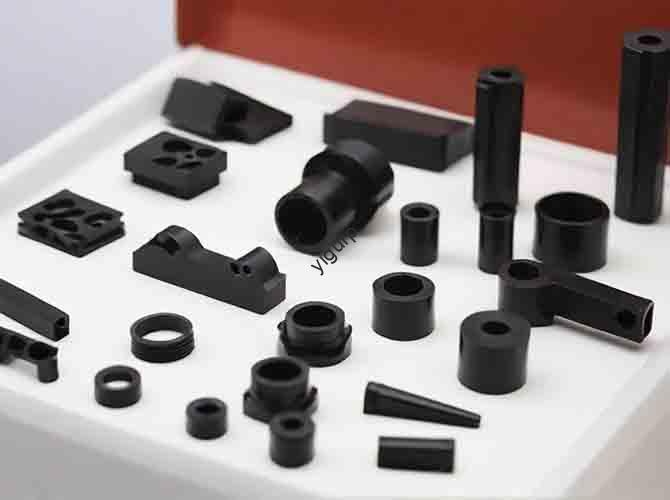
Our Capabilities: Yigu Technology’s Thermoplastics Machining Strengths
At Yigu Technology, we’ve built a robust set of capabilities to handle all your thermoplastics CNC machining needs. Our strengths cover every aspect of the process, from equipment to expertise:
| Capability | Description |
| CNC Machining Capabilities | We handle complex operations (3-axis to 5-axis machining) for thermoplastics, including drilling, milling, and turning. |
| Thermoplastics Machining Expertise | Our engineers have 15+ years of experience working with all common thermoplastics—from ABS to high-performance polymers like PEEK. |
| Advanced Equipment | Our fleet includes CNC mills with high-speed spindles (up to 15,000 RPM) and precision lathes, optimized for thermoplastic softening and cutting. |
| Production Capacity | We support both low-volume prototyping (1–50 units) and high-volume production (10,000+ units), with a monthly capacity of 50,000+ thermoplastic parts. |
| Skillful Team | Our machinists undergo regular training to master new techniques for thermoplastic machining, such as minimizing heat-induced warping. |
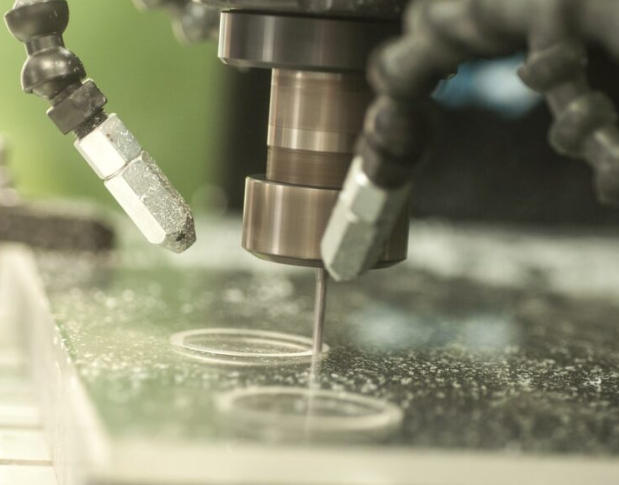
Process: Step-by-Step Thermoplastics CNC Machining Workflow
Machining thermoplastics requires a tailored approach to avoid issues like melting or warping. Our process follows 6 clear steps to ensure quality:
- Design & Programming: We start with your 3D design (CAD file) and convert it into CNC Machining Process code (G-code). This code accounts for the thermoplastic’s melting point and flexibility to prevent damage.
- Material Selection: We choose the right thermoplastic (e.g., Polycarbonate for impact resistance or Nylon for durability) based on your application needs.
- Machine Setup: Our team mounts the thermoplastic material on the CNC machine and adjusts tooling (e.g., carbide end mills for sharp cuts) to match the material’s properties.
- Cutting Operations: The CNC machine executes the pre-programmed Techniques—such as face milling or contouring—at controlled speeds (5,000–12,000 RPM) to avoid overheating.
- Deburring: We remove any rough edges or excess material from the part to ensure a smooth finish.
- Quality Inspection: Each part is checked for Dimensional Accuracy using calipers and coordinate measuring machines (CMMs) to ensure it meets your specs.
Materials: Common Thermoplastics Used in Our Machining
We work with a wide range of thermoplastics, each selected for its unique properties and suitability for specific industries. Below is a breakdown of our most frequently used materials:
| Material | Key Properties | Typical Applications |
| ABS (Acrylonitrile Butadiene Styrene) | Impact-resistant, lightweight, easy to machine | Automotive interior parts, electronics housings |
| Polycarbonate | Transparent, shatterproof, heat-resistant | Medical device covers, safety goggles |
| Polypropylene | Chemical-resistant, flexible, low-cost | Food containers, industrial pipes |
| Nylon (Polyamide) | High tensile strength, wear-resistant | Gears, bearings, automotive fasteners |
| Acrylic (Polymethyl Methacrylate) | Clear, scratch-resistant, UV-stable | Display cases, signage, optical parts |
| High-Performance Polymers (e.g., PEEK) | Heat-resistant (up to 300°C), biocompatible | Medical implants, aerospace components |
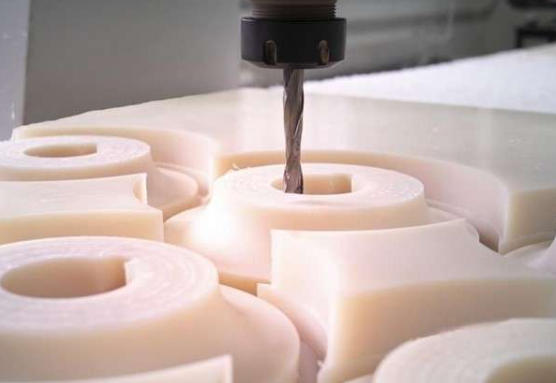
Surface Treatment: Enhancing Thermoplastic Parts
After machining, Surface Treatment is essential to improve the appearance, durability, and functionality of thermoplastic parts. Our most popular options include:
- Polishing: We use abrasive compounds to create a smooth, glossy finish—ideal for parts like consumer goods or display components.
- Coating: We apply protective coatings (e.g., polyurethane) to enhance scratch resistance and UV protection for outdoor or high-wear parts.
- Painting: We use thermoplastic-compatible paints to match brand colors or add corrosion resistance for automotive or industrial parts.
- Texturing: We create textured surfaces (e.g., matte or grip patterns) to improve usability—common for handles or medical device grips.
- Plating: For parts needing conductivity or a metallic look, we offer electroplating (e.g., chrome or nickel plating) that adheres securely to thermoplastics.
- Anodizing: While typically used for metals, we offer specialized anodizing for thermoplastics to add a durable, colored layer for high-end applications.
Tolerances: Achieving Precision in Thermoplastics Machining
Tolerances (allowable deviations from the design) are critical for thermoplastic parts—especially in industries like medical and aerospace. At Yigu Technology, we prioritize precision across every project:
| Tolerance Aspect | Our Performance |
| Machining Tolerances | We consistently achieve tolerances as tight as ±0.005mm for small parts (under 100mm) and ±0.01mm for larger components. |
| Dimensional Accuracy | Our CMMs (Coordinate Measuring Machines) verify accuracy down to 0.001mm, ensuring every part matches your CAD design. |
| Tolerance Levels by Industry | For automotive parts: ±0.05mm; medical parts: ±0.008mm; electronics parts: ±0.02mm. |
| Quality Control | Every batch undergoes 100% inspection—we reject any part that falls outside your specified tolerance range. |
Table: Tolerance Comparison – Yigu vs. Industry Average
| Industry | Industry Average Tolerance | Yigu Technology Tolerance |
| Automotive | ±0.08mm | ±0.05mm |
| Medical | ±0.015mm | ±0.008mm |
| Electronics | ±0.03mm | ±0.02mm |
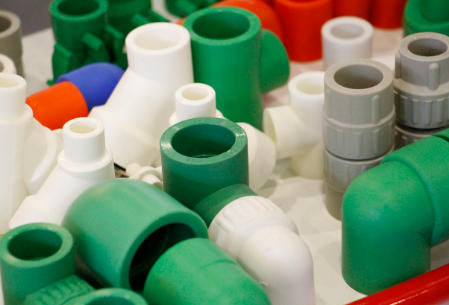
Advantages: Why Choose Thermoplastics CNC Machining?
This technology offers numerous benefits over traditional machining or other thermoplastic manufacturing methods (like injection molding):
- Precision: CNC machining delivers consistent accuracy—critical for parts that need to fit with other components (e.g., medical devices or electronics).
- Customization: It supports complex designs (e.g., curved edges or internal cavities) that are hard to achieve with injection molding, making it ideal for prototyping.
- Speed: For small to medium batches (1–1,000 units), CNC machining has a faster turnaround (3–7 days) than injection molding, which requires mold creation (2–4 weeks).
- Cost-Effectiveness: No upfront mold costs mean lower expenses for prototyping or low-volume production—saving you up to 40% compared to injection molding for small batches.
- High-Quality: The automated process reduces human error, resulting in a 99.9% defect-free rate for our thermoplastic parts.
- Consistency: Every part in a batch is identical—essential for industries like automotive, where uniformity is key.
Applications Industry: Where Our Thermoplastics CNC Machined Parts Are Used
Our thermoplastic components power innovation across 7 key industries, each benefiting from the material’s unique properties:
| Industry | Applications | Thermoplastics Used |
| Automotive | Interior panels, battery housings, sensor brackets | ABS, Polypropylene, Nylon |
| Aerospace | Cockpit components, wire harnesses, lightweight structural parts | High-performance polymers (PEEK), Polycarbonate |
| Medical | Surgical instrument handles, implant housings, diagnostic device parts | Biocompatible polymers (PEEK), Polycarbonate |
| Electronics | Phone cases, circuit board enclosures, connector housings | ABS, Acrylic, Polycarbonate |
| Consumer Goods | Kitchen utensils, toy parts, cosmetic packaging | ABS, Polypropylene, Acrylic |
| Industrial | Gear housings, conveyor belt parts, chemical storage containers | Nylon, Polypropylene, high-performance polymers |
| Prototyping | Rapid prototypes for new product designs (e.g., new tool handles or device casings) | All common thermoplastics (based on design needs) |
Case Studies: Yigu Technology’s Thermoplastics CNC Machining Success Stories
Case Study 1: Medical Device Handle for a Global Healthcare Brand
- Challenge: A leading medical company needed a biocompatible, impact-resistant handle for a surgical tool—with a tolerance of ±0.008mm and a 2-week turnaround.
- Solution: We used PEEK (a high-performance, biocompatible thermoplastic) and 5-axis CNC machining to create the handle. We added a textured surface for better grip and performed strict quality checks to meet medical standards.
- Outcome: The handle passed biocompatibility testing (ISO 10993) and met all tolerance requirements. The client ordered 5,000 units/month and expanded the project to 3 more tool designs.
Case Study 2: Automotive Sensor Bracket for an EV Manufacturer
- Challenge: An electric vehicle (EV) maker needed a lightweight, heat-resistant bracket to hold sensors in the engine bay—able to withstand temperatures up to 150°C.
- Solution: We chose Nylon (known for heat resistance and durability) and used 3-axis CNC machining to create the bracket. We applied a protective coating to enhance heat resistance further.
- Outcome: The bracket reduced the sensor assembly weight by 30% and lasted 1,000+ hours of heat testing. The client integrated it into their new EV model, with an annual order of 20,000 units.