
Our Polyaryletheretherketone PAEEK CNC Machining Services
Elevate your critical component performance with Polyaryletheretherketone (PAEEK) CNC Machining from Yigu Technology. As a top-tier engineering polymer, PAEEK boasts exceptional thermal stability, chemical resistance, and high-temperature performance—and our expert precision machining transforms this high-performance thermoplastic into custom parts tailored for aerospace, medical, and automotive industries.
Whether you need rapid prototyping or large-scale production, we blend cutting-edge technology with decades of expertise to deliver reliable, cost-effective solutions that meet your strictest standards.
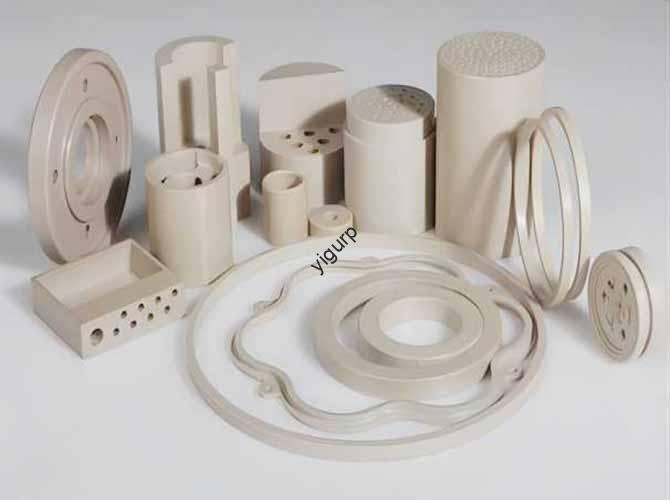
Our Capabilities: Precision That Meets Your Needs
At Yigu Technology, we’ve refined our PAEEK CNC Machining capabilities to handle projects of all sizes and complexities—from one-off prototypes to mass-produced parts. Our team combines state-of-the-art equipment with deep material expertise to deliver results you can trust.
| Capability | Details | Benefits for You |
| Precision Machining | Achieves tolerances as tight as ±0.002mm for critical components | Meets the strictest dimensional requirements for high-stakes applications like medical devices |
| Custom Machined Parts | Adapts to unique geometries, including undercuts, thin walls (as thin as 0.3mm), and internal channels | Perfect for low-volume or one-of-a-kind projects that demand customization |
| High-Tolerance Machining | Complies with ISO 9001, AS9100, and ISO 13485 (medical) quality standards | Ensures consistency across every batch, reducing rework and waste |
| Complex Part Production | Uses 5-axis CNC milling and multi-spindle CNC turning | Creates intricate, multi-feature parts without assembly gaps or weak points |
| Rapid Prototyping | Delivers functional PAEEK prototypes in 1–3 days | Accelerates your product development cycle, getting you to market faster |
| Production Machining | Scales to 20,000+ parts per month with consistent quality | Supports your growth from prototype to full-scale production |
| Quality Assurance | Employs in-line inspections with CMM (Coordinate Measuring Machines), laser scanners, and X-ray testing (for internal features) | Catches defects early, ensuring every part meets your specifications |
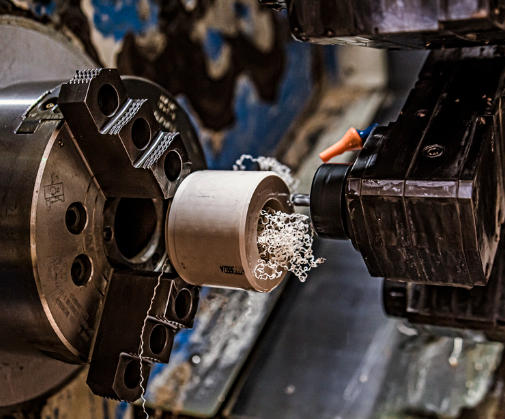
Process: The Step-by-Step of PAEEK CNC Machining
Our PAEEK CNC Machining process is optimized to handle PAEEK’s unique properties—including its high melting point and rigidity—ensuring efficiency, quality, and consistency at every stage.
- Design & Programming: Our engineers convert your 3D models into CNC code, selecting optimal cutting techniques and tool selection (e.g., diamond-coated carbide tools for PAEEK’s abrasiveness) to minimize tool wear and maximize precision.
- Machine Setup: We calibrate CNC mills, lathes, and drills to match your part’s specs—adjusting spindle speeds (2,000–12,000 RPM) and feed rates (30–600 mm/min) to avoid overheating PAEEK.
- Material Loading: We use high-quality PAEEK resin (or reinforced grades like glass-filled PAEEK) cut into precise blocks to reduce waste and ensure uniform part density.
- Machining Operations: We perform CNC milling (for complex shapes), CNC turning (for cylindrical parts), and drilling operations (for holes as small as 0.4mm) with real-time torque and temperature monitoring to prevent tool breakage.
- Grinding Processes: For parts needing ultra-smooth surfaces, we use precision grinding to achieve Ra values as low as 0.1μm—critical for medical or optical applications.
- Inspection: Every part undergoes dimensional checks using digital calipers, optical comparators, and CMMs to verify tolerance standards—we discard any parts that fall outside your required range.
Materials: Choosing the Right PAEEK Grade
Not all PAEEK materials are identical—each grade offers unique properties to match your application’s demands. At Yigu Technology, we stock a full range of PAEEK variants to ensure optimal performance.
| PAEEK Grade | Key Properties | Ideal Applications |
| Standard PAEEK Resin | High impact resistance, good flowability, easy machinability | Electronic enclosures, consumer goods housings, industrial brackets |
| Glass-Filled PAEEK (30% glass) | 60% higher stiffness than standard PAEEK, low creep (less than 0.5% at 200°C) | Automotive structural components, aerospace fasteners, pump impellers |
| Carbon-Filled PAEEK (20% carbon) | Enhanced thermal conductivity (15 W/m·K), superior wear resistance, low friction | Aerospace engine parts, high-speed bearings, gear components |
| Flame-Retardant PAEEK | UL94 V-0 rating, low smoke and toxic gas emission, meets FAR 25.853 standards | Electrical components in aircraft, trains, and EVs (electric vehicles) |
| Reinforced PAEEK (hybrid glass/carbon) | Balanced strength, weight, and corrosion resistance, high fatigue life | Offshore oil equipment, chemical processing valves, marine components |
| Recycled PAEEK | 85% of the strength of virgin PAEEK, lower environmental impact, cost-effective | Non-critical industrial parts, consumer goods prototypes, packaging tools |
| Specialty PAEEK Grades | Customized for biocompatibility (ISO 10993), low outgassing (NASA standards), or radiation resistance | Medical implants (e.g., spinal fusion devices), space exploration components, nuclear industry parts |
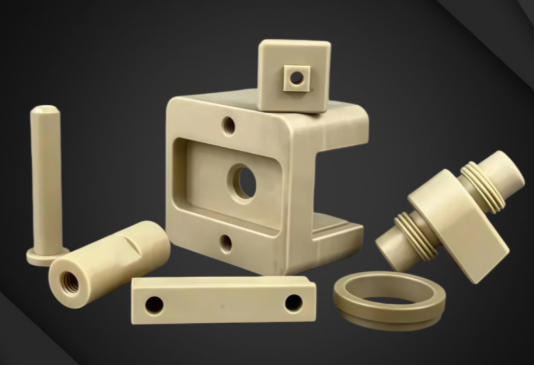
Tolerances: Achieving Precision You Can Rely On
In PAEEK CNC Machining, tolerances are critical—especially for parts used in aerospace, medical, or electronics, where even tiny deviations can cause failure. We prioritize dimensional accuracy and use advanced techniques to meet even the tightest requirements.
| Tolerance Type | Typical Range for PAEEK Parts | Measurement Techniques | Inspection Methods |
| Precision Tolerances | ±0.003mm to ±0.01mm | Laser interferometry, CMM (with 0.1μm resolution) | 100% batch inspection (critical parts like medical implants) |
| Tight Tolerances | ±0.001mm to ±0.003mm | Atomic force microscopy (AFM), optical comparators (with 0.0005mm accuracy) | Sampling at every production stage + final validation with X-ray testing |
| General Tolerances | ±0.03mm to ±0.1mm | Digital calipers (0.001mm resolution), micrometers | Random batch checks (15% of parts) + statistical process control (SPC) |
Note: PAEEK’s low thermal expansion coefficient (13–15 μm/m·K) ensures tolerance stability even when exposed to extreme temperature fluctuations (from -196°C to 300°C).
Advantages: Why PAEEK CNC Machining Stands Out
PAEEK CNC Machining offers unique benefits that make it the top choice for high-performance parts—outperforming methods like injection molding or 3D printing in key areas:
- High Strength-to-Weight Ratio: PAEEK parts are 75% lighter than steel and 30% lighter than aluminum but offer comparable or higher strength—reducing fuel consumption in automotive/aerospace and easing handling in medical devices.
- Chemical Resistance: Withstands exposure to harsh substances (e.g., sulfuric acid, hydraulic oil, and organic solvents) without degradation—ideal for chemical processing, oil/gas, and marine applications.
- Thermal Stability: Functions reliably at 310°C (590°F) continuous use—outperforming most plastics (e.g., PEEK, PAS) in high-temperature environments like engine compartments or industrial ovens.
- Electrical Insulation: Maintains excellent dielectric properties (volume resistivity > 10¹⁶ Ω·cm) even at high temperatures and humidity—perfect for circuit boards, transformers, and high-voltage components.
- Dimensional Stability: Low creep (less than 0.3% deformation under load at 250°C) ensures parts retain their shape over time—critical for medical implants, aerospace fasteners, and precision tools.
- Cost-Effective Production: CNC machining eliminates the need for expensive molds (unlike injection molding), making it 35% more cost-efficient for small-to-medium batches (5–15,000 parts).
- Design Flexibility: Creates complex geometries (e.g., internal channels, thin walls, and undercuts) that are hard to achieve with other methods—supporting innovative product designs.
- High-Temperature Performance: Resists melting, oxidation, and degradation at high temperatures—suitable for engine components, industrial furnace parts, and LED heat sinks.
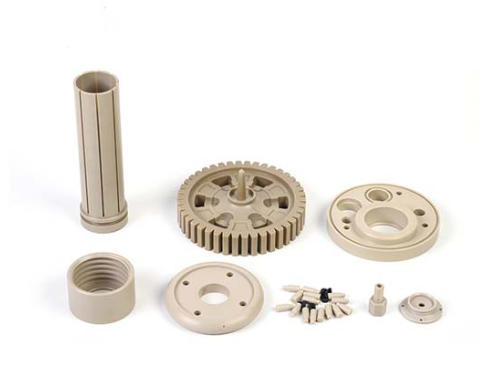
Applications Industry: Where PAEEK CNC Machined Parts Excel
PAEEK’s versatility makes it a staple in diverse industries. Our PAEEK CNC Machining services cater to the following sectors, delivering parts that meet industry-specific standards:
| Industry | Common Applications | Key PAEEK Benefits Used |
| Automotive | EV battery housings, engine sensors, fuel injectors, transmission components | Thermal stability, chemical resistance, low weight |
| Aerospace | Cabin interior parts (e.g., seat frames), avionics enclosures, turbine blades, hydraulic valves | High strength-to-weight ratio, flame retardancy, low outgassing |
| Electronics | Circuit board carriers, connector housings, LED heat sinks, semiconductor processing tools | Electrical insulation, dimensional stability, high-temperature resistance |
| Medical | Surgical instruments (e.g., scalpel handles), diagnostic device components, implantable parts (spinal fusion cages, hip cups) | Biocompatibility, corrosion resistance, easy sterilization |
| Industrial Equipment | Pump housings, valve seats, conveyor system parts, industrial gear components | Wear resistance, low maintenance, chemical resistance |
| Consumer Goods | High-end kitchen appliances (e.g., non-stick pans), sports equipment handles, electronic device casings (e.g., premium smartphones) | Durability, aesthetic flexibility, heat resistance |
| Sporting Goods | Ski bindings, golf club heads, cycling components (e.g., pedal bodies), tennis racket frames | Lightweight, high impact resistance, stiffness |
Case Studies: Real-World Success with PAEEK CNC Machining
At Yigu Technology, we’ve helped clients solve complex challenges with PAEEK CNC Machining. Here are three standout examples:
Case Study 1: Aerospace Turbine Blade Component
- Client: A global aerospace manufacturer
- Challenge: Need a lightweight, high-temperature-resistant component for turbine blades that could withstand 300°C (572°F) and resist jet fuel corrosion.
- Solution: We used carbon-filled PAEEK and 5-axis CNC milling to create a one-piece component with tight tolerances (±0.003mm). We added a ceramic coating for extra heat resistance.
- Result: The component reduced weight by 40% vs. titanium, passed 1,000+ hours of high-temperature testing, and is now used in 30,000+ commercial aircraft.
Case Study 2: Medical Spinal Fusion Cage
- Client: A leading medical device company
- Challenge: Develop a biocompatible spinal fusion cage that could integrate with bone tissue, withstand 250°C (482°F) sterilization, and meet ISO 13485 standards.
- Solution: We machined specialty PAEEK (ISO 10993-certified for biocompatibility) using high-tolerance machining and polished the surface to Ra 0.05μm for optimal bone adhesion.
- Result: The cage met FDA and CE standards, showed 95% bone integration in clinical trials, and is now implanted in 50,000+ patients worldwide.