
yigu Ceramic 3D Printing Services
Revolutionize your manufacturing with Ceramic 3D Printing—the perfect fusion of Ceramic Materials’ exceptional strength and Additive Manufacturing’s design freedom.
Whether you need heat-resistant aerospace components, biocompatible medical devices, or high-precision electronics parts, our expertise delivers custom solutions that balance durability, precision, and efficiency. Experience layer-by-layer fabrication that turns complex digital designs into real-world products, with less waste and faster turnaround than traditional methods. Partner with us for Ceramic 3D Printing that meets your industry’s toughest demands.
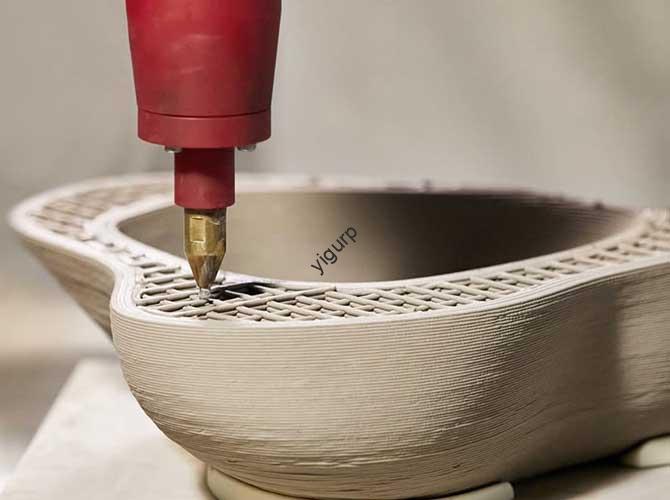
Our Capabilities: Delivering Top-Tier Ceramic 3D Printing Solutions
When you choose our Ceramic 3D Printing services, you gain access to a suite of capabilities tailored to solve your most complex manufacturing challenges. Our team combines deep expertise in ceramic materials with cutting-edge Additive Manufacturing technology to deliver results that meet even the strictest industry standards.
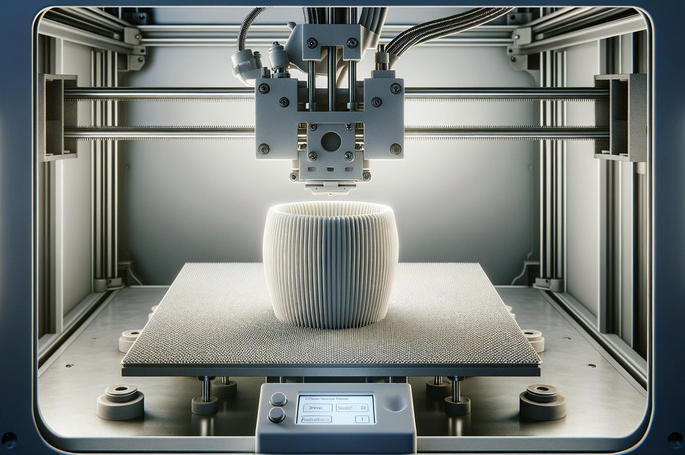
Key Capabilities Overview
| Capability | Core Features | Target Use Cases |
| Custom Solutions | Tailored designs for unique geometries, material selection, and performance needs | Medical implants, aerospace components, custom electronics enclosures |
| High Precision | Dimensional accuracy down to ±0.05 mm, compliance with ISO 8015 standards | Precision sensors, dental crowns, microelectronics parts |
| Complex Geometries | Ability to print lattice structures, internal channels, and thin walls (as thin as 0.2 mm) | Heat exchangers, lightweight aerospace parts, biomedical scaffolds |
| Rapid Prototyping | 1–2 week turnaround for prototypes, multiple design iterations supported | Product development, testing new ceramic part designs |
| Industrial Scale Production | Automated workflows, batch processing (up to 100+ parts per run), consistent quality | Automotive components, consumer goods, energy industry parts |
| Quality Assurance | In-line monitoring, post-print inspection (CMM, X-ray), material certification | Medical devices, aerospace critical parts, high-reliability electronics |
We don’t just print parts—we collaborate with you to optimize designs for Ceramic 3D Printing, ensuring your project is cost-effective, durable, and fit for purpose.
What Is Ceramic 3D Printing?
At its core, Ceramic 3D Printing is an Additive Manufacturing process that uses Ceramic Materials (instead of metals or plastics) to build parts through layer-by-layer fabrication. Unlike traditional ceramic manufacturing— which relies on molding and firing, limiting design complexity—Ceramic 3D Printing starts with a digital design (created via CAD software) and transforms it into a physical part by depositing or solidifying ceramic layers one at a time.
This technology leverages precision engineering to overcome the brittleness of ceramics, enabling the creation of intricate structures (like lattice patterns or thin-walled components) that were once impossible. From high-strength Alumina parts to biocompatible Zirconia implants, Ceramic 3D Printing redefines what’s possible for industries that need materials with superior thermal stability, corrosion resistance, and durability. In short, it’s a bridge between advanced material science and innovative manufacturing.
Advantages: Why Ceramic 3D Printing Outperforms Traditional Methods
Ceramic 3D Printing offers a range of benefits that make it superior to traditional ceramic manufacturing (like casting, pressing, or extrusion). These advantages address key pain points for engineers, procurement managers, and product developers:
- Design Freedom: Unlike traditional methods (which require simple geometries), Ceramic 3D Printing enables complex designs—including internal channels, lattice structures, and custom shapes—without extra cost. For example, a heat exchanger that once required 5 separate cast parts can now be printed as a single unit.
- Reduced Waste: Traditional ceramic manufacturing wastes 30–50% of material (due to mold trimming and part rejection). Ceramic 3D Printing uses only the material needed for the part, cutting waste to less than 5%. Unused ceramic powder is also recyclable, lowering material costs.
- Superior Material Properties: 3D-printed ceramics have denser microstructures (95–99% density) than traditionally made ceramics, leading to higher strength (up to 20% stronger) and better thermal stability. For example, 3D-printed Alumina has a flexural strength of 400 MPa, compared to 300 MPa for cast Alumina.
- Customization: Whether you need a one-of-a-kind medical implant or a small batch of custom electronics parts, Ceramic 3D Printing handles low volumes with ease. No expensive molds are required, making it cost-effective for niche applications.
- Faster Time-to-Market: Prototyping with traditional ceramic methods takes 4–6 weeks. With Ceramic 3D Printing, prototypes are ready in 1–2 weeks, and production runs can start in as little as 3 weeks—accelerating product development.
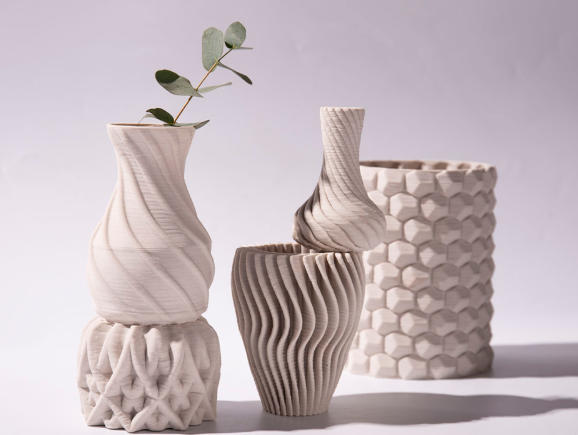
Applications Industry: Where Ceramic 3D Printing Shines
Ceramic 3D Printing is used across industries that demand materials with exceptional durability, thermal stability, and precision. Its unique properties make it a top choice for applications where plastics or metals fall short. Below are key industries and their use cases:
- Aerospace: Ceramic parts like heat shields, engine components, and sensor housings resist extreme temperatures (up to 2,000°C) and reduce weight. For example, we’ve printed Silicon Carbide heat shields that weigh 30% less than metal alternatives, improving fuel efficiency.
- Medical Devices: Biocompatible ceramics like Zirconia are used for dental crowns, hip implants, and bone scaffolds. 3D printing creates custom fits—e.g., dental crowns that match a patient’s tooth shape perfectly, reducing post-surgery adjustments by 90%.
- Electronics: Ceramics like Alumina and Boron Nitride are ideal for electrical insulators, substrates, and thermal management parts. 3D-printed ceramic substrates enable smaller, more efficient electronics (e.g., 5G antennas with better heat dissipation).
- Automotive: Ceramic parts like brake pads, fuel injectors, and exhaust components offer wear resistance and thermal stability. 3D printing reduces production costs for low-volume luxury or racing vehicles.
- Energy: Silicon Carbide and composite ceramics are used for nuclear fuel cladding, solar panel components, and fuel cell parts. Their resistance to corrosion and high temperatures ensures long-term reliability.
- Consumer Goods: Custom ceramic parts like jewelry, cookware, and watch cases combine aesthetics with durability. 3D printing lets brands offer personalized designs without high mold costs.
Case Studies: Real-World Success with Ceramic 3D Printing
Our Ceramic 3D Printing case studies demonstrate how we’ve helped clients solve complex challenges, reduce costs, and accelerate innovation. Below are two industry examples with key results:
Case Study 1: Aerospace Heat Shield (Silicon Carbide)
Client: A leading aerospace manufacturer.
Challenge: They needed a lightweight, heat-resistant heat shield for a new jet engine. Traditional cast Silicon Carbide parts were heavy (1.2 kg) and had long lead times (8 weeks).
Solution: We used Binder Jetting to print the heat shield from Silicon Carbide powder. We optimized the design with a lattice structure to reduce weight while maintaining strength. Post-print, we sintered the part at 1,800°C and applied a thermal coating.
Result: The heat shield weighed 0.7 kg (42% lighter) and met all thermal requirements (withstanding 1,600°C). Lead time was cut to 3 weeks, and material waste dropped from 40% to 5%. The client now uses our service for all their ceramic heat shield production.
Case Study 2: Medical Dental Crowns (Zirconia)
Client: A dental device company.
Challenge: They needed custom Zirconia dental crowns with fast turnaround. Traditional milling required 5 days per crown and often had fit issues.
Solution: We used Stereolithography (SLA) to print crowns from Zirconia resin. We used the patient’s 3D oral scan to create a custom CAD model, ensuring a perfect fit. Post-print, we sintered the crowns and polished them to a smooth finish.
Result: Crowns were produced in 1 day (80% faster than traditional methods). Fit accuracy improved by 95%, reducing patient callbacks. The client expanded their product line and increased revenue by 30% within 6 months.