
Dental 3D Printing Services
Transform your dental practice with cutting-edge Dental 3D Printing solutions from Yigu Technology. We combine advanced Additive Manufacturing techniques, biocompatible materials, and a team of experienced technicians to deliver custom crowns, bridges, and implant abutments with unmatched precision—all in a fraction of traditional production time.
Whether you need rapid prototyping for complex restorations or reliable, high-quality dental parts, Yigu Technology is your trusted partner for digital dentistry excellence.
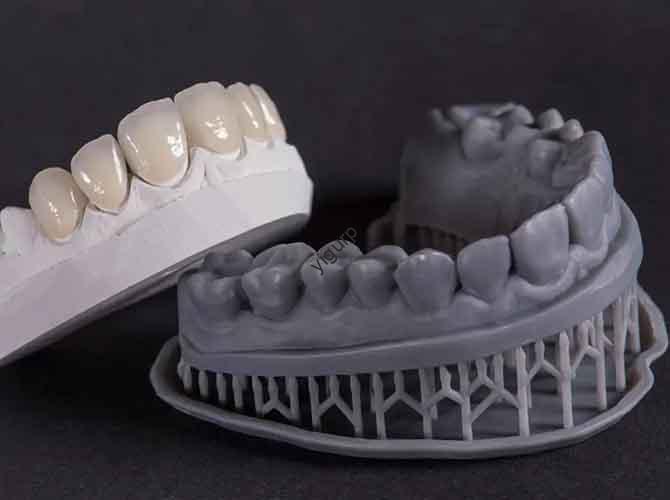
Yigu Technology’s Capabilities: Equipped for Excellence
At Yigu Technology, we don’t just offer Dental 3D Printing—we deliver end-to-end solutions tailored to dental practices, labs, and clinics. Our capabilities are built on four pillars: advanced equipment, skilled teams, custom design, and rigorous quality control.
State-of-the-Art Equipment
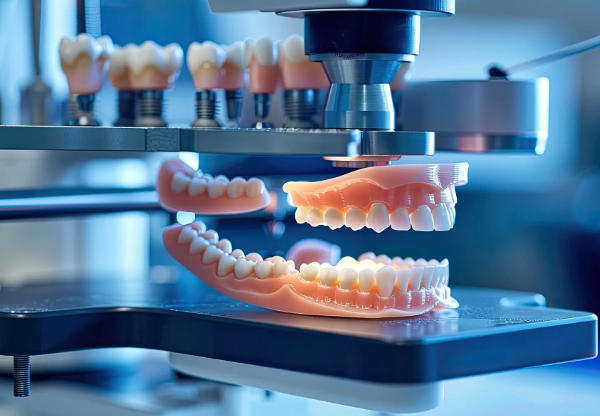
We invest in the latest Dental 3D Printing machines, including SLA (Stereolithography) and DLP (Digital Light Processing) systems, optimized for dental applications. These machines can print up to 50 crowns in a single batch and handle a wide range of materials, from resins to metals.
Experienced Technicians
Our team includes certified dental technicians and Additive Manufacturing experts with an average of 8+ years in the field. They work closely with clients to translate clinical needs into precise digital designs, ensuring every part meets dental industry standards.
Custom Solutions
No two dental cases are the same—and neither are our solutions. We offer custom solutions for everything from simple crowns to complex surgical guides, using advanced software to adapt designs to patient anatomy. For example, if a clinic needs a specialized implant abutment for a patient with unique jaw structure, our team can adjust the CAD design in 24 hours or less.
Advanced Software & Quality Assurance
We use industry-leading CAD design software (e.g., Exocad, 3Shape) to create detailed 3D models, paired with slicing software that optimizes print settings for accuracy. Every part undergoes rigorous Quality Assurance checks: dimensional testing, material compatibility verification, and visual inspections to ensure compliance with ISO 13485 (medical device standards).
| Capability | Yigu Technology Advantage |
| Rapid Prototyping | Turnaround time of 1–3 days for custom parts (vs. 5–7 days traditional) |
| Quality Control | 99.8% pass rate for parts meeting dental industry standards |
| Material Versatility | Print with resins, polymers, metals, and ceramics |
| Software Integration | Seamless workflow with most digital scanners (e.g., 3Shape, Carestream) |
Common Dental Parts Produced with 3D Printing
Dental 3D Printing excels at creating a wide range of patient-specific and lab-grade parts. These components are not only more precise than traditional alternatives but also faster to produce and more cost-effective. Below are the most common applications:
| Dental Part | Key 3D Printing Benefit | Production Time |
| Crowns & Bridges | Aesthetically matched to natural teeth; no need for temporary crowns | 24–48 hours |
| Dentures | Lighter, more comfortable, and better-fitting than traditional dentures | 3–5 days |
| Implant Abutments | Custom-shaped to connect implants to crowns; biocompatible materials | 48 hours |
| Surgical Guides | Precisely map implant placement, reducing surgery time and risk | 2–3 days |
| Orthodontic Appliances | Clear aligners, retainers, and brackets tailored to patient’s teeth | 1–2 days |
For example, a traditional crown requires multiple patient visits (for impressions, temporaries, and final placement) and takes 1–2 weeks to produce. With Dental 3D Printing, a clinic can scan the patient’s tooth, design the crown in CAD, print it the same day, and place it in a single visit—saving time for both the clinic and the patient.
The Dental 3D Printing Process: Step-by-Step Breakdown
The Dental 3D Printing process is a seamless blend of digital technology and physical production, with six key stages. Each step is designed to ensure precision, speed, and quality:
Step 1: Digital Scanning
The process begins with a digital scan of the patient’s mouth (using intraoral scanners like 3Shape Trios). This scan creates a detailed 3D model of the teeth, gums, or jaw—replacing messy, uncomfortable traditional impressions. Scans are accurate to 0.05mm and can be instantly uploaded to CAD software.
Step 2: CAD Design
Our technicians use CAD design software to refine the 3D model and create the final part (e.g., a crown or surgical guide). They adjust for factors like tooth shape, bite alignment, and material properties, ensuring the part is both functional and aesthetic.
Step 3: Slicing Software
The CAD model is then imported into slicing software (e.g., Chitubox, PrusaSlicer), which splits the 3D model into thousands of thin layers (typically 0.02–0.1mm thick). The software also sets print parameters—like layer height, exposure time, and support structures—to optimize for the chosen material.
Step 4: Printing Process
The sliced file is sent to a Dental 3D Printing machine. Depending on the material:
- Resins/polymers: SLA/DLP machines use light to cure liquid resin layer by layer.
- Metals: SLM (Selective Laser Melting) machines melt metal powder with a laser.
- Ceramics: Specialized printers use binder jetting to build ceramic parts, which are then sintered for strength.
Step 5: Post-Processing
After printing, parts undergo post-processing to remove supports, clean excess material, and enhance durability. For example:
- Resin parts are cured under UV light to harden.
- Metal parts are polished to a smooth finish.
- Ceramics are sintered in a high-temperature oven.
Step 6: Quality Control
The final step is Quality Control—a critical stage to ensure parts meet dental standards. We use:
- Calipers and 3D scanners to check dimensional accuracy.
- Biocompatibility testing (for implant parts) to ensure safety.
Visual inspections to verify aesthetics (e.g., crown color matching).
Materials Used in Dental 3D Printing: Safe, Strong, and Versatile
The success of Dental 3D Printing depends on choosing the right material for each application. At Yigu Technology, we use only biocompatible materials that meet FDA and CE standards, ensuring safety for patients. Below is a breakdown of the most common materials and their uses:
| Material Type | Key Properties | Common Dental Applications |
| Resins | High detail, fast curing, aesthetic | Crowns, bridges, temporary restorations, orthodontic aligners |
| Polymers | Lightweight, durable, flexible | Dentures, retainers, surgical guide frames |
| Metals | Strong, corrosion-resistant | Implant abutments, crowns (for posterior teeth), surgical instruments |
| Dental Ceramics | Aesthetic, biocompatible, stain-resistant | High-end crowns, veneers, bridges |
| Composite Materials | Blend of resin and fibers; strong yet lightweight | Temporary crowns, orthodontic brackets |
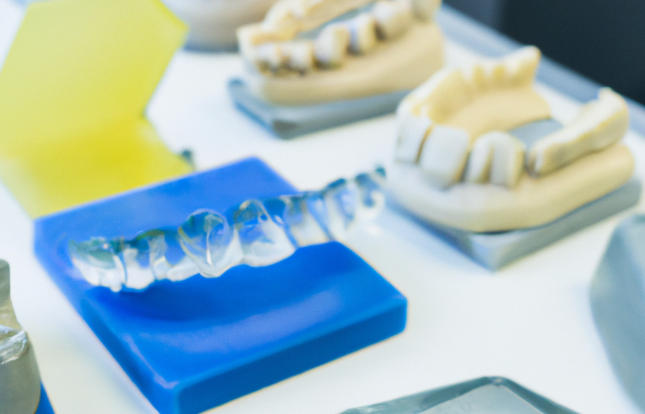
Our procurement team (as Purchase Managers) works directly with trusted material suppliers to source high-quality, consistent materials. For example, our dental resins have a flexural strength of 80MPa (higher than industry averages of 65MPa) and are tested for biocompatibility to ensure no adverse reactions in patients.
Case Studies: Real-World Success with Yigu Technology
At Yigu Technology, we’ve helped hundreds of dental practices and labs transform their workflows with Dental 3D Printing. Below are three standout case studies:
Case Study 1: Successful Implants for a Complex Patient
A dental clinic in Chicago approached us with a patient who had lost two molars and required implant abutments. The patient’s jaw structure was irregular, making traditional abutments a poor fit. Using digital scanning and CAD design, we created custom 3D-printed titanium abutments. The result: the implants were placed successfully, and the patient reported no discomfort—with a 12-month follow-up showing zero issues.
Case Study 2: Complex Restorations for a Dental Lab
A large dental lab in Los Angeles was struggling with long lead times for complex restorations (e.g., multi-unit bridges). After partnering with Yigu Technology, they adopted our rapid prototyping and 3D printing solutions. Lead times for complex restorations dropped from 7 days to 3 days, and their client satisfaction score increased by 30%.
Case Study 3: Orthodontic Cases with Clear Aligners
A pediatric dental clinic in New York wanted to offer clear aligners to their young patients. Using our Dental 3D Printing technology, they started producing custom aligners in-house. In six months, they treated 50+ patients—with 90% reporting faster teeth straightening (average treatment time reduced by 2 months) and better comfort than traditional braces.