
Our Folding Sheet Metal Services
At Yigu Technology, our Folding Sheet Metal Services deliver unmatched precision, flexibility, and efficiency for all your metalworking needs. Whether you require small-batch custom parts or large-scale production runs, we combine advanced press brake technology, expert material selection, and strict quality control to meet tight tolerances and exceed industry standards.
From automotive components to medical equipment, our tailored solutions ensure durability, aesthetics, and cost-effectiveness—making us your trusted partner in sheet metal fabrication.
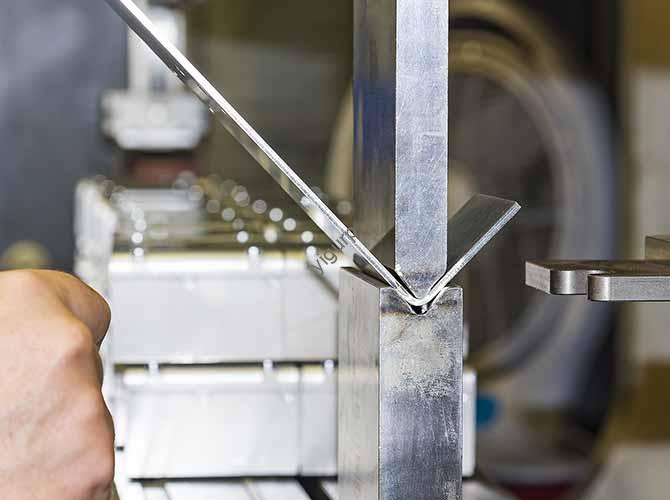
Our Folding Sheet Metal Capabilities
At Yigu Technology, we pride ourselves on a versatile range of capabilities to meet diverse client needs. Our services offered cover every aspect of sheet metal folding, from prototype development to high-volume production.
Core Capabilities Breakdown
| Capability | Details |
| Range of Folding | Handle parts from 50mm (small brackets) to 6,000mm (large enclosures) |
| Thickness Capacity | Process sheet metal from 0.5mm (thin aluminum) to 25mm (thick mild steel) |
| Machine Capacity | 10+ CNC press brakes (up to 300 tons of force) for high-precision bending |
| Custom Folding | Create unique geometries (e.g., offset folds, hems, roll forms) via CAD/CAM integration |
| Precision Folding | Achieve angles as tight as ±0.1° and dimensional accuracy of ±0.05mm |
| Production Scalability | Support small batch production (1–100 units) and large-scale production (10,000+ units/month) |
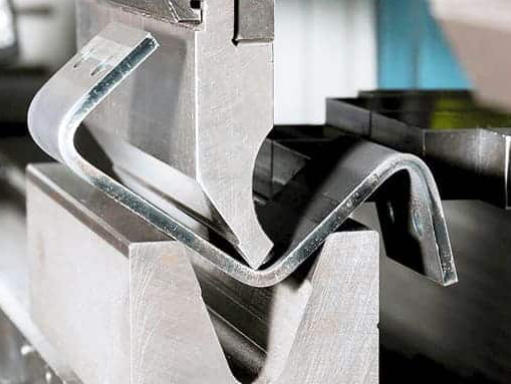
Whether you need a one-off custom part or a continuous supply of components, our team adapts to your timeline and quality requirements.
The Sheet Metal Folding Process: Steps & Workflow
The folding process at Yigu Technology follows a structured, repeatable workflow to ensure consistency and quality. Below is a step-by-step breakdown of our standard procedure:
- Design & Planning: Convert client CAD files into machine-readable code (G-code) to define bend lines, angles, and bending sequence.
- Tooling Setup: Select and install appropriate dies (V-dies, U-dies) and punches on the press brake—critical for matching material thickness and desired folds.
- Material Preparation: Cut the sheet metal to size (via laser cutting or punching) and clean surfaces to remove debris (prevents tool damage).
- Press Brake Operation: Load the metal onto the press brake; the machine applies controlled force to bend the metal along the predefined line. We use both automation (CNC press brakes for high volume) and manual folding (for delicate or custom parts).
- Quality Control & Inspection: Check dimensions, angles, and surface finish using calipers, micrometers, and coordinate measuring machines (CMMs)—a key step to meet quality control standards.
- Post-Processing: Send parts to surface treatment (e.g., powder coating) or assembly (if required) before final delivery.
This workflow reduces errors, shortens lead times, and ensures every part meets your specifications.
Materials for Sheet Metal Folding
Choosing the right material is critical for folding success—different metals have unique properties that affect bendability, strength, and cost. Below are the most common sheet metal types we work with:
Common Materials & Their Properties
| Material | Thickness Range (mm) | Key Properties | Ideal Applications |
| Aluminum | 0.5–12 | Lightweight, corrosion-resistant, easy to bend | Aerospace parts, consumer electronics |
| Stainless Steel | 0.8–20 | High strength, rust-resistant, durable | Medical equipment, food processing machinery |
| Mild Steel | 1.0–25 | Low cost, high ductility, strong | Automotive frames, construction brackets |
| Copper | 0.3–8 | Excellent conductivity, malleable | Electrical components, heat exchangers |
| Brass | 0.5–10 | Aesthetic appeal, corrosion-resistant | Decorative parts, musical instruments |
| Titanium | 1.0–15 | Ultra-strong, lightweight, biocompatible | Aerospace, medical implants |
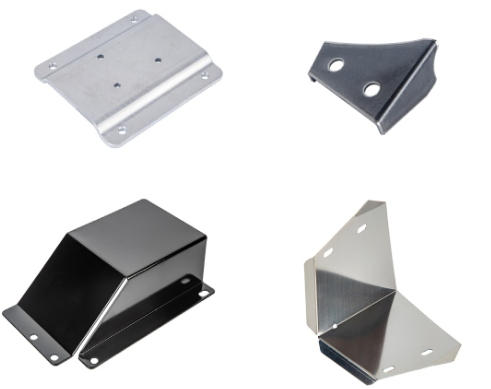
Our team provides material selection guidance to balance performance, cost, and manufacturability for your project.
Surface Treatment for Folded Sheet Metal Parts
After folding, surface treatment enhances the part’s durability, aesthetics, and resistance to environmental damage. We offer a full range of surface finishing options to meet your needs:
Surface Treatment Options
| Treatment Type | Purpose | Advantages | Ideal Materials |
| Powder Coating | Corrosion protection, color customization | Durable, scratch-resistant, eco-friendly | Mild steel, aluminum |
| Painting | Aesthetics, basic corrosion resistance | Low cost, wide color range | Most metals (pre-treated) |
| Plating | Improve conductivity, prevent rust | Enhances surface hardness, decorative | Copper, steel (zinc/nickel plating) |
| Anodizing | Hardens surface, adds color | High corrosion resistance, no chipping | Aluminum |
| Polishing | Create a smooth, reflective finish | Aesthetic appeal, easy to clean | Stainless steel, brass |
| Galvanizing | Heavy-duty corrosion protection | Withstands outdoor/harsh environments | Mild steel, iron |
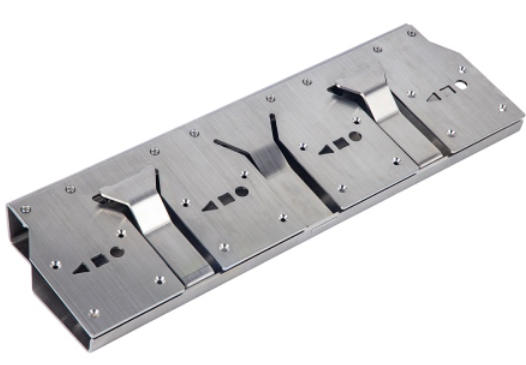
Corrosion protection is a top priority for parts used in automotive, marine, or outdoor applications—our treatments extend part lifespan by 5–10 years on average.
Case Studies: Success Stories in Sheet Metal Folding
Our case studies demonstrate how we solve complex challenges for clients across industries. Here are two notable examples:
Case Study 1: Aerospace Component for a Leading Aircraft Manufacturer
- Challenge: The client needed 500 custom titanium brackets with tight tolerances (±0.05mm) and corrosion resistance—critical for engine mounting.
- Solution: We used CNC press brakes with titanium-specific tooling, followed by anodizing for corrosion protection. Our quality control team performed 100% CMM inspections.
- Results: Delivered parts 1 week ahead of schedule, with zero defects. The brackets met AS9100 standards and reduced the client’s assembly time by 30%.
Case Study 2: Medical Equipment Enclosures for a Healthcare Tech Firm
- Challenge: The client required 2,000 stainless steel enclosures for diagnostic machines—needing smooth finishes, biocompatibility, and quick turnaround.
- Solution: We folded 1.5mm stainless steel, applied electropolishing (for a bacteria-resistant finish), and integrated punching for cable entry holes.
- Results: Completed production in 10 days, with all parts passing ISO 13485 certification. The client reported a 25% cost savings compared to their previous supplier.