
Our PC Vacuum Casting Services
Looking for a high-precision, cost-effective solution for small-batch plastic part production? PC Vacuum Casting delivers exceptional dimensional accuracy, smooth surface finishes, and fast turnaround times—perfect for prototyping, low-volume manufacturing, and custom components across industries.
At Yigu Technology, we combine decades of expertise with advanced techniques to bring your designs to life with unmatched quality.
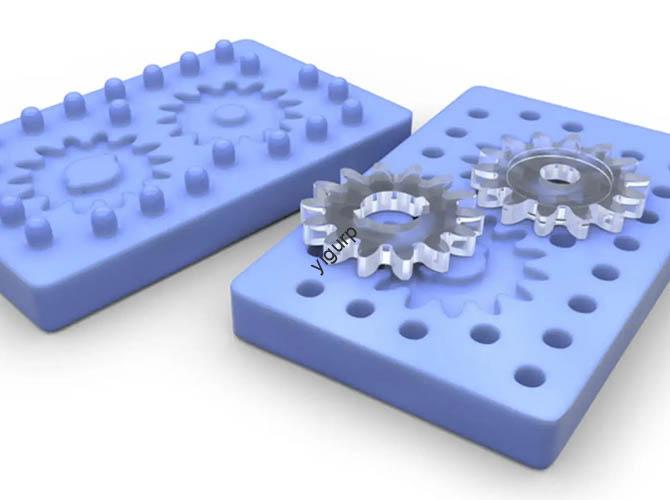
Yigu Technology’s PC Vacuum Casting Capabilities
At Yigu Technology, our PC Vacuum Casting Capabilities are built on years of hands-on experience and a commitment to excellence. We don’t just offer a service—we provide end-to-end solutions tailored to your project’s unique needs. Our Expertise in PC Vacuum Casting covers every stage, from mold design to post-processing, ensuring consistent quality across every part.
Our team’s Skills in PC Vacuum Casting include mastering complex geometries, matching custom resin properties (such as flexibility or heat resistance), and optimizing processes for faster turnaround. With Experience with PC Vacuum Casting spanning 15+ years, we’ve supported clients in automotive, electronics, medical, and consumer goods industries. The Range of PC Vacuum Casting Services we offer includes:
| Service Category | Specific Offerings |
| Mold Creation | Silicone mold design, multi-cavity molds, mold maintenance |
| Resin Selection | Over 50 resin options (rigid, flexible, transparent, flame-retardant) |
| Post-Processing | Surface treatment, painting, assembly, quality inspection |
| Design Support | DFM (Design for Manufacturability) advice, prototype refinement |
What is PC Vacuum Casting?
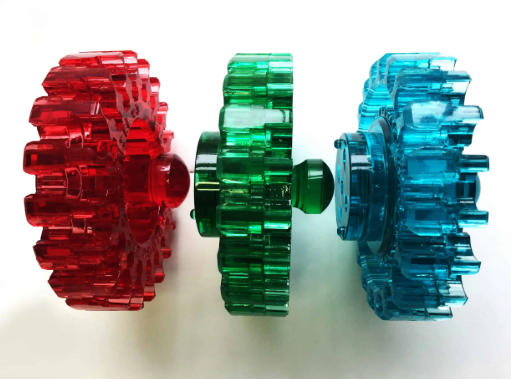
Understanding the Definition of PC Vacuum Casting is the first step to leveraging its benefits. Simply put, PC Vacuum Casting (also known as polyurethane vacuum casting) is a low-pressure casting process used to produce high-quality plastic parts from polyurethane resins. It uses a master model (often 3D-printed) to create a silicone mold, which is then filled with liquid resin under vacuum to eliminate air bubbles—resulting in parts that mimic the look and feel of injection-molded components.
This method answers the question, “What is PC Vacuum Casting?” by focusing on precision and flexibility: it’s ideal for small production runs (10–100 parts) where injection molding would be too costly. The PC Vacuum Casting Meaning extends beyond basic production—it’s a bridge between prototyping and mass manufacturing, allowing businesses to test designs and meet short-term demand without heavy upfront investment. For a quick overview, the table below summarizes its core attributes:
| Aspect | Key Detail |
| Core Purpose | Small-batch production, prototyping, custom parts |
| Primary Material | Polyurethane resins (with PC-like properties) |
| Typical Batch Size | 10–100 parts per mold |
| Lead Time | 3–7 days (from mold creation to part delivery) |
| Accuracy Level | ±0.1mm (for parts under 100mm) |
How Does PC Vacuum Casting Work?
The PC Vacuum Casting Process Flow is a structured sequence of steps that ensures precision and consistency. Unlike traditional casting methods, it relies on vacuum pressure to create bubble-free parts—here’s a breakdown of the Steps in PC Vacuum Casting:
- Master Model Preparation: First, a master model (usually 3D-printed in resin or CNC-machined) is created to match the desired part design. This model must be smooth and accurate, as it will define the mold’s shape.
- Silicone Mold Making: The master model is placed in a mold frame, and liquid silicone is poured around it. The frame is then placed under vacuum to remove air, and the silicone cures (typically 4–8 hours) to form a flexible mold.
- Resin Casting: The silicone mold is opened, the master model is removed, and liquid polyurethane resin (colored or clear) is poured into the mold cavity. The mold is again placed under vacuum (20–50 mbar pressure) to eliminate air bubbles—this step is critical for achieving a smooth surface.
- Curing: The mold is heated to 40–60°C to speed up resin curing (1–2 hours). For larger parts, room-temperature curing may be used, though it takes longer.
- Demolding & Post-Processing: Once cured, the part is carefully removed from the mold. Post-processing steps (like trimming excess resin or Surface Treatment in PC Vacuum Casting) are then performed to finalize the part.
The Detailed Process of PC Vacuum Casting can be adjusted based on part size and resin type, but this core workflow remains consistent. To visualize the timeline, see the table below:
| Process Stage | Typical Time Required | Key Goal |
| Master Model Creation | 1–2 days | Achieve design accuracy |
| Silicone Mold Making | 1–2 days | Create durable, precise mold |
| Resin Casting | 2–4 hours | Fill mold without air bubbles |
| Curing | 1–8 hours | Ensure resin hardens fully |
| Post-Processing | 0.5–1 day | Refine part to meet specifications |
Materials Used in PC Vacuum Casting
Choosing the right Materials Used in PC Vacuum Casting is essential for meeting part performance requirements. The primary material is polyurethane resin, but there are dozens of formulations to match different needs—from rigid, PC-like resins to flexible, rubber-like options.
The table below compares Common Materials in PC Vacuum Casting and their properties:
| Material Type | Shore Hardness | Tensile Strength | Key Applications |
| Rigid PC-Like Resin | 85D–95D | 50–65 MPa | Electronic enclosures, structural parts |
| Flexible Resin | 30A–90A | 5–15 MPa | Gaskets, grips, soft components |
| Transparent Resin | 80D–90D | 45–55 MPa | Lenses, display covers, light fixtures |
| Flame-Retardant Resin | 85D–90D | 48–58 MPa | Electrical parts, automotive components |
Material Selection for PC Vacuum Casting depends on factors like temperature resistance, chemical exposure, and aesthetic needs. Our team at Yigu Technology helps you choose the best material by analyzing your project’s requirements.
Advantages of PC Vacuum Casting
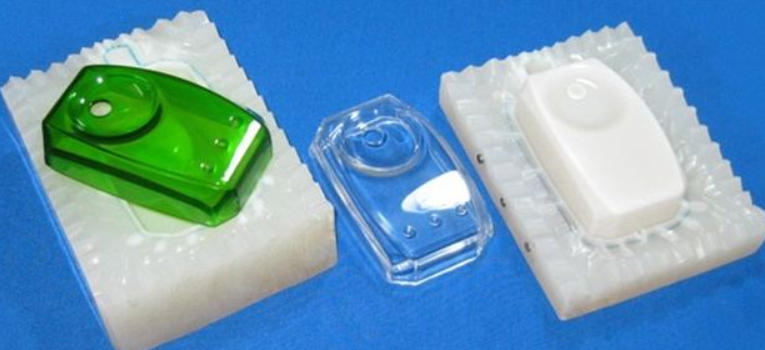
The Benefits of PC Vacuum Casting make it a top choice for businesses looking to balance quality, cost, and speed. Whether you’re prototyping or producing small batches, it offers advantages that other methods can’t match.
Key Advantages of Using PC Vacuum Casting include:
- Cost-Effective for Small Batches: No expensive metal molds (like injection molding), so it’s affordable for runs of 10–100 parts.
- Fast Turnaround: From design to finished parts in as little as 3 days—ideal for tight deadlines.
- High-Quality Finishes: Smooth surfaces and fine detail replication (even for complex geometries).
- Material Flexibility: Dozens of resin options to match PC, ABS, rubber, or specialty materials.
- Low Risk: Easy to modify master models or molds if design changes are needed—unlike injection molding, where mold changes are costly.
So, Why Choose PC Vacuum Casting? It’s the perfect solution when you need production-quality parts without the upfront investment of mass manufacturing. The Strengths of PC Vacuum Casting shine in industries like automotive (for custom interior parts), electronics (for prototype enclosures), and medical (for low-volume device components).
Applications of PC Vacuum Casting by Industry
Industries Using PC Vacuum Casting span across manufacturing, thanks to its versatility and precision. From prototyping to end-use parts, it solves unique challenges in diverse sectors.
The Market for PC Vacuum Casting is growing as more businesses adopt agile manufacturing practices—needing fast, low-cost solutions to test ideas or meet niche demand. The table below highlights industry-specific uses:
| Industry | Key Applications | Resin Type Preferred |
| Automotive | Interior trim, sensor housings | Rigid PC-like, flame-retardant |
| Electronics | Phone cases, LED housings | Rigid ABS-like, transparent |
| Medical | Surgical tool handles, prosthetics | Biocompatible, rigid or flexible |
| Consumer Goods | Toy parts, cosmetic packaging | Colorable, rigid or soft-touch |
PC Vacuum Casting Case Studies
Real-world PC Vacuum Casting Case Studies demonstrate how this process solves complex manufacturing challenges. Below are two examples of successful projects we’ve completed at Yigu Technology:
Case Study 1: Automotive Prototype Enclosure
- Client: A leading electric vehicle (EV) manufacturer.
- Challenge: Need 50 prototype sensor enclosures for testing—required PC-like rigidity, flame-retardant properties, and a 5-day turnaround.
- Solution: We used a 3D-printed master model to create a 4-cavity silicone mold. We selected a flame-retardant PC-like resin and optimized vacuum pressure to ensure no bubbles. Post-processing included painting to match the EV’s interior color.
- Result: Delivered 50 parts in 4 days—all meeting dimensional tolerances (±0.1mm) and passing flame-retardant tests. The client used the prototypes to validate sensor fit, saving 6 weeks of development time compared to injection molding.
Case Study 2: Medical Device Component
- Client: A medical equipment startup.
- Challenge: Need 20 custom prosthetic finger components—required biocompatible resin, flexible texture, and a smooth surface finish.
- Solution: We used a biocompatible flexible resin (Shore 50A) and created a 2-cavity mold. We added a UV-resistant coating to improve durability and performed CMM checks to ensure dimensional accuracy.
- Result: The components met FDA biocompatibility standards and were delivered in 6 days. The startup used the parts to test patient comfort, leading to a design refinement that was easily implemented with a new master model.
These Successful Projects in PC Vacuum Casting show how flexibility and precision drive customer success. Case Examples of PC Vacuum Casting like these are why businesses trust Yigu Technology for their critical projects.