
Our Mechanical CNC Machining Services
At Yigu Technology, we redefine Mechanical CNC Machining with cutting-edge Precision Engineering and fully integrated Automation.
From custom Mechanical Components to high-volume production, our advanced CNC Equipment delivers unrivaled accuracy, consistency, and cost-effectiveness—empowering industries to turn ideas into reliable, high-performance solutions.
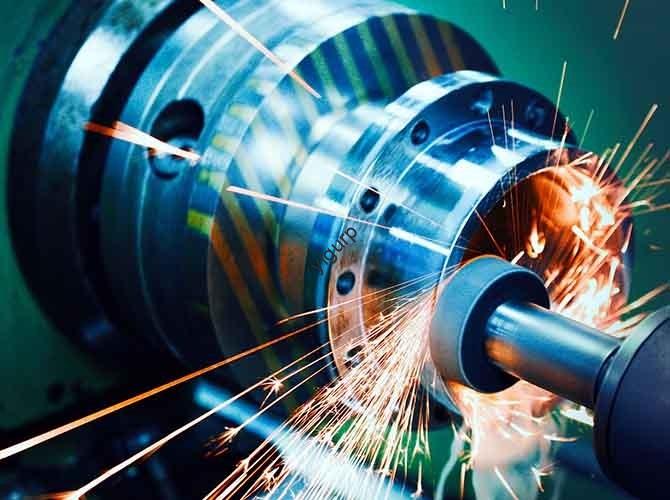
Our Capabilities: Delivering CNC Excellence
At Yigu Technology, our Mechanical CNC Machining capabilities are built to meet the most demanding industry needs. We invest in state-of-the-art equipment and train our team to master every aspect of the process, ensuring we deliver solutions that align with your goals—whether you need a single prototype or mass-produced parts.
Key Capabilities Overview
| Capability | Description | Technical Specs |
| High-Precision Machining | Achieve tight tolerances for critical components | Up to ±0.001 mm tolerance; surface finish down to Ra 0.8 μm |
| Advanced CNC Equipment | Fleet of modern machines for versatile operations | 5-axis CNC mills, 4-axis CNC lathes, and automated loading systems |
| Custom Manufacturing | Tailor parts to unique designs and requirements | Support for 2D/3D CAD files (STEP, IGES, STL formats) |
| Quality Assurance | Rigorous testing to maintain consistency | In-line CMM (Coordinate Measuring Machine) inspections; ISO 9001 certified |
| Rapid Prototyping | Fast turnaround for design validation | Prototypes ready in 3–5 business days for most components |
| Production Capacity | Scale from small batches to high-volume runs | Up to 100,000 units/month for standard parts; flexible scheduling for peaks |
| Technical Expertise | Team of engineers with 10+ years of CNC experience | Specialized in complex geometries and multi-material machining |
| Multi-Axis Machining | Access hard-to-reach areas for complex parts | 5-axis machining reduces setup time by 40% vs. traditional 3-axis methods |
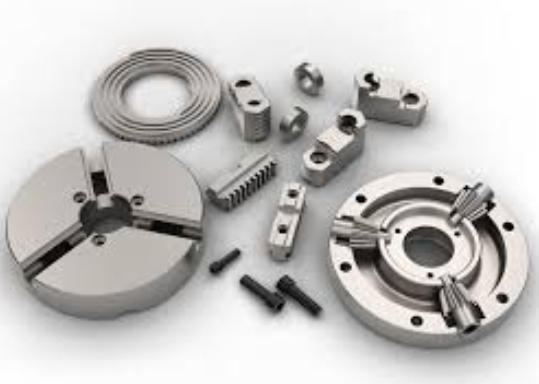
Whether you need a custom gear for a robotics project or a high-volume order of shafts for automotive use, our capabilities ensure you get parts that meet your exact specifications—on time and within budget.
Common Parts: What We Manufacture
Mechanical CNC Machining excels at producing a wide range of parts, from simple components to intricate assemblies. These parts are used in nearly every industry, forming the building blocks of machines, vehicles, and equipment. Below are the most common parts we produce, along with their typical applications:
| Part Type | Description | Primary Applications |
| Gears | Toothed components for power transmission | Automotive transmissions, industrial gearboxes, robotics |
| Shafts | Long, cylindrical parts for rotating machinery | Motors, pumps, conveyor systems, aircraft engines |
| Bearings | Components that reduce friction between moving parts | Automotive wheels, industrial turbines, medical devices |
| Cylinders | Hollow or solid cylindrical parts for fluid/mechanical systems | Hydraulic pumps, pneumatic tools, engine blocks |
| Pistons | Sliding components that convert pressure into motion | Car engines, compressors, hydraulic cylinders |
| Valves | Devices that control fluid/gas flow | Plumbing systems, oil/gas pipelines, HVAC equipment |
| Mechanical Components | Custom parts (brackets, fasteners, housings) | Electronics enclosures, machinery frames, medical tools |
| Frames and Structures | Supportive structures for heavy equipment | Industrial machines, construction equipment, aerospace parts |
Each part is manufactured with the precision and consistency that only CNC Machining can provide—ensuring compatibility, durability, and performance in your end product.
Process: The Step-by-Step CNC Machining Journey
Our Mechanical CNC Machining process is a structured, customer-centric workflow designed to turn your design into a high-quality part. Every step is optimized for accuracy, efficiency, and quality control, with clear communication to keep you informed.
The 8-Step CNC Machining Process
- Design and Simulation: We start by reviewing your 2D/3D CAD files (e.g., from SolidWorks or AutoCAD). Our engineers use simulation software to test the design—identifying potential issues (like tool collisions) before machining begins. This step reduces errors and ensures the part functions as intended.
- Material Selection: Based on your part’s use (e.g., strength, corrosion resistance), we help you choose the right material (see Section 5 for options). We source materials from trusted suppliers to guarantee quality.
- CNC Programming: Our programmers convert the design into a G-code (the language CNC machines understand). The code includes every detail—tool path, cutting speed, and depth—to ensure precision.
- Machining Operations: The programmed CNC machine (mills, lathes, or routers) executes the cuts. Multi-Axis Machining is used for complex parts, allowing the tool to move in 5 directions for seamless, accurate shaping.
- Inspection and Testing: After machining, each part undergoes rigorous inspection. We use CMMs, laser scanners, and calipers to check dimensions, tolerances, and surface finish—ensuring it meets your specs.
- Finishing Processes: Parts are polished, coated (e.g., anodizing for aluminum), or treated (e.g., heat treatment for steel) to enhance durability, appearance, or performance.
- Assembly Integration (if needed): For assemblies, we fit machined parts together and test the final product to ensure all components work in harmony.
- Quality Control: A final review ensures every part meets our ISO 9001 standards and your requirements. Only parts that pass this step are shipped to you.
This process is transparent—you’ll receive updates at each stage, so you know exactly when your parts will be ready.
Materials: Choosing the Right Foundation
The success of a Mechanical CNC Machining project depends largely on material selection. Different materials have unique properties (strength, weight, corrosion resistance) that make them suitable for specific applications. We work with a wide range of materials to match your part’s needs:
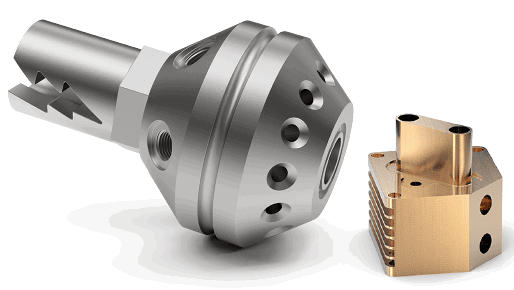
Material Options and Their Benefits
| Material | Key Properties | Ideal Applications |
| Aluminum Alloys | Lightweight, corrosion-resistant, easy to machine | Aerospace parts, automotive components, electronics enclosures |
| Stainless Steel | High strength, rust-resistant, durable | Medical devices, food processing equipment, marine parts |
| Carbon Steel | Strong, cost-effective, versatile | Construction machinery, automotive frames, tools |
| Brass | Excellent conductivity, malleable, aesthetic | Electrical connectors, plumbing fixtures, decorative parts |
| Bronze | Wear-resistant, corrosion-resistant (in water) | Bearings, pumps, marine hardware |
| Plastics | Lightweight, low cost, chemical-resistant | Consumer goods, electronics, medical tools (e.g., PEEK) |
| Composites | High strength-to-weight ratio, durable | Aerospace components, sports equipment, industrial machinery |
| High-Strength Alloys (e.g., Titanium) | Ultra-strong, heat-resistant, corrosion-resistant | Aerospace engines, medical implants, military equipment |
Our engineers help you select the best material for your project—balancing performance, cost, and machinability to ensure optimal results.
Advantages: Why CNC Machining Outperforms Traditional Methods
Mechanical CNC Machining offers a host of advantages over manual machining or other manufacturing methods. These benefits make it the top choice for industries that demand precision, consistency, and efficiency.
Core Advantages of CNC Machining
- Precision and Accuracy: CNC machines achieve tolerances as tight as ±0.001 mm—far better than manual machining. This is critical for parts like medical implants or aerospace components, where even small errors can be dangerous.
- Consistency and Reproducibility: Once programmed, a CNC machine produces identical parts every time. For high-volume orders, this means no variation—ensuring your end product is reliable.
- Cost-Effectiveness: While CNC machines have higher upfront costs, they reduce labor costs (less manual operation) and waste (fewer errors). For large batches, this lowers the total cost per part.
- Time Efficiency: CNC machines work 24/7 with minimal supervision. They also complete complex tasks faster than manual methods—reducing lead times from weeks to days.
- Customization: CNC machining handles complex designs (e.g., 3D geometries) with ease. Whether you need a one-of-a-kind prototype or a custom part, we can bring your design to life.
- Enhanced Durability: CNC-machined parts have smoother surfaces and more consistent structures, making them more durable than parts made with manual methods.
- Reduced Waste: Precise tool paths mean less material is wasted during cutting. This is not only cost-effective but also better for the environment.
- Versatility: A single CNC machine can produce multiple part types—just by changing the program. This flexibility is ideal for small batches or custom orders.
In short, CNC machining helps you get better parts, faster, and at a lower cost—giving you a competitive edge in your industry.
Case Studies: Real-World Success Stories
At Yigu Technology, our Mechanical CNC Machining solutions have helped clients across industries solve problems, improve performance, and save costs. Below are three key case studies that showcase our expertise:
Case Study 1: Automotive Shafts for a Global Manufacturer
Challenge: A leading automotive company needed 50,000 precision shafts per month for their new electric vehicle (EV) line. The shafts required tight tolerances (±0.002 mm) and had to be corrosion-resistant.
Solution: We used Stainless Steel and 5-axis CNC Machining to produce the shafts. Our Advanced CNC Equipment allowed us to scale production to meet the 50,000-unit monthly demand, while In-line CMM Inspections ensured every shaft met the tolerance requirement.
Results:
- Reduced production time by 30% vs. their previous supplier.
- Achieved 100% compliance with their quality standards.
- Saved the client 15% on per-unit costs due to reduced waste and labor.
- Client Testimonial: “Yigu’s CNC machining helped us launch our EV line on time—their consistency and speed are unmatched.” — Automotive Production Manager
Case Study 2: Medical Bearings for a Device Maker
Challenge: A medical device company needed custom Bearings for a diagnostic machine. The bearings had to be biocompatible, wear-resistant, and precise enough to handle delicate movements.
Solution: We selected Titanium (a High-Strength Alloy) for its biocompatibility and durability. Our Technical Expertise in Precision Engineering allowed us to machine the bearings to ±0.001 mm tolerance, and we added a special coating for extra wear resistance.
Results:
- The bearings performed flawlessly in clinical trials, with no wear after 10,000+ cycles.
- The client received their prototype in 4 days (faster than their 2-week target).
- The device was approved by the FDA 3 months ahead of schedule.
These case studies prove that our Mechanical CNC Machining solutions deliver real, measurable value—whether you’re launching a new product or improving an existing one.