
Our Polyester PBT CNC Machining Services
Elevate your component production with our Polyester PBT CNC Machining services! As a trusted partner, we specialize in crafting high-performance custom machined parts—from rapid prototypes to large-scale production runs—by leveraging the exceptional material properties of Polyester PBT (a robust thermoplastic polyester and engineering plastic) and advanced CNC Machining technology.
Whether you need high-tolerance machining for aerospace components or cost-effective parts for consumer goods, we deliver tailored solutions that meet your industry’s strictest demands.
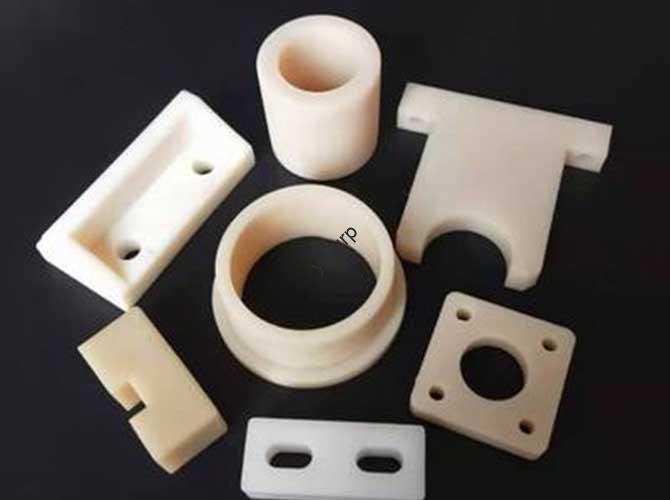
Our Capabilities in Polyester PBT CNC Machining
At Yigu Technology, we offer a comprehensive suite of Polyester PBT CNC Machining capabilities to handle projects of all sizes and complexities. Our services prioritize precision, efficiency, and quality, backed by strict quality assurance protocols to ensure every part meets your expectations.
| Capability | Key Features | Typical Use Cases |
| Precision Machining | Achieves exceptional dimensional accuracy as tight as ±0.005mm for critical components | Medical device parts, aerospace fasteners |
| Custom Machined Parts | Creates parts tailored to specific design requirements (size, shape, functionality) | Industrial equipment brackets, custom enclosures |
| High-Tolerance Machining | Consistently adheres to strict tolerance standards (ISO 8015) for reliable, repeatable performance | Automotive sensors, electronic connectors |
| Complex Part Production | Manufactures parts with intricate features (threads, undercuts, thin walls) using advanced 5-axis CNC machines | Robotics components, high-end consumer goods |
| Rapid Prototyping | Delivers functional Polyester PBT prototypes in 1–3 days for design testing and validation | New product development, concept verification |
| Production Machining | Scales seamlessly from small batches (10–50 parts) to high-volume production (10,000+ parts) | Mass-produced industrial tools, consumer goods parts |
| Quality Assurance | Implements multi-step inspections (CMM testing, visual checks, material verification) to ensure 100% part compliance | All industries, especially medical and aerospace |
Definition of Polyester PBT CNC Machining
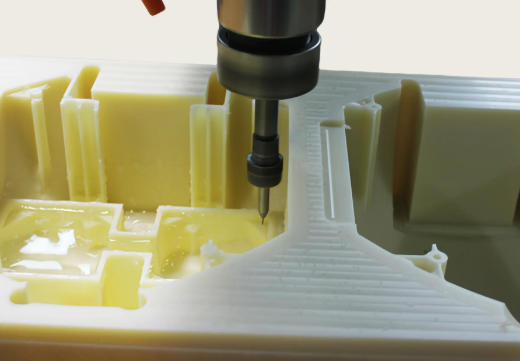
Polyester PBT (Polybutylene Terephthalate) is a versatile thermoplastic polyester and engineering plastic celebrated for its outstanding material properties, including excellent thermal stability, strong chemical resistance, and reliable electrical insulation. CNC Machining is an automated machining process that uses pre-programmed software to control machine tools, ensuring precise, consistent, and efficient production of parts. When combined, Polyester PBT CNC Machining merges the durability of Polyester PBT with the accuracy of CNC technology, resulting in parts that excel across diverse applications—from automotive components to medical devices. A key advantage of this pairing is Polyester PBT’s excellent machinability: it cuts cleanly, minimizes tool wear, and maintains dimensional stability, making it ideal for complex part designs.
The Polyester PBT CNC Machining Process
Our Polyester PBT CNC Machining process follows a systematic, optimized workflow to guarantee consistent quality and efficiency, from initial planning to final part delivery. Each step is designed to accommodate the unique characteristics of Polyester PBT.
- Design Review & Machine Setup: We start by reviewing your CAD design files to confirm feasibility. Next, our team conducts machine setup—calibrating CNC equipment, selecting the right tools (via careful tool selection based on PBT grade), and programming tool paths to align with your design.
- CNC Milling: For parts with complex 3D features (like slots or cavities), we use CNC Milling. This process involves rotating cutting tools to remove material from Polyester PBT blocks, ideal for creating flat or irregularly shaped components.
- CNC Turning: For cylindrical parts (such as rods or bushings), CNC Turning is employed. The Polyester PBT workpiece spins while a stationary cutting tool shapes it, ensuring smooth and precise inner and outer diameters.
- Drilling Operations & Cutting Techniques: We perform drilling operations to create holes (ranging from 0.5mm to 50mm) and use specialized cutting techniques to separate finished parts from raw PBT material—adjusting speeds to prevent melting and ensure clean edges.
- Grinding Processes: To achieve ultra-smooth surfaces (Ra < 0.8μm), grinding processes are used to refine part edges and eliminate burrs—critical for parts that require tight fitment.
- Inspection: Every Polyester PBT part undergoes thorough inspection using advanced measurement techniques (digital micrometers, CMMs) and inspection methods to ensure it meets your exact specifications.
Polyester PBT Materials Used in CNC Machining
Polyester PBT is available in various grades, each with unique properties to suit different application needs. We select the appropriate grade based on your project’s mechanical, thermal, and chemical requirements.
| Material Grade | Key Properties | Density (g/cm³) | Melting Point (°C) | Typical Applications |
| Polyester PBT | Good impact resistance, low water absorption, excellent electrical insulation | 1.31 | 225–230 | Electronic connectors, consumer goods housings |
| PBT Resin | Pure, unfilled PBT with high moldability, ideal for basic machining projects | 1.31 | 225–230 | Simple industrial brackets, toy components |
| Glass-Filled PBT | Enhanced stiffness (2–3x vs. unfilled PBT), improved dimensional stability | 1.50–1.70 | 225–230 | Structural automotive parts, industrial gears |
| Flame-Retardant PBT | Meets UL94 V-0 fire rating, low smoke emission, suitable for electrical applications | 1.40–1.60 | 225–230 | Circuit board housings, power supply components |
| Reinforced PBT | Boosted tensile strength (up to 80MPa), high wear resistance | 1.45–1.75 | 225–230 | Heavy-duty industrial tools, aerospace fasteners |
| Recycled PBT | Sustainable option, retains 85–90% of virgin PBT’s strength, cost-effective | 1.31–1.35 | 225–230 | Non-critical industrial parts, consumer goods (furniture components) |
| Specialty PBT Grades | Customized properties (e.g., biocompatibility, UV resistance) | 1.31–1.80 | 225–230 | Medical device components, outdoor equipment parts |
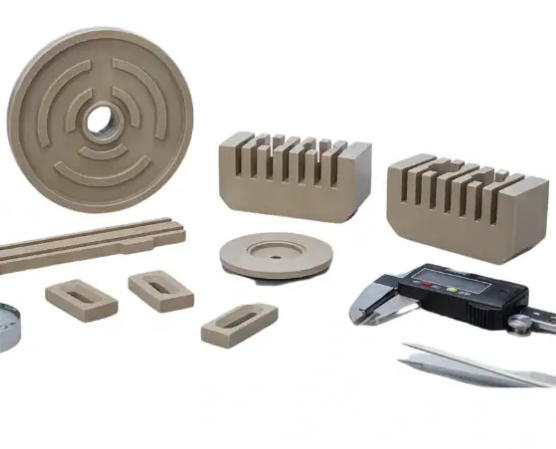
Advantages of Polyester PBT CNC Machining
Polyester PBT CNC Machining offers numerous benefits that make it a preferred choice for industries worldwide:
- High Strength-to-Weight Ratio: Polyester PBT parts have strength comparable to some metals but are much lighter (density 1.31–1.80 g/cm³ vs. 7.87 g/cm³ for steel), making them ideal for weight-sensitive applications like aerospace and automotive.
- Chemical Resistance: Polyester PBT resists oils, greases, and most solvents (except strong alkalis), suitable for parts used in harsh chemical environments (e.g., industrial pumps, chemical storage equipment).
- Thermal Stability: Most PBT grades maintain performance at temperatures up to 120°C (continuous use), with reinforced grades handling up to 150°C—perfect for under-hood automotive parts and high-temperature industrial equipment.
- Electrical Insulation: Polyester PBT has excellent dielectric properties, making it a top choice for electrical components like connectors and circuit board housings.
- Cost-Effective Production: CNC machining of PBT is faster than metal machining (lower cutting forces, less tool wear), and PBT raw materials are more affordable than metals like aluminum or stainless steel—reducing overall production costs.
- Design Flexibility: CNC machining allows for the creation of complex PBT part geometries (e.g., internal channels, thin walls) that are difficult to achieve with other processes like injection molding—great for custom prototypes and unique components.
Applications Industry for Polyester PBT CNC Machined Parts
Polyester PBT CNC Machined Parts are used across a wide range of industries due to their versatility and performance:
| Industry | Common Polyester PBT CNC Machined Parts | Key Requirements Addressed |
| Automotive | Sensor housings, under-hood brackets, electrical connectors | Thermal stability, lightweight, cost-effectiveness |
| Aerospace | Cable management parts, small structural components, electrical enclosures | High strength-to-weight ratio, tight tolerances, chemical resistance |
| Electronics | Circuit board housings, power supply components, connector bodies | Flame resistance, electrical insulation, dimensional accuracy |
| Medical | Device housings, surgical tool components, diagnostic equipment parts | Biocompatibility (specialty grades), smooth surfaces, chemical resistance |
| Industrial Equipment | Pump components, gear housings, conveyor parts | Wear resistance, durability, low maintenance |
| Consumer Goods | Toy components, kitchen tool parts, appliance housings | Aesthetics, impact resistance, affordability |
| Sporting Goods | Protective gear parts, equipment handles, small structural components | Lightweight, high strength, flexibility |
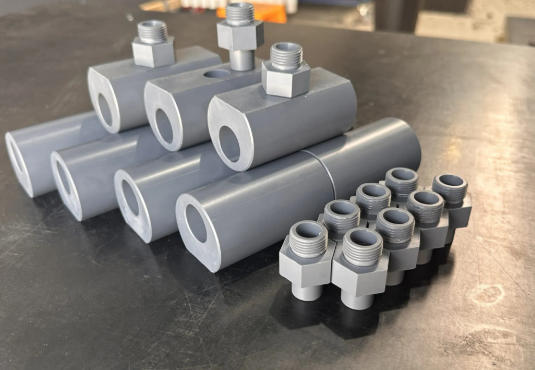
Case Studies: Success with Polyester PBT CNC Machining
Our Polyester PBT CNC Machining services have helped clients across industries overcome production challenges and achieve their goals. Here are three notable case studies:
Case Study 1: Automotive Electrical Connector for a Global OEM
- Challenge: A leading automotive manufacturer needed a flame-retardant, electrically insulating connector for under-hood use. The part required tight tolerances (±0.03mm) to fit with wiring harnesses and resistance to temperatures up to 130°C.
- Solution: We used Flame-Retardant PBT for its UL94 V-0 rating and thermal stability, paired with CNC milling to create the connector’s intricate pin slots. A protective coating was added to enhance chemical resistance.
- Result: 12,000 units delivered in 4 weeks, with 0 defects. The connector passed 1,000+ hours of thermal cycling tests, maintained electrical insulation, and fit perfectly with the client’s wiring systems—reducing assembly time by 15%.
Case Study 2: Medical Device Housing for a Healthcare Firm
- Challenge: A medical device company needed a biocompatible housing for a portable blood glucose monitor. The housing required a smooth surface (Ra < 0.4μm) for hygiene and precision tolerances (±0.02mm) to fit internal electronics.
- Solution: We selected Specialty PBT Grade (biocompatible variant) and used CNC turning + polishing to achieve the desired surface finish. Heat treatment was performed to reduce internal stress and prevent warping.
- Result: Prototypes delivered in 48 hours, with full production (5,000 units) completed in 2 weeks. The housing met FDA biocompatibility standards, passed rigorous cleaning tests, and provided a secure fit for the monitor’s electronics.