
Our Engineering Plastics CNC Machining Services
At Yigu Technology, we specialize in Engineering Plastics CNC Machining that delivers unrivaled precision and performance.
Whether you need custom prototypes, high-volume production runs, or parts made from top-tier high-performance polymers like PEEK or POM, our advanced equipment and technical expertise ensure every component meets tight tolerances and industry standards. From aerospace to medical devices, we turn your design ideas into durable, dimensionally stable parts—on time, every time.
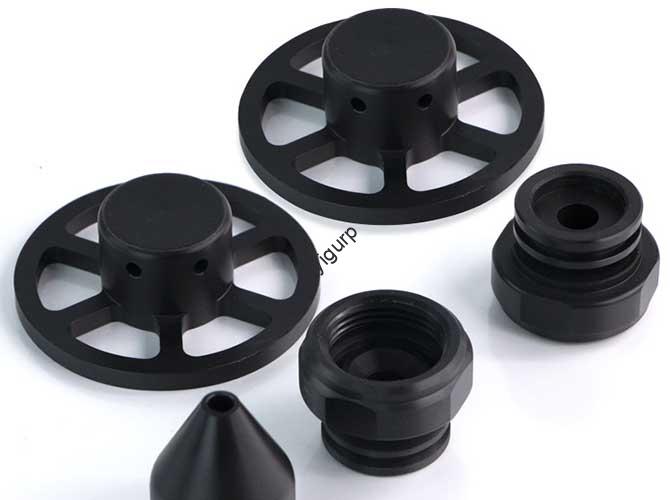
Our Capabilities: Delivering Precision at Every Stage
At Yigu Technology, our Engineering Plastics CNC Machining capabilities are built to meet the diverse needs of modern industries. We don’t just make parts—we provide end-to-end solutions that prioritize quality, speed, and customization.
| Capability | Details |
| Precision Machining | Achieve tolerances as tight as ±0.005 mm for critical components. |
| Custom Parts | Design and produce parts tailored to your unique specifications (size, shape, material). |
| High Volume Production | Scale from 100 to 100,000+ parts/month with consistent quality. |
| Prototyping | Fast turnaround (3–5 days) for functional prototypes to test fit and performance. |
| Quality Control | In-line inspections using coordinate measuring machines (CMMs) and visual checks. |
| Technical Expertise | Team of engineers with 10+ years of experience in polymer machining. |
| Advanced Equipment | 5-axis CNC mills, CNC turning centers, and automated drilling machines. |
| ISO Certification | ISO 9001:2015 certified, ensuring compliance with global quality standards. |
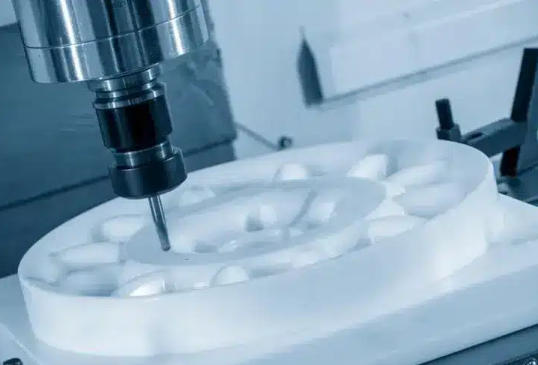
Process: How We Machin Engineering Plastics
Our Engineering Plastics CNC Machining process follows a structured, repeatable workflow to ensure accuracy and efficiency. Each step is optimized to handle the unique properties of engineering plastics (e.g., reducing heat buildup to prevent warping).
- Design & Programming: Our team reviews your CAD files and writes CNC programs that specify tool paths, cutting speeds, and feed rates. We select tools (e.g., carbide end mills) compatible with your chosen material.
- Setup: The engineering plastic stock (sheet, rod, or tube) is secured in a fixture on the CNC machine. We calibrate the machine to ensure zero-point accuracy.
- Machining: The machine executes the program, performing processes like CNC turning (for cylindrical parts), CNC milling (for complex shapes), drilling (for holes), and cutting (for trimming). We monitor temperatures to avoid material degradation.
- Post-Machining: Parts undergo deburring to remove sharp edges. If needed, we move to surface treatment (see Section 5).
- Inspection: Every part is checked for dimensional accuracy using CMMs or calipers. We compare results to your tolerance requirements and discard any non-compliant parts.
| Process Step | Time Range (Per Part) | Quality Check Point |
| Programming | 1–4 hours (one-time) | Program simulation to test tool paths |
| Machining (Small Part) | 5–30 minutes | In-process temperature monitoring |
| Inspection | 2–5 minutes | Dimensional measurement vs. CAD model |
Materials: Choosing the Right Engineering Plastic
Selecting the right engineering plastic is critical to part performance. We offer a range of materials, each with unique properties to match your application.
| Material | Key Properties | Typical Applications |
| Polyether Ether Ketone (PEEK) | High temp resistance (up to 250°C), biocompatible, high strength | Medical implants, aerospace components |
| Polyoxymethylene (POM) | Low friction, excellent dimensional stability | Gear wheels, automotive interior parts |
| Polycarbonate (PC) | High impact resistance, transparency | Electrical enclosures, consumer goods |
| Polyamide (PA/Nylon) | Wear resistance, good tensile strength | Bearings, industrial fasteners |
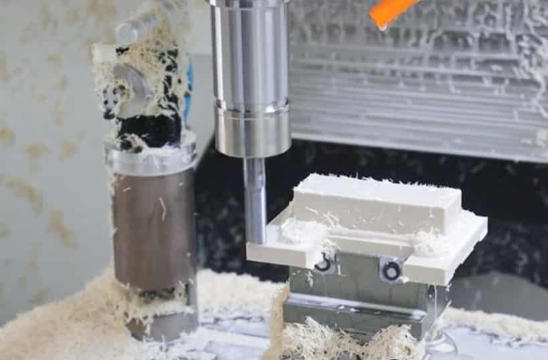
Our engineers help with material selection by analyzing your application’s needs:
- If your part will be exposed to high heat (e.g., engine components), we recommend PEEK.
- For parts needing flexibility and chemical resistance (e.g., fluid handling), PA is ideal.
For transparent or impact-prone parts (e.g., safety shields), PC is the top choice.
Advantages: Why Choose Engineering Plastics CNC Machining?
Compared to other manufacturing methods (e.g., injection molding) or materials (e.g., metal), Engineering Plastics CNC Machining offers unique benefits:
- High Strength: Engineering plastics like PEEK rival metals in tensile strength while being lighter (20–50% less weight than aluminum).
- High Temperature Resistance: Many polymers withstand continuous use temperatures above 100°C, making them suitable for harsh environments.
- Chemical Resistance: Unlike metals, engineering plastics won’t rust or corrode when exposed to oils, acids, or saltwater.
- Dimensional Stability: Minimal warping means parts maintain their shape even under temperature or pressure changes.
- Low Coefficient of Thermal Expansion: Reduces the risk of part failure due to thermal stress (critical for electronics).
- Cost-Effective: No expensive molds (unlike injection molding), making it ideal for small batches or prototypes.
- Fast Turnaround: CNC machining eliminates long setup times, so you get parts in days—not weeks.
Applications Industry: Where Our Parts Make an Impact
Our Engineering Plastics CNC Machining parts are used across industries that demand reliability, precision, and durability.
| Industry | Common Applications | Materials Used Most Often |
| Aerospace | Interior components, sensor housings, fasteners | PEEK, PA |
| Automotive | Gear wheels, electrical connectors, fluid reservoirs | POM, PA |
| Electronics | Circuit board supports, insulation parts, enclosures | PC, POM |
| Medical Devices | Surgical tools, implant components, device housings | PEEK (biocompatible), PC |
| Industrial Equipment | Bearings, conveyor parts, pump components | PA, POM |
| Consumer Goods | High-end appliance parts, durable handles | PC, PA |
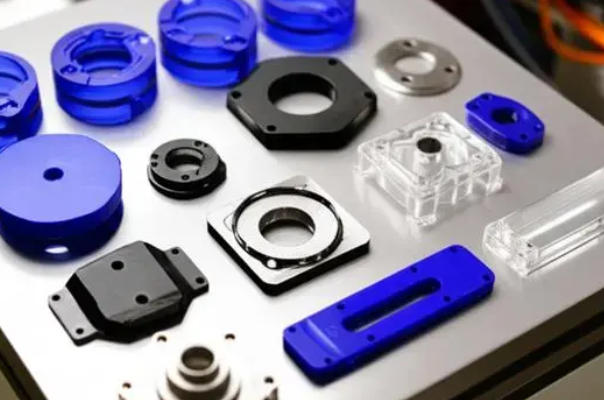
Case Studies: Real-World Success Stories
Case Study 1: Aerospace Sensor Housing
Client: A leading aerospace manufacturer.
Challenge: Need a lightweight, heat-resistant housing for a temperature sensor (continuous use at 180°C).
Solution: We used PEEK (high heat resistance) and CNC milling to create a custom housing with ±0.02 mm tolerances. We added a PTFE coating for extra chemical resistance.
Result: 1,000+ parts delivered on time; zero defects. The client reported a 15% weight reduction compared to their previous metal housing.
Case Study 2: Medical Surgical Tool
Client: A medical device company.
Challenge: Develop a biocompatible, precision-machined handle for a laparoscopic tool.
Solution: We selected PEEK (biocompatible, easy to sterilize) and used CNC turning to shape the handle. Polishing ensured a smooth, non-porous surface.
Result: Prototypes approved in 4 days; high-volume production (5,000/month) met all FDA standards. The client praised the tool’s ergonomic design and durability.