
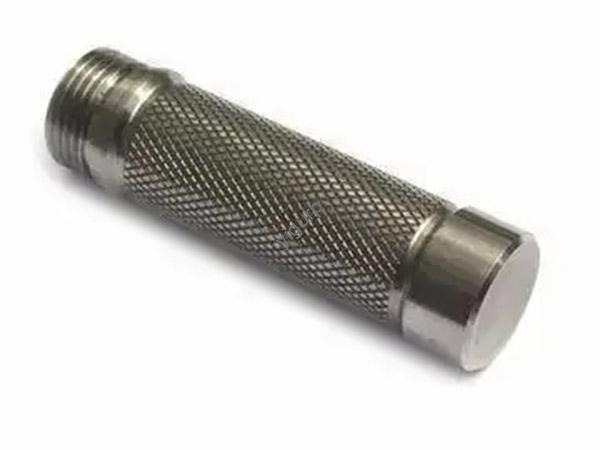
If you are designing a transmission gear that must withstand thousands of shifts, a drive shaft that handles constant torque, or a bearing race that endures continuous friction, you face a classic engineering challenge. The part needs a hard, wear-resistant surface to resist abrasion. But it also needs a tough, ductile core to absorb impacts and prevent cracking. AISI 8620 alloy steel is engineered to meet this exact need. It is a low-carbon nickel-chromium-molybdenum (Ni-Cr-Mo) steel designed specifically for carburizing—a heat treatment that hardens only the surface. The result is a component with a hard outer layer (up to 60 HRC) and a tough, impact-resistant core. This guide explains its properties, applications, and why it is the go-to choice for gears, shafts, and other critical components.
Introduction
For engineers working in automotive, aerospace, and industrial machinery, material selection often involves a compromise. A steel that is hard enough to resist wear is often brittle and prone to cracking. A steel that is tough enough to absorb impact is often too soft to resist abrasion. AISI 8620 was developed to eliminate this compromise. Its chemistry is carefully balanced: low carbon (0.18-0.23%) ensures the core remains ductile after heat treatment. The addition of nickel (0.40-0.70%) boosts core toughness, especially at low temperatures. Chromium (0.40-0.60%) enhances the hardenability of the surface layer. Molybdenum (0.15-0.25%) increases the overall fatigue limit. The magic happens during carburizing, where carbon is diffused into the surface. This creates a gradient—a hard, wear-resistant case over a tough, shock-absorbing core.
What Defines AISI 8620?
The performance of AISI 8620 is defined by its chemistry and the critical carburizing process that unlocks its unique dual-property structure.
What Is in the Alloy?
The chemical composition of AISI 8620 is optimized for carburizing. Every element has a specific role in achieving the final “hard case, tough core” structure.
| Element | Content Range (%) | Its Role in the Steel |
|---|---|---|
| Carbon (C) | 0.18 – 0.23 | The baseline carbon. Low enough to keep the core ductile and tough. |
| Nickel (Ni) | 0.40 – 0.70 | The toughness enhancer. It maintains impact strength, even at low temperatures, in the core. |
| Chromium (Cr) | 0.40 – 0.60 | Boosts the hardenability of the surface layer during carburizing and quenching. |
| Molybdenum (Mo) | 0.15 – 0.25 | Raises the fatigue limit and prevents the carburized surface from becoming brittle. |
| Manganese (Mn) | 0.70 – 0.90 | Refines the grain structure and contributes to overall strength. |
| Silicon (Si) | 0.15 – 0.35 | A deoxidizer that ensures a clean steel for consistent carburizing. |
What Are Its Key Mechanical Properties?
The true value of AISI 8620 is revealed after carburizing. The table below compares its properties in the annealed (soft) state and after carburizing, showing the dramatic transformation.
| Property | Non-Carburized (Annealed) | Carburized | Why This Matters |
|---|---|---|---|
| Surface Hardness | 18 – 22 HRC | 58 – 60 HRC | The hard surface resists wear, pitting, and galling. |
| Core Hardness | 18 – 22 HRC | 30 – 35 HRC | The core remains tough enough to absorb shock and impact. |
| Tensile Strength | 600 MPa | 1,100 MPa | The carburized case significantly increases the overall strength of the part. |
| Yield Strength | 350 MPa | 800 MPa | The part resists permanent deformation under load. |
| Elongation | 28 – 32% | 12 – 15% | The core retains good ductility, allowing the part to flex under stress without cracking. |
| Fatigue Limit | 300 MPa | 650 MPa | The combination of a hard case and a tough core dramatically increases the number of stress cycles the part can withstand. |
A German car manufacturer demonstrated this value in a real-world application. They were using AISI 1045 carbon steel for their transmission gears. These gears were failing due to tooth wear and cracking from shift shock. They switched to carburized AISI 8620 gears. The result was a 200,000 km lifespan—double that of the 1045 gears. The carburized surface (59 HRC) prevented tooth pitting, while the tough core (32 HRC) absorbed the impact of gear shifts. This led to a 40% reduction in warranty claims.
Where Is AISI 8620 Used?
AISI 8620 is the standard material for components that must resist wear while withstanding impact and cyclic stress.
Gears and Transmission Components
This is the primary market for AISI 8620. Its combination of surface hardness and core toughness is ideal for gear teeth.
- Automotive Transmission Gears: Used in manual and automatic transmissions, where gears must resist wear from meshing and absorb shock from shifting.
- Industrial Gearbox Gears: For heavy machinery, where gears face constant load and occasional overloads.
- Helicopter Rotor Gears: In aerospace, where reliability and impact resistance are critical for safety.
Shafts and Axles
Components that transmit torque and support loads benefit from the carburized surface and tough core.
- Drive Shafts and Camshafts: The hard surface resists wear at bearing journals and splines, while the tough core handles torsional stress.
- Axle Shafts: For vehicles, the carburized surface resists abrasion, and the core absorbs road shocks.
Bearings and Industrial Components
Where friction and impact are both concerns, AISI 8620 provides a reliable solution.
- Bearing Races and Bushings: The smooth, hard surface minimizes friction, while the tough core prevents cracking under heavy loads.
- Chain Links and Conveyor Rollers: A warehouse replaced standard steel conveyor shafts that failed every two years with AISI 8620 shafts, carburized and shot-peened. The new shafts lasted five years without wear or cracking, saving the facility $35,000 in replacement costs.
How Is AISI 8620 Manufactured?
The manufacturing process for AISI 8620 is focused on achieving the precise carburized case depth and properties required for each application.
Steelmaking and Forming
The steel is made in an electric arc furnace (EAF) or basic oxygen furnace (BOF) with precise control over the nickel, chromium, and molybdenum content. It is then hot-rolled or forged into the desired shape, such as bars for gears or blanks for shafts. In this annealed state (18-22 HRC), it is easily machined.
The Critical Carburizing Process
This is the heart of AISI 8620’s performance. The process creates the hard case and tough core.
- Gas Carburizing: The machined parts are heated to 880-920°C in a carbon-rich atmosphere (like methane). Carbon diffuses into the surface of the steel. The depth of the carburized layer is controlled by time—typically 4 hours for a 0.5 mm case, and 12 hours for a 1.2 mm case. For a typical automotive gear, a case depth of 0.8-1.0 mm is common.
- Quenching: After carburizing, the parts are cooled to 830-850°C and then rapidly quenched in oil. This transforms the high-carbon surface into hard martensite (58-60 HRC), while the low-carbon core transforms into a tougher structure (30-35 HRC).
- Tempering: The parts are then reheated to 180-220°C. This step reduces the brittleness of the martensitic case without lowering its hardness, ensuring the surface is tough enough to resist cracking under impact.
Finishing and Quality Control
After heat treatment, precision grinding is often used to achieve the final dimensions and surface finish. Shot peening is sometimes applied to further increase the fatigue limit. Quality control includes hardness testing to verify the surface and core hardness and microscopic analysis to confirm a uniform carburized layer.
How Does AISI 8620 Compare to Other Materials?
Choosing the right material for a carburized component often means comparing AISI 8620 to its alternatives.
| Material | Key Advantage | Key Disadvantage | Best Application |
|---|---|---|---|
| AISI 8620 | Excellent balance of case hardness and core toughness | Moderate cost | Gears, shafts, bearings in automotive and industrial applications |
| AISI 4140 | Lower cost; good strength | Higher carbon; not ideal for carburizing (core too hard) | Non-carburized, medium-wear parts like bolts and smaller shafts |
| AISI 1018 | Very low cost; good for simple carburizing | Poor core strength after carburizing; low wear resistance | Low-load, non-critical carburized parts |
| 52100 Bearing Steel | Superior wear resistance | Very poor toughness; brittle; not weldable | Precision bearings that do not experience impact loads |
| Stainless Steel 410 | Corrosion-resistant; carburizable | Much higher cost; lower overall toughness | Carburized parts in wet or mildly corrosive environments |
Analysis: For a critical component like an automotive transmission gear that requires both high wear resistance and high impact toughness, AISI 8620 is the superior choice. For a simple, low-load part like a small bracket, the cheaper AISI 1018 might be sufficient. For a bearing that only sees compressive stress, 52100 steel would be better.
Conclusion
AISI 8620 alloy steel represents a brilliant solution to a fundamental engineering problem. It allows designers to have both a hard, wear-resistant surface and a tough, impact-absorbing core in a single component. Its low-carbon, nickel-chromium-molybdenum chemistry is specifically designed for carburizing, a heat treatment that creates this unique dual-property structure. While it costs more than simple carbon steels, its ability to dramatically extend the life of critical components like gears and shafts—often by 3 to 4 times—makes it a highly cost-effective choice. For any application where components face both abrasion and impact, AISI 8620 is a proven, reliable, and essential material.
FAQ
What is the typical carburized layer thickness for AISI 8620?
The typical case depth ranges from 0.5 mm to 1.2 mm. The depth is controlled by the time spent in the carburizing furnace (approximately 4 hours for 0.5 mm, 12 hours for 1.2 mm). For automotive gears, a case depth of 0.8-1.0 mm is common to balance wear resistance and the risk of surface cracking.
Can AISI 8620 be used without carburizing?
Yes, but it is not an efficient use of the material. In its annealed state, it has a tensile strength of only about 600 MPa, which is lower than many plain carbon steels. Without carburizing, its wear resistance is also poor. It is only used in this state for very low-load, non-critical parts like simple brackets.
Is AISI 8620 suitable for low-temperature applications?
Yes. The nickel content (0.40-0.70%) provides excellent core toughness even at low temperatures. It maintains good impact resistance down to -30°C. For applications in arctic conditions below -30°C, a grade with higher nickel content, such as AISI 8640, may be specified.
How does AISI 8620 compare to AISI 4140 for gears?
AISI 4140 is a through-hardening steel. It does not have the tough, ductile core of carburized AISI 8620. For gears that experience significant impact loads (like in automotive transmissions), AISI 8620 is superior because its tough core can absorb shock. For gears in a low-impact, high-load environment, a through-hardened AISI 4140 gear may be sufficient.
What is the best way to machine AISI 8620?
AISI 8620 is best machined in its annealed condition (18-22 HRC). In this state, it has excellent machinability and can be turned, milled, and drilled using high-speed steel (HSS) or carbide tools. After carburizing, the surface is too hard for traditional machining and must be finished by grinding.
Discuss Your Projects with Yigu Rapid Prototyping
Designing components that require both wear resistance and impact toughness is a complex challenge. At Yigu Rapid Prototyping, we have extensive experience with AISI 8620 and other carburizing steels. Whether you need custom-cut gears, precision shafts, or guidance on heat treatment and case depth, our team can help. Contact us to discuss your next project.