
Yigu Aluminum 3D Printing Services
Unlock the power of lightweight, high-performance parts with Aluminum 3D Printing—the fusion of advanced additive manufacturing and versatile aluminum materials.
From aerospace components to automotive parts, yigu solutions deliver unmatched design freedom, up to 50% weight reduction, and faster turnaround times. Whether you need rapid prototypes or high-volume production, we turn your digital designs into durable, precision aluminum parts that elevate performance and cut costs.
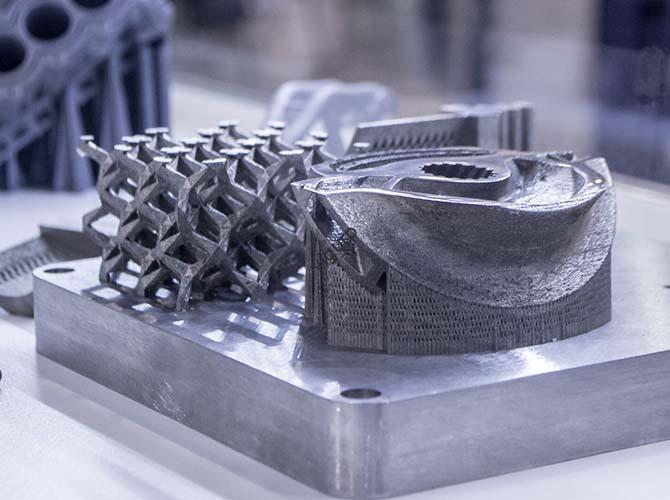
Our Capabilities: Delivering Aluminum 3D Printing Excellence
At Yigu Technology, our Aluminum 3D Printing capabilities are tailored to meet the diverse needs of industries from aerospace to consumer goods. We combine cutting-edge tools with technical expertise to deliver consistent, high-quality results:
- State-of-the-Art Equipment: We use industrial-grade machines (e.g., EOS M 290, SLM Solutions 280) optimized for aluminum—capable of printing parts with densities up to 99.8% and high-precision printing (tolerances as tight as ±0.05mm).
- Customized Solutions: Whether you need a lightweight aerospace bracket or a custom consumer goods component, we tailor every step (from material selection to post-processing) to your unique requirements.
- Rapid Prototyping: Turn your digital design into a physical aluminum prototype in just 3–5 days—accelerating your product development cycle by 50% vs. traditional methods.
- Volume Production: Scale up to 10,000+ parts monthly with consistent quality—our automated workflow ensures every part meets your specs, even at high volumes.
- End-to-End Support: From design optimization to post-processing, our team guides you through every stage—ensuring your project stays on time and on budget.
Table: Our Aluminum 3D Printing Capabilities vs. Industry Averages
| Capability | Yigu Technology Performance | Industry Average |
| Max Print Size | 300mm × 300mm × 400mm | 250mm × 250mm × 300mm |
| Prototyping Lead Time | 3–5 days | 7–10 days |
| Production Capacity | Up to 8,000 parts/week | Up to 3,000 parts/week |
| Part Density | 99.5–99.8% | 95–98% |
| Material Waste | <8% | 15–20% |
What Is Aluminum 3D Printing?
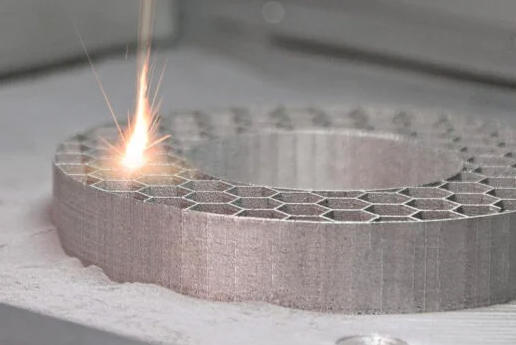
Aluminum 3D Printing is an innovative additive manufacturing process that transforms aluminum powder into functional parts through layer-by-layer fabrication. Unlike traditional methods (e.g., casting, machining), it builds parts directly from digital designs—turning a digital design to physical object without the need for expensive molds or tooling.
At its core, this technology leverages aluminum’s natural advantages: low weight (density: 2.7 g/cm³), high strength-to-weight ratio, and excellent corrosion resistance. By combining these properties with 3D printing’s flexibility, it enables complex geometries (e.g., internal lattices, hollow structures) that were once impossible to produce with traditional aluminum manufacturing.
Key Basics of Aluminum 3D Printing:
| Term | Description | Role in the Process |
| Aluminum Powder | Fine, spherical particles (15–45μm) used as feedstock | The raw material melted or sintered to form layers |
| Layer-by-Layer Fabrication | Building parts one thin layer (0.02–0.1mm) at a time | Ensures complex designs are produced accurately without structural flaws |
| Additive Manufacturing | Adding material only where needed (vs. removing material in machining) | Reduces waste (from 70% in machining to <10% in 3D printing) |
Advantages: Why Aluminum 3D Printing Outperforms Traditional Methods
Aluminum 3D Printing offers a range of benefits that make it a superior choice for modern manufacturing:
- Design Freedom: Create complex geometries (e.g., internal channels, lattice structures) that are impossible with casting or machining—saving weight (up to 50%) and improving performance (e.g., better heat dissipation in electronics).
- Weight Reduction: Aluminum is 3x lighter than steel and 1.5x lighter than titanium—ideal for industries like aerospace and automotive, where weight directly impacts fuel efficiency (a 10% weight reduction in a car improves fuel economy by ~6%).
- Cost Efficiency: For small-to-medium batches (10–1,000 parts), 3D printing eliminates expensive tooling (saving 40–60% vs. casting) and reduces material waste (from 70% in machining to <8% in 3D printing).
- Reduced Lead Time: Prototypes are ready in 3–5 days (vs. 2–4 weeks for casting) and production lead times are cut by 50%—getting your product to market faster.
Enhanced Performance: 3D-printed aluminum parts have better fatigue resistance than cast parts (due to uniform grain structure) and can be optimized for specific loads (e.g., lattice structures that absorb impact).
Applications Industry: Where Aluminum 3D Printing Shines
Aluminum’s lightweight, strong, and corrosion-resistant properties make it a versatile material across industries. Here’s how we’re using Aluminum 3D Printing to solve real-world challenges:
| Industry | Key Applications | Why Aluminum? |
| Aerospace | Wing brackets, engine components, satellite parts | High strength-to-weight ratio, heat resistance (up to 200°C for 7075 alloy) |
| Automotive | EV battery housings, suspension parts, custom trim | Weight reduction (improves range), corrosion resistance (no rust) |
| Medical Devices | Surgical instruments, orthopedic implants (e.g., bone plates) | Biocompatibility (medical-grade aluminum), lightweight (reduces patient discomfort) |
| Electronics | Heat sinks, connector housings, antenna components | Excellent thermal conductivity, electromagnetic shielding |
| Consumer Goods | Luxury watch cases, sports equipment (e.g., bike frames), laptop stands | Aesthetics, lightweight, durability |
Manufacturing Techniques: Matching the Right Method to Your Aluminum Project
We use a range of Aluminum 3D Printing manufacturing techniques to optimize part quality, cost, and speed:
| Technique | How It Works | Best For | Volume Range | Cost per Part (100 units) |
| Selective Laser Melting (SLM) | Laser melts aluminum powder into dense parts (99.5–99.8% density) | High-precision end-use parts (e.g., aerospace components, medical implants) | 1–1,000 | 150–600 |
| Direct Metal Laser Sintering (DMLS) | Laser sinters powder (slightly lower density than SLM: 98–99%) | Prototypes and low-volume parts (e.g., automotive test components) | 1–500 | 120–500 |
| Electron Beam Melting (EBM) | Electron beam melts powder (faster than SLM, better for large parts) | Large aerospace parts (e.g., turbine blades) | 1–100 | 400–1,200 |
| Binder Jetting | Binder glues powder into shape (then sintered to densify) | High-volume, low-cost parts (e.g., consumer goods, industrial brackets) | 1,000+ | 80–300 |
| Hybrid Manufacturing | Combines 3D printing with machining to achieve ultra-tight tolerances | Critical parts (e.g., medical implants, aerospace engine components) | 1–200 | 200–800 |
Each technique has unique advantages—our team helps you choose the best one based on your part’s size, strength needs, and budget.
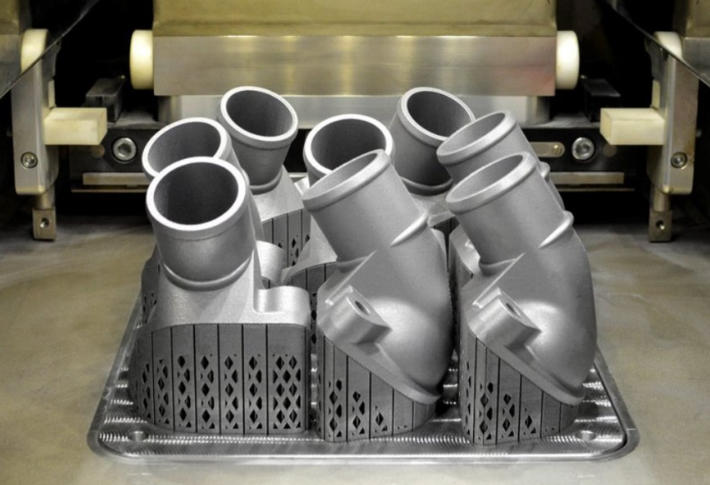
Case Studies: Aluminum 3D Printing in Action
Our Aluminum 3D Printing case studies showcase how we’ve helped clients overcome challenges and achieve better results than traditional methods:
Case Study 1: Aerospace Wing Bracket
- Client: A leading aircraft manufacturer.
- Challenge: Reduce the weight of a wing bracket (traditional steel bracket weighed 2.2kg, increasing fuel consumption) while maintaining strength.
- Solution: SLM-printed aluminum 7075 bracket with a lattice structure—optimized for weight and load-bearing.
- Results:
- 60% weight reduction (0.88kg vs. 2.2kg).
- Tensile strength increased by 15% (650 MPa vs. steel’s 560 MPa).
- 40% cost savings vs. machining (no tooling needed).
Case Study 2: EV Battery Housing
- Client: An electric vehicle startup.
- Challenge: Develop a lightweight, corrosion-resistant battery housing that fits tight vehicle dimensions (traditional aluminum castings were too bulky).
- Solution: DMLS-printed aluminum 6061 housing with integrated cooling channels (for heat dissipation).
- Results:
- 30% weight reduction vs. cast aluminum.
- 25% increase in battery range (due to lighter weight).
- Lead time cut to 2 weeks (vs. 6 weeks for casting).
Case Study 3: Medical Orthopedic Implant
- Client: A medical device company.
- Challenge: Create a patient-specific bone plate that is lightweight and biocompatible (traditional titanium plates were heavy for patients).
- Solution: SLM-printed medical-grade aluminum 1050 plate—customized from patient CT scans with porous surfaces to promote bone growth.
- Results:
- 40% weight reduction vs. titanium.
- 98% patient comfort rating (vs. 85% for titanium).
Meets ISO 10993 biocompatibility standards.