
Our Punching Sheet Metal Services
Looking for top-tier Punching Sheet Metal Services? Our team delivers exceptional precision punching for both large volume production and small batch production, using advanced equipment to meet tight tolerances.
From material selection (aluminum, steel, stainless steel, and more) to professional surface treatments (coating, anodizing, powder coating), we provide cost-effective, durable solutions tailored to automotive, aerospace, electronics, and medical industries. Choose us for reliable quality, quick turnaround, and expert customer service—your trusted partner in sheet metal fabrication.
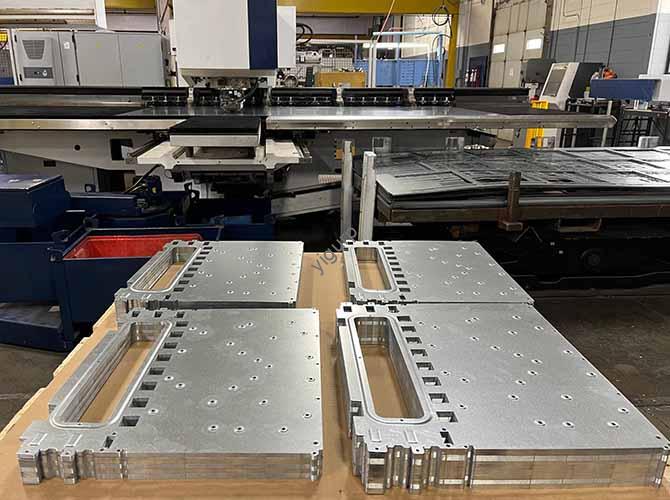
Our Punching Sheet Metal Capabilities
We pride ourselves on a diverse range of capabilities to meet every client’s needs, from standard to custom projects. Our sheet metal punching services combine advanced technology with skilled craftsmanship to ensure high-quality outcomes.
| Capability Category | Key Features | Ideal For |
| Precision Punching | Achieves tight tolerances (±0.005 inches) and high dimensional accuracy | Aerospace, medical, and electronics parts |
| Custom Punching | Creates custom shapes (slots, tabs, notches) based on client designs | Unique industrial equipment or consumer products |
| Large Volume Production | High-speed punching machines (up to 1,200 strokes per minute) | Automotive components, construction parts |
| Small Batch Production | Flexible setup with quick changeover between tools | Prototypes, niche medical devices |
| High-Quality Punching | Post-punch inspection (using CNC measuring tools) to ensure defect-free parts | Critical applications (e.g., medical implants) |
| Advanced Equipment | CNC punch presses (3-axis and 5-axis models) for complex, multi-angle punching | Intricate aerospace or electronics parts |
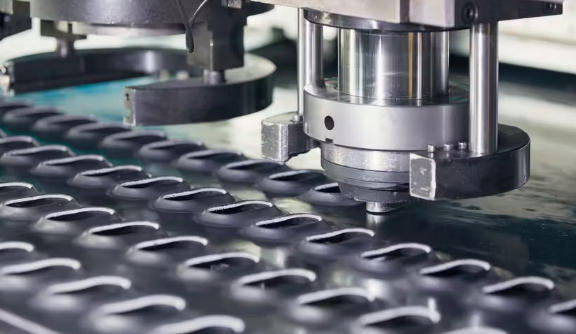
The Sheet Metal Punching Process
The punching process for sheet metal is a structured sequence that ensures consistency and precision. While it may vary slightly based on part design, it typically follows these steps:
- Material Preparation: The selected sheet metal (e.g., aluminum, steel) is cut to size using shearing or laser cutting tools to match the project’s requirements.
- Tooling Setup: A custom die (matching the desired shape) and punch are installed in a press brake or CNC punch press. Tooling selection depends on material thickness (0.005–0.25 inches) and type.
- Positioning: The metal sheet is secured on the machine’s worktable and aligned using guides or CNC controls to ensure accurate hole placement.
- Punching Action: The press applies force (5–500 tons, depending on material) to push the punch through the metal and into the die, creating the desired shape.
- Deburring: Sharp edges from punching are smoothed to prevent injury and improve part functionality.
- Inspection: Parts are checked for dimensional accuracy using calipers or coordinate measuring machines (CMMs) as part of quality control.
Related processes often paired with punching include stamping process (for larger, more complex shapes) and die cutting (for thinner metals or non-metallic materials).
Materials Used in Sheet Metal Punching
Choosing the right material is critical for punch part performance, cost, and durability. We work with a wide range of metals, each with unique properties suited to specific applications.
| Material | Thickness Range (Inches) | Key Properties | Common Applications |
| Aluminum | 0.010–0.125 | Lightweight, corrosion-resistant, easy to punch | Automotive parts, consumer electronics, signage |
| Steel | 0.005–0.250 | Strong, durable, cost-effective | Construction brackets, industrial equipment |
| Stainless Steel | 0.015–0.200 | Corrosion-resistant, high strength | Medical devices, food processing equipment |
| Copper | 0.008–0.100 | Excellent conductivity, malleable | Electrical components, heat exchangers |
| Brass | 0.010–0.150 | Aesthetic appeal, corrosion-resistant | Decorative parts, plumbing fixtures |
| Titanium | 0.020–0.180 | Ultra-strong, heat-resistant | Aerospace components, medical implants |
| Alloy (e.g., alloy steel) | 0.012–0.220 | Customizable strength/weight ratios | High-performance automotive or aerospace parts |
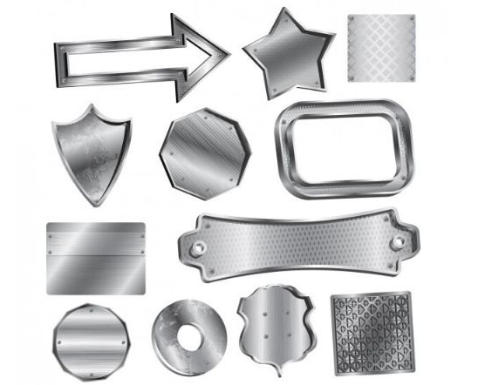
Our material selection team helps clients pick the best option based on budget, environmental conditions (e.g., moisture, heat), and functional needs (e.g., conductivity, strength).
Surface Treatment for Punched Sheet Metal Parts
After punching, surface treatment enhances the appearance, durability, and performance of sheet metal parts. We offer a full range of finishing options to protect against corrosion, improve aesthetics, or meet industry-specific standards.
| Surface Treatment Method | Purpose | Advantages | Ideal Materials |
| Coating | Basic protection against scratches and minor corrosion | Low cost, quick application | Steel, aluminum |
| Painting | Aesthetic enhancement + corrosion resistance | Wide color options, customizable finish | All metals (steel, aluminum, brass) |
| Plating (e.g., zinc, chrome) | Enhanced corrosion resistance and conductivity | Long-lasting, improves surface hardness | Steel (zinc plating), copper (chrome plating) |
| Anodizing | Creates a hard, porous oxide layer (only for aluminum) | scratch-resistant, decorative (dyed colors) | Aluminum |
| Powder Coating | Thick, durable finish that resists chipping and fading | Eco-friendly (no solvents), uniform coverage | Steel, aluminum, stainless steel |
| Passivation | Removes free iron from stainless steel to boost corrosion resistance | Improves long-term durability in harsh environments | Stainless steel |
| Surface Finishing (e.g., polishing) | Improves smoothness and shine | Enhances aesthetic appeal, reduces friction | Brass, copper, stainless steel |
Tolerances and Precision in Sheet Metal Punching
Tolerances measure how much a part’s actual dimensions can deviate from the design specifications—and they’re a top priority in our sheet metal punching services. We maintain strict control over tolerances to ensure parts fit and function as intended.
Our precision standards:
- Standard Tolerances: ±0.010 inches for most materials (e.g., steel, aluminum) and hole sizes (0.125–1.0 inch).
- Tight Tolerances: ±0.005 inches for high-precision applications (e.g., aerospace, medical parts), achieved with CNC punch presses and advanced tooling.
- Dimensional Accuracy: Guaranteed through real-time monitoring during punching and post-process inspection (using CMMs and laser scanners).
Quality control steps to maintain precision:
- Pre-production testing of tooling to ensure it matches design specs.
- In-process checks every 50–100 parts (for large volume runs) to catch deviations early.
Final inspection of 100% of small-batch parts or 5–10% of large-batch parts (per ISO 9001 standards).
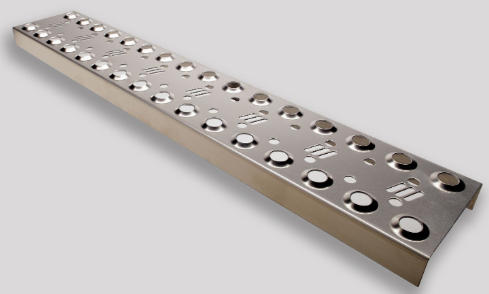
Applications of Sheet Metal Punching by Industry
Sheet metal punching is used across diverse sectors, thanks to its versatility, precision, and cost-effectiveness. Below are common applications in key industries:
| Industry | Typical Punched Parts | Material Preferences |
| Automotive | Brackets, sensor housings, vent holes in dashboards, exhaust components | Steel, aluminum, alloy steel |
| Aerospace | Fuel line brackets, avionics enclosures, lightweight structural parts | Titanium, aluminum, stainless steel |
| Electronics | Circuit board mounts, heat sink vents, connector housings | Aluminum, copper, stainless steel |
| Construction | HVAC duct holes, wall brackets, roofing fastener holes | Steel, galvanized steel |
| Medical | Surgical instrument components, implant housings, diagnostic device parts | Stainless steel, titanium |
| Industrial Equipment | Gear covers, control panel holes, conveyor system brackets | Steel, stainless steel |
| Consumer Products | Appliance parts (e.g., washing machine drum holes), furniture brackets | Aluminum, steel, brass |
Case Studies: Success Stories in Sheet Metal Punching
Our sheet metal punching services have helped clients solve complex challenges and achieve their production goals. Below are two brief case studies highlighting our expertise:
Case Study 1: Automotive Component Mass Production
- Client: A leading automotive manufacturer needing 50,000 aluminum brackets monthly.
- Challenge: Tight deadline (2-week lead time) and strict tolerance (±0.008 inches) for bracket holes.
- Solution: Used high-speed CNC punch presses (1,000 strokes/min) with custom dies. Implemented in-process inspection to ensure accuracy.
- Result: Delivered 50,000 defect-free brackets in 10 days. Reduced client’s per-unit cost by 15% compared to their previous supplier.
Case Study 2: Medical Device Prototyping
- Client: A startup developing a new medical monitor, needing 100 stainless steel enclosure prototypes.
- Challenge: Custom hole patterns for wiring and ventilation, plus passivation (to meet medical standards).
- Solution: Used flexible CNC punch presses for quick tooling changeover. Added passivation after punching to ensure corrosion resistance.
- Result: Delivered 100 prototypes in 5 days. Prototypes passed all medical testing, allowing the client to move to full production.