
Our PETG 3D Printing Services
Looking for reliable, high-quality 3D printing solutions that blend durability, aesthetics, and cost-effectiveness? PETG 3D Printing is your answer. At Yigu Technology, we leverage the unique properties of PETG material to deliver custom prototypes, industrial parts, and consumer goods across industries like automotive, aerospace, and medical.
Whether you need rapid prototyping or precise, long-lasting components, Yigu expert team optimizes every step—from material selection to post-processing—to meet your exact needs. Choose Yigu Technology for PETG printing that combines innovation, quality, and exceptional customer support.
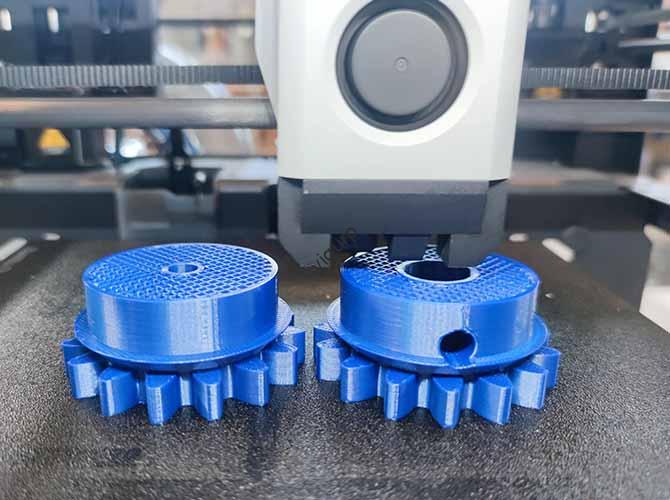
What is PETG 3D Printing?
PETG 3D Printing refers to the process of creating three-dimensional objects using PETG (Polyethylene Terephthalate Glycol) filament, a thermoplastic known for its balance of strength, flexibility, and ease of use. Unlike rigid PLA or high-temperature ABS, PETG offers a sweet spot for both hobbyists and industrial users.
To understand PETG better, let’s break down its core components and how it compares to other common filaments:
| Aspect | Details |
| PETG Material Composition | A copolymer of PET (Polyethylene Terephthalate) with added glycol, which improves flexibility and reduces brittleness. It is also recyclable and food-safe (when properly processed). |
| 3D Printing Process Overview | PETG is typically used in Fused Deposition Modeling (FDM)—a process where the filament is heated, extruded through a nozzle, and layered to build objects. It requires moderate print temperatures (220–250°C) and a heated bed (70–90°C) for adhesion. |
| PETG vs. Other Filaments | See the table below for a direct comparison. |
PETG vs. Common 3D Printing Filaments
| Filament Type | Strength | Flexibility | Print Temperature | Bed Temperature | Cost (per kg) | Best For |
| PETG | High | Moderate | 220–250°C | 70–90°C | 20–35 | Prototypes, functional parts, consumer goods |
| PLA | Low-Med | Low | 190–220°C | 40–60°C | 15–25 | Hobby projects, decorative items |
| ABS | High | Low | 230–260°C | 90–110°C | 25–40 | Industrial parts (but prone to warping) |
| Nylon | Very High | High | 240–280°C | 100–120°C | 30–50 | High-stress parts (but absorbs moisture) |
Our PETG 3D Printing Capabilities
At Yigu Technology, we specialize in turning your ideas into high-quality physical objects with PETG 3D Printing. Our services are tailored to meet the needs of businesses, engineers, and designers—whether you need a single prototype or large-scale production runs.
Key Capabilities We Offer
- Custom PETG Printing Services: We create personalized parts based on your 3D models, with support for complex geometries (e.g., overhangs, internal structures) and custom colors.
- High-Quality PETG Printing: Our printers use precision nozzles (0.2–0.8mm) and advanced calibration tools to ensure smooth surfaces, consistent layer adhesion, and minimal defects.
- Rapid Prototyping with PETG: Need a prototype fast? We offer turnaround times as short as 24–48 hours for small to medium-sized parts, helping you speed up product development.
- Industrial PETG Printing Solutions: For industrial clients, we produce durable parts for machinery, automotive components, and aerospace applications—all with strict quality control checks.
Our Capability Metrics
| Service | Turnaround Time | Max Part Size | Layer Resolution | Material Options |
| Custom Printing | 3–7 days | 600x600x600mm | 0.1–0.3mm | Clear, colored, reinforced |
| Rapid Prototyping | 24–48 hours | 300x300x300mm | 0.2–0.3mm | Standard PETG |
| Industrial Solutions | 5–14 days | 1000x1000x1000mm | 0.15–0.25mm | High-strength PETG blends |
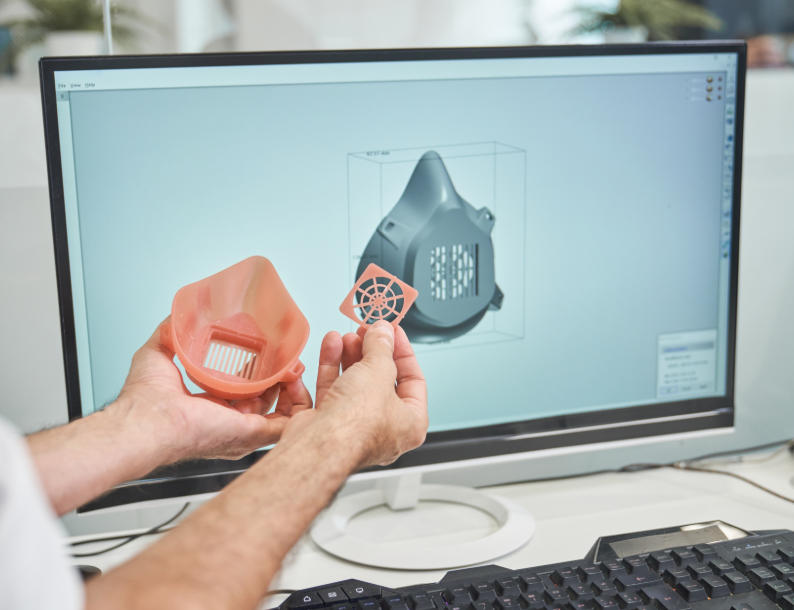
PETG Materials: Types, Properties, and Selection
PETG filament comes in various types, each designed for specific applications. Understanding their properties helps you choose the right material for your project.
PETG Filament Types
- Standard PETG: The most common type, ideal for prototypes, consumer goods, and general-purpose parts.
- Reinforced PETG: Blended with materials like carbon fiber or glass fiber for increased strength and stiffness (great for industrial parts).
- Colored PETG: Available in solid, transparent, or fluorescent colors—perfect for decorative or brand-specific parts.
- Food-Safe PETG: Meets FDA standards, used for kitchenware, containers, or medical devices (requires proper post-processing).
PETG Material Properties
PETG’s unique properties make it a top choice for many applications:
- Durability and Strength: Resistant to impact, scratches, and chemicals (e.g., oils, detergents).
- Flexibility: Can bend without breaking (unlike PLA), making it suitable for parts that need slight give (e.g., hinges).
- Aesthetics: Offers a smooth, semi-transparent finish that can be polished to look professional.
- Ease of Use: Less prone to warping than ABS and easier to print than nylon—great for beginners and experts alike.
PETG Printing Tolerances: Precision
Tolerances refer to the acceptable variation in a part’s dimensions. For PETG printing, achieving tight tolerances is crucial for parts that need to fit together (e.g., gears, enclosures) or meet industry standards (e.g., medical devices).
At Yigu Technology, we offer three tolerance levels to match your needs:
| Tolerance Level | Dimensional Accuracy | Best For |
| Standard | ±0.3mm | Decorative parts, non-functional prototypes. |
| Precision | ±0.15mm | Functional parts, small components (e.g., brackets). |
| High Precision | ±0.05mm | Critical parts (e.g., medical devices, aerospace components) that require strict fits. |
PETG 3D Printing Applications by Industry
PETG’s unique properties make it suitable for a wide range of industries. Below are some of the most common uses:
1. Automotive PETG Applications
- Prototypes: Engine components, dashboard parts, and door handles (for testing fit and function).
- Functional Parts: Air ducts, cable organizers, and interior trim (PETG’s heat resistance handles engine bay temperatures).
- Custom Accessories: Cup holders, phone mounts, and seat covers (colored PETG matches car interiors).
2. Aerospace PETG Uses
- Lightweight Parts: Brackets, connectors, and paneling (PETG is lighter than metal but still strong).
- Prototypes: Satellite components and drone parts (fast turnaround for testing).
- Insulation: PETG’s chemical resistance makes it suitable for parts exposed to fuels or coolants.
3. Medical PETG Solutions
- Medical Devices: Syringe holders, surgical tool handles, and diagnostic equipment parts (food-safe PETG meets medical standards).
- Patient-Specific Parts: Custom braces, splints, and prosthetic components (3D printing allows for personalized fits).
- Lab Equipment: Test tube racks, petri dish holders, and sample containers (resistant to chemicals used in labs).
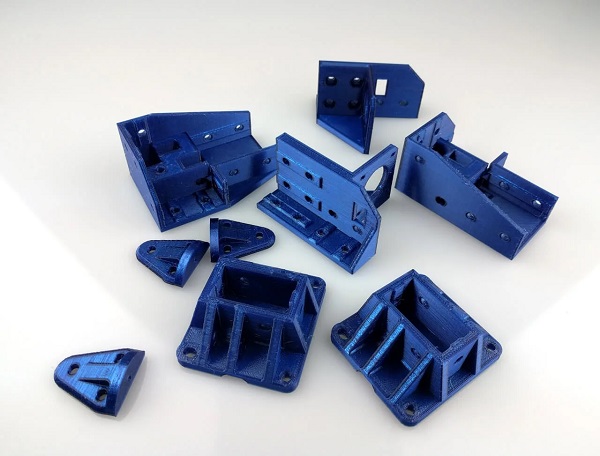
4. Consumer Goods with PETG
- Home Decor: Vases, candle holders, and wall art (smooth finish and custom colors).
- Kitchenware: Food storage containers, utensil holders, and cup lids (food-safe and easy to clean).
- Electronics: Phone cases, laptop stands, and cable organizers (durable and impact-resistant).
Real-World PETG 3D Printing Case Studies
Seeing how PETG is used in real projects can help you visualize its potential for your own needs. Below are three industry-specific case studies from Yigu Technology:
Case Study 1: Automotive Prototype for a Leading Car Manufacturer
- Challenge: A major automotive company needed a prototype of a new dashboard vent to test airflow and fit. The part required complex curves and had to withstand temperatures up to 80°C (common in car interiors).
- Solution: We used reinforced PETG (blended with glass fiber) for added heat resistance. Our team optimized print parameters (240°C nozzle temperature, 80°C bed temperature) to ensure smooth layer adhesion and minimal warping.
- Result: The prototype was delivered in 48 hours (via rapid prototyping with PETG), met all airflow and fit requirements, and withstood 100+ heat cycles without deformation. The client used the prototype to make design adjustments, saving 6 weeks of development time compared to traditional prototyping.
Case Study 2: Medical Device Component for a Healthcare Startup
- Challenge: A startup developing a portable blood glucose monitor needed a custom case that was food-safe (for potential contact with skin), durable, and lightweight.
- Solution: We chose food-safe PETG filament and used FDM printing to create the case. Post-processing included sanding (800–1200 grit) for a smooth surface and a clear, food-safe coat for extra protection.
- Result: The case passed FDA food-safety tests, weighed 30% less than a plastic injection-molded alternative, and cost 50% less for a small run of 50 units. The startup used the cases for user testing and received positive feedback on comfort and durability.
Case Study 3: Consumer Goods – Custom Water Bottle Lids
- Challenge: A small business wanted to launch a line of custom water bottles with interchangeable lids (straw, flip-top, and screw-on). They needed lids that were leak-proof, BPA-free, and available in 5 colors.
- Solution: We used colored PETG filament and printed the lids with a tight tolerance (±0.1mm) to ensure a leak-proof seal. We also optimized the print speed (50 mm/s) to balance production time and quality.
Result: We delivered 500 lids in 10 days, with zero defects. The lids were leak-proof, dishwasher-safe, and the custom colors matched the client’s brand. The business reported a 20% increase in sales due to the unique, interchangeable design.