
Our Conductive Plastics CNC Machining Services
At Yigu Technology, we specialize in Conductive Plastics CNC Machining—delivering high-precision, custom solutions that blend the unique properties of Electrically Conductive Polymers with advanced CNC Milling and CNC Turning processes.
Whether you need tight-tolerance components for aerospace or chemical-resistant parts for medical devices, our expertise ensures cost-effective production without compromising on quality or design flexibility.
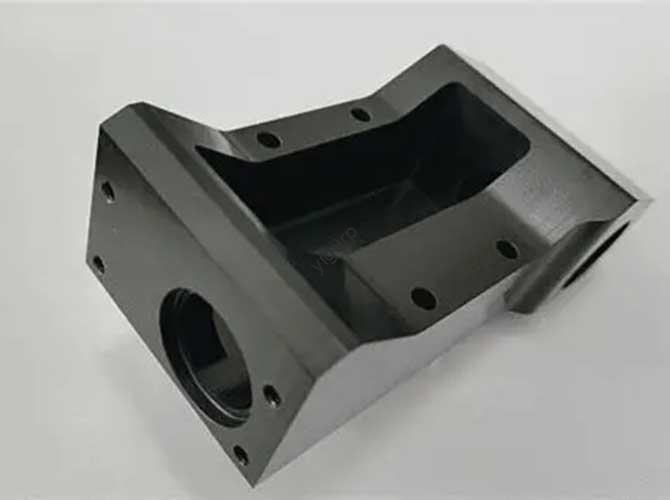
Our Capabilities: Precision You Can Trust
At Yigu Technology, our Conductive Plastics CNC Machining capabilities are designed to meet the most demanding industry needs. We leverage state-of-the-art equipment and skilled teams to deliver:
| Capability | Key Features | Typical Use Cases |
| Precision Machining | Achieves tolerances as tight as ±0.005mm; ideal for micro-components | Electronic connectors, medical sensors |
| Custom Machined Parts | Tailored designs for unique requirements; supports low-to-high volume runs | Aerospace brackets, industrial tooling |
| High-Tolerance Machining | Adheres to strict Tolerance Standards (e.g., ISO 8015) for critical parts | Automotive safety components |
| Complex Part Production | Handles intricate geometries (e.g., internal channels, thin walls) | Consumer electronics enclosures |
| Rapid Prototyping | Fast turnaround (3–5 days) for prototype testing | New product development in medical devices |
| Production Machining | Scalable for mass production (10,000+ units/month) with consistent quality | Industrial equipment components |
| Quality Assurance | In-line inspections using CMM (Coordinate Measuring Machines) | All industries requiring compliance |
What Is Conductive Plastics CNC Machining?
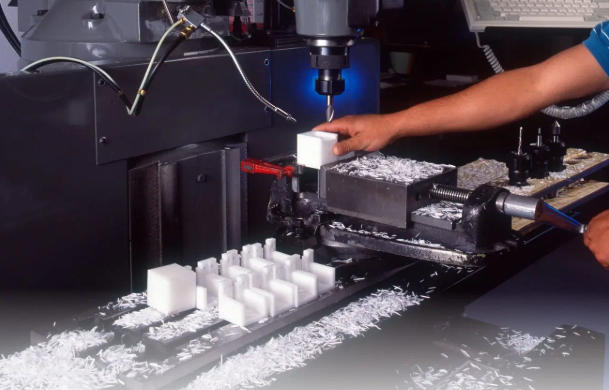
Conductive Plastics CNC Machining combines two critical technologies: CNC Machining (computer numerical control) and Conductive Plastics (polymers infused with conductive materials like carbon or metal). Unlike traditional non-conductive plastics, Electrically Conductive Polymers offer electrical conductivity while retaining the lightweight, durable benefits of Engineering Plastics.
The core goal of this process is to shape conductive plastic materials into precise parts using automated Machining Process—such as milling, turning, or drilling—while preserving key Material Properties (e.g., conductivity, chemical resistance). This makes it ideal for applications where both electrical performance and dimensional accuracy are non-negotiable.
Process: Step-by-Step Guide to CNC Machining Conductive Plastics
The Conductive Plastics CNC Machining process involves 6 key stages, each optimized to preserve material integrity and ensure precision:
- Design & Programming: Convert 3D models into CNC code, selecting optimal Tool Selection (e.g., carbide endmills for abrasive conductive fillers).
- Machine Setup: Calibrate CNC machines (mills/turning centers) and secure the conductive plastic material to avoid vibration.
- CNC Milling: Remove material using rotating cutters to create complex shapes (e.g., slots, pockets) in flat or irregular parts.
- CNC Turning: Rotate the material while a cutting tool shapes it into cylindrical parts (e.g., rods, bushings).
- Drilling Operations: Create precise holes using high-speed drills; adjust speed to prevent melting (common in plastics).
- Grinding Processes: Refine surfaces to meet tight finish requirements (e.g., Ra 0.8μm for medical parts) and ensure dimensional accuracy.
Note: Each step includes quality checks using Measurement Techniques like laser scanning to avoid defects.
Materials: Choosing the Right Conductive Plastic
Selecting the correct material is critical for Conductive Plastics CNC Machining success. Below is a comparison of our most popular options:
| Material Type | Conductivity (S/m) | Key Benefits | Ideal Applications |
| Carbon-Filled Polymers | 1–100 | Low cost, good chemical resistance | Industrial equipment housings |
| Metal-Filled Polymers | 100–10,000 | High conductivity, EMI shielding | Electronic enclosures, automotive sensors |
| Graphite-Loaded Polymers | 0.1–10 | High thermal stability (-200°C to 300°C) | Aerospace components, high-temperature tools |
| Antistatic Polymers | 10⁻⁹–10⁻⁶ | Prevents static buildup, FDA-compliant | Medical devices, consumer goods |
| Specialty Conductive Grades | Customizable | Tailored for unique needs (e.g., biocompatibility) | Implantable medical parts |
| Recycled Conductive Materials | 0.5–50 | Sustainable, cost-effective | Non-critical industrial parts |
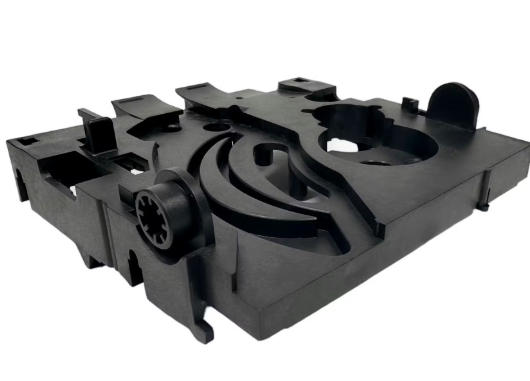
Advantages: Why Choose Conductive Plastics CNC Machining?
Compared to traditional metal machining or non-conductive plastic processes, Conductive Plastics CNC Machining offers unmatched benefits:
- High Strength-to-Weight Ratio: Conductive plastics are 50–70% lighter than metals (e.g., aluminum) while maintaining similar strength—ideal for aerospace and automotive applications.
- Chemical Resistance: Materials like PEEK-based conductive polymers resist acids, oils, and solvents, outperforming metals in harsh environments.
- Thermal Stability: Many conductive plastics (e.g., graphite-loaded PPS) withstand extreme temperatures (-200°C to 300°C) without deforming.
- Electrical Conductivity: Eliminates the need for secondary conductive coatings, reducing production time and cost.
- Dimensional Stability: Low thermal expansion (0.00001–0.00005 mm/mm°C) ensures parts retain shape in temperature fluctuations.
- Cost-Effective Production: Faster machining speeds and lower material costs (vs. metals) reduce total part cost by 20–40%.
- Design Flexibility: CNC machining supports complex geometries (e.g., undercuts, thin walls) that are impossible with injection molding.
Applications Industry: Where Conductive Plastics Shine
Our Conductive Plastics CNC Machining solutions serve a wide range of industries, addressing unique challenges in each:
| Industry | Key Applications | Material Preference |
| Automotive | Sensor housings, EMI shielding, battery components | Metal-filled polymers (high conductivity) |
| Aerospace | Avionics enclosures, antenna parts | Graphite-loaded polymers (thermal stability) |
| Electronics | Connectors, LED heat sinks, circuit board supports | Carbon-filled or specialty grades |
| Medical | Surgical tools, diagnostic sensors, implantable parts | Antistatic or biocompatible grades |
| Industrial Equipment | Control panels, motor components, conveyor parts | Recycled or carbon-filled polymers |
| Consumer Goods | Smartwatch casings, headphone parts | Polished antistatic polymers |
| Sporting Goods | Golf club grips, fitness tracker housings | Lightweight carbon-filled polymers |
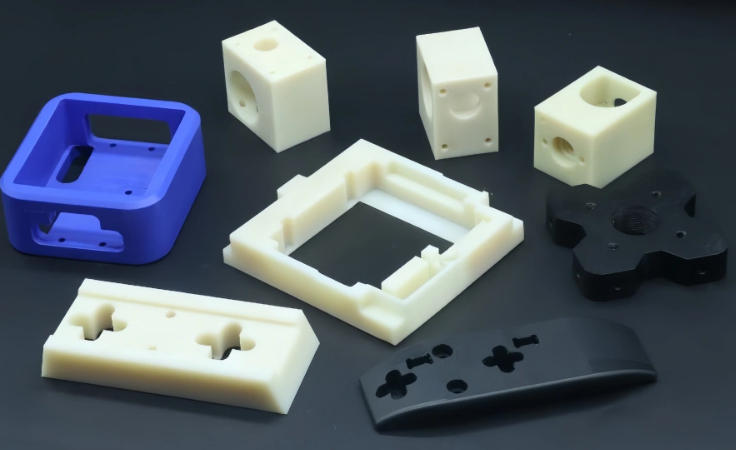
Case Studies: Real-World Success Stories
Case Study 1: Automotive Sensor Component
- Challenge: A leading automaker needed a conductive plastic sensor housing that could withstand engine heat (150°C) and resist oil.
- Solution: We used graphite-loaded PPS and CNC Milling to create a part with ±0.02mm tolerance. Surface treatment included plating (nickel) for enhanced conductivity.
- Result: 30% weight reduction vs. metal, 25% cost savings, and zero defects in 10,000+ units produced.
Case Study 2: Medical Diagnostic Device
- Challenge: A medical client required an antistatic, FDA-compliant part for a blood glucose monitor.
- Solution: We machined antistatic PEEK using high-tolerance CNC Turning (±0.005mm) and added polishing for a smooth, easy-to-clean surface.
- Result: The part met ISO 10993 biocompatibility standards and reduced production time by 40% vs. injection molding.