
Yigu ASA 3D Printing Services
Elevate your projects with ASA 3D Printing—the ultimate blend of robust Acrylic Styrene Acrylonitrile (ASA) polymer and cutting-edge 3D Printing technology.
From weather-resistant outdoor components to high-strength consumer goods, yigu solutions deliver unmatched UV resistance, durability, and customization. Whether you need custom automotive parts or long-lasting construction components, we turn your designs into reliable, high-performance reality.
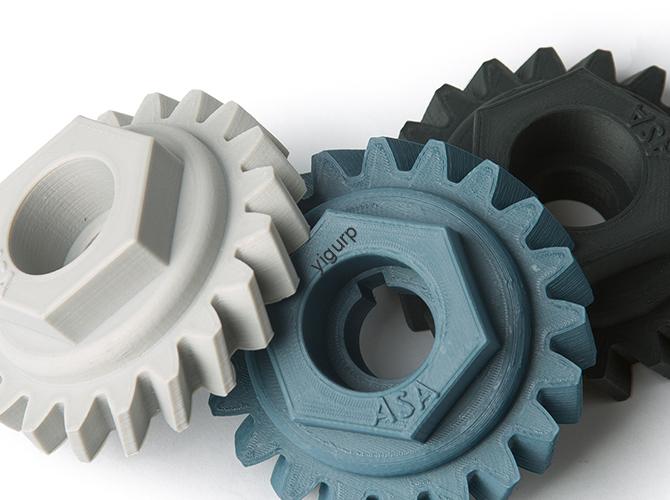
What Is ASA 3D Printing?
ASA 3D Printing is an advanced additive manufacturing process that uses ASA (Acrylic Styrene Acrylonitrile)—a tough, weather-resistant thermoplastic polymer—to build parts layer by layer. Unlike other polymers like ABS, ASA stands out for its exceptional ability to withstand harsh environmental conditions, making it a top choice for outdoor and high-demand applications.
At its core, ASA 3D Printing leverages the unique properties of the ASA polymer: a combination of acrylic (for UV resistance), styrene (for processability), and acrylonitrile (for chemical resistance and strength). This blend makes it ideal for replacing traditional materials in industries where durability and weather resilience are non-negotiable.
Key Traits of ASA Polymer:
| Trait | Description | Relevance to 3D Printing |
| UV Resistance | Retains color and strength after 2,000+ hours of UV exposure | Perfect for outdoor parts (e.g., construction fixtures, automotive exterior components) |
| Weather Resistance | Withstands temperature fluctuations (-40°C to 80°C) and moisture | Prevents warping or degradation in harsh climates |
| Mechanical Strength | Tensile strength of 40 MPa, impact resistance of 20 kJ/m² | Suitable for load-bearing parts (e.g., consumer goods handles, industrial brackets) |
Our Capabilities: Expertise That Delivers Results
At Yigu Technology, our ASA 3D Printing capabilities are tailored to meet the diverse needs of industries ranging from automotive to construction. We combine technical prowess with customer-centric solutions to bring your ideas to life:
- Custom ASA Solutions: We design and print parts to your exact specifications, whether you need complex geometries for electronics or large-format components for construction.
- Technical Expertise: Our team has years of experience working with ASA polymer, understanding its unique printing requirements (e.g., temperature control, bed adhesion) to avoid common issues like warping.
- End-to-End Services: From design consultation to post-processing, we handle every step—ensuring your ASA parts meet quality standards and functional needs.
- High-Volume Production: Beyond prototyping, we scale up to high-volume manufacturing for end-use parts (e.g., 10,000+ consumer goods components monthly).
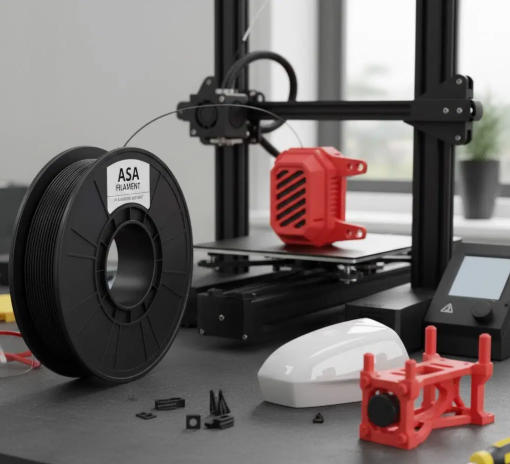
Table: Our ASA 3D Printing Capabilities vs. Industry Standards
| Capability | Yigu Technology Performance | Industry Average |
| Max Print Size | 800mm × 800mm × 600mm | 600mm × 600mm × 500mm |
| Prototyping Lead Time | 2–4 days | 5–7 days |
| Production Capacity | Up to 5,000 parts/week | Up to 2,000 parts/week |
| Material Waste | <4% | 8–12% |
Process: The Step-by-Step Workflow for ASA 3D Printing
Our ASA Printing process follows a structured, quality-focused workflow to ensure consistency and reliability—critical for parts that need to withstand harsh conditions:
- Design & Preparation: Our team reviews your CAD model to optimize it for ASA’s properties (e.g., adding minimal supports to reduce post-processing). We then convert the design to an STL file, compatible with industry-leading slicing software.
- Slicing & Parameter Setup: The slicer breaks the model into layers (0.1–0.3mm) and sets key parameters: ASA extrusion temperature (230–260°C), heated bed temperature (90–110°C), and print speed (30–60mm/s) to ensure proper layer adhesion.
- Layering & Printing: Using Fused Deposition Modeling (FDM)—the most common technique for ASA—the printer extrudes molten ASA filament layer by layer, building the part with precision.
- Cooling & Removal: After printing, the part cools slowly on the heated bed to minimize warping. We then carefully remove it, avoiding damage to delicate features.
- Post-Processing: We trim excess material, remove supports, and perform surface treatment (e.g., sanding, coating) to enhance the part’s appearance and performance.
Quality Inspection: Every ASA part undergoes dimensional measurement and visual checks to ensure it meets your tolerance levels and quality requirements.
Advantages: Why ASA 3D Printing Stands Out
ASA 3D Printing offers a host of benefits that make it a superior choice over other polymers and traditional manufacturing methods:
- Unmatched Durability: ASA parts last 3–5x longer than ABS or PLA parts in outdoor or high-wear applications—reducing replacement costs and maintenance.
- UV & Weather Resistance: Unlike most polymers (e.g., ABS fades after 6 months outdoors), ASA retains color and strength for 5+ years in direct sunlight and harsh climates.
- Cost-Effective: For small-to-medium batches (10–1,000 parts), ASA 3D Printing costs 20–30% less than injection molding (no expensive tooling needed).
- Design Flexibility: 3D printing allows for complex geometries (e.g., internal channels, overhangs) that are impossible with traditional methods—ideal for innovative products in electronics and consumer goods.
Chemical Resistance: ASA resists oils, mild solvents, and cleaning agents—making it suitable for industrial parts (e.g., machine components) and consumer goods (e.g., kitchen tools).
Applications Industry: Where ASA 3D Printing Shines
ASA’s unique properties make it a versatile material across industries. Here’s how we’re using ASA 3D Printing to solve real-world challenges:
| Industry | Key Applications | Why ASA? |
| Automotive | Exterior trim (e.g., mirror housings), underhood components, interior panels | UV resistance, heat resistance, impact strength |
| Construction | Outdoor fixtures (e.g., light housings, sensor brackets), temporary structural parts | Weather resistance, durability, load-bearing capacity |
| Consumer Goods | Garden tools, outdoor furniture parts, kitchen appliances | UV stability, chemical resistance, aesthetic appeal |
| Electronics | Outdoor device enclosures (e.g., solar panel connectors), router housings | Weather resistance, electrical insulation |
| Marine | Small boat components (e.g., latch covers, instrument housings) | Moisture resistance, saltwater tolerance |
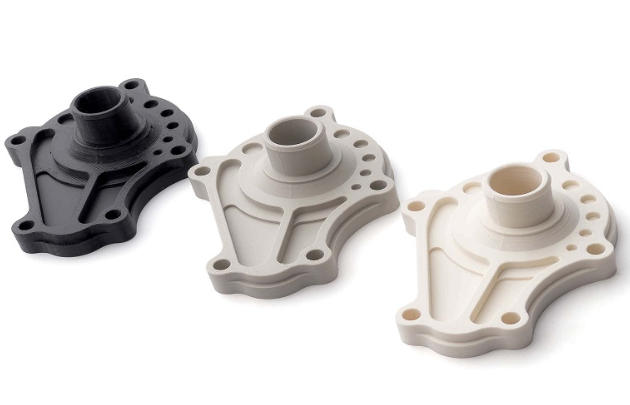
Case Studies: ASA 3D Printing in Action
Our ASA 3D Printing projects have helped clients overcome challenges and achieve better results than traditional manufacturing:
Case Study 1: Automotive Exterior Trim
- Client: A mid-sized automotive parts supplier.
- Challenge: Need a UV-stable, impact-resistant exterior mirror housing that matches the vehicle’s color—traditional ABS parts faded within 6 months.
- Solution: FDM-printed ASA housing with colored ASA filament and a clear UV coating.
- Results: 0% fading after 2 years of outdoor testing, 15% cost savings vs. injection molding, and 3-week lead time (vs. 8 weeks for tooling).
Case Study 2: Outdoor Electronics Enclosure
- Client: A solar energy company.
- Challenge: Develop a weather-resistant enclosure for solar panel connectors that withstands extreme temperatures (-40°C to 80°C) and moisture.
- Solution: SLS-printed ASA powder enclosure with a polyurethane coating for extra moisture protection.
- Results: 100% waterproof rating (IP67), no performance issues after 1 year in desert climates, and 25% weight reduction vs. aluminum enclosures.
Case Study 3: Consumer Goods Garden Tool Handle
- Client: A home improvement brand.
- Challenge: Create a durable, UV-stable handle for a garden rake that resists wear and retains grip.
- Solution: FDM-printed ASA handle with a textured surface (for grip) and a colored ASA filament.
Results: 95% customer satisfaction (vs. 70% for previous ABS handles), 3-year warranty compliance, and 20% faster production than injection molding.