
Our Micro Injection Molding Services
At Yigu Technology, we specialize in Micro Injection Molding—the gold standard for creating high-quality, tiny components that power today’s most advanced industries.
From medical micro-devices to MEMS, our blend of advanced micro-injection molding machines, custom micro-mold design, and strict quality assurance for micro-parts ensures your project meets ultra-tight micro-tolerances while staying cost-effective. Whether you need rapid prototyping or large-scale production, we turn your micro-scale ideas into reliable, high-performance reality.
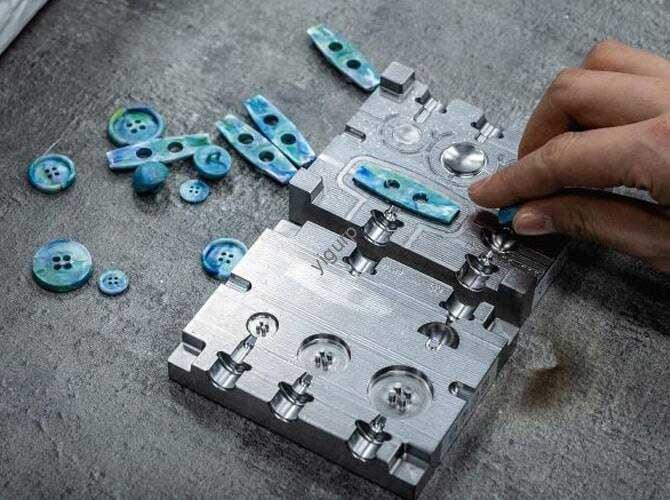
Our Capabilities: Powering Your Micro Projects
At Yigu Technology, we don’t just offer micro injection molding—we deliver end-to-end solutions tailored to your unique needs. Our capabilities are built on decades of micro-molding expertise and a commitment to innovation.
| Capability | Key Benefits | Applications |
| Custom micro-mold design | Tailored to your part’s unique geometry; reduces waste | Medical micro-devices, Micro-optics |
| High-precision tooling | Ensures consistent micro-tolerances (down to ±0.001mm) | Micro-electronics, MEMS |
| Advanced micro-injection molding machines | Automated control for repeatable quality | Micro-sensors, Micro-fluidics |
| Rapid micro-prototyping | Turns designs into physical parts in 5–7 days | New product development, Testing |
| Material selection for micro-molding | Access to 50+ high-performance polymers and bio-compatible options | Medical, Aerospace |
| Micro-assembly capabilities | Combines micro-parts into functional systems | Micro-robotics, Micro-actuators |
We also provide project engineering support and automated micro-production to scale your project from prototype to mass production—all with rigorous quality assurance for micro-parts.
What Is Micro Injection Molding?
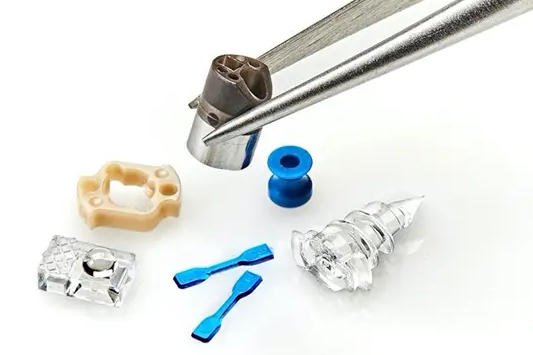
Micro Injection Molding is a specialized manufacturing process designed to produce extremely small, complex parts with exceptional accuracy. Unlike traditional injection molding, it focuses on micro-scale components—often measuring just a few millimeters or even microns—and requires techniques that prioritize high-precision manufacturing and ultra-fine molding.
This process leverages micro-technology to create parts with intricate micro-features, making it ideal for applications where size and precision are non-negotiable. Key terms that define micro injection molding include:
- Precision molding: Ensuring consistent, tight dimensional control.
- Miniature part production: Focusing on components too small for standard molding.
- High-resolution molding: Capturing fine details in micro-parts.
Nano-molding: Extending precision to the nanoscale for advanced applications.
Process: Step-by-Step Micro Injection Molding
The micro injection molding process is a carefully orchestrated sequence of steps, each optimized for precision and consistency. Unlike standard molding, it requires tighter control over material flow, temperature, and timing to avoid defects in tiny parts.
Key Stages of the Micro Injection Molding Process
- Micro-material preparation: Raw materials (e.g., micro-scale thermoplastics or micro-composites) are melted and filtered to remove impurities—critical for preventing clogs in micro-molds.
- Micro-mold setup: The custom mold (built with high-precision tooling) is clamped into the machine, and temperatures are calibrated for the chosen material.
- Precision injection: Molten material is injected into the mold at ultra-low pressures (5–50 MPa) to fill tiny cavities without damaging the mold or creating flash.
- Micro-cooling and solidification: The mold is cooled rapidly (using micro-channels) to set the part while preserving micro-features—this step typically takes 1–5 seconds.
- Micro-ejection: Gentle ejection systems (e.g., micro-pins) remove the part without bending or scratching it.
- Quality inspection at micro-level: Parts are checked using tools like optical microscopes or laser scanners to verify dimensional accuracy at micro-scale and adherence to micro-tolerances.
Throughout the process, process control at micro-scale and material flow optimization ensure consistent quality, while cycle time management keeps production efficient. Before full production, we conduct process validation for micro-parts to confirm the process meets your specifications.
Materials: Choosing the Right Micro-Grade Materials
The success of a micro injection molding project depends heavily on material selection. At Yigu Technology, we offer a wide range of materials engineered for micro-scale performance, each chosen for its ability to withstand the molding process and meet end-use requirements.
Common Materials for Micro Injection Molding
| Material Type | Key Properties | Typical Applications |
| Micro-scale thermoplastics (e.g., PEEK, PP) | High strength, chemical resistance | Micro-packaging, Micro-sensors |
| High-performance polymers (e.g., LCP, PPS) | Heat resistance (up to 300°C), low outgassing | Aerospace micro-components, LED micro-optics |
| Bio-compatible materials (e.g., PLA, medical-grade PE) | Non-toxic, sterilizable | Medical micro-devices (e.g., catheters, implants) |
| Conductive micro-materials (e.g., carbon-filled PA) | Electrical conductivity | Micro-electronics (e.g., micro-connectors) |
| UV-resistant micro-materials (e.g., UV-stabilized PC) | Resistance to sun damage | Outdoor micro-sensors |
| Micro-composites (e.g., glass fiber-reinforced PP) | Enhanced stiffness, lightweight | Micro-actuators, Micro-robotics |
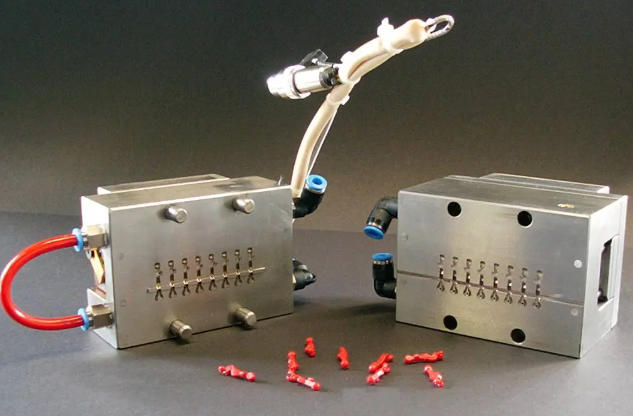
We also work with micro-powders, micro-beads, and micro-fibers to create custom materials for unique applications—just share your requirements, and our team will recommend the best option.
Tolerances: The Foundation of Micro Injection Molding
In micro injection molding, tolerances are everything. Even a tiny deviation (as small as 0.001mm) can render a part useless—especially in industries like medical or aerospace. At Yigu Technology, we prioritize ultra-precision alignment and strict quality control to meet the tightest tolerances.
Tolerance Capabilities and Measurement Techniques
| Tolerance Type | Our Capability | Measurement Technique |
| Micro-tolerances | ±0.001mm (for parts < 1mm) | Optical comparators, laser profilometers |
| Dimensional accuracy at micro-scale | ±0.005mm (for parts 1–10mm) | Coordinate Measuring Machines (CMMs) with micro-probes |
| Interlocking micro-tolerances | ±0.002mm (for parts that fit together) | Micro-vision systems |
We also manage tolerance stack-up at micro-scale—a critical step when assembling multiple micro-parts—to ensure the final product functions as intended. All our processes comply with ISO certification for micro-molding (ISO 9001 and ISO 13485 for medical parts), so you can trust that your parts meet global quality standards.
Advantages: Why Choose Micro Injection Molding?
Micro injection molding offers unique benefits that make it the best choice for producing miniature parts—especially compared to traditional manufacturing methods like machining or 3D printing.
Key Advantages of Micro Injection Molding
- High precision: Creates parts with consistent micro-tolerances that other methods can’t match—critical for MEMS and medical devices.
- Miniature parts: Produces components as small as 0.1mm (about the size of a human hair) with intricate micro-features.
- Reduced assembly: Integrates multiple features into one part, eliminating the need to assemble tiny components (saves time and reduces errors).
- Cost-effectiveness for high-precision parts: For large production runs (10,000+ parts), micro injection molding is 30–50% cheaper than machining (see table below).
- Design flexibility: Accommodates complex geometries (e.g., micro-channels, thin walls) that are impossible with other methods.
- Material versatility: Works with a wide range of high-performance polymers and custom materials—more options than 3D printing.
- Faster production of micro-parts: Cycle times as short as 5 seconds (for small parts) mean faster delivery than machining (which can take minutes per part).
| Production Method | Cost per Part (100,000 units) | Cycle Time | Precision |
| Micro Injection Molding | 0.50–2.00 | 5–30 seconds | ±0.001mm |
| Micro Machining | 2.00–5.00 | 1–5 minutes | ±0.002mm |
| 3D Printing (SLA) | 5.00–10.00 | 10–60 minutes | ±0.01mm |
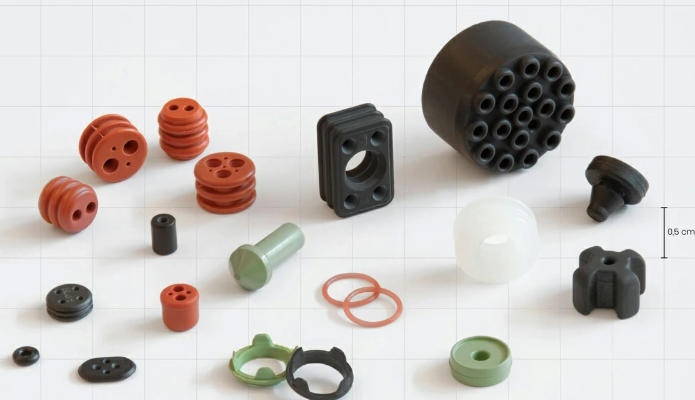
Other advantages include enhanced functionality (e.g., integrated sensors), improved durability (thanks to high-performance materials), and aesthetic appeal (via micro-surface finish techniques).
Applications Industry: Where Micro Injection Molding Shines
Micro injection molding is used across industries that rely on small, precise parts. Its versatility and precision make it indispensable for cutting-edge technologies.
Key Industries and Applications
| Industry | Applications | Key Requirements |
| Medical | Medical micro-devices (catheters, implants), micro-pumps, drug delivery systems | Bio-compatible materials, sterilizability, strict micro-tolerances |
| Electronics | Micro-electronics (micro-connectors, chip carriers), MEMS (micro-sensors, accelerometers) | Conductivity, heat resistance, miniaturization |
| Optics | Micro-optics (lenses, prisms for cameras or medical scopes) | Ultra-smooth surfaces, light transmission |
| Fluidics | Micro-fluidics (lab-on-a-chip devices, micro-valves) | Precise micro-channels, chemical resistance |
| Robotics | Micro-robotics (tiny motors, grippers) | Lightweight, high strength, interlocking micro-tolerances |
| Aerospace | Micro-sensors, micro-actuators for satellites | High-temperature resistance, low outgassing |
In each industry, our custom solutions address unique challenges—whether it’s creating a sterilizable medical part or a heat-resistant aerospace component.
Case Studies: Real-World Success with Micro Injection Molding
Our track record of successful micro-molding projects speaks to our expertise. Below are two examples of how we helped clients overcome challenges and achieve their goals.
Case Study 1: Medical Micro-Valve for Drug Delivery
- Challenge: A medical device company needed a 2mm micro-valve with a micro-tolerance of ±0.002mm. The valve had to be bio-compatible and withstand repeated sterilization.
- Solution: We used custom micro-mold design with a hot runner system to reduce waste. The material chosen was medical-grade PEEK (a high-performance polymer). We added a micro-coating of PTFE to improve valve sealing.
- Results:
- Production yield: 99.8%
- Cost savings: 40% compared to micro-machining
- Delivery time: 3 weeks (from design to production)
- Customer Testimonial: “Yigu’s precision and speed helped us launch our drug delivery device 6 months ahead of schedule. The micro-valves perform flawlessly in clinical trials.” — Medical Device Engineer, Global Pharma Company
Case Study 2: MEMS Sensor for Automotive Applications
- Challenge: An automotive client needed a 5mm MEMS sensor with conductive micro-materials for temperature monitoring. The sensor required UV-resistant coating and a cycle time under 10 seconds.
- Solution: We used a sequential valve gating system to fill the mold quickly and evenly. The material was carbon-filled PA (conductive), and we applied a UV coating for micro-parts post-production.
- Results:
- Cycle time: 8 seconds
- Temperature resistance: Up to 150°C
- Cost per part: $0.75 (for 500,000 units)
- Customer Testimonial: “The MEMS sensors from Yigu are more reliable than our previous supplier’s. Their process optimization helped us cut production costs by 25%.” — Automotive Component Manager