
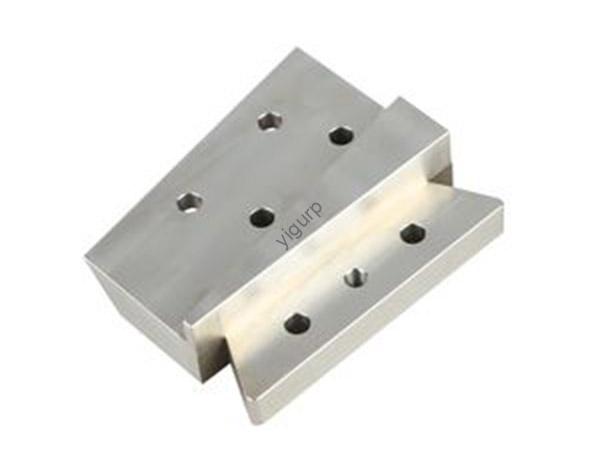
When your application involves aerospace components, high-performance automotive parts, or industrial tools that must withstand extreme stress, high temperatures, and heavy wear, MS 1700 martensitic steel is a material that delivers exceptional performance. As a high-carbon, high-chromium martensitic steel, it offers ultra-high tensile strength (1800–2200 MPa), exceptional hardness (60–65 HRC), and good corrosion resistance, making it the preferred choice for the most demanding applications. In this guide, I will walk you through its properties, applications, and how to work with it based on real manufacturing experience.
Introduction
MS 1700 is a premium martensitic stainless steel that achieves its properties through a carefully balanced chemistry and specialized heat treatment. Its composition includes 0.80–1.00% carbon for ultra-high hardness, 15.0–18.0% chromium for corrosion resistance and hardenability, and 1.50–2.00% molybdenum for high-temperature strength and fatigue resistance. Vanadium additions refine the grain structure, contributing to toughness. Unlike austenitic stainless steels that cannot be hardened by heat treatment, MS 1700 can be quenched and tempered to achieve hardness levels that rival tool steels while maintaining good corrosion resistance. Over the years at Yigu Rapid Prototyping, I have worked with aerospace engineers, automotive designers, and tool manufacturers who specify MS 1700 for components that must perform reliably under the most extreme conditions. Its combination of ultra-high strength, hardness, and corrosion resistance makes it a go-to material for mission-critical applications.
What Makes MS 1700 a High-Performance Martensitic Steel?
MS 1700 achieves its properties through its high carbon and chromium content, combined with molybdenum and vanadium additions. The high carbon forms hard carbides that provide exceptional wear resistance, while the chromium provides corrosion resistance and hardenability.
The Chemistry Behind the Performance
The chemical composition of MS 1700 is designed to achieve ultra-high strength and hardness while maintaining good corrosion resistance.
| Element | Content Range (%) | Why It Matters |
|---|---|---|
| Carbon (C) | 0.80 – 1.00 | Provides ultra-high hardness and forms carbides for wear resistance. |
| Chromium (Cr) | 15.0 – 18.0 | Provides corrosion resistance and hardenability. Forms chromium carbides. |
| Molybdenum (Mo) | 1.50 – 2.00 | Enhances high-temperature strength and fatigue resistance. |
| Vanadium (V) | 0.20 – 0.50 | Refines grain structure. Enhances toughness and wear resistance. |
| Tungsten (W) | 0.50 – 1.00 | Optional. Provides additional high-temperature strength. |
| Manganese (Mn) | ≤ 1.00 | Improves hardenability. |
| Silicon (Si) | ≤ 1.00 | Aids deoxidation. |
| Sulfur (S) / Phosphorus (P) | ≤ 0.030 | Kept low to maintain toughness. |
Key Insight: The combination of 0.80–1.00% carbon and 15.0–18.0% chromium allows MS 1700 to achieve hardness of 60–65 HRC while maintaining good corrosion resistance. The molybdenum addition provides high-temperature strength and fatigue resistance, making it suitable for applications such as turbine blades and high-performance engine components.
Mechanical Properties That Matter
MS 1700’s mechanical properties are achieved through a specialized heat treatment cycle involving high-temperature quenching and multiple tempering cycles.
| Property | Typical Value | Significance |
|---|---|---|
| Tensile Strength | 1800 – 2200 MPa | Ultra-high strength. Handles extreme loads in aerospace and automotive applications. |
| Yield Strength | 1600 – 1900 MPa | Resists permanent deformation under extreme pressure. |
| Hardness | 60 – 65 HRC | Exceptional hardness. Provides wear resistance for cutting tools and high-wear components. |
| Impact Toughness | 30 – 45 J | Good for a steel at this hardness level. Resists brittle failure. |
| Fatigue Strength | 700 – 800 MPa | Resists failure from repeated stress cycles. Critical for rotating components. |
| Elongation | 5 – 8% | Limited ductility is the trade-off for ultra-high strength. |
| Wear Resistance | Excellent | Outperforms most other steels in abrasive and sliding wear applications. |
Case Study: A jet engine manufacturer was struggling with turbine blade wear. Standard steel blades needed replacement every 2,000 flight hours. They switched to MS 1700 blades. Blade lifespan increased to 3,700 flight hours—an 85% improvement. The material’s high oxidation resistance up to 700°C and excellent wear resistance handled the engine’s heat and friction better. Maintenance costs were reduced by $450,000 per engine per year.
Where Does MS 1700 Deliver the Most Value?
This material is specified for applications that require ultra-high strength, exceptional hardness, and good corrosion resistance.
Aerospace Components
Aerospace applications demand materials that can handle extreme stress, high temperatures, and constant wear.
- Landing gear components: Parts that support aircraft during takeoff and landing. Ultra-high tensile strength (1800–2200 MPa) supports the weight of large planes.
- Turbine blades: Blades that operate at high temperatures. High melting point and oxidation resistance up to 700°C.
- High-stress structural parts: Wing brackets and fuselage components. High fatigue strength resists repeated stress from flight.
Case Study: A major aerospace firm reported that MS 1700 landing gear parts lasted 35% longer than those made from standard martensitic steel. The material’s ultra-high strength and toughness provided the reliability required for critical safety components.
High-Performance Automotive
High-performance and heavy-duty vehicles rely on MS 1700 for components that must be strong and durable.
- Engine components: Crankshafts and connecting rods for high-speed engines. High yield strength handles intense pressure.
- Transmission components: Gears and shafts for heavy-duty trucks. Excellent wear resistance reduces maintenance costs.
- Suspension systems: Components that keep parts from bending or breaking on rough roads.
Case Study: A luxury car maker found that MS 1700 crankshafts reduced engine wear by 25% compared to standard steel. The material’s ultra-high tensile strength and fatigue resistance handled the high RPMs of performance engines.
Tool Manufacturing
Tools need to stay sharp and tough—MS 1700 delivers on both.
- Cutting tools: Milling cutters and drills. Hardness of 60–65 HRC provides exceptional edge retention.
- Molds and dies: For plastic and metal forming. Wear resistance prevents scratches and damage, ensuring consistent part quality.
Case Study: A tool manufacturer reported that MS 1700 milling cutters lasted 50% longer than those made from H13 steel when cutting hard metals. The cutters could also handle 25% higher cutting speeds, increasing productivity. Even though MS 1700 cutters cost 15% more, the longer life and faster speed reduced per-part tool costs by 18%.
Industrial Machinery
Heavy machinery needs parts that can withstand constant use and heavy loads.
- Gears and shafts: High fatigue strength prevents breakage from repeated rotation.
- Bearings: Excellent wear resistance keeps bearings running smoothly in dusty or wet factories.
- High-load machine parts: Presses and lifts use ultra-high tensile strength to handle heavy weights safely.
Defense and Sports Equipment
Specialized applications benefit from MS 1700’s combination of strength and hardness.
- Armor-piercing projectiles: Hardness and strength allow penetration of armor.
- Military vehicle components: Tank tracks and armor plates.
- High-performance golf clubs: Strength allows thinner clubheads, improving swing speed.
- Bicycle frames: Balances strength and weight for durable mountain biking frames.
How Is MS 1700 Manufactured and Processed?
Producing MS 1700 requires precise control over chemistry, heat treatment, and fabrication to achieve its ultra-high strength and hardness.
Steelmaking
MS 1700 is typically produced in an electric arc furnace (EAF) for small batches or a basic oxygen furnace (BOF) for large-scale production. For critical applications, vacuum arc remelting (VAR) is used to remove impurities and improve fatigue life.
Heat Treatment
Heat treatment is critical for achieving MS 1700’s ultra-high strength and hardness.
- High-temperature quenching: Heat to 1,050–1,150°C, then rapidly cool in oil or water. This forms a hard martensite structure.
- Multiple tempering cycles: Reheat 2–3 times to 500–550°C. This reduces brittleness while maintaining high hardness.
- Cryogenic treatment (optional): Cool to -80 to -196°C to convert retained austenite to martensite, boosting hardness and wear resistance.
Forming and Fabrication
MS 1700 is typically formed in the annealed condition before heat treatment.
- Hot forging: Heat to 1,100–1,200°C, then hammer or press into shape. Used for complex parts such as landing gear components.
- Cold rolling: For thin sheets and bars with smooth surfaces.
- Machining: In the annealed condition, carbide tools are required. After heat treatment, grinding is used for final finishing.
Surface Treatment
Surface treatments enhance performance in specific environments.
- Nitriding: Adds a hard surface layer for additional wear resistance.
- Coating: TiN (titanium nitride) or DLC (diamond-like carbon) coatings reduce friction and extend tool life.
- Shot peening: Increases fatigue strength by up to 20% for high-stress components.
How Does MS 1700 Compare to Other Materials?
Understanding the trade-offs between MS 1700 and alternative materials helps in making an informed selection.
| Material | Tensile Strength (MPa) | Hardness (HRC) | Corrosion Resistance | Relative Cost | Best For |
|---|---|---|---|---|---|
| MS 1700 | 1800 – 2200 | 60 – 65 | Good | 100% | Ultra-high stress, wear-resistant applications |
| 440C Stainless | 1700 – 2000 | 58 – 62 | Very Good | 80% | Corrosion-resistant high-hardness applications |
| H13 Tool Steel | 1300 – 1600 | 48 – 52 | Fair | 60% | Hot work tooling |
| 316L Stainless | 550 – 650 | 20 – 25 | Excellent | 70% | Corrosive environments, low stress |
| 7075-T6 Aluminum | 570 | N/A | Good | 40% | Lightweight applications |
Key Insights:
- Compared to 440C stainless steel, MS 1700 offers higher strength (1800–2200 MPa vs. 1700–2000 MPa) with comparable hardness, though 440C has slightly better corrosion resistance. For applications requiring maximum strength, MS 1700 is the better choice.
- Compared to H13 tool steel, MS 1700 offers significantly higher hardness and better corrosion resistance, though H13 has better high-temperature performance for hot work applications.
- Compared to 316L stainless steel, MS 1700 offers 3–4 times higher strength at comparable cost, though 316L provides superior corrosion resistance for marine environments.
What About Corrosion Resistance?
MS 1700 has good corrosion resistance due to its 15.0–18.0% chromium content. It resists rust in dry and mildly humid environments and is suitable for aerospace, automotive, and industrial applications where exposure to moisture is limited. For marine environments or continuous saltwater exposure, austenitic stainless steels such as 316L are recommended.
Conclusion
MS 1700 martensitic steel is a premium material for the most demanding applications requiring ultra-high strength, exceptional hardness, and good corrosion resistance. Its high carbon and chromium content, combined with molybdenum and vanadium additions, provides tensile strength of 1800–2200 MPa and hardness of 60–65 HRC. For aerospace landing gear, high-performance engine components, cutting tools, and industrial machinery, MS 1700 delivers the performance required for mission-critical applications. When you need a material that combines ultra-high strength with hardness and corrosion resistance, MS 1700 is a proven, trusted choice.
FAQ About MS 1700 Martensitic Steel
Can MS 1700 be used in marine environments?
MS 1700 has good corrosion resistance due to its 15.0–18.0% chromium content, but it is not recommended for continuous saltwater immersion. For marine applications, austenitic stainless steels such as 316L or super austenitic grades provide superior corrosion resistance.
What heat treatment is required for MS 1700?
The standard cycle is: high-temperature quenching at 1,050–1,150°C, oil or water quench, followed by 2–3 tempering cycles at 500–550°C. Cryogenic treatment at -80 to -196°C is optional for maximum hardness and wear resistance.
Is MS 1700 difficult to machine?
Yes. In the hardened condition, MS 1700 is very difficult to machine. Most machining should be performed in the annealed condition. After heat treatment, grinding is used for final finishing. Carbide tools are required for any machining.
How does MS 1700 compare to 440C stainless steel?
MS 1700 offers higher tensile strength (1800–2200 MPa vs. 1700–2000 MPa) and comparable hardness (60–65 HRC vs. 58–62 HRC). 440C has slightly better corrosion resistance. Choose MS 1700 for applications requiring maximum strength; choose 440C for applications requiring slightly better corrosion resistance with high hardness.
Discuss Your Projects with Yigu Rapid Prototyping
Selecting the right ultra-high-strength steel for demanding applications requires balancing strength, hardness, corrosion resistance, and cost. At Yigu Rapid Prototyping, we help aerospace engineers, automotive designers, and tool manufacturers navigate these decisions with practical, experience-based guidance. Whether you need MS 1700 for landing gear components, high-performance engine parts, or cutting tools, we can provide material sourcing, heat treatment, and precision finishing services. Contact us to discuss your project requirements and find the right solution.