
Our Polyamide PA CNC Machining Services
Unlock precision and performance with our Polyamide PA CNC Machining services! We specialize in crafting high-quality, custom thermoplastic parts—from intricate prototypes to large production runs—leveraging the exceptional material properties of polyamide (a top-tier engineering plastic) and advanced CNC machining techniques.
Whether you need tight tolerances, chemical resistance, or lightweight components, we deliver solutions tailored to your industry’s unique demands.
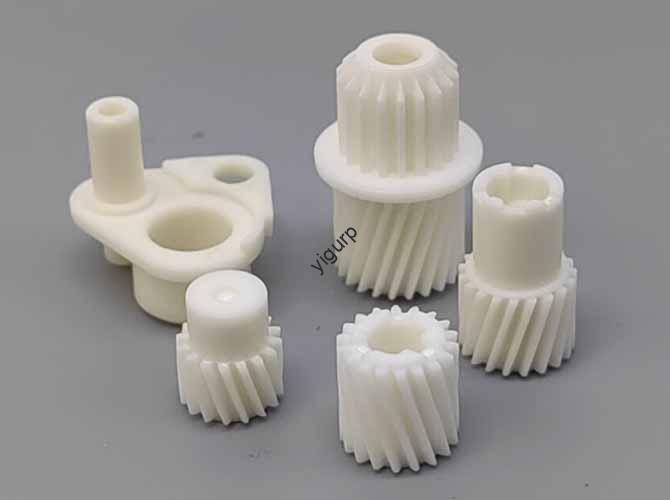
Our Capabilities in Polyamide PA CNC Machining
At Yigu Technology, we pride ourselves on a full suite of Polyamide PA CNC Machining capabilities to meet diverse project needs. Our services are designed to balance precision, speed, and quality, supported by rigorous quality control measures at every step.
| Capability | Key Features | Typical Use Cases |
| Precision Machining | Achieves dimensional accuracy down to ±0.005mm for critical components | Aerospace fasteners, medical device parts |
| Custom Parts | Tailors designs to unique specifications (size, shape, material grade) | Industrial equipment brackets, custom enclosures |
| High Tolerance | Consistently meets tight tolerances (ISO 8015 standard) for repeatability | Automotive sensors, electronic connectors |
| Complex Geometries | Handles intricate features (threads, undercuts, thin walls) with 5-axis machining | Robotics components, consumer goods parts |
| Rapid Prototyping | Delivers functional prototypes in 1–3 days for design validation | New product development, testing samples |
| Production Runs | Scales from small batches (10–50 parts) to high-volume production (10,000+) | Mass-produced industrial tools, consumer parts |
| Quality Control | Uses CMM (Coordinate Measuring Machines) and visual inspections for 100% part verification | All industries, especially medical/aerospace |
Definition of Polyamide PA CNC Machining
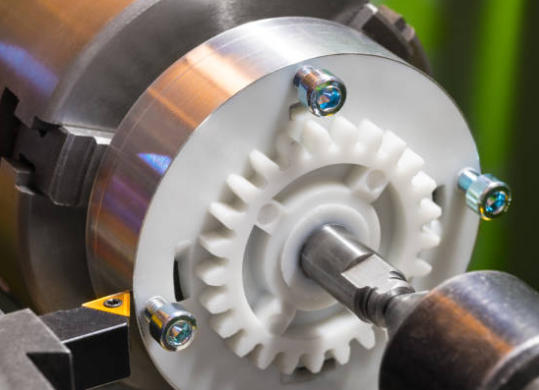
Polyamide PA (commonly known as nylon) is a versatile thermoplastic and engineering plastic celebrated for its superior material properties—including high strength, impact resistance, and excellent wear performance. CNC Machining, or Computer Numerical Control Machining, is an automated manufacturing process that uses pre-programmed software to control machine tools (like mills and lathes) for precise part production. When combined, Polyamide PA CNC Machining merges the durability of polyamide with the accuracy of CNC technology, resulting in parts that meet strict industry standards. A key advantage here is polyamide’s strong machinability—it cuts cleanly, minimizes tool wear, and maintains dimensional stability during processing, making it ideal for complex designs.
The Polyamide PA CNC Machining Process
Our Polyamide PA CNC Machining process follows a structured workflow to ensure consistency and precision, from initial setup to final part finishing. Each step is optimized to enhance efficiency and maintain part quality.
- Design & Setup: We start with CAD (Computer-Aided Design) file review to confirm part specifications. Next, our engineers perform setup—calibrating machines, selecting appropriate cutting tools, and programming CNC paths to match the design.
- CNC Milling: For parts with complex 3D features (like slots or pockets), we use CNC Milling—a process that rotates cutting tools to remove material from the polyamide block. This is ideal for flat or irregularly shaped components.
- CNC Turning: For cylindrical parts (like rods or bushings), CNC Turning is used. The polyamide workpiece spins while a stationary cutting tool shapes it, ensuring smooth, precise outer and inner diameters.
- Drilling & Cutting: We perform drilling to create holes (ranging from 0.5mm to 50mm) and cutting to separate finished parts from the raw material, using high-speed tools to prevent polyamide melting.
- Grinding: For ultra-smooth surfaces (Ra < 0.8μm), grinding is used to refine part edges and remove any machining burrs, critical for parts requiring tight fitment.
- Inspection: Every part undergoes dimensional checks using calipers, micrometers, and CMMs to ensure compliance with client specifications.
Polyamide Materials Used in CNC Machining
Not all polyamides are the same—we select the right grade based on your project’s mechanical, thermal, and chemical requirements. Below is a breakdown of the most common polyamide materials we use:
| Material Grade | Key Properties | Density (g/cm³) | Melting Point (°C) | Typical Applications |
| Polyamide 6 (PA6) | High impact resistance, good fatigue strength, easy to machine | 1.14 | 220 | Automotive door handles, industrial gears |
| Polyamide 66 (PA66) | Higher tensile strength, better thermal stability than PA6 | 1.14 | 260 | Aerospace components, high-temperature fasteners |
| Polyamide 12 (PA12) | Low water absorption, excellent chemical resistance, flexible | 1.02 | 180 | Medical catheters, electronic enclosures |
| Glass-Filled Polyamide | Enhanced stiffness (3x vs. unfilled PA), improved dimensional stability | 1.30–1.50 | 220–260 | Structural automotive parts, industrial brackets |
| Flame-Retardant Polyamide | Meets UL94 V-0 fire rating, ideal for electrical applications | 1.15–1.40 | 220–260 | Electronic connectors, circuit board housings |
| Recycled Polyamide | Sustainable option, retains 90% of virgin PA’s strength, cost-effective | 1.14–1.15 | 220–260 | Consumer goods (e.g., sporting goods), non-critical industrial parts |
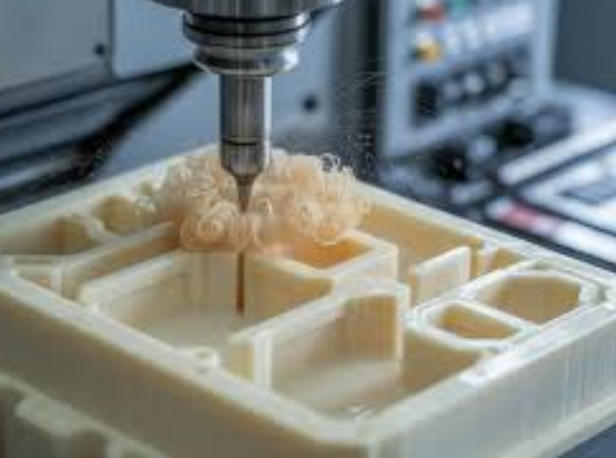
Advantages of Polyamide PA CNC Machining
Choosing Polyamide PA CNC Machining for your project offers a range of benefits that make it a top choice across industries:
- High Strength: Polyamide parts have tensile strengths ranging from 60MPa (PA6) to 90MPa (PA66), comparable to some metals—ideal for load-bearing components.
- Lightweight: With a density of 1.02–1.50 g/cm³ (vs. 7.87 g/cm³ for steel), polyamide parts reduce overall product weight, improving fuel efficiency in automotive/aerospace applications.
- Chemical Resistance: Polyamide resists oils, greases, and most solvents (except strong acids), making it suitable for parts in harsh chemical environments (e.g., industrial pumps).
- Thermal Stability: Most polyamides maintain performance at temperatures up to 120°C (continuous use), with PA66 and glass-filled grades handling up to 150°C—perfect for under-hood automotive parts.
- Cost-Effective: CNC machining of polyamide is faster than metal machining (lower cutting forces, less tool wear), and polyamide raw materials are more affordable than metals like aluminum or stainless steel.
- Recyclability: Recycled polyamide retains most of its properties, allowing for sustainable production and lower material costs for non-critical parts.
- Design Flexibility: CNC machining can create complex geometries (e.g., internal channels, thin walls) that are difficult or impossible with other processes like injection molding—great for custom prototypes.
Applications Industry for Polyamide PA CNC Machined Parts
Polyamide PA CNC Machining serves a wide range of industries, thanks to its versatility and performance. Below are key sectors and their common applications:
| Industry | Common Polyamide CNC Machined Parts | Key Requirements Addressed |
| Automotive | Gears, sensor housings, door handles, under-hood brackets | Lightweight, heat resistance, cost-effectiveness |
| Aerospace | Fasteners, cable management parts, interior components | High strength, tight tolerances, chemical resistance |
| Electronics | Connector housings, circuit board supports, heat sinks | Flame resistance, dimensional accuracy, insulation |
| Medical | Catheter tips, surgical tool handles, device enclosures | Biocompatibility, smooth surfaces, chemical resistance |
| Industrial Equipment | Pump components, gearboxes, conveyor parts | Wear resistance, durability, low maintenance |
| Consumer Goods | Sporting goods (e.g., bike pedals), kitchen tool parts, toy components | Aesthetics, impact resistance, affordability |
| Sporting Goods | Ski bindings, golf club components, protective gear parts | Lightweight, high strength, flexibility |
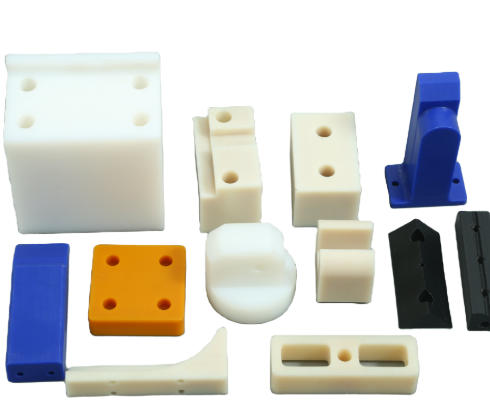
Case Studies: Success with Polyamide PA CNC Machining
Our Polyamide PA CNC Machining services have delivered results for clients across industries. Here are three standout examples:
Case Study 1: Medical Catheter Tip for a Healthcare Provider
- Challenge: A medical device company required a flexible, biocompatible catheter tip with a smooth surface (Ra < 0.4μm) to minimize patient discomfort.
- Solution: We selected Polyamide 12 (PA12) for its low water absorption and flexibility, using CNC turning to achieve the tapered tip design. Polishing and heat treatment were performed to ensure surface smoothness and stress relief.
- Result: Prototypes delivered in 48 hours, with full production (10,000 units) completed in 3 weeks. The tip met all FDA biocompatibility standards and reduced insertion friction by 25%.
Case Study 2: Industrial Gear for a Manufacturing Plant
- Challenge: A factory needed a durable gear to replace a metal one that was prone to corrosion in a wet environment. The gear required high wear resistance and a tight tolerance (±0.02mm) for smooth operation.
- Solution: We used Glass-Filled Polyamide for enhanced stiffness and CNC milling to create the gear teeth. A PTFE coating was added to reduce friction and improve wear resistance.
- Result: The gear lasted 2x longer than the metal version, with no corrosion. The client saved 40% on material costs and reduced maintenance downtime by 30%.