
Our Urea Formaldehyde Resin Injection Molding Services
Unlock cost-effective, high-performance solutions with our Urea Formaldehyde (UF) Resin Injection Molding services. Specializing in thermoset UF process for electrical, automotive, and household industries, we deliver durable, electrically insulating parts—from tight-tolerance components to high-volume runs.
Our ISO 9001-certified facility combines automated lines, custom tooling, and expert engineering to meet your unique needs, making us your trusted partner for all UF plastic molding projects.
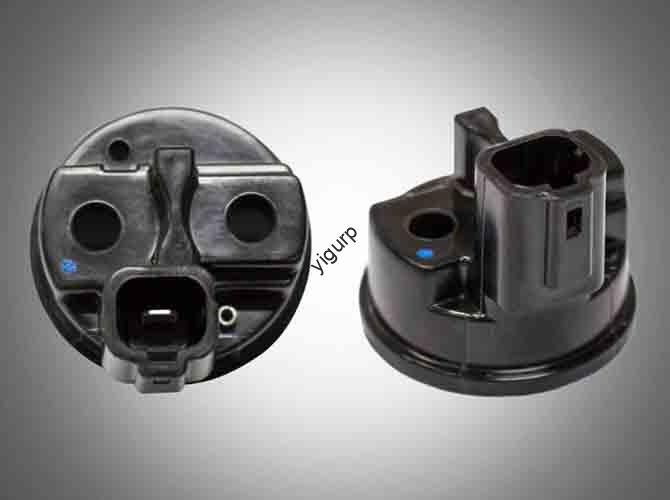
Our Urea Formaldehyde Injection Molding Capabilities
At Yigu Technology, we’ve optimized our capabilities to handle the full spectrum of UF resin molding needs—from small-batch prototypes to massive production runs. Our focus on precision and efficiency ensures consistent quality across every order.
Core Capabilities at a Glance
| Capability | Specifications |
|---|---|
| UF Molding Capacity | Up to 400,000 units/month (high-volume urea molding for large-scale projects) |
| Precision | Tight-tolerance UF parts: As low as ±0.1 mm (ideal for electrical components) |
| Tooling | Multi-cavity UF tools (up to 24 cavities); in-house toolroom for custom designs |
| Customization | Insert molding UF, over-molding urea, and secondary ops (e.g., drilling, printing) |
| Prototyping | Rapid prototyping UF resin: 2-4 day turnaround for functional samples |
| Automation | Automated UF lines with real-time quality checks (reduces defects by 25%) |
| Logistics | Global UF supply: Door-to-door delivery to 30+ countries with 98% on-time rate |
Our automated lines are equipped with servo-driven injection units that maintain consistent clamp pressure UF (1500-2800 bar) and mold temperature—critical for replicating precise parts in high volumes. For example, our 24-cavity tool for UF closure caps produces 10,000 units per 8-hour shift, cutting production time by 40% compared to standard 8-cavity tools.
What Is Urea Formaldehyde Resin Injection Molding?
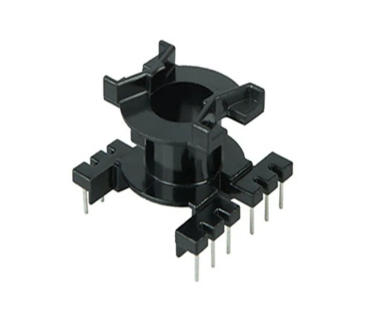
Urea Formaldehyde (UF) Resin Injection Molding is a specialized thermoset manufacturing process that uses a resin blend of urea and formaldehyde. Unlike thermoplastics, UF resin cures permanently under heat and pressure, forming rigid, dimensionally stable parts. It falls under the broader category of amino-plastic injection, known for its balance of affordability and performance.
Key defining traits of this process:
- Thermoset Nature: Once cured, UF parts cannot be melted or reshaped, ensuring long-term stability in harsh conditions.
- Core Applications: Dominant in sectors requiring electrical insulation and cost-efficiency, such as electronics and household goods.
- Material Versatility: Blends with fillers (e.g., alpha-cellulose, glass fibers) to enhance strength or reduce costs.
Below is a breakdown of core terms to clarify UF definition molding:
| Term | Description |
|---|---|
| UF Resin Molding | The overall process of shaping urea formaldehyde resin into parts via injection. |
| Thermoset UF Process | The curing-driven cycle where UF resin hardens permanently under heat/pressure. |
| Urea Resin Injection | The step of forcing molten UF compound into a mold cavity at high pressure. |
| UF Plastic Molding | A casual term for UF resin injection molding, emphasizing the plastic-like final part. |
Urea Formaldehyde Resin Materials: Grades & Properties
We offer a diverse range of urea formaldehyde resin grades, each formulated to match specific application needs—from electrical insulation to food-contact safety. All materials meet global standards (UL, RoHS) and prioritize sustainability (e.g., low-formaldehyde variants).
Material Grades & Their Uses
| Material Grade | Filler/Additive | Key Properties | Target Applications |
|---|---|---|---|
| Electrical-Grade UF | Glass-filled urea (20%) | Excellent electrical insulation, flame-retardant | UF electrical housings, wiring devices |
| Low-Formaldehyde UF | Alpha-cellulose filled UF | <0.1% formaldehyde emission, eco-friendly | Household UF tableware, children’s products |
| Food-Contact UF | None (pure) | FDA-compliant, non-toxic | Food-safe closure caps, utensil handles |
| High-Flow UF | Mineral filler | Easy mold filling for complex shapes | Intricate automotive UF parts, switch internals |
| Pigmentable Urea Resin | Color pigments | Customizable shades (Pantone-matched) | Appliance knobs urea, colored buttons |
Material Performance Comparison
| Property | Electrical-Grade UF | Low-Formaldehyde UF | High-Flow UF |
|---|---|---|---|
| Hardness (Shore D) | 75-85 | 70-80 | 68-78 |
| Heat Resistance | Up to 130°C | Up to 120°C | Up to 115°C |
| Electrical Insulation | 10¹⁴ Ω·cm | 10¹³ Ω·cm | 10¹² Ω·cm |
| Cost (per kg) | $2.80-$3.20 | $3.00-$3.50 | $2.60-$3.00 |
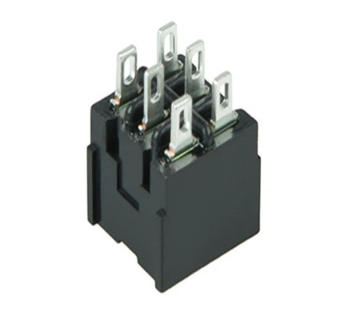
Advantages of Urea Formaldehyde Resin Injection Molding
UF resin molding offers unique benefits that make it a top choice for cost-sensitive, high-performance applications. Its advantages over other thermosets (e.g., melamine, epoxy) and thermoplastics (e.g., ABS) are clear:
- UF Cost Advantage: 15-25% lower material and production costs than melamine-formaldehyde, thanks to faster cycles and cheaper raw materials.
- Electrical Insulation UF: Excels in dielectric strength (15-20 kV/mm), making it the gold standard for UF electrical housings and switches.
- Dimensional Stability: Low cure shrink (0.5-0.8%) ensures parts retain shape even in temperature fluctuations (from -30°C to 130°C).
- Flame-Retardant UF: Naturally meets UL 94 V0 standards without added flame retardants, critical for electrical applications.
- Fast Molding UF: Shorter cycle times (20-60 seconds) than most thermosets—ideal for high-volume runs like closure caps (400k units/month).
- Recyclable Flash UF: Scrap material (flash) can be ground and reused (up to 15% of total compound), reducing waste and costs.
Advantage Comparison: UF vs. Melamine-Formaldehyde (MF)
| Advantage | Urea Formaldehyde (UF) | Melamine-Formaldehyde (MF) |
|---|---|---|
| Cost (per part) | Lower (15-25% less) | Higher |
| Cycle Time | Faster (20-60 sec) | Slower (30-120 sec) |
| Electrical Insulation | Superior | Good |
| Heat Resistance | Up to 130°C | Up to 200°C |
| Food-Contact Safe | Only FDA-approved grades | Most grades |
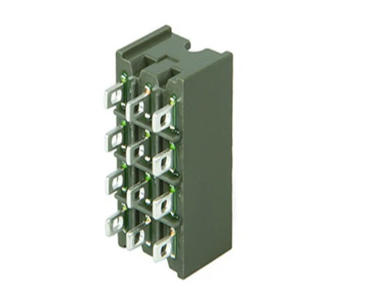
Industry Applications of Urea Formaldehyde Parts
UF resin molding serves a wide range of industries, driven by its cost-efficiency and electrical insulation properties. Below are the most common use cases:
| Industry | Applications | Key Material Grade |
|---|---|---|
| Electrical & Electronics | UF electrical housings, switches, wiring devices | Electrical-Grade UF |
| Appliances | Knobs, control panels, dryer components | Pigmentable Urea Resin |
| Automotive | Interior trim, connector housings, door handles | High-Flow UF |
| Household | Closure caps, tableware (food-safe), toilet seat UF | Low-Formaldehyde/ Food-Contact UF |
| Industrial | Handles, machine guards, valve covers | Glass-filled Urea |
For example, in the automotive industry, our high-flow UF is used to produce complex connector housings—its excellent moldability ensures all small pins and slots are filled perfectly, reducing assembly defects by 30%.
Case Studies: Our UF Injection Molding Success Stories
We’ve helped clients across industries overcome production challenges with tailored UF resin molding solutions. Here are three standout cases:
Case 1: UL-Listed UF Switchgear Housing
- Client: A leading electrical equipment manufacturer.
- Challenge: Produce 100,000 switchgear housings that meet UL 94 V0 flame-retardant standards and ±0.1 mm tolerance for component fit.
- Solution: Used electrical-grade UF with glass filler; optimized clamp pressure UF (2500 bar) and UF mold temperature (180°C) for precision.
- Result: 99.8% defect-free rate; UL listing obtained in 4 weeks; production cost 20% lower than client’s previous supplier.
Case 2: Cost-Down UF Lid for Household Jars
- Client: A global food packaging brand.
- Challenge: Reduce costs for 500,000 monthly UF closure caps without sacrificing durability.
- Solution: Switched from pure UF to alpha-cellulose filled UF (30% filler); implemented 24-cavity UF tools (up from 12-cavity).
- Result: Cost per lid reduced by 18%; hardness maintained (Shore D 75); on-time delivery rate 99%.