
Our Polyvinyl Chloride PVC CNC Machining Services
At Yigu Technology, we specialize in Polyvinyl Chloride (PVC) CNC Machining—combining advanced equipment, skilled technicians, and strict quality control to deliver high-performance PVC components.
Whether you need Rigid PVC for durable construction parts or Flexible PVC for automotive gaskets, our precision machining and custom services ensure tight tolerances, chemical resistance, and cost-effectiveness. From medical devices to consumer products, we turn PVC’s versatility into tailored solutions that meet your exact specs—on time, every time.
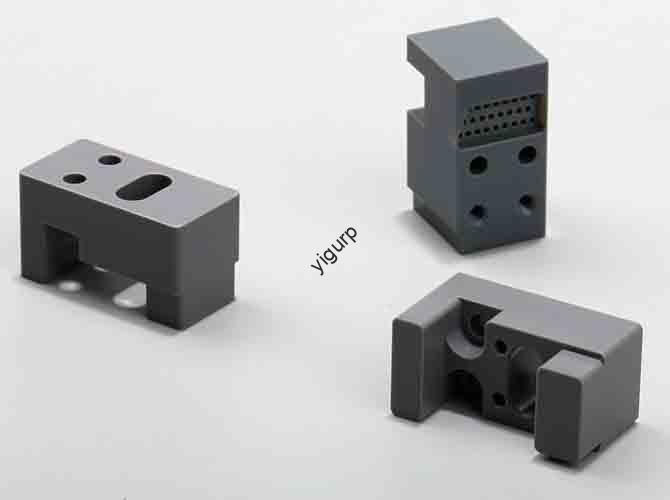
Our Capabilities: Yigu Technology’s PVC Machining Strengths
At Yigu Technology, we’ve built a comprehensive set of capabilities to meet the most demanding PVC CNC machining needs. Our strengths cover every stage of production:
| Capability | Description |
| Precision Machining | We achieve tight tolerances (down to ±0.01mm for small PVC parts) and consistent dimensional accuracy—critical for parts that need to fit with other components (e.g., electronics housings). |
| Custom CNC Services | From one-off prototypes to high-volume production, we tailor processes to your unique design specs—whether you need complex 3D shapes (via milling) or cylindrical parts (via turning). |
| High-Quality CNC Equipment | Our fleet includes 5-axis CNC mills, high-speed lathes, and automated drills—all optimized for PVC’s thermoplastic properties to minimize melting and ensure smooth cuts. |
| Skilled Technicians | Our team has 10+ years of experience in PVC machining, solving challenges like material warping and tool wear to deliver flawless parts. |
| Advanced Software | We use CAD/CAM software (e.g., SolidWorks, Mastercam) for precise CNC Programming, ensuring every tool path aligns with your design. |
| Rapid Prototyping | We deliver PVC prototypes in 3–5 business days, helping you test and refine designs before full-scale production. |
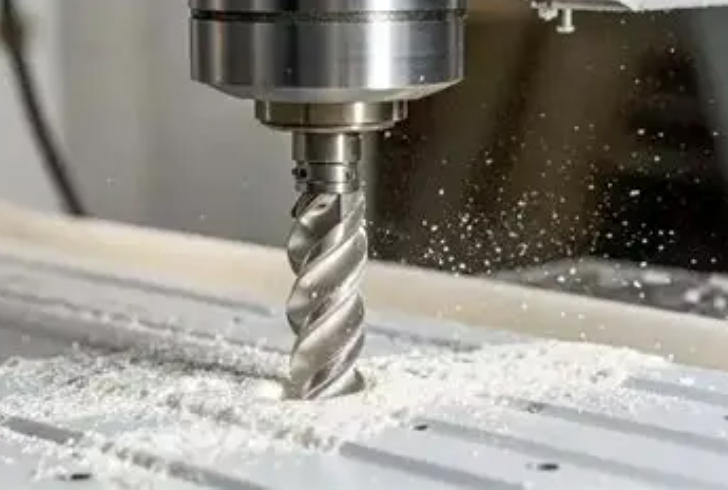
Process: Step-by-Step Polyvinyl Chloride PVC CNC Machining Workflow
Machining PVC requires careful control to avoid heat buildup (which can cause melting or toxic fume release). Our 7-step process ensures safety, quality, and consistency:
- Material Selection: We choose the right PVC type (Rigid PVC or Flexible PVC) and grade based on your application—e.g., rigid PVC for construction pipes or flexible PVC for medical tubing.
- CNC Programming: Our technicians use advanced software to write custom G-code, setting cutting speeds (4,000–8,000 RPM for rigid PVC; 3,000–6,000 RPM for flexible PVC) to prevent overheating.
- Tool Selection: We use carbide end mills with sharp, low-friction edges for rigid PVC (to avoid chipping) and high-speed steel (HSS) tools for flexible PVC (to prevent material sticking).
- Cutting Operations: The CNC machine executes core processes:
- Milling: For flat or 3D-shaped parts (e.g., PVC electrical boxes).
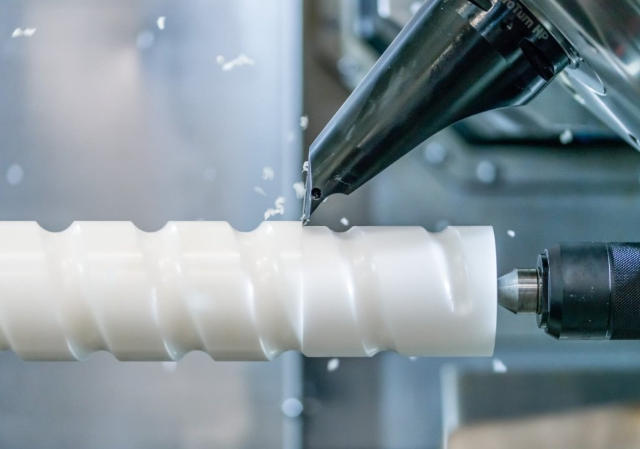
- Turning: For cylindrical parts (e.g., PVC pipes or rods).
- Drilling: For adding holes or openings (e.g., for fasteners in industrial components).
- Deburring: We remove rough edges or excess material using specialized tools, ensuring a smooth finish that meets safety standards (critical for consumer products).
- Finishing Processes: We apply surface treatments (e.g., polishing or coating) as needed to enhance appearance or functionality.
- Quality Control: Each part is inspected with calipers and coordinate measuring machines (CMMs) to verify tolerances and accuracy—we reject any part that fails to meet specs.
Surface Treatment: Enhancing PVC Parts
While PVC has natural durability, surface treatment can improve its appearance, functionality, or lifespan. Our most popular options for PVC parts include:
- Polishing: We use fine-grit abrasives to create a glossy, scratch-free finish—ideal for visible parts like consumer product casings or automotive trim.
- Painting: We apply PVC-compatible paints (acrylic or urethane-based) to add color or branding, ensuring adhesion even in humid or harsh environments.
- Coating: We use protective coatings (e.g., polyurethane) to enhance scratch resistance and UV protection—common for outdoor parts like PVC construction panels.
- Adhesive Bonding: We apply industrial-grade adhesives to join PVC parts to other materials (e.g., metal or plastic), creating strong, long-lasting assemblies (e.g., PVC-steel hybrid industrial components).
- Laser Engraving: For adding logos, serial numbers, or text (e.g., for medical devices or electrical components), we use precision laser engraving that won’t damage PVC’s surface.
- Surface Finishing Techniques: For flexible PVC, we use plasma treatment to improve adhesion for coatings or bonding—critical for medical tubing that needs to attach to other devices.
Tolerances: Achieving Precision in PVC Machining
Tolerances (allowable deviations from the design) are critical for PVC parts—especially in industries like medical and electronics where fit and safety matter. At Yigu Technology, we prioritize precision with tailored tolerance control:

| Tolerance Aspect | Our Performance |
| Precision Tolerances | For small PVC parts (<50mm): ±0.01mm; for medium parts (50–200mm): ±0.02mm; for large parts (>200mm): ±0.03mm. |
| Tight Tolerances | For critical applications (e.g., medical tubing or electronics connectors), we achieve tolerances as tight as ±0.008mm using advanced 5-axis CNC machines. |
| Dimensional Accuracy | Our CMMs can detect deviations as small as 0.001mm, ensuring every part matches your CAD design—even for complex shapes. |
| Measurement Standards | We follow ISO 2768-m (general tolerance) and ISO 8015 (size tolerance) standards, aligning with global industry norms for PVC machining. |
| Quality Control | Every batch undergoes 100% inspection—we use both contact (calipers) and non-contact (laser scanning) methods to verify tolerances. |
Table: Tolerance Comparison – Yigu vs. Industry Average
| Part Size | Industry Average Tolerance | Yigu Technology Tolerance |
| Small (<50mm) | ±0.02mm | ±0.01mm |
| Medium (50–200mm) | ±0.04mm | ±0.02mm |
| Large (>200mm) | ±0.06mm | ±0.03mm |
Advantages: Why Choose Polyvinyl Chloride PVC CNC Machining?
This technology offers unmatched benefits over traditional machining or other plastic fabrication methods (like injection molding):
- Cost-Effective: PVC is one of the most affordable thermoplastics, and CNC machining eliminates upfront mold costs—saving you 30–50% compared to injection molding for small batches (1–500 units).
- High Durability: PVC resists wear, impact, and weathering—rigid PVC parts can last 10+ years in outdoor or industrial environments, reducing replacement costs.
- Chemical Resistance: PVC stands up to most acids, bases, and solvents—making it ideal for laboratory equipment, chemical storage tanks, and medical devices that contact harsh substances.
- Easy to Machine: PVC’s thermoplastic nature and consistent density make it easy to cut, drill, and shape—resulting in faster production times and fewer defects.
- Customizable: We offer a range of PVC types (rigid, flexible, fire-retardant) and surface treatments, letting you tailor parts to your exact needs—e.g., flexible PVC for a medical gasket or fire-retardant PVC for an electronics housing.
- Recyclable: PVC is recyclable (when processed correctly), making it a more sustainable choice than non-recyclable plastics—aligning with eco-friendly manufacturing goals.
Applications Industry: Where Our PVC CNC Machined Parts Shine
PVC’s versatility and affordability make it a top choice across 6 key industries. Below are our most common applications:
| Industry | Applications | PVC Type/Grade Used |
| Construction | Pipes and fittings, electrical boxes, wall panels, window frames | Rigid PVC (durability, chemical resistance) |
| Automotive | Interior trim (e.g., dashboard components), gaskets, wire insulation, battery housings | Rigid PVC (trim), Flexible PVC (gaskets/insulation) |
| Electronics | Device housings, cable insulation, connector components, circuit board supports | Fire-Retardant PVC (safety), Rigid PVC (structural) |
| Medical Devices | Tubing (IV, catheters), diagnostic tool components, medication containers | Medical-Grade PVC (biocompatible, sterilizable) |
| Industrial Equipment | Chemical storage tanks, conveyor belt components, pump housings, protective covers | Rigid PVC (chemical resistance), Fire-Retardant PVC (safety) |
| Consumer Products | Toy parts, household containers, furniture components, appliance casings | Rigid PVC (durability), Flexible PVC (soft parts) |
Case Studies: Yigu Technology’s PVC CNC Machining Success Stories
Case Study 1: Medical-Grade PVC Tubing for a Healthcare Provider
- Challenge: A global medical company needed biocompatible, flexible PVC tubing for IV systems. The tubing required a tolerance of ±0.008mm to fit connectors and had to withstand autoclave sterilization (121°C) without degrading.
- Solution: We used Medical-Grade PVC and CNC Turning to create the tubing, with precise tool adjustments to avoid material stretching. We applied a hydrophilic coating to improve fluid flow and performed ISO 10993 biocompatibility testing.
- Outcome: The tubing passed sterilization testing (500+ cycles) and met all tolerance requirements. The client ordered 100,000 units/year and expanded the project to 3 more tubing sizes.
Case Study 2: Rigid PVC Electrical Boxes for a Construction Firm
- Challenge: A construction company needed durable, fire-retardant PVC electrical boxes for commercial buildings. The boxes required multiple drilled holes (tolerance ±0.02mm) and had to meet UL 94 V-0 fire standards.
- Solution: We used Fire-Retardant Rigid PVC and CNC Milling (with carbide tools) to create the boxes, with in-process laser scanning to verify hole accuracy. We tested samples for fire resistance and impact strength.
- Outcome: The boxes passed fire testing and withstood 10+ foot drop tests. The client integrated them into 50+ building projects, with an annual order of 50,000 units.