
Our CNC Broaching Services
Looking for precision CNC Broaching that blends efficiency, consistency, and cost-effectiveness? Our CNC Broaching machining services leverage advanced manufacturing techniques and decades of expertise to deliver custom solutions for industries ranging from automotive to medical.
Whether you need intricate internal gears or high-tolerance keyways, we turn your specifications into high-quality parts—on time, every time.
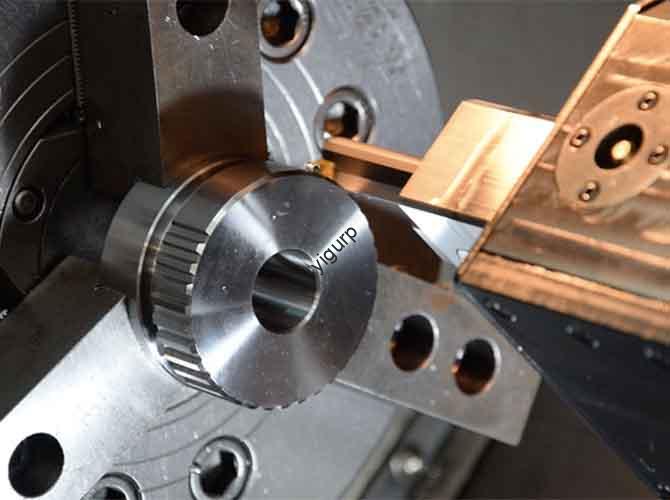
Our Capabilities: What We Offer in CNC Broaching
Our team brings together years of experience and technical expertise to handle even the most demanding CNC machining Broaching projects. We don’t just offer standard services—we tailor solutions to your unique needs, ensuring every part meets your exact specifications.
Our Core CNC Broaching Capabilities
| Capability | Details | Typical Applications |
| Custom Broaching | Design and produce broaching tools for unique part geometries (e.g., non-standard splines, custom keyways) | Aerospace engine components, medical device fittings |
| Precision Broaching | Achieve dimensional tolerances as tight as ±0.0005” (0.0127 mm) and surface roughness down to Ra 0.8 μm | High-precision gears for robotics, electronics connectors |
| Range of Services | Internal broaching (keyways, splines), external broaching (gears, slots), and surface broaching | Automotive transmissions, machinery shafts, construction equipment parts |
| High-Volume Production | Process up to 500 parts per shift with consistent quality | Mass-produced automotive keyways, appliance components |
With a team of certified engineers and state-of-the-art CNC broaching machines, we’ve successfully delivered projects for clients in 12+ industries—proving our ability to scale from small-batch prototypes to large-scale production runs.
What Is CNC Broaching?
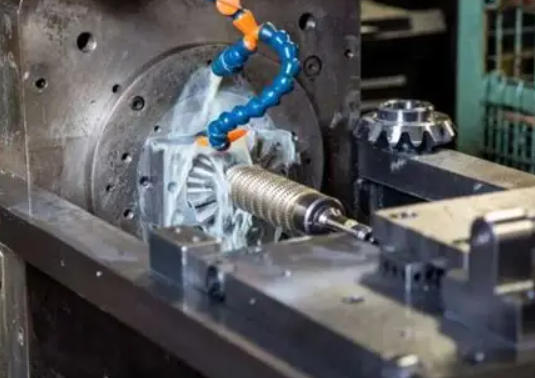
CNC Broaching is a specialized cutting process in machining that uses a toothed tool called a Broaching Tool to remove material from a workpiece, creating precise, complex shapes (such as keyways, splines, gears, or slots) in a single pass. Unlike manual broaching, CNC (Computer Numerical Control) broaching uses computer programs to control the tool’s movement, ensuring unparalleled accuracy and repeatability.
At its core, the concept of CNC Broaching revolves around efficiency: instead of multiple setup changes for different cuts, the Broaching Tool (which has teeth increasing in size) completes the entire cut in one operation. This makes it ideal for high-volume production while maintaining strict quality standards.
| Key Term | Meaning | Role in CNC Broaching |
| CNC Broaching | Computer-controlled broaching process | Automates tool movement for precision and consistency |
| Broaching Tool | Toothed cutting tool with progressively sized teeth | Removes material to create desired shapes in one pass |
| Cutting Process | Material removal via tool-workpiece interaction | Core operation that shapes the final part |
Process: How CNC Broaching Works
The CNC Broaching Process is streamlined and efficient, with clear steps that minimize setup time and maximize accuracy. Unlike other machining methods (e.g., milling or turning), broaching relies on a linear tool path to create complex shapes in one go.
Step-by-Step CNC Broaching Operation Procedure
- Machine Setup: The workpiece is clamped securely in a fixture, and the CNC program (which defines the tool path and cutting parameters) is loaded into the machine. Our technicians calibrate the machine to ensure alignment with the workpiece’s reference points.
- Tool Preparation: The appropriate Broaching Tool (selected based on material, part geometry, and tolerance requirements) is mounted onto the machine’s spindle. Tools are inspected for sharpness and wear before each run.
- Cutting Sequence: The CNC machine moves the Broaching Tool linearly across (or into) the workpiece. Each tooth on the tool removes a small amount of material—starting with the smallest tooth and ending with the largest, which achieves the final shape.
- Quality Check: After the cut is complete, the workpiece is removed and inspected for dimensional accuracy and surface finish using precision measuring tools (e.g., micrometers, CMMs).
- Part Ejection & Next Cycle: The finished part is ejected, and the machine resets for the next workpiece—all automated to reduce downtime.
The entire process typically takes 30 seconds to 2 minutes per part, depending on the complexity—making it far faster than multi-step machining methods.
Materials: What Can We Broach?
CNC Broaching works with a wide range of materials, from soft plastics to hard alloys. The choice of material depends on the part’s end-use (e.g., strength for automotive parts, corrosion resistance for medical devices) and determines the Broaching Tool type and cutting parameters.
Common Materials for CNC Broaching
| Material Type | Examples | Key Properties | Ideal Applications |
| Metals | Steel (mild, alloy, stainless), Aluminum | Steel: High strength; Aluminum: Lightweight, good thermal conductivity | Steel: Gear shafts, construction brackets; Aluminum: Electronics enclosures, automotive trim |
| Alloys | Titanium alloy, Brass alloy, Copper alloy | Titanium: High strength-to-weight ratio; Brass: Corrosion-resistant, good machinability | Titanium: Aerospace components; Brass: Plumbing fittings, electrical connectors |
| Plastic | Nylon, PEEK, Acetal | Lightweight, corrosion-resistant, low friction | Medical device components, consumer electronics parts |
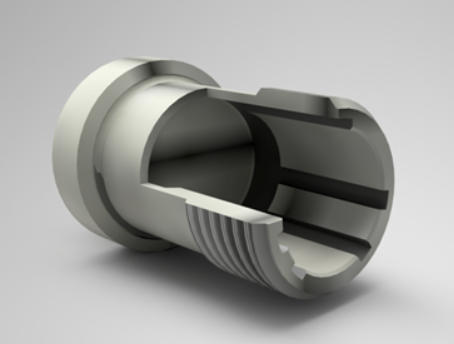
We test each material with sample cuts to optimize the cutting process—ensuring minimal tool wear and maximum part quality. For example, when broaching stainless steel (a hard material), we use carbide Broaching Tools and slower cutting speeds to maintain precision.
Tolerances: The Precision We Deliver
Tolerances are critical in CNC Broaching—even small deviations can affect a part’s performance (e.g., a loose keyway in a gear shaft can cause machinery failure). Our process is optimized to achieve tight dimensional tolerance and smooth surface roughness, meeting or exceeding industry standards.
Our Tolerance Capabilities vs. Industry Averages
| Metric | Our Capability | Industry Average | Advantage |
| Dimensional Tolerance | ±0.0005” (0.0127 mm) | ±0.0015” (0.0381 mm) | 3x tighter tolerance for high-precision parts |
| Surface Roughness (Ra) | 0.8 – 3.2 μm | 3.2 – 6.3 μm | Smoother surface for reduced friction and improved aesthetics |
| Positional Tolerance | ±0.001” (0.0254 mm) | ±0.003” (0.0762 mm) | More accurate part alignment for assembly |
To maintain these tolerances, we use CNC machines with linear encoders (accuracy: ±0.0001” per foot) and perform in-process inspections every 20 parts. This ensures consistency across even large production runs.
Advantages: Why Choose CNC Broaching Over Other Methods?
CNC Broaching offers unique benefits that make it superior to traditional machining methods (e.g., milling, shaping) for many applications. Its combination of efficiency, precision, and cost-effectiveness makes it a top choice for manufacturers.
Key Advantages of CNC Broaching
| Advantage | Description | Impact on Your Project |
| High Efficiency | Completes complex cuts in one pass (vs. 3–5 passes for milling) | Reduces production time by 50–70% |
| Precision & Consistency | CNC automation eliminates human error; parts have identical dimensions | Reduces scrap rate to <1% (vs. 3–5% for manual methods) |
| Cost-Effective | Fewer setup changes and less labor mean lower per-part costs—especially for high volumes | Saves 20–30% on production costs for runs of 1,000+ parts |
| Time-Saving | Fast cycle times (30 sec–2 min per part) and minimal downtime | Meets tight deadlines for urgent orders |
| Complex Shape Capability | Creates intricate shapes (e.g., internal splines, blind keyways) that are hard to achieve with other methods | Eliminates the need for secondary operations (e.g., grinding) |
For example, a client producing automotive transmission shafts switched from milling to our CNC Broaching service and cut their production time from 10 minutes per part to 90 seconds—while reducing scrap from 4% to 0.5%.
Applications Industry: Where CNC Broaching Is Used
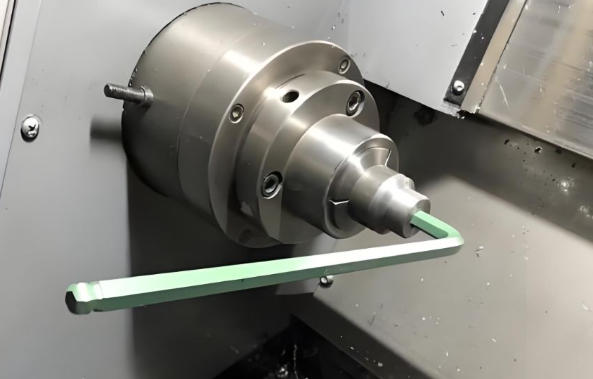
CNC Broaching is a versatile process used in nearly every manufacturing sector. Its ability to create precise, complex parts makes it indispensable for industries that demand high performance and reliability.
Industry Applications of CNC Broaching
| Industry | Common Broached Parts | Why CNC Broaching Is Ideal |
| Automotive | Keyways in transmission shafts, splines in axles, gears in engines | High-volume production needs; requires consistent precision for safety-critical parts |
| Aerospace | Turbine blade roots, aircraft engine gears, hydraulic valve slots | Demands ultra-tight tolerances (±0.0005”) and high-strength materials (titanium alloys) |
| Electronics | Connectors with internal slots, heat sink fins, sensor housings | Needs small, precise parts and fast production for consumer electronics |
| Medical | Surgical instrument components (e.g., forceps slots), implant parts (e.g., hip implant splines) | Requires biocompatible materials (e.g., stainless steel) and smooth surface finishes (Ra <1.6 μm) |
| Machinery | Gear shafts, bearing housings, conveyor chain links | Needs durable parts that can withstand heavy loads; CNC broaching ensures long part life |
| Construction | Hydraulic cylinder keyways, crane gear teeth, scaffolding connectors | Requires large, strong parts with consistent dimensions for structural safety |
In the aerospace industry alone, our CNC Broaching services have helped clients produce parts that meet AS9100 standards—critical for airworthiness.
Case Studies: Success Stories From Our Clients
Our CNC Broaching services have helped clients across industries solve complex manufacturing challenges. Below are two real-world examples of how we delivered results.
Case Study 1: Automotive Transmission Parts
Client: A leading automotive parts manufacturer producing 50,000 transmission shafts per month.
Challenge: Their existing milling process took 10 minutes per shaft, with a 4% scrap rate—causing delays and high costs.
Solution: We implemented CNC Broaching with custom carbide tools and automated load/unload systems.
Results:
- Cycle time reduced to 90 seconds per shaft (75% faster).
- Scrap rate dropped to 0.5% (saving $40,000/month in material costs).
- Met their monthly production target 2 weeks ahead of schedule.
Client Feedback: “The CNC Broaching service transformed our production line—we now have the capacity to take on larger orders without sacrificing quality.”
Case Study 2: Medical Device Components
Client: A medical device company needing 1,000 custom hip implant splines (titanium alloy).
Challenge: The parts required a surface roughness of Ra 0.8 μm and dimensional tolerance of ±0.0003”—beyond their current capabilities.
Solution: We used precision CNC Broaching with diamond-coated tools and in-process CMM inspections.
Results:
- All parts met the tight tolerance and surface finish requirements.
- Delivered the order in 2 weeks (vs. their previous supplier’s 4-week lead time).
- Parts passed FDA biocompatibility testing on the first try.
Client Feedback: “The attention to detail in the CNC Broaching process was unmatched—we now rely on them for all our high-precision medical parts.”