
Our Nylon 3D Printing Services
Unlock the future of manufacturing with Nylon 3D Printing—where additive manufacturing meets unmatched versatility. From high-precision prototypes to large-scale production runs, our nylon-based polymer printing solutions deliver durable, lightweight parts tailored to industries like automotive, aerospace, and medical.
Whether you need complex geometries or strict dimensional accuracy, Yigu combine cutting-edge processes with expert service to turn your ideas into reality—fast, cost-effectively, and reliably.
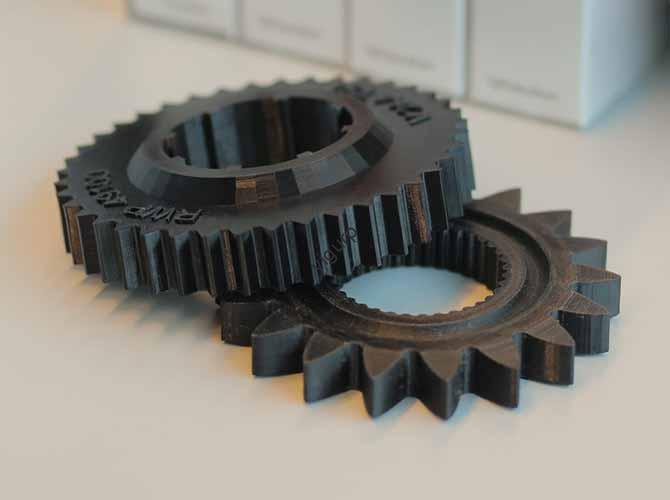
Our Nylon 3D Printing Capabilities
We pride ourselves on offering a full suite of capabilities to meet the unique needs of every project. Whether you’re a startup needing a single prototype or a large enterprise requiring mass production, our services are designed to deliver quality, speed, and precision.
Core Capabilities Breakdown
| Capability | Description | Ideal For |
| Custom Printing | Fully tailored solutions to match your exact design specifications, from material choice to surface finish. | One-off prototypes, custom end-use parts. |
| High Precision | Prints with tight dimensional accuracy (down to ±0.1mm) and consistent layer adhesion, ensuring parts meet strict industry standards. | Medical devices, aerospace components. |
| Large Scale Production | Ability to scale from small batches (10–50 parts) to high-volume runs (1,000+ parts) without compromising quality. | Automotive parts, consumer product components. |
| Complex Geometries | Expertise in printing intricate designs—including hollow structures, lattice patterns, and undercuts—that traditional manufacturing can’t achieve. | Lightweight aerospace parts, custom jigs. |
Our team works closely with you to understand your goals, whether that’s reducing weight for an aerospace project or enhancing durability for a medical device. No design is too complex—we turn even the most challenging concepts into functional, high-quality parts.
What Is Nylon 3D Printing?
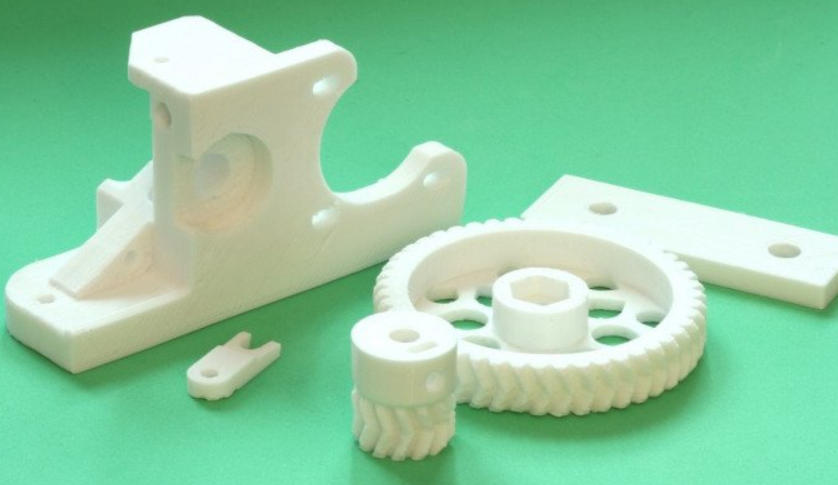
At its core, Nylon 3D Printing is a specialized branch of additive manufacturing (AM) that uses nylon (a flexible, strong thermoplastic polymer) as the primary build material. Unlike traditional subtractive methods (which remove material from a block), this technology builds objects layer by layer—enabling designs that would be impossible with techniques like CNC machining or injection molding.
Nylon itself is a key advantage: it offers an ideal balance of strength, flexibility, and heat resistance, making it suitable for both functional prototypes and end-use parts. When paired with 3D Printing technologies like SLS or FDM, it becomes a powerful tool for industries seeking to reduce lead times, cut costs, and innovate faster.
Materials Used in Nylon 3D Printing
The choice of material is critical to the performance of your 3D-printed part. We offer a range of nylon-based materials, each engineered for specific applications—from flexible prototypes to heat-resistant end-use parts.
Material Options & Their Benefits
| Material | Key Properties | Industry Applications |
| Nylon 12 | High impact resistance, excellent chemical resistance, and low moisture absorption. | Automotive hoses, medical devices, aerospace components. |
| Nylon 6 | High tensile strength, good heat resistance (up to 220°C), and cost-effective. | Consumer products, electrical components, structural parts. |
| Composite Materials | Nylon blended with additives (e.g., carbon fiber, glass fiber) for enhanced strength or flexibility. | High-stress parts (e.g., automotive brackets, drone frames). |
| Filaments | Ready-to-use nylon strands for FDM printing, available in various colors and grades. | Prototyping, low-volume production, custom decorative parts. |
We also offer material testing services to help you select the best option for your project. For example, if you need a part that can withstand high temperatures (like an engine component), we’ll recommend a heat-resistant nylon composite over standard Nylon 6.
Advantages of Nylon 3D Printing
Nylon 3D printing offers a host of benefits over traditional manufacturing methods, making it a top choice for forward-thinking industries. These advantages translate to faster time-to-market, lower costs, and more innovative designs.
Key Advantages at a Glance
| Advantage | How It Benefits You |
| Cost-Effective | Eliminates the need for expensive molds or tooling (saving up to 50% on prototype costs) and reduces material waste (SLS uses 95% of powder). |
| Rapid Prototyping | Turns a digital design into a physical part in days (not weeks), allowing for faster testing and iteration. |
| Lightweight | Nylon parts are up to 30% lighter than metal equivalents, without sacrificing strength—ideal for aerospace and automotive (reducing fuel consumption). |
| Durable | Nylon’s inherent strength and flexibility make parts resistant to impact, wear, and temperature changes—extending their lifespan. |
For example, a automotive client used our nylon 3D printing service to prototype a new engine component. They cut prototyping time from 6 weeks (with injection molding) to 5 days and reduced costs by 40%—all while testing 3 design iterations to optimize performance.
Industry Applications of Nylon 3D Printing
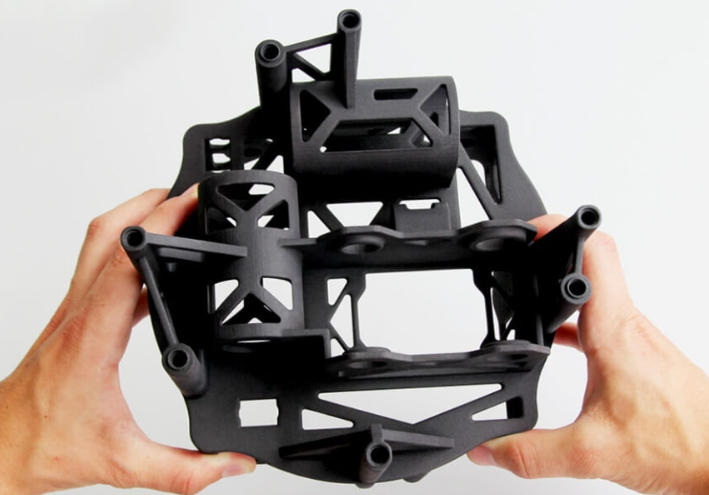
Nylon 3D printing is versatile enough to serve nearly every industry, from healthcare to consumer goods. Its unique combination of strength, flexibility, and precision makes it a go-to solution for solving complex manufacturing challenges.
Industry Use Cases
| Industry | Common Applications | Why Nylon 3D Printing Works |
| Automotive | Prototypes (e.g., dashboard components), end-use parts (e.g., air ducts), custom jigs. | Lightweight, heat-resistant, cost-effective for low-volume runs. |
| Aerospace | Engine parts, brackets, interior components (e.g., seat frames). | High strength-to-weight ratio, tight tolerances, compliance with aerospace standards. |
| Medical | Surgical guides, custom implants (e.g., hip replacements), prosthetics. | Biocompatible options, customizable to patient anatomy, durable. |
| Consumer Products | Phone cases, toys, household items (e.g., kitchen utensils). | Customizable designs, colorful finishes, lightweight. |
One of our recent medical projects involved 3D printing custom surgical guides for a orthopedic clinic. Using Nylon 12, we created guides tailored to each patient’s anatomy—reducing surgery time by 25% and improving accuracy.
Our clients’ success is our success. Below are real-world examples of how we’ve used nylon 3D printing to solve complex challenges and deliver results.
Case Study 1: Aerospace Component Prototyping
- Client: A leading aerospace manufacturer.
- Challenge: Need a lightweight, high-strength prototype for a new engine bracket—with a 2-week deadline.
- Solution: Used SLS printing with Nylon 12 composite (reinforced with carbon fiber) to create the bracket.
- Results: Delivered the prototype in 7 days, which was 40% lighter than the metal version and met all strength tests. The client later ordered 500 end-use parts.
Case Study 2: Medical Prosthetic Customization
- Client: A pediatric hospital.
- Challenge: Create affordable, custom prosthetics for children (who outgrow parts quickly).
- Solution: Used FDM printing with flexible Nylon 6 filament, tailored to each child’s measurements.
- Results: Reduced prosthetic cost by 70% (vs. traditional methods) and cut delivery time from 4 weeks to 5 days. Over 100 children have received parts.
Case Study 3: Automotive Production Scaling
- Client: A startup electric vehicle (EV) maker.
- Challenge: Scale from 100 to 10,000 interior door handles, without investing in expensive molds.
- Solution: Combined 3D printing (for initial 500 parts) with injection molding (for high-volume runs), using 3D-printed molds.
Results: Scaled production in 6 weeks (vs. 3 months with traditional molds) and saved $150,000 in tooling costs.