
Yigu Titanium 3D Printing Services
Elevate your most demanding projects with Titanium 3D Printing—the perfect fusion of titanium’s unmatched strength-to-weight ratio and advanced additive manufacturing technology.
From biocompatible medical implants to lightweight aerospace components, our solutions deliver exceptional precision printing, complex geometries, and rapid production. Experience design freedom, reduced waste, and cost-effective customization that turns your boldest ideas into durable, industry-ready reality.
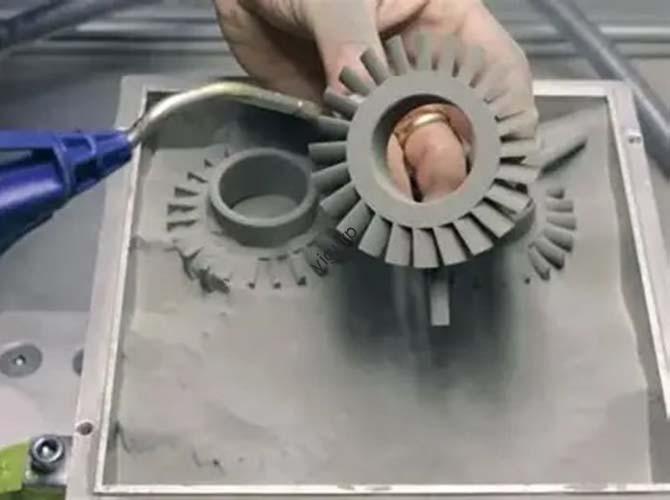
Our Capabilities: Delivering Titanium 3D Printing Excellence
At Yigu Technology, our Titanium 3D Printing capabilities are engineered to meet the strictest industry standards—from aerospace to medical. We combine advanced tools with deep technical expertise to deliver consistent, high-quality results:
- Precision Printing: Our machines (e.g., EOS M 400, Arcam Q20) achieve tight tolerances (as low as ±0.03mm) and part densities up to 99.9%—critical for medical implants and aerospace components.
- Complex Geometries: We print intricate designs (e.g., internal lattices, hollow structures) that are impossible with traditional machining—perfect for lightweighting parts without sacrificing strength.
- High-Quality Outputs: Every titanium part undergoes rigorous testing (tensile, fatigue, corrosion) to ensure it meets industry standards (e.g., ASTM F136 for medical titanium).
- Custom Solutions: Whether you need a patient-specific dental implant or a custom aerospace bracket, we tailor every step (material selection, post-processing) to your unique needs.
- Large Build Volume: Our EBM machines handle parts up to 400mm × 400mm × 400mm—ideal for large industrial or aerospace components.
- Post-Processing Services: We offer sandblasting, polishing, and heat treatment to enhance part performance and aesthetics.
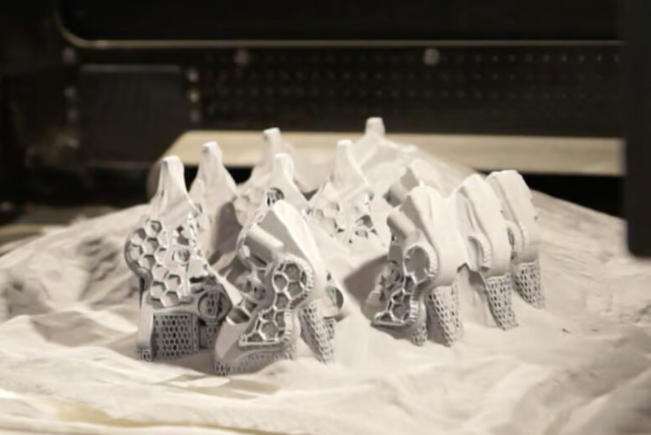
Table: Our Titanium 3D Printing Capabilities vs. Industry Averages
| Capability | Yigu Technology Performance | Industry Average |
| Max Build Volume | 400mm × 400mm × 400mm (EBM) | 300mm × 300mm × 300mm |
| Prototyping Lead Time | 4–6 days | 8–12 days |
| Production Capacity | Up to 5,000 parts/week | Up to 2,000 parts/week |
| Part Density | 99.7–99.9% | 95–98% |
| Tolerance Range | ±0.03–±0.1mm | ±0.1–±0.2mm |
What Is Titanium 3D Printing?
Titanium 3D Printing is a cutting-edge metal printing process that uses additive manufacturing principles to build parts layer by layer from titanium feedstock (typically powder). Unlike traditional subtractive methods (e.g., machining), it follows the core principle of layer-by-layer fabrication—adding material only where needed to transform a digital design into a physical object via digital fabrication.
At its heart, this technology leverages titanium’s unique properties: exceptional strength (comparable to steel), ultra-lightweight (40% lighter than steel), biocompatibility (safe for human implantation), and corrosion resistance (unaffected by saltwater, chemicals, and extreme temperatures). These traits, combined with 3D printing’s flexibility, make it ideal for industries where performance and reliability are non-negotiable.
Key Basics of Titanium 3D Printing:
| Term | Description | Role in the Process |
| Titanium Powders | Fine, spherical particles (15–45μm) used as feedstock | The raw material melted or sintered to form dense, high-strength layers |
| Rapid Prototyping | Quickly turning digital designs into physical titanium prototypes | Accelerates product development by 50–70% vs. traditional methods |
| Customized Production | Creating one-of-a-kind or low-volume titanium parts without tooling | Ideal for medical implants (patient-specific) and aerospace components (unique geometries) |
Materials: Choosing the Right Titanium for Your Project
Not all titanium materials are the same—we offer a range of titanium alloys and pure titanium to match your application’s demands. Here’s how our materials stack up:
| Material Type | Key Properties | Ideal Applications |
| Ti-6Al-4V (Grade 5) | High strength (860 MPa), excellent corrosion resistance, biocompatible | Aerospace components (engine brackets, wing parts), medical implants (hip cups, bone screws) |
| Pure Titanium (Grade 2) | High ductility, superior biocompatibility, low strength (345 MPa) | Dental implants, surgical instruments, chemical processing parts |
| Ti-6Al-4V ELI (Grade 23) | Extra low interstitial (fewer impurities), enhanced biocompatibility | Implantable medical devices (spinal cages, cranial plates) |
| Titanium Composites (Ti + carbon fiber) | 30% higher strength-to-weight ratio than Ti-6Al-4V | High-performance aerospace parts, racing automotive components |
| Ti-5Al-2.5Sn | High-temperature resistance (up to 500°C), good creep strength | Aerospace engine components, industrial furnace parts |
We source titanium powders from certified suppliers—every batch is tested for purity (minimum 99.95% titanium content) and flowability to ensure consistent print quality.
Advantages: Why Titanium 3D Printing Outperforms Traditional Methods
Titanium 3D Printing offers a range of benefits that make it a superior choice for high-performance applications:
- Weight Reduction: Titanium is 40% lighter than steel and 60% lighter than copper—ideal for aerospace (reduces fuel consumption by ~10% per 10% weight reduction) and automotive (improves EV range).
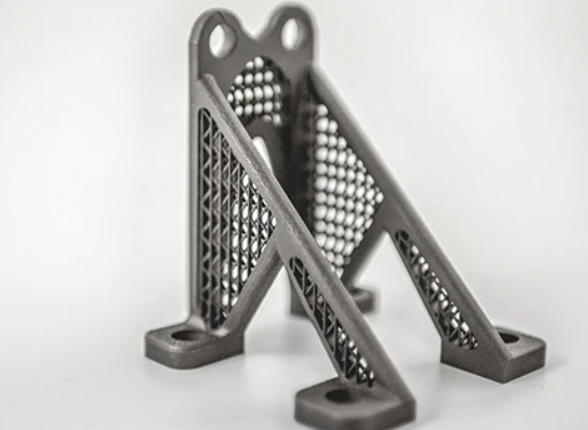
- Design Freedom: Create complex geometries (e.g., lattice structures, internal channels) that are impossible with machining—saving material and improving performance (e.g., better heat dissipation in electronics).
- Reduced Waste: Traditional machining of titanium generates 70–80% waste, while 3D printing reduces waste to <5% (unused powder is recycled).
- Rapid Production: Prototypes are ready in 4–6 days (vs. 2–4 weeks for casting), and production lead times are cut by 60%—accelerating time to market.
- Cost-Effective: For small batches (1–100 parts), 3D printing eliminates expensive tooling (saving 50–70% vs. casting) and reduces material waste.
- High Strength-to-Weight Ratio: Titanium’s strength matches steel, but at half the weight—making it perfect for load-bearing parts (e.g., aerospace brackets, medical implants).
Applications Industry: Where Titanium 3D Printing Shines
Titanium’s unique properties make it a versatile material across industries. Here’s how we’re using Titanium 3D Printing to solve real-world challenges:
| Industry | Key Applications | Why Titanium? |
| Aerospace | Engine components, wing brackets, satellite parts | High strength-to-weight ratio, heat resistance (up to 500°C for Ti-5Al-2.5Sn) |
| Medical | Implantable devices (hip cups, spinal cages), surgical tools, dental implants | Biocompatibility (no rejection), corrosion resistance (to bodily fluids) |
| Automotive | Racing components (engine parts, suspension brackets), luxury car trim | Lightweight (improves speed/fuel efficiency), durability |
| Defense | Armor plates, missile components, drone parts | High strength, corrosion resistance (for harsh environments) |
| Dental | Custom crowns, bridges, implant abutments | Biocompatibility, precision fit (matches patient teeth) |
| Sports Equipment | Golf club heads, bicycle frames, ski bindings | Lightweight, high strength (improves performance) |
Manufacturing Techniques: Matching the Right Method to Your Titanium Project
We use a range of Titanium 3D Printing manufacturing techniques to optimize part quality, cost, and speed:
| Technique | How It Works | Best For | Volume Range | Cost per Part (100 units) |
| Selective Laser Melting (SLM) | Laser melts titanium powder into dense parts (99.7–99.9% density) | High-precision parts (e.g., medical implants, small aerospace components) | 1–1,000 | 300–1,200 |
| Electron Beam Melting (EBM) | Electron beam melts powder (faster than SLM, better for high-temperature alloys) | Large aerospace parts, high-temperature components | 1–500 | 400–1,500 |
| Direct Metal Laser Sintering (DMLS) | Laser sinters powder (slightly lower density than SLM: 98–99%) | Prototypes, low-volume industrial parts | 1–300 | 250–1,000 |
| Wire Arc Additive Manufacturing (WAAM) | Electric arc melts titanium wire to build large parts | Very large industrial components (e.g., ship hull parts) | 1–50 | 500–2,000 |
| Binder Jetting | Binder glues powder into shape (then sintered to densify) | High-volume, low-cost parts (e.g., consumer electronics components) | 1,000+ | 150–500 |