
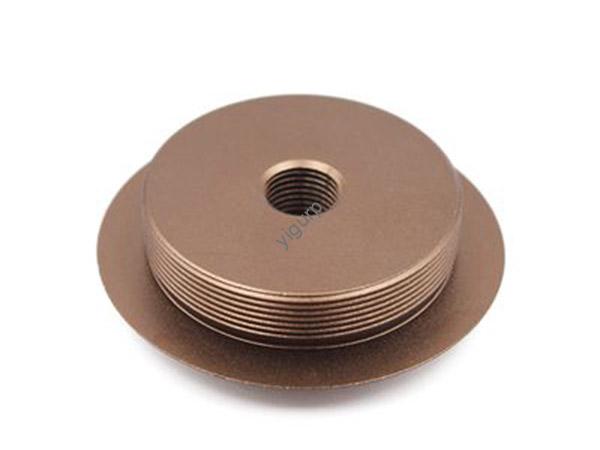
If your equipment battles constant scraping, impact, or friction—think mining buckets, crusher parts, or dump truck beds—AR400 abrasion resistant steel is your solution. This tough, quenched-and-tempered steel outlasts standard steel by 3 to 5 times, cutting replacement costs and downtime. This guide covers everything you need to know to choose, use, and fabricate AR400 effectively.
What forms does AR400 come in?
AR400 comes in versatile shapes to fit high-wear equipment and projects. Picking the right product ensures maximum durability without wasting material.
| Product Type | Key Features | Common Uses |
|---|---|---|
| Plate | Thick (6–100 mm), uniform hardness | Mining dump truck liners, excavator bucket floors |
| Sheet and cut-to-size | Thin (2–6 mm), pre-cut to specs | Light-duty chutes, agricultural tool blades |
| Strip and slit coil | Narrow (10–150 mm width), continuous lengths | Conveyor scrapers, small wear strips |
| Custom-profiled parts | Shaped to equipment | Shredder blades, bulldozer edge protectors |
| Bar and flat | Solid, high-strength | Industrial mixer arms, grain elevator components |
A recycling plant swapped standard steel shredder blades for custom-profiled AR400 parts. Blades that used to break after 2 weeks now last 3 months—saving $8,000 in monthly replacements.
What makes AR400 so tough?
AR400’s abrasion resistance comes from its precise chemistry and heat-treated structure. The quenched and tempered process creates a uniform martensitic microstructure with no weak spots.
Chemical composition
The elements work together to build hardness and toughness.
| Element | Content Range | Role |
|---|---|---|
| Carbon (C) | 0.25 – 0.35% | Builds hardness, critical for wear resistance |
| Chromium (Cr) | 1.00 – 1.50% | Forms hard carbides that block abrasion |
| Molybdenum (Mo) | 0.15 – 0.25% | Boosts toughness and heat resistance |
| Boron (B) | 0.0005 – 0.0030% | Improves hardenability, ensures uniform strength |
| Manganese (Mn) | 1.40 – 1.80% | Enhances tensile strength and work-hardening |
Microstructure: quenched and tempered martensite
AR400 undergoes a specific heat treatment process.
- Quenching: Heated to 850–900°C, then rapidly cooled in water or oil to form a hard, dense martensite structure.
- Tempering: Reheated to 500–600°C to reduce brittleness while keeping hardness.
The result is a uniform martensitic microstructure with through-thickness hardness uniformity. Even thick AR400 plates wear evenly—unlike cheaper steels that thin out in patches.
What are the mechanical properties of AR400?
AR400 balances extreme hardness with enough toughness to avoid cracking. Here’s how it compares to standard carbon steel and lower-grade AR200.
| Property | AR400 | AR200 | A36 Carbon |
|---|---|---|---|
| Hardness (BHN) | 360–440 | 180–220 | 110–130 |
| Tensile strength | 1,000–1,200 MPa | 700–850 MPa | 400–550 MPa |
| Yield strength | ≥ 800 MPa | ≥ 550 MPa | ≥ 250 MPa |
| Impact toughness at -20°C | ≥ 27 J | ≥ 30 J | ≥ 27 J |
| Fatigue life at 10⁶ cycles | 350–400 MPa | 280–320 MPa | 180–220 MPa |
Standout traits
- Work-hardening behavior: When AR400 is hit or rubbed by rocks in a bucket, its surface hardness jumps to 450–500 BHN. This self-strengthening makes it more resistant as it’s used.
- Abrasion resistance: Tests show AR400 resists wear 5 times better than A36 steel. Mining dump truck liners handle 5 times more loads before needing replacement.
What standards should you look for?
Not all wear steel meets AR400 specs. Stick to these standards to ensure quality.
| Standard/Grade | Region | Key Requirements |
|---|---|---|
| ASTM A514 | USA | Meets hardness of 360–440 BHN and toughness |
| AR400F | Global | “F” denotes improved formability for bending |
| EN 10029 | Europe | Ensures uniform chemistry and through-thickness hardness |
| ISO 4952 | Global | Harmonized standard for abrasion-resistant steels |
| OEM specs | Equipment makers | Custom tweaks for brands like Caterpillar |
Pro tip: Always ask for a Mill Test Report (MTR). It confirms hardness, chemistry, and compliance. Never buy AR400 without one.
Where does AR400 perform best?
AR400 is a workhorse in industries where wear destroys equipment.
Mining
Used for dump truck liners and excavator bucket wear packages. A copper mine in Chile reports AR400 liners last 4 times longer than standard steel.
Waste and recycling
Used for shredder blades and sorting machine parts. AR400 resists damage from glass, metal, and plastic without dulling.
Construction
Used for bulldozer blades, concrete mixer drums, and asphalt paver plates. AR400 stands up to gravel, sand, and sharp debris.
Agriculture
Used for tillage tools like plows and harrows. Farmers report tools last 2–3 seasons instead of 1 when made from AR400.
Material handling
Used for chute and hopper liners for coal, cement, and grain. The smooth, hard surface prevents clogging and wear.
How should you fabricate AR400?
AR400 is harder than standard steel, so it needs specific fabrication techniques. Follow these guidelines to avoid mistakes.
Cutting AR400
- Plasma cutting: The best method. Use these speeds:
- 2–6 mm plates: 150–200 mm/min
- 6–25 mm plates: 80–120 mm/min
- 25–100 mm plates: 40–60 mm/min
- Oxy-fuel cutting: Works for plates over 10 mm. Preheat to 200–300°C first to prevent cracking.
Welding AR400
| Step | Specification |
|---|---|
| Preheat temperature | 200–300°C (thicker plates need higher heat) |
| Consumables | Low-hydrogen rods (AWS E11018-G) or wires (ER110S-G) |
| Post-weld stress relief | Heat weld area to 550–600°C, hold 1 hour per 25 mm thickness, cool slowly |
Skipping preheat causes cracks. Always match consumables to AR400’s strength.
Cold bending
AR400 has strict bending limits.
- Plates under 10 mm: minimum bend radius is 5 times plate thickness (50 mm radius for 10 mm plate)
- Thicker plates: heat to 300–400°C first to avoid cracking
Conclusion
AR400 abrasion resistant steel delivers exceptional wear life for demanding applications. Its quenched and tempered martensitic structure provides hardness up to 440 BHN while maintaining enough toughness for moderate impacts. For mining equipment, recycling machinery, construction tools, and material handling systems, AR400 reduces downtime and replacement costs. With proper fabrication techniques like preheating for welding and following bending limits, it performs reliably in the toughest conditions.
FAQ
Can AR400 rust?
Yes. AR400 resists wear, not corrosion. For outdoor or wet use like marine mining, add zinc coating or paint with a corrosion-resistant industrial primer. This extends service life by 2–3 years.
Is AR400 too brittle for impact?
No. Its quenched and tempered structure balances hardness with toughness. AR400 handles moderate impacts like rocks hitting a bucket. Avoid extreme impacts like sledgehammer blows, which can cause cracking.
When should I choose AR400 over AR200?
Choose AR400 for extreme wear like shredders and mining buckets. Choose AR200 for lighter wear like agricultural chutes or parts needing more flexibility like curved liners. AR400 lasts longer but is less formable.
Can AR400 be welded without preheating?
No. Always preheat AR400 to 200–300°C before welding. Skipping preheat causes hydrogen cracking in the heat-affected zone. Thicker plates require higher preheat temperatures.
What’s the difference between AR400 and AR400F?
AR400F has improved formability for bending and forming. The “F” designation indicates it meets stricter bend test requirements. Choose AR400F for applications needing tight bends or complex shapes.
Discuss Your Projects with Yigu Rapid Prototyping
At Yigu Rapid Prototyping, we supply AR400 abrasion resistant steel for mining, recycling, and construction equipment. From cut-to-size plates to custom-profiled wear parts, our AR400 meets ASTM and ISO standards with Mill Test Reports for every order. We also provide fabrication guidance to help you cut and weld successfully. Contact us to discuss your wear-intensive application.