
Our CNC Swissing Services
Elevate your small-component production with our CNC Swissing services—the gold standard for high precision and tight tolerances in aerospace, medical, and electronics industries.
Leveraging advanced Swiss Screw Machining and Swiss Turning technology, we craft intricate parts (down to 0.5mm diameter) from metals (titanium, stainless steel), exotic alloys, and high-performance polymers—delivering consistent, repeatable results with exceptional surface finishes. Whether you need micro-medical components or high-volume electronics parts, our custom solutions blend efficiency, versatility, and uncompromising quality.
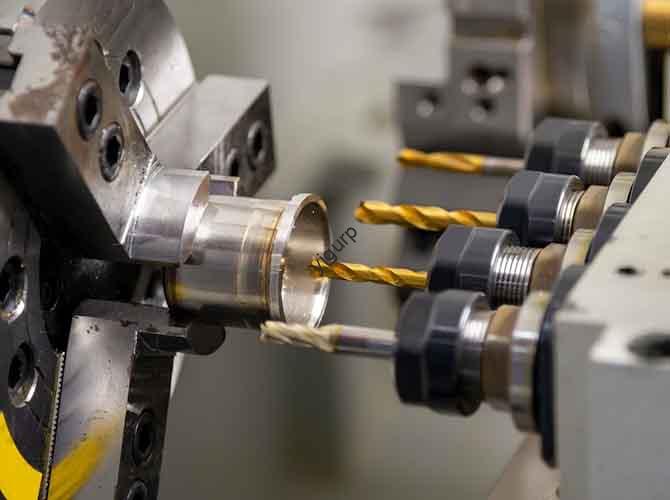
Our CNC Swissing Capabilities
We offer comprehensive CNC Swissing capabilities tailored to the demands of small-component manufacturing, with a focus on precision machining levels, tolerance achievements, and flexibility. Below is a detailed breakdown of our key capacities:
| Capability | Specification |
| Precision Levels | – Positioning accuracy: ±0.0005–0.002mm- Repeatability: ±0.0003–0.001mm |
| Tolerance Achievements | – Standard: ±0.001–0.005mm (metals), ±0.005–0.01mm (non-metals)- Critical parts: ±0.0005mm (e.g., medical micro-needles)- Meets ISO 2768-1 (extra-fine grade) and ASME Y14.5 |
| Maximum Part Size | – Diameter: 0.5mm–25mm (ideal for small parts)- Length: Up to 300mm (length-to-diameter ratio up to 20:1)- Weight: Up to 500g |
| Material Thickness | – Metals: 0.5mm–20mm (stainless steel), 0.5mm–25mm (aluminum), 0.5mm–15mm (titanium)- Non-Metals: 1mm–20mm (plastics), 1mm–15mm (composites)- Special Materials: 0.5mm–10mm (exotic metals like inconel), 1mm–15mm (high-performance polymers) |
| Custom Machining | – Features: Micro-threads (down to 0.2mm pitch), cross-holes (0.3mm diameter), slots, knurls, and undercuts- Compatibility: CAD/CAM files (DXF, DWG, STEP, STL, IGES)- Volume: Prototypes (1–100 units) to high-volume (500,000+ units/month) |
| Tooling Options | – Cutting tools: Carbide, diamond-coated, ceramic (for exotic metals)- Live tooling: Drills, taps, mills (for multi-feature parts in one setup)- Tool changers: Automated (up to 32 tools) for high-volume runs |
| High-Speed Machining | – Spindle speed: Up to 15,000 RPM (for aluminum/plastics)- Feed rate: Up to 500mm/min (optimized for efficiency without compromising precision) |
| Quality Assurance | – In-line inspection: Laser micrometers, vision systems (for real-time dimension checks)- Post-machining: CMMs (Coordinate Measuring Machines), optical comparators- Compliance: ISO 9001, AS9100 (aerospace), ISO 13485 (medical) |
Whether you need 100 titanium medical needles (0.8mm diameter) or 500,000 brass electronics pins (2mm diameter), our CNC Swissing capabilities scale to match your project’s complexity and volume.
What Is CNC Swissing?
CNC Swissing—also known as Swiss Screw Machining or Swiss Turning—is a specialized manufacturing technology designed to produce small, complex cylindrical parts with ultra-tight tolerances. Originating in Switzerland in the 19th century for watchmaking, it has evolved into an automated CNC process that excels at parts where precision and consistency are non-negotiable.
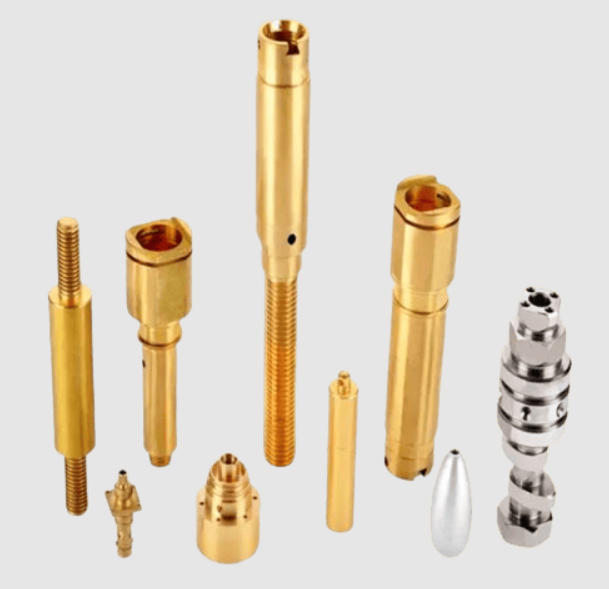
The process overview revolves around a unique design: Unlike conventional turning (where the workpiece is held at one end), CNC Swissing uses a guide bushing—a precision sleeve that supports the workpiece close to the cutting tool. This minimizes vibration and deflection, even for long, thin parts (e.g., medical needles, electronics pins).
To explain “how it works” simply: The workpiece is fed through the guide bushing and rotated by a spindle. Cutting tools (mounted on a sliding turret or gang tool post) move along multiple axes (X, Y, Z, and often C for rotational control) to shape the part. The guide bushing ensures the cutting tool acts on the workpiece’s unsupported length with minimal flex—enabling tolerances as tight as ±0.001mm.
In short, CNC Swissing is the go-to for “micro-precision” parts: If a component is small (typically ≤25mm diameter), long (length-to-diameter ratio ≥10:1), or requires complex features (e.g., multiple threads, slots, cross-holes), CNC Swissing delivers results conventional machining can’t match.
The CNC Swissing Process
Our step-by-step process is optimized to leverage the unique advantages of Swiss Screw Machining—minimizing vibration, maximizing precision, and streamlining production:
- Design and CAD Modeling: We start by reviewing your CAD model (or creating one from sketches/specifications). Our engineers optimize the design for CNC Swissing—e.g., ensuring features like cross-holes are accessible with live tooling and the part’s length-to-diameter ratio works with the guide bushing. For micro-parts, we use 3D simulation to test feasibility.
- CAM Programming: The CAD model is imported into CAM software (Mastercam Swiss, GibbsCAM) to generate optimized tool paths. We program sequential operations (turning → drilling → tapping → milling) and synchronize tool movements with spindle rotation. For high-volume runs, we add in-line inspection triggers (e.g., check diameter after turning).
- Setup and Calibration: The workpiece (usually a bar stock) is loaded into the machine’s spindle and fed through the guide bushing (calibrated to within ±0.0005mm of the spindle axis). Cutting tools are mounted on the turret/gang tool post, and coolant systems are activated. We run a test part to verify tolerances and adjust tool offsets if needed.
- Machining Execution: The machine runs the CAM program, with the guide bushing supporting the workpiece during cutting. Live tooling adds complex features (e.g., cross-holes, threads) without repositioning the part. Our operators monitor the process via CNC software, adjusting spindle speed/feed rate for material-specific needs (e.g., slower speeds for titanium).
- Post-Machining Inspection: Parts undergo rigorous quality control—100% inspection for critical components (e.g., medical devices) using CMMs and optical comparators. We verify dimensions, tolerances, and surface finish against CAD data. For high-volume runs, in-line vision systems flag defects in real time.
- Swiss Screw Machine Operation Review: After production, we analyze tool wear and process data to refine future runs—ensuring consistent quality for repeat orders.
Materials We Work With
CNC Swissing excels with a wide range of materials—from common metals to specialized alloys and polymers. Below is a breakdown of our supported materials, their key properties, and ideal uses:
| Material Category | Examples | Key Properties | Ideal Applications | Machining Notes |
| Metals | Stainless Steel | Corrosion-resistant, strong | Medical needles, aerospace fasteners | Use carbide tools; flood coolant reduces heat |
| | Aluminum | Lightweight, conductive, easy to machine | Electronics pins, automotive connectors | High spindle speeds (12,000–15,000 RPM) |
| | Titanium | High strength-to-weight, biocompatible | Orthopedic screws, medical catheters | Slow speeds (3,000–5,000 RPM); sharp tools |
| | Brass | Malleable, conductive | Electrical terminals, watch components | Fast speeds; produces smooth finishes |
| | Copper | Highly conductive, soft | Heat exchanger tubes, electronics pins | Use coolant to avoid melting; sharp tools |
| Non-Metals | Plastics (ABS/Polycarbonate) | Lightweight, durable | Consumer goods components, electronics casings | Low speeds to prevent warping |
| | Composites | High strength, lightweight | Drone components, aerospace sensors | Specialized carbide tools to avoid fraying |
| Special Materials | Exotic Metals (Inconel/Tantalum) | Heat-resistant, corrosion-proof | Aerospace engine parts, chemical processing components | Ceramic tools; slow, steady feeds |
| | High-Performance Polymers (PEEK/PTFE) | Heat-resistant, chemical-resistant | Medical implants, industrial seals | Low spindle speeds; mist coolant |
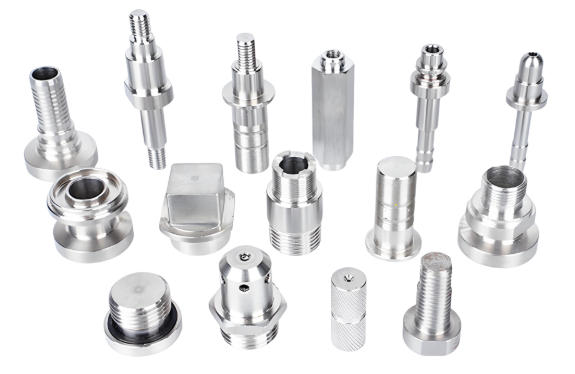
We test all materials to optimize tool selection, speeds, and coolant use—ensuring consistent precision across every part.
Tolerances & Quality Assurance
Tolerances and accuracy standards are the foundation of CNC Swissing—especially for parts used in safety-critical industries. Our precision levels and tolerance ranges are tailored to your material and application, backed by rigorous measurement techniques and quality control processes:
| Material | Tolerance Range | Accuracy Standard Used | Measurement Technique | Inspection Methods |
| Stainless Steel | ±0.0005–0.003mm | ISO 2768-1 (extra-fine), ASME Y14.5 | CMM + Laser Micrometer | 100% inspection for medical parts |
| Titanium | ±0.001–0.005mm | ISO 2768-1 (extra-fine), AMS 4928 | CMM + Optical Comparator | 100% inspection + stress testing |
| Aluminum | ±0.002–0.008mm | ISO 2768-1 (fine), AMS 2750 | CMM + Digital Calipers | Sampling (5%) for high-volume |
| ABS Plastic | ±0.005–0.015mm | ISO 2768-1 (fine), ASTM D638 | CMM + Micrometer | Sampling (10%) for prototypes |
| Exotic Metals (Inconel) | ±0.001–0.004mm | ISO 2768-1 (extra-fine), AS9100 | CMM + X-Ray Fluorescence | 100% inspection + material verification |
| PEEK Polymer | ±0.005–0.02mm | ISO 2768-1 (medium), ASTM D638 | Optical Profilometer + CMM | 100% inspection (brittle material) |
Our quality control processes include:
- Pre-machining: Inspecting raw materials (bar stock) for defects (e.g., cracks, uneven diameter) and verifying material composition (via X-ray fluorescence for exotic metals).
- In-process: Real-time monitoring of tool wear, spindle speed, and part dimensions (via laser micrometers and vision systems); automatic tool changes when wear is detected.
Post-machining: 100% inspection for critical parts (medical/aerospace); statistical sampling for high-volume orders. We document every step (machining parameters, inspection results) for compliance.
Key Advantages of CNC Swissing
Compared to conventional turning or milling, CNC Swissing offers unique benefits for small, complex parts:
- High Precision: With tolerances as tight as ±0.0005mm, it produces parts that fit seamlessly—critical for micro-medical components (e.g., catheter tips) or electronics pins where even tiny gaps cause failure.
- Consistency and Repeatability: The guide bushing minimizes vibration, and CNC automation ensures every part is identical—even for high-volume orders (e.g., 500,000 brass terminals).
- Complex Geometries: Live tooling and multi-axis control enable machining of features like cross-holes, threads, and undercuts in one setup—eliminating the need for secondary operations (and associated errors).
- Reduced Setup Time: Automated tool changers and bar-feeder systems let us run unattended for hours—cutting setup time by 60–80% compared to conventional machining.
- Increased Efficiency: High-Speed Machining (up to 15,000 RPM for aluminum) and unattended operation reduce per-part cycle time. For high-volume parts, we achieve production rates of 10–50 parts per minute.
- Versatility: It works with almost any material (metals, plastics, exotics) and handles parts from 0.5mm to 25mm diameter—making it a one-stop solution for diverse small-component needs.
- Cost-Effectiveness: While upfront costs are higher than conventional machining, reduced secondary operations, minimal waste (precision cutting), and fast cycle times lower long-term costs—especially for high-volume orders.
- Tight Tolerances: The guide bushing’s support is unmatched for long, thin parts (e.g., 20mm-long needles with 1mm diameter)—conventional turning would cause deflection, but CNC Swissing maintains ±0.001mm tolerance.
- High-Quality Surface Finish: Minimal vibration and sharp cutting tools produce surface finishes as smooth as Ra 0.1μm—eliminating the need for post-machining polishing in many cases.
Industry Applications
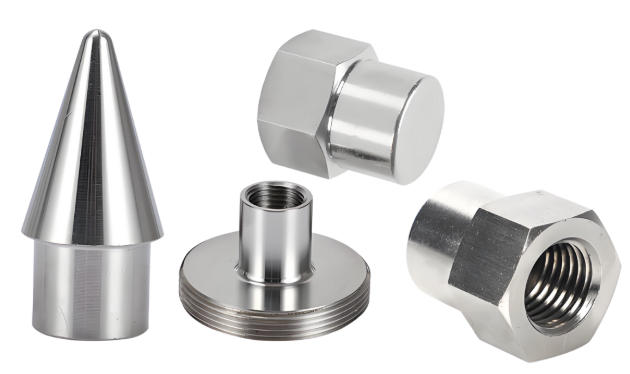
CNC Swissing is indispensable across industries that rely on small, high-precision components. Here are its most common applications:
| Industry | Common Uses | Key Benefit of CNC Swissing |
| Aerospace | Micro-fasteners (titanium), fuel injector nozzles (stainless steel), sensor pins (brass) | Tight tolerances for flight safety |
| Automotive | Fuel system components (brass), electrical connectors (copper), valve stems (steel) | High-volume consistency |
| Medical Devices | Hypodermic needles (stainless steel), orthopedic screws (titanium), catheter tips (PEEK) | Micro-precision + biocompatibility |
| Industrial Manufacturing | Hydraulic valve pins (steel), pneumatic fittings (brass), sensor components (aluminum) | Durability + tight fitment |
| Electronics | PCB pins (brass), connector terminals (copper), micro-switch components (plastic) | Small size + conductivity |
| Defense | Weapon sight components (aluminum), communication device pins (brass), guidance system parts (titanium) | Reliability in harsh environments |
| Tool and Die Making | Precision punches (steel), die pins (carbide), mold components (stainless steel) | Long tool life + accuracy |
| Prototyping | Small-component prototypes (plastics/aluminum) | Fast turnaround for design testing |
| Consumer Goods | Watch components (brass/steel), eyeglass hinges (titanium), jewelry findings (gold-plated brass) | Aesthetics + precision |
| Energy | Solar panel connector pins (copper), wind turbine sensor components (stainless steel) | Corrosion resistance + durability |
For example, in the medical industry, our CNC-swissed hypodermic needles (0.8mm diameter, ±0.001mm tolerance) ensure consistent fluid flow and minimal patient discomfort. In electronics, our brass PCB pins (1mm diameter) fit seamlessly into dense circuit boards—critical for miniaturized devices like smartphones.
Case Studies: CNC Swissing Success Stories
Our CNC Swissing services have solved complex small-component challenges for clients across medical, electronics, and aerospace industries. Below are two successful projects showcasing our expertise in micro-precision and high-volume production:
Case Study 1: Medical Device Company (Stainless Steel Hypodermic Needles)
- Challenge: The client needed 1,000,000 stainless steel hypodermic needles monthly (0.8mm outer diameter, 0.5mm inner diameter, ±0.001mm tolerance). The needles required a sharp, burr-free tip (for minimal patient discomfort) and a polished inner surface (for consistent fluid flow). Their previous supplier used conventional turning, which caused 5% of needles to fail (uneven tips, inconsistent inner diameter) and had a 3-week lead time.
- Solution: We used CNC Swissing with a 12mm-capacity Swiss machine, carbide turning tools, and micro-grinding tools for the needle tip. We optimized the process with automatic bar feeders (3-meter bars) for unattended operation and in-line vision systems to inspect tip sharpness and inner diameter in real time. For the polished inner surface, we used a diamond-coated honing tool in the live tooling turret. We ran 10 machines 24/7 to meet high-volume demand.
- Results:
- Defect rate dropped from 5% to 0.3%—only 3,000 needles failed per month (vs. 50,000 previously).
- Lead time shortened from 3 weeks to 10 days—helping the client keep up with global demand for medical supplies.
- The client’s customer satisfaction score increased by 20% (due to smoother needle insertion and consistent performance).
- Client Testimonial: “CNC Swissing transformed our needle production. The precision and speed are unmatched, and the defect reduction saved us thousands in rework costs. We’ve expanded our order to include other medical components.” — Jennifer M., Medical Device Production Director.
- Before and After: Conventional needles had jagged tips and inconsistent inner diameters; our needles featured sharp, uniform tips and smooth inner surfaces that met FDA standards.