
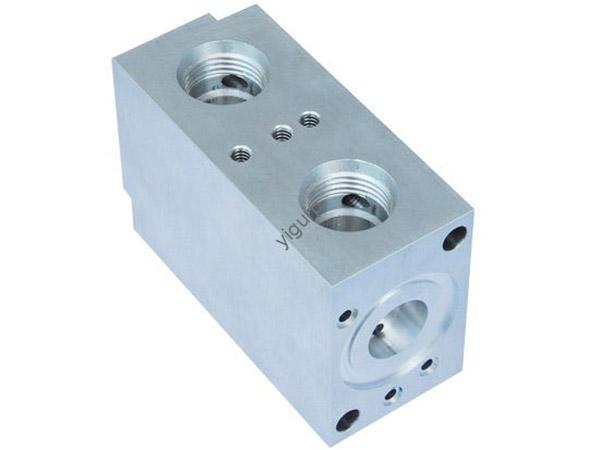
ST14 tool steel is a low-carbon, deep-drawing grade steel specifically engineered for applications requiring exceptional formability, excellent surface finish, and good machinability. With a carbon content of ≤0.10%, it is among the softest and most ductile of tool steels. This ultra-low carbon content gives it a unique combination of properties: it can be deep-drawn into complex shapes with depth-to-thickness ratios as high as 8:1, it can be machined with high precision using standard tools, and it provides a smooth, high-quality surface finish. These characteristics make ST14 the material of choice for deep-drawn dies, precision mechanical components, and parts where intricate shaping is required.
Introduction
For many tooling and manufacturing applications, the primary requirement is not extreme hardness but rather the ability to form complex shapes with precision and efficiency. High-carbon tool steels can be made very hard, but they are difficult to form and machine. Standard low-carbon steels are more formable but often lack the surface quality and consistency needed for precision tooling. ST14 was developed to fill this gap. It is a deep-drawing grade steel that is optimized for workability. Its ultra-low carbon content ensures it remains soft and ductile, allowing it to be drawn, stretched, and bent into intricate shapes without cracking. Its controlled chemistry also provides a smooth surface finish that is ready for use or coating. For manufacturers of deep-drawn dies, precision stamping tools, and complex mechanical components, ST14 offers a practical and cost-effective solution.
What Are the Key Properties of ST14?
The performance of ST14 is defined by its ultra-low carbon content and the resulting mechanical properties that prioritize workability over hardness.
Chemical Composition
ST14 is a low-carbon steel with tightly controlled impurities to ensure consistent forming and surface quality.
| Element | Content Range (%) | Its Role in Performance |
|---|---|---|
| Carbon (C) | ≤ 0.10 | Ultra-low for maximum ductility and deep-drawability. |
| Manganese (Mn) | ≤ 0.40 | Provides modest strength without compromising formability. |
| Silicon (Si) | ≤ 0.30 | Aids in deoxidation during steelmaking. |
| Sulfur (S) | ≤ 0.040 | Controlled to improve machinability while maintaining formability. |
| Phosphorus (P) | ≤ 0.035 | Minimized to prevent cold brittleness. |
Mechanical and Physical Properties
These properties make ST14 exceptionally easy to work with.
| Property | Typical Value | Why It Matters |
|---|---|---|
| Tensile Strength | 280 – 380 MPa | Sufficient for light-duty tooling and precision components. |
| Yield Strength | 160 – 240 MPa | Low enough for deep drawing without cracking. |
| Hardness | 55 – 85 HB | Extremely soft, allowing for fast machining with standard tools. |
| Elongation | 30 – 40% | Exceptional ductility, enabling deep-draw ratios up to 8:1. |
| Impact Toughness | 55 – 75 J/cm² | Excellent toughness, preventing breakage from minor impacts. |
| Surface Finish | Ra 0.4 – 1.6 μm | Smooth finish ready for use or coating. |
| Density | 7.85 g/cm³ | Standard for steel, simplifying design calculations. |
- Machinability: It has outstanding machinability. Its softness and uniform grain structure allow for fast CNC machining, drilling, and tapping with standard high-speed steel tools, reducing machining time by up to 30% compared to alloy steels.
- Formability: This is its standout feature. ST14 is specialized for deep drawing and can achieve depth-to-thickness ratios of 8:1 or higher without cracking.
- Weldability: It has excellent weldability. The ultra-low carbon content allows for welding with common methods (MIG, TIG, arc) without preheating for thin sections.
Where Is ST14 Used in the Real World?
ST14 is used in applications where complex forming, precision, and surface quality are more important than extreme hardness.
Deep-Drawn Tooling and Dies
This is a primary application. ST14 is used for dies that form thin-walled parts through deep drawing.
- Case Study: A small metal fabricator was using standard low-carbon steel for deep-drawn aluminum can dies. The dies were cracking during forming, resulting in a 20% scrap rate .
- They switched to ST14 dies.
- The scrap rate dropped to 3% .
- This saved $12,000 annually in material waste.
- Die production time was cut by 25% due to improved machinability.
Precision Mechanical Components
ST14 is used for small, precision parts in appliances, electronics, and light machinery.
- Shafts: Small shafts for blender motors and vacuum cleaners benefit from its machinability, allowing for tight diameter tolerances (±0.005 mm).
- Gears: Low-torque gears for printers and small motors use its smooth surface finish for quiet, efficient operation.
- Housings: Thin-walled brackets and covers for electronics, such as smartphone chargers, benefit from its formability and surface finish.
Automotive and Electrical Components
ST14 is used for non-load-bearing automotive parts and electrical enclosures.
- Engine Components: Oil pans, fuel filter housings, and sensor brackets benefit from its formability for fitting into tight spaces and its surface finish for easy cleaning.
- Electrical Enclosures: Thin-walled housings for routers and power supplies use ST14 for its deep-drawability, creating seamless, aesthetically pleasing designs.
How Is ST14 Manufactured?
The manufacturing process for ST14 is designed to maximize its formability and surface quality.
Steelmaking and Cold Rolling
- Steelmaking: It is typically made in a Basic Oxygen Furnace (BOF) or Electric Arc Furnace (EAF) , with strict control to keep carbon below 0.10% and impurities low.
- Hot Rolling: The steel is hot rolled to an intermediate thickness.
- Annealing: The hot-rolled steel is annealed (heated to 680-730°C and slowly cooled) to soften it and prepare the microstructure for deep drawing.
- Cold Rolling: This is the key step. The annealed steel is cold rolled to its final thickness. This improves the surface finish and aligns the grain structure for optimal formability.
Forming and Finishing
- Deep Drawing: The cold-rolled sheets are deep-drawn into complex shapes using specialized presses. The material’s high ductility allows for deep draws without cracking.
- Machining: In its soft state, ST14 is easily machined using standard high-speed steel (HSS) tools.
- Surface Treatment: For corrosion protection, ST14 can be painted, galvanized, or electroplated. Its smooth surface ensures even coating coverage.
ST14 vs. Other Common Materials
Comparing ST14 to other materials helps clarify its role as a specialized deep-drawing steel.
| Material | Formability (Deep Draw Ratio) | Machinability | Surface Finish | Relative Cost | Best For |
|---|---|---|---|---|---|
| ST14 | Superior (8:1) | Outstanding | Excellent | Low | Deep-drawn dies, precision components |
| ST12 | Good (5:1) | Outstanding | Good | 10% Lower | General forming, less complex draws |
| Low-Alloy Tool Steel (A2) | Poor (2:1) | Good | Fair | 4x Higher | High-wear tooling, not for forming |
| Stainless Steel (430) | Fair (4:1) | Good | Good | 4.5x Higher | Corrosion-resistant, light forming |
| Aluminum (5052) | Good (6:1) | Very Good | Good | 3.5x Higher | Lightweight, non-magnetic applications |
Key Takeaway: ST14 offers the best combination of deep-draw formability, machinability, and surface quality for complex tooling and precision components. It is significantly more formable than standard low-carbon steel and far more machinable and affordable than alloy or stainless tool steels. For applications requiring complex shapes, tight tolerances, and a high-quality finish, ST14 is the optimal and most cost-effective choice.
Conclusion
ST14 tool steel is a specialized material engineered for deep drawing and precision manufacturing. Its ultra-low carbon content provides exceptional ductility, allowing it to be formed into complex shapes with high depth-to-thickness ratios. Its excellent machinability and smooth surface finish make it ideal for precision tooling and components where both form and function are important. For applications in deep-drawn dies, precision mechanical parts, and high-quality enclosures, ST14 offers a reliable, efficient, and cost-effective solution.
FAQ About ST14 Tool Steel
What is the maximum depth-to-thickness ratio achievable with ST14?
ST14 can achieve depth-to-thickness ratios of up to 8:1 in deep drawing operations. This means, for example, a 1 mm thick sheet can be drawn into a shape that is 8 mm deep. This makes it suitable for complex, deep-drawn components like cans, housings, and deep die cavities.
Can ST14 be used for outdoor applications?
No, not without protection. ST14 has low inherent corrosion resistance. For outdoor or humid environments, it requires a protective coating such as paint, hot-dip galvanizing, or electroplating. Its smooth surface provides excellent adhesion for these coatings.
What is the difference between ST14 and ST12?
The main differences are formability and cost. ST14 offers superior deep-drawability, with a depth-to-thickness ratio of up to 8:1, compared to ST12’s ratio of about 5:1. ST14 also typically has a better surface finish (Ra 0.4-1.6 μm vs. 0.8-3.2 μm). ST12 is slightly cheaper but is better suited for less demanding forming operations. For complex, deep-drawn parts, ST14 is the preferred choice.
Discuss Your Projects with Yigu Rapid Prototyping
At Yigu Rapid Prototyping, we have extensive experience working with ST14 and other deep-drawing steels for precision tooling and component manufacturing. We understand that for complex forming operations, material consistency and surface quality are as important as formability. We supply ST14 in sheets and coils with full mill test certificates. Our team can provide guidance on deep-drawing parameters, tool design, and surface finishing to ensure your components are formed accurately and efficiently. Whether you are manufacturing deep-drawn dies, precision mechanical components, or high-quality enclosures, we are here to help. Contact us today to discuss your project requirements.