
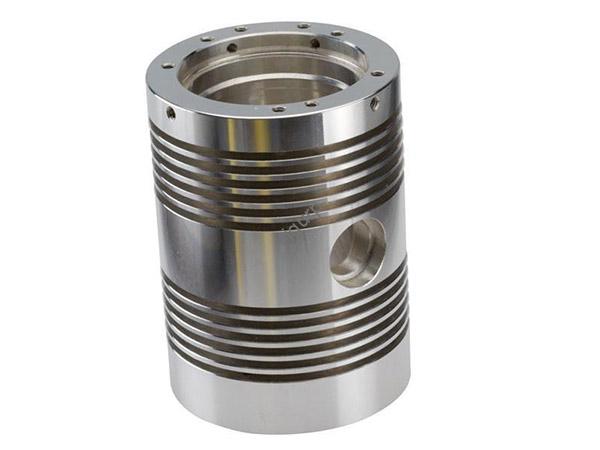
If you’re designing molds that need to withstand high temperatures, deliver mirror-like surface finishes, and endure high-volume production runs, EN 1.2312 mold steel offers a compelling combination of properties. This pre-hardened alloy balances hot hardness with excellent machinability, making it a practical choice for plastic injection molds, hot runner systems, and die casting applications. In this guide, we’ll cover its material properties, real-world applications, manufacturing techniques, and how it stacks up against alternative mold materials—giving you the information you need to decide if it’s right for your next mold project.
Introduction
Mold making involves constant trade-offs. Steels that are hard enough to resist wear often prove difficult to machine, increasing lead times and tooling costs. Materials that polish well for glossy cosmetic parts may lack the heat resistance needed for high-temperature plastics or hot runner systems. EN 1.2312 addresses these competing demands through a carefully designed composition. Supplied in a pre-hardened condition (HRC 30–35), it arrives ready for machining without requiring additional heat treatment. Its chromium and molybdenum content provide wear resistance and hot hardness, while a fine-grained structure enables exceptional polishability. This balance makes it a go-to material for mold makers serving automotive, consumer goods, and packaging industries.
What Material Properties Define EN 1.2312?
The performance of EN 1.2312 stems from its chemical composition and the resulting mechanical and physical characteristics. Understanding these helps you select the right processing methods and predict mold life.
Chemical Composition
The alloying elements in EN 1.2312 work together to achieve the desired balance of hardness, toughness, and machinability.
| Element | Content Range (%) | Role in the Alloy |
|---|---|---|
| Carbon (C) | 0.38 – 0.45 | Provides hardness while maintaining machinability |
| Manganese (Mn) | 0.80 – 1.10 | Improves hardenability; reduces brittleness |
| Silicon (Si) | 0.20 – 0.40 | Boosts strength and oxidation resistance |
| Chromium (Cr) | 1.70 – 2.00 | Enhances wear and corrosion resistance; forms carbides for durability |
| Nickel (Ni) | 1.00 – 1.30 | Improves toughness and ductility; prevents cracking under stress |
| Molybdenum (Mo) | 0.25 – 0.35 | Increases hot hardness—critical for hot runner systems |
| Vanadium (V) | 0.10 – 0.20 | Refines grain structure; improves polishability and fatigue strength |
| Sulfur (S) | ≤ 0.030 | Minimized to avoid surface defects like pits or lines |
| Phosphorus (P) | ≤ 0.030 | Kept low to prevent brittleness |
The molybdenum content is a key differentiator. It allows the steel to retain strength at elevated temperatures (up to 450°C), making it suitable for hot runner nozzles and molds processing high-temperature engineering plastics like nylon or PEEK.
Physical Properties
These properties affect how EN 1.2312 behaves during both manufacturing and mold operation.
- Density: 7.85 g/cm³. Standard for tool steels, simplifying mold weight calculations.
- Melting point: 1460 – 1520°C. High enough to withstand forging and heat treatment without deformation.
- Thermal conductivity: 31 W/(m·K). Provides good heat transfer, ensuring even cooling of plastic parts in injection molds.
- Coefficient of thermal expansion: 12.0 × 10⁻⁶/°C (20–600°C). Low expansion means molds retain dimensional accuracy through heating and cooling cycles.
- Specific heat capacity: 465 J/(kg·K). Efficient heat absorption and release, contributing to shorter cycle times.
Mechanical Properties (Pre-Hardened Condition)
EN 1.2312 is typically supplied in a pre-hardened condition, meaning it arrives at the machinist with a hardness of HRC 30–35. This eliminates the need for post-machining heat treatment.
| Property | Typical Value | Why It Matters |
|---|---|---|
| Hardness (HRC) | 30 – 35 | Balanced—hard enough for wear resistance, soft enough for machining |
| Tensile strength | ≥ 1100 MPa | Withstands injection pressures without deformation |
| Yield strength | ≥ 900 MPa | Resists permanent damage, maintaining dimensional stability over thousands of cycles |
| Elongation | ≥ 12% | Ductile enough to avoid cracking during clamping or stress events |
| Impact toughness (Charpy) | ≥ 50 J at 20°C | Prevents sudden failure from part jams or unexpected impacts |
| Fatigue strength | ~480 MPa (10⁷ cycles) | Resists wear from repeated use in high-cycle molds |
Other Functional Properties
- Corrosion resistance: Good. Chromium content provides protection against rust in workshop environments and mild chemical exposure from plastic additives or die casting lubricants.
- Wear resistance: Very good. Chromium and vanadium form hard carbides that resist abrasive wear—essential for molds processing glass-filled plastics.
- Machinability: Excellent. The pre-hardened hardness (HRC 30–35) allows efficient milling, drilling, and turning, reducing machining time by 25–30% compared to harder mold steels.
- Hardenability: Excellent. Evenly hardens across thick sections up to 100 mm, ensuring consistent performance in large molds like automotive bumper tools.
- Mirror polishability: Outstanding. Fine grain structure and low impurity levels allow finishes down to Ra ≤ 0.01 μm—critical for cosmetic parts and high-gloss consumer products.
- Hot hardness: Strong. Retains hardness at temperatures up to 450°C, making it suitable for hot runner systems and high-temperature plastic molds.
Where Is EN 1.2312 Mold Steel Used?
The combination of heat resistance, polishability, and machinability makes EN 1.2312 versatile across multiple mold types.
Plastic Injection Molds
EN 1.2312 is widely used for molds processing engineering plastics that require elevated melt temperatures.
- High-temperature plastics: Nylon, PEEK, and polycarbonate parts.
- Applications: Automotive engine covers, electrical connectors, laptop casings.
A Taiwanese plastic manufacturer switched to EN 1.2312 for nylon connector molds. Mold life increased from 100,000 to 250,000 parts—a 150% improvement—thanks to the material’s hot hardness and wear resistance.
Die Casting Molds
For non-ferrous metal casting, EN 1.2312 offers the toughness needed to withstand injection pressure.
- Metals: Zinc and magnesium alloys.
- Applications: Toy parts, lightweight automotive components.
A U.K. die caster using EN 1.2312 for zinc toy molds reported a 40% reduction in maintenance costs, with fewer mold repairs needed over the production run.
Hot Runner Systems
Hot runner systems keep plastic molten as it travels from the injection unit to the mold cavity. Components like nozzles and manifolds face continuous high temperatures.
- Operating temperatures: 400–450°C.
- Requirements: Hot hardness to prevent deformation; wear resistance for sliding surfaces.
A Chinese hot runner manufacturer replaced alloy steel nozzles with EN 1.2312. System life doubled because the material retained strength at operating temperature and resisted surface wear.
Blow Molding Tools
Large blow molds for hollow parts benefit from EN 1.2312’s dimensional stability and machinability.
- Products: Water tanks, detergent bottles, automotive air ducts.
- Advantage: Complex tool geometries can be machined efficiently, and the material maintains shape through production cycles.
A U.S. packaging company using EN 1.2312 for 5-gallon water jug molds saw part defect rates fall by 30%, attributed to the material’s consistent thermal expansion and stability.
Automotive Molds
Automotive applications demand both durability and surface quality.
- Parts: Exterior components (fenders, grille inserts) and under-hood parts (sensor housings).
- Standards: Must meet automotive industry requirements for dimensional accuracy and cycle life.
A German automotive supplier used EN 1.2312 for sensor housing molds. The material’s machinability allowed faster cavity finishing, reducing overall cycle time by 20%.
Consumer Product Molds
High-gloss finishes are essential for products where appearance matters.
- Products: Cosmetic containers, kitchenware, electronic device casings.
- Requirement: Mirror polishability for defect-free surfaces.
A French cosmetic brand used EN 1.2312 for lipstick tube molds. After switching, customer complaints about surface flaws dropped to zero.
How Is EN 1.2312 Manufactured into Molds?
Producing EN 1.2312 molds involves a structured process from raw material to finished tool. Understanding each step helps ensure consistent quality.
Melting and Casting
Raw materials are melted in an electric arc furnace (EAF) at 1500–1600°C. This process ensures uniform mixing of alloying elements—critical for consistent polishability and hot hardness. The molten steel is then cast into ingots or continuously cast into slabs and billets. Slow cooling (50–100°C per hour) prevents internal cracking and refines grain structure.
Forging
Slabs are heated to 1100–1200°C and forged into mold blanks. Forging improves toughness, eliminates internal voids, and refines the grain structure further. A typical blank for a large injection mold might measure 600 mm × 600 mm × 300 mm after forging.
Heat Treatment
EN 1.2312 is often supplied pre-hardened, but the heat treatment cycle that achieves this condition follows these steps:
- Annealing: Heated to 820–860°C, held for 2–4 hours, then slowly cooled. This softens the steel to HRC 22–25 for initial rough machining if needed.
- Quenching: Heated to 880–920°C, held for 1–2 hours, then oil-quenched. This hardens the steel to HRC 50–55.
- Tempering: Reheated to 580–620°C, held for 2–3 hours, then cooled. This reduces brittleness and achieves the final pre-hardened hardness of HRC 30–35.
Machining
Mold blanks are milled, drilled, and turned to create cavities, cores, and cooling channels. Carbide tools are recommended for best results. EN 1.2312’s machinability allows tight tolerances of ±0.005 mm.
Polishing
Polishing is critical for molds that will produce high-gloss parts. The process typically follows these steps:
- Start: 400-grit sandpaper to remove machining marks
- Progress: 1000-grit, then 3000-grit for smoothing
- Finish: Diamond paste for mirror finishes down to Ra ≤ 0.01 μm
Because of its fine grain structure, EN 1.2312 takes approximately 50% less polishing time compared to stainless mold steels like S136.
Surface Treatment (Optional)
For demanding applications, additional surface treatments can extend mold life.
- Electroplating: Chrome or nickel coatings add wear resistance for molds processing glass-filled plastics.
- Nitriding: The mold is heated to 500–550°C in a nitrogen-rich atmosphere. This creates a hard surface layer (HRC 60–65) while maintaining core toughness. Particularly useful for hot runner nozzles and die casting molds.
- Grinding: Final CNC grinding ensures precise dimensions and flatness for mold alignment.
What Does a Real-World Application Look Like?
A European plastic injection mold maker faced a recurring problem: hot runner nozzles made from standard alloy steel were deforming at 420°C. This caused plastic leakage, part quality issues, and costly downtime for nozzle replacements.
The Challenge
The existing nozzles were failing after approximately 80,000 cycles. Each failure required 4–6 hours of downtime and produced scrap parts during restart.
The Solution
The mold maker switched to EN 1.2312 nozzles with the following specifications:
- Material: Pre-hardened EN 1.2312 (HRC 32)
- Surface treatment: Nitrided to HRC 62 for wear resistance
- Internal finish: Polished to Ra 0.05 μm to prevent plastic buildup
The Results
| Metric | Previous Alloy Steel | EN 1.2312 | Improvement |
|---|---|---|---|
| Nozzle life (cycles) | 80,000 | 200,000 | 150% increase |
| Plastic leakage incidents | Frequent | 90% reduction | — |
| Maintenance time per year | Baseline | 35% reduction | — |
The improvement came from two factors: molybdenum in EN 1.2312 retained strength at 420°C, preventing deformation; and nitriding created a wear-resistant surface that resisted erosion from molten plastic flow.
How Does EN 1.2312 Compare to Other Mold Materials?
Selecting the right mold material requires understanding trade-offs in hardness, machinability, polishability, and cost.
| Material | Hardness (HRC) | Hot Hardness (450°C) | Machinability | Mirror Polishability | Relative Cost | Best Application |
|---|---|---|---|---|---|---|
| EN 1.2312 | 30–35 | Strong | Excellent | Outstanding | 100% | Hot runners, high-temp plastic molds |
| P20 (pre-hardened) | 28–32 | Weak | Excellent | Very good | 85% | General plastic molds (no high heat) |
| S136 (stainless) | 30–32 | Moderate | Fair | Outstanding | 190% | Corrosion-prone molds (PVC, medical) |
| EN 1.2344 (H13) | 45–50 | Excellent | Poor | Poor | 160% | High-heat die casting (not for polished parts) |
| 1045 carbon steel | 18–22 | Very weak | Excellent | Poor | 50% | Low-cost prototype molds |
| 7075 aluminum | 15–18 | Very weak | Excellent | Good | 130% | Low-volume, non-heat molds |
Key takeaways:
- EN 1.2312 vs. P20: EN 1.2312 offers superior hot hardness, making it the better choice for molds with hot runners or high-temperature plastics. P20 is adequate for lower-temperature applications and costs slightly less.
- EN 1.2312 vs. S136: S136 provides better corrosion resistance for PVC or medical molds but costs nearly twice as much and is more difficult to machine. EN 1.2312 is more cost-effective when corrosion is not the primary concern.
- EN 1.2312 vs. H13: H13 (EN 1.2344) offers higher hot hardness for extreme die casting temperatures but is difficult to machine and does not achieve mirror finishes. EN 1.2312 is preferred when both heat resistance and surface finish are required.
Conclusion
EN 1.2312 mold steel offers a practical balance of properties for demanding mold applications. Its pre-hardened condition (HRC 30–35) eliminates post-machining heat treatment, reducing lead times. Molybdenum provides the hot hardness needed for hot runner systems and high-temperature plastics. Chromium and vanadium contribute wear resistance, while the fine-grained structure enables mirror finishes down to Ra ≤ 0.01 μm. In real-world applications—from automotive sensor housings to cosmetic packaging molds—it consistently delivers longer tool life, faster machining, and lower maintenance costs than alternatives. For mold makers seeking a versatile material that handles both heat and high-gloss requirements, EN 1.2312 is a proven solution.
FAQ About EN 1.2312 Mold Steel
Can EN 1.2312 be used for molds processing corrosive plastics like PVC?
EN 1.2312 has good corrosion resistance but is not as resistant as stainless mold steel (S136). For PVC molds, which release corrosive gases during processing, either add a thick chrome electroplating layer to EN 1.2312 or specify S136 if long-term corrosion resistance is critical.
What is the difference between EN 1.2312 and EN 1.2311 mold steel?
The main difference is molybdenum content. EN 1.2312 contains 0.25–0.35% molybdenum, while EN 1.2311 contains 0.15–0.25%. This gives EN 1.2312 better hot hardness, making it suitable for hot runner systems and high-temperature molds. EN 1.2311 is adequate for lower-temperature plastic molds.
Do I need to post-heat treat EN 1.2312 after machining?
No. EN 1.2312 is supplied in a pre-hardened condition (HRC 30–35) and is ready for use after machining. Additional heat treatment would alter the hardness and dimensional stability. If a harder surface is required, nitriding can be applied after machining without affecting core properties.
What polishing methods work best for EN 1.2312?
Start with 400-grit sandpaper to remove machining marks, progress through 1000-grit and 3000-grit, and finish with diamond paste. The material’s fine grain structure allows it to achieve mirror finishes (Ra ≤ 0.01 μm) with approximately 50% less polishing time than stainless mold steels.
Is EN 1.2312 suitable for molds with complex cooling channels?
Yes. Its machinability allows deep-hole drilling for conformal cooling channels. The material’s good thermal conductivity (31 W/(m·K)) ensures efficient heat transfer, contributing to consistent cooling and shorter cycle times.
What surface treatments extend the life of EN 1.2312 molds?
Nitriding is the most common surface treatment. It creates a hard surface layer (HRC 60–65) while maintaining core toughness, making it ideal for hot runner nozzles and molds processing abrasive materials. Chrome plating can also be applied for additional wear and corrosion resistance.
Discuss Your Projects with Yigu Rapid Prototyping
Selecting the right mold steel for high-temperature, high-gloss applications requires balancing heat resistance, machinability, and surface finish requirements. At Yigu Rapid Prototyping, we help mold makers and product engineers specify EN 1.2312 for injection molds, hot runner systems, and die casting tools. We provide guidance on material selection, machining parameters, and surface treatments to ensure your molds deliver consistent quality and extended service life. Contact us to discuss your mold project requirements.