
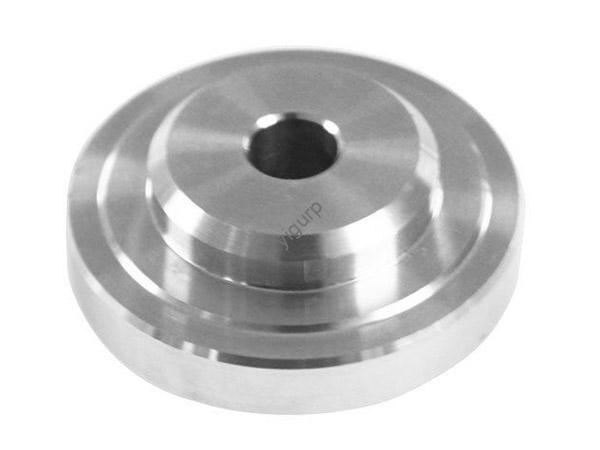
When your manufacturing process demands cutting tools that maintain sharp edges under high wear and moderate heat, T1 tool steel offers a proven solution. As a tungsten-based high-carbon tool steel, it achieves exceptional hardness and wear resistance through its carefully balanced composition and precise heat treatment. This guide explores its key properties, real-world applications across aerospace, automotive, and general manufacturing, manufacturing processes, and how it compares to other tool steels—helping you determine if this versatile material is right for your cutting and forming tools.
Introduction
In the world of manufacturing, the tools that cut, shape, and form materials are just as important as the materials themselves. A milling cutter that dulls too quickly, a punch that chips under pressure, or a reamer that loses its tolerance mid-run can cripple production schedules and drive up costs. T1 tool steel was developed to address these challenges. Its high carbon and tungsten content create a microstructure of hard carbides that resist abrasion, while its ability to retain hardness at elevated temperatures makes it suitable for operations where friction generates significant heat. For decades, T1 has been a standard choice for general-purpose cutting and forming tools that require durability without the premium cost of high-speed steels.
What Defines T1 Tool Steel?
The performance of T1 tool steel is rooted in its chemical composition and the heat treatment that develops its characteristic hardness and wear resistance. Understanding these fundamentals explains why this material remains a staple in tool rooms and manufacturing facilities.
Chemical Composition
T1 achieves its properties through a balanced combination of carbon for hardness, tungsten for wear resistance, and chromium for hardenability.
| Element | Content Range (%) | Functional Role |
|---|---|---|
| Carbon (C) | 0.80–0.90 | Provides the base hardness and forms carbides with tungsten and chromium for wear resistance. |
| Tungsten (W) | 1.50–2.00 | Forms tough tungsten carbides that resist abrasion and contribute to hot hardness at elevated temperatures. |
| Chromium (Cr) | 3.25–4.25 | Enhances hardenability and helps retain strength at moderate temperatures. |
| Manganese (Mn) | 0.15–0.35 | Improves hardenability without adding brittleness. |
| Silicon (Si) | 0.15–0.35 | Boosts strength and heat resistance. |
| Phosphorus (P) | ≤ 0.03 | Strictly controlled to avoid brittleness in high-stress tools. |
| Sulfur (S) | ≤ 0.03 | Minimized to maintain toughness and prevent cracking. |
Mechanical Properties
After proper heat treatment, T1 delivers mechanical properties that make it suitable for a wide range of cutting and forming operations.
| Property | Typical Value | Practical Significance |
|---|---|---|
| Hardness | 62–66 HRC | Provides excellent wear resistance for cutting edges and forming surfaces. |
| Tensile Strength | 1,800–2,200 MPa | Handles the forces generated during cutting and forming operations without failure. |
| Yield Strength | 1,500–1,800 MPa | Resists permanent deformation under load, maintaining tool geometry. |
| Elongation | 10–15% | Provides sufficient ductility to absorb minor impacts without chipping. |
| Impact Toughness | Moderate to high | Withstands sudden pressure in punching and stamping applications. |
| Fatigue Strength | 700–800 MPa | Endures repeated stress cycles in high-volume production tools. |
Physical Properties
The physical characteristics of T1 are consistent with most tool steels, simplifying design and fabrication.
| Property | Typical Value | Practical Significance |
|---|---|---|
| Density | ~7.85 g/cm³ | Standard for tool steels, with no weight penalty for tool designs. |
| Thermal Conductivity | ~35 W/(m·K) | Moderate conductivity, requiring controlled heating during heat treatment. |
| Coefficient of Thermal Expansion | 11 × 10⁻⁶/°C | Predictable expansion, minimizing distortion during heat treatment cycles. |
| Magnetic Properties | Ferromagnetic | Enables magnetic particle inspection for quality control and defect detection. |
Why Is It a Standard for General-Purpose Tooling?
T1 tool steel has earned its place as a standard choice for manufacturing tools because its properties align well with the demands of general-purpose cutting and forming operations.
Excellent Wear Resistance
The combination of tungsten and carbon creates hard carbides throughout the steel matrix. These carbides resist abrasion from the materials being cut or formed, allowing tools to maintain their geometry through extended production runs. A T1 milling cutter, for example, can produce significantly more parts before requiring resharpening than a lower-grade tool steel.
Good Hot Hardness
Unlike some tool steels that soften rapidly when friction generates heat, T1 retains its hardness up to approximately 500°C. At this temperature, it maintains hardness above 58 HRC, making it suitable for operations like turning steel or milling where cutting edges experience elevated temperatures.
Balanced Toughness
While T1 is hard and wear-resistant, it is not brittle. Its impact toughness allows it to withstand the sudden forces encountered in punching, stamping, and interrupted cutting operations. This balance of hardness and toughness makes it versatile across different tool types.
Cost-Effective Performance
T1 occupies a sweet spot in the tool steel market. It offers significantly better wear resistance and hot hardness than cold-work steels like A2 or D2 at a moderate cost premium, while being substantially less expensive than high-speed steels like M2 for applications where the highest red hardness is not required.
Where Is T1 Tool Steel Commonly Used?
The combination of wear resistance, hot hardness, and balanced toughness makes T1 suitable for a wide range of cutting and forming tools.
- Cutting Tools:
- Milling cutters for machining steel, cast iron, and non-ferrous metals.
- Turning tools and lathe bits for shaping cylindrical parts.
- Broaches for cutting precise holes, keyways, and splines.
- Reamers for finishing holes to precise diameters.
- Taps and dies for cutting threads.
- Forming Tools:
- Punches for stamping holes through metal sheets.
- Dies for bending, forming, and shaping metal components.
- Stamping tools for high-volume production of automotive and appliance parts.
- Cold heading tools for forming fasteners.
- Aerospace Manufacturing:
- Tools for machining high-strength aluminum alloys and titanium components.
- Precision cutting tools for engine and structural parts.
- Automotive Manufacturing:
- Cutting tools for engine blocks, cylinder heads, and transmission components.
- Stamping tools for body panels, brackets, and structural parts.
- General Mechanical Engineering:
- Gears and shafts requiring wear resistance in industrial machinery.
- Bearings and wear components for pumps, motors, and conveyors.
How Is T1 Tool Steel Manufactured?
The manufacturing process for T1 tool steel is designed to achieve its characteristic hardness and uniform carbide distribution.
Steelmaking
T1 is produced in an Electric Arc Furnace (EAF) at temperatures between 1,600°C and 1,800°C. Scrap steel is melted with precise additions of carbon, tungsten, chromium, and other alloys to achieve the target composition. For large-scale production, the Basic Oxygen Furnace (BOF) may be used, with alloying elements added after oxygen blowing to prevent oxidation.
Rolling and Forming
After casting, the steel is hot rolled at 900–1,100°C to form bars, plates, and rods. This process refines the grain structure and shapes the material into forms suitable for tool manufacturing. For small, precise components, cold rolling at room temperature improves surface finish and dimensional accuracy.
Heat Treatment
Heat treatment is critical to unlocking T1’s full hardness and wear resistance:
| Process | Temperature Range | Purpose |
|---|---|---|
| Annealing | 800–850°C, slow cool | Softens the steel for machining, reducing hardness to approximately 200 HB. |
| Austenitizing | 850–900°C | Prepares the steel for hardening by transforming the structure to austenite. |
| Quenching | Oil quench | Rapid cooling transforms austenite to martensite, achieving 64–66 HRC. |
| Tempering | 150–200°C, 2–3 hours | Reduces brittleness while retaining 62–66 HRC hardness. |
| Stress Relief Annealing | 500–550°C | Applied after machining to remove internal stresses that could cause warping during hardening. |
Surface Treatment
To enhance performance, T1 tools often receive additional treatments:
- Nitriding: Creates a hard surface layer for punches and stamping tools.
- PVD/CVD Coatings: Titanium nitride or other coatings reduce friction and extend tool life by up to 50%.
- Flame Hardening: Localized hardening for cutting edges requiring maximum wear resistance.
How Does It Compare to Other Tool Steels?
Understanding where T1 fits relative to other tool steels helps clarify its value for specific applications.
| Material | Hardness (HRC) | Wear Resistance | Hot Hardness (at 500°C) | Relative Cost | Best Applications |
|---|---|---|---|---|---|
| T1 | 62–66 | Excellent | Good (retains 58+ HRC) | 100% | General cutting tools, punches, forming tools |
| A2 | 58–62 | Good | Moderate (retains 50 HRC) | 80% | Cold stamping tools, dies requiring toughness |
| D2 | 59–63 | Excellent | Moderate (retains 52 HRC) | 90% | Cold cutting tools, high-wear applications |
| M2 (HSS) | 63–65 | Excellent | Very High (retains 60 HRC) | 150% | High-speed cutting, production machining |
| 440C | 56–58 | Good | Low (retains 45 HRC) | 85% | Corrosion-resistant tools, bearings |
Key takeaways:
- T1 offers better hot hardness than cold-work steels like A2 and D2, making it more suitable for operations that generate significant heat.
- Compared to M2 high-speed steel, T1 provides comparable hardness at approximately 33% lower cost, though M2 has superior red hardness for very high-speed applications.
- For corrosion-prone environments, 440C may be preferred despite its lower hardness.
- The balance of wear resistance, hot hardness, and cost makes T1 the most practical choice for general-purpose cutting and forming tools.
Case Study: T1 Milling Cutters for Automotive Parts
A U.S. tool manufacturer was supplying milling cutters to automotive parts producers machining aluminum engine components. The cutters were made from A2 tool steel and required resharpening after every 1,000 parts. Production downtime for tool changes was impacting customer schedules. The manufacturer switched to T1 tool steel milling cutters with a PVD titanium nitride coating. The new cutters lasted 1,400 parts—a 40% improvement—before requiring resharpening. Tool replacement costs for their clients dropped by $25,000 annually, and production downtime was reduced by 30%. The manufacturer gained a competitive advantage by offering longer-lasting tools at a modest price increase.
Conclusion
T1 tool steel occupies a well-established position in the family of tool steels, offering a practical balance of wear resistance, hot hardness, and cost for general-purpose cutting and forming tools. Its tungsten and carbon content creates hard carbides that resist abrasion, while its heat treatment develops hardness up to 66 HRC with sufficient toughness to withstand the demands of stamping, punching, and interrupted cutting. For applications requiring the highest red hardness for high-speed machining, M2 or other high-speed steels may be justified. For corrosion-critical environments, stainless tool steels have advantages. But for the majority of manufacturing operations—milling, turning, reaming, stamping, and forming—T1 delivers the durability and performance that tool rooms and production facilities require at a cost that fits project budgets.
FAQ About T1 Tool Steel
Can T1 tool steel be used for cutting wood or plastic?
Yes, but it is generally considered overkill. T1 is designed for cutting hard materials like steel and cast iron. For wood or plastic cutting, lower-cost high-speed steels or carbon steels typically provide adequate performance without the higher material cost of T1.
What is the maximum temperature T1 can handle before losing hardness?
T1 retains its full hardness (62+ HRC) up to approximately 500°C. Above this temperature, hardness begins to decline gradually. It is not suitable for applications like hot forging dies or tools that operate continuously above 600°C, where high-speed steels or hot-work tool steels are required.
Is T1 tool steel difficult to machine?
In its annealed condition (approximately 200 HB), T1 machines reasonably well with carbide tooling. Standard machining operations like turning, milling, and drilling can be performed before heat treatment. After hardening, T1 is not machinable with conventional tools and must be finished by grinding.
Can T1 tool steel be welded?
Welding T1 is possible but requires careful procedures. The high carbon content makes it susceptible to cracking in the heat-affected zone. Preheating to 300–400°C and post-weld stress relief are mandatory to prevent weld failure. For most tooling applications, welding is avoided by designing tools that can be machined from solid stock.
Discuss Your Projects with Yigu Rapid Prototyping
Selecting the right tool steel for your manufacturing operation requires balancing wear resistance, hardness, toughness, and cost. At Yigu Rapid Prototyping, we combine deep expertise in tool steels like T1 with advanced manufacturing capabilities to deliver cutting and forming tools that meet your production requirements. Whether you need milling cutters, punches, reamers, or custom tooling, our team can guide you from material selection through heat treatment and surface finishing.
We specialize in working with T1 and other tool steels, offering services including precision machining, custom heat treatment, and PVD coating. If your next project demands durable, cost-effective cutting tools, we are ready to help. Contact us today to discuss your requirements and discover how our expertise can support your tooling needs.