
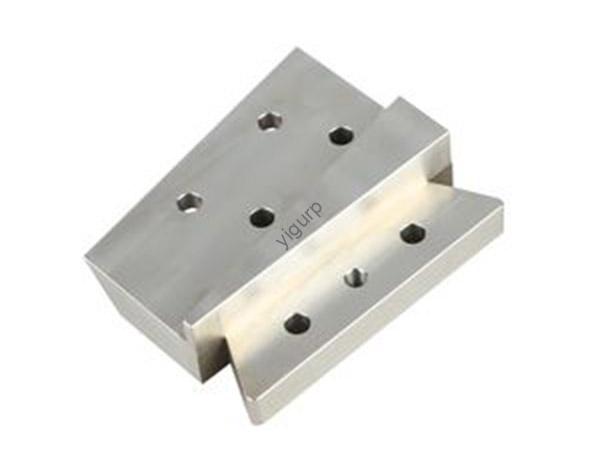
AISI 4130 alloy steel is a low-carbon chromium-molybdenum (Cr-Mo) steel known for its excellent balance of strength, weldability, and toughness. Its carbon content of 0.28-0.33% is lower than many other alloy steels, which gives it superior weldability while still allowing it to be heat-treated to high strength levels. The addition of chromium and molybdenum provides good hardenability and fatigue resistance. This combination makes it the ideal choice for welded components in demanding applications such as aerospace frames, automotive roll cages, and industrial machinery shafts.
Introduction
Many high-strength steels present a difficult challenge for fabricators. They can be welded, but often require complex pre- and post-weld heat treatments to avoid cracking. Other steels that are easy to weld often lack the strength needed for critical applications. AISI 4130 was developed to bridge this gap. Its chemistry is carefully balanced to provide a high strength-to-weight ratio while remaining readily weldable using common techniques. For engineers designing components that must be both strong and reliably joined, AISI 4130 offers a proven, versatile solution.
What Are the Key Properties of AISI 4130?
The performance of AISI 4130 is defined by its chemical composition and the wide range of mechanical properties achievable through heat treatment.
Chemical Composition
The low carbon and the chromium-molybdenum addition are key to its balanced properties.
| Element | Content Range (%) | Its Role in Performance |
|---|---|---|
| Carbon (C) | 0.28 – 0.33 | Provides moderate strength while maintaining excellent weldability. |
| Chromium (Cr) | 0.80 – 1.10 | Enhances hardenability, corrosion resistance, and wear resistance. |
| Molybdenum (Mo) | 0.15 – 0.25 | Boosts high-temperature strength and fatigue resistance. |
| Manganese (Mn) | 0.40 – 0.60 | Refines grain structure and enhances ductility. |
| Silicon (Si) | 0.15 – 0.35 | Aids in deoxidation and supports stability during heat treatment. |
Mechanical Properties
A key advantage of AISI 4130 is its versatility. Its properties can be tailored through heat treatment to suit different applications.
| Condition | Tensile Strength | Yield Strength | Hardness | Elongation | Best For |
|---|---|---|---|---|---|
| Annealed | 560 MPa | 345 MPa | 17-20 HRC | 28-32% | Welding, forming, general fabrication |
| Quenched & Tempered (300°C) | 1450 MPa | 1300 MPa | 45-48 HRC | 10-12% | High-strength applications like shafts |
| Quenched & Tempered (600°C) | 850 MPa | 700 MPa | 25-28 HRC | 20-22% | Balanced strength and toughness for frames |
- Impact Toughness: Even in heat-treated conditions, it maintains good toughness. In the annealed state, it can achieve over 90 J at room temperature.
- Fatigue Limit: When heat-treated, its fatigue limit can exceed 680 MPa, making it excellent for components under cyclic stress.
Where Is AISI 4130 Used in the Real World?
AISI 4130 is widely used in industries where welded, high-strength structures are required. Its combination of properties makes it a versatile material.
Aerospace and Automotive
This is a primary application. AISI 4130 is used for welded airframes, roll cages, and chassis components.
- Case Study (Aerospace): An aircraft manufacturer in Canada needed to build lightweight, welded frame sections for a small cargo plane.
- They chose AISI 4130 tubes in the annealed condition (17 HRC) for easy TIG welding.
- After welding, the frames were tempered to 300°C, achieving a hardness of 45 HRC for strength.
- During testing, the frames withstood 120% of the design load without any weld cracking.
- The steel frames were 15% lighter than the previous steel alternative.
- Case Study (Automotive): A racing team needed a roll cage that could absorb crash impact and be welded on-site.
- They used AISI 4130 DOM tubes, welded with MIG, with no post-weld heat treatment.
- In a crash test, the cage bent but did not break. Its ductility protected the driver.
- The cage lasted 3 racing seasons, while a previous carbon steel cage cracked after just 1 season.
Industrial and Mechanical Applications
It is used for welded shafts, hydraulic cylinder rods, and machine frames that require both strength and the ability to be repaired or fabricated by welding.
Motorcycle and Performance Parts
Its light weight and high strength make it a favorite for motorcycle frames, swingarms, and engine mounts.
How Is AISI 4130 Manufactured?
The manufacturing process for AISI 4130 is designed to produce a material that is easy to work with in its annealed state and can be heat-treated to achieve high strength.
Forming and Heat Treatment
- Hot Rolling: The steel is hot rolled into bars, tubes, and plates. This makes it easy to bend and shape.
- Annealing: Before fabrication, the steel is often annealed. It is heated to 815-845°C, held, and then slowly cooled. This softens it to 17-20 HRC, making it ideal for welding and forming.
- Quenching and Tempering: After welding and forming, the part can be heat-treated for strength.
- Quenching: Heated to 845-870°C and oil-quenched, hardening it to 50-52 HRC.
- Tempering: Reheated to a temperature between 200-650°C. A lower tempering temperature (e.g., 300°C) gives very high strength. A higher tempering temperature (e.g., 600°C) gives a better balance of strength and toughness.
Welding
This is where AISI 4130 excels. It is readily weldable using MIG, TIG, or stick welding.
- Filler Metal: Use low-hydrogen electrodes like E8018-B2.
- Preheat: For thin sections (under 10mm), preheat to 150°C. For thick sections (over 20mm), preheat to 200°C.
- Post-Weld Heat Treatment (PWHT) : For thin sections, it is often not required. For thick or highly stressed parts, a PWHT at 600-650°C is recommended to relieve residual stress.
Machining
In the annealed state, it is easy to machine with standard high-speed steel (HSS) tools. In the heat-treated state, carbide tools are required.
AISI 4130 vs. Other Common Materials
Comparing AISI 4130 to other materials helps clarify its position as a versatile, weldable, high-strength steel.
| Material | Weldability | Strength (Yield) | Relative Cost | Best For |
|---|---|---|---|---|
| AISI 4130 | Excellent | 345 – 1300 MPa | Medium | Welded high-strength structures, frames, shafts |
| AISI 4140 | Fair | 500 – 1500 MPa | 10% Higher | Non-welded high-strength parts like gears |
| AISI 1018 | Excellent | 290 MPa | Lower | Low-stress, non-critical welded parts |
| 6061 Aluminum | Good (with care) | 276 MPa | 2x Higher | Lightweight, non-welded or carefully welded parts |
| 304 Stainless | Good | 205 MPa | 3x Higher | Corrosive environments, welded parts |
Key Takeaway: AISI 4130 offers a unique combination of excellent weldability and the ability to achieve very high strength through heat treatment. It is a significant upgrade from carbon steel like 1018 for welded structures. While AISI 4140 can achieve higher hardness, it is much more difficult to weld. For applications requiring both strong welds and high strength, AISI 4130 is often the optimal choice.
Conclusion
AISI 4130 alloy steel is a versatile, reliable material engineered for applications where weldability and strength are equally important. Its low-carbon, chromium-molybdenum chemistry allows it to be easily welded and formed in its annealed state, then heat-treated to achieve a wide range of high-strength properties. For critical welded components in aerospace, automotive, and industrial machinery, it offers a proven balance of performance, fabricability, and cost-effectiveness that few other materials can match.
FAQ About AISI 4130 Alloy Steel
Do I need post-weld heat treatment (PWHT) for AISI 4130?
It depends on the application. For thin sections (under 20mm) or low-stress parts, PWHT is not required. For thick sections (over 20mm) or high-stress, safety-critical parts like aerospace frames, a PWHT at 600-650°C for 1 hour is recommended to reduce residual stress and ensure optimal toughness.
Can AISI 4130 be used for high-temperature applications above 300°C?
Yes. Its molybdenum content provides good strength up to 400°C. For sustained service above 400°C, a stainless steel or a nickel-based superalloy would be required.
What is the difference between AISI 4130 and AISI 4130 DOM?
AISI 4130 DOM (Drawn-Over-Mandrel) is a specific product form—a tube. It is made by drawing a hot-rolled tube over a mandrel, which gives it a smoother interior surface, tighter wall thickness tolerances, and slightly higher strength than a standard AISI 4130 tube. It is the preferred form for applications like automotive roll cages and aerospace tubes.
Discuss Your Projects with Yigu Rapid Prototyping
At Yigu Rapid Prototyping, we have extensive experience working with AISI 4130 and other high-performance alloys. We understand the critical balance between achieving high strength and maintaining good weldability. We supply AISI 4130 in a variety of forms, including annealed bars, plates, and DOM tubes, ready for fabrication. Our team can provide guidance on welding procedures, heat treatment, and finishing to ensure your components meet their performance requirements. Whether you are building a race car chassis, an aerospace frame, or a heavy-duty industrial shaft, we are here to help. Contact us today to discuss your project.