
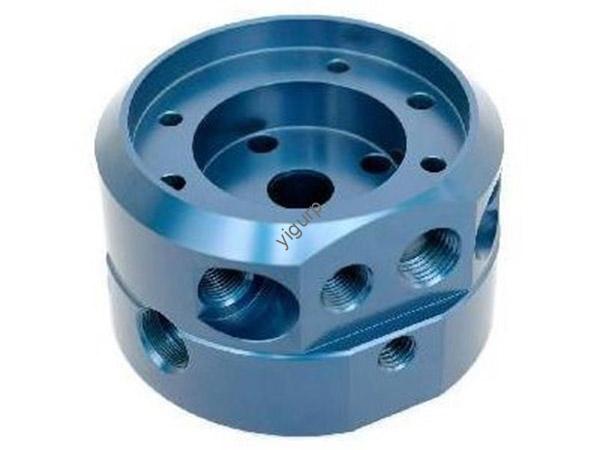
S1 tool steel is a versatile, low-alloy, cold-work steel designed for applications that require a practical balance of toughness, wear resistance, and machinability. Unlike high-alloy tool steels such as D2 or M2, which prioritize extreme hardness and wear resistance at the expense of cost and workability, S1 is formulated for usability. Its moderate carbon (0.40-0.50%) and chromium (0.50-0.70%) content allow it to be heat-treated to a useful hardness of 50-55 HRC while maintaining excellent toughness. This combination makes it an ideal material for a wide range of low-to-medium stress applications, including small cutting tools, forming dies, and precision components where reliability, ease of fabrication, and cost-effectiveness are key.
Introduction
For many tooling applications, the highest possible hardness is not the primary requirement. In fact, for tools that must withstand minor impacts, misalignments, or that are used in manual operations, a steel that is too hard can be brittle and prone to chipping. High-alloy tool steels like D2, while exceptionally wear-resistant, are expensive and difficult to machine. S1 was developed to fill this gap. It is a practical, user-friendly tool steel that offers a compelling combination of properties: it is tough enough to resist cracking, hard enough to provide good wear resistance for many applications, and, importantly, it is easy to machine and relatively inexpensive. For small machine shops, toolmakers, and manufacturers of low-to-medium volume tooling, S1 provides a reliable and cost-effective solution.
What Are the Key Properties of S1?
The performance of S1 is defined by its balanced chemical composition and the mechanical properties achieved through its heat treatment.
Chemical Composition
The moderate carbon and chromium content are key to its balance of toughness and wear resistance.
| Element | Content Range (%) | Its Role in Performance |
|---|---|---|
| Carbon (C) | 0.40 – 0.50 | Provides good hardness and wear resistance without excessive brittleness. |
| Chromium (Cr) | 0.50 – 0.70 | Enhances hardenability and provides mild corrosion resistance. |
| Manganese (Mn) | 0.50 – 0.80 | Boosts tensile strength and hardenability. |
| Silicon (Si) | 0.15 – 0.35 | Aids in deoxidation and stabilizes mechanical properties. |
| Sulfur (S) | ≤ 0.03 | Kept low to maintain toughness. |
| Phosphorus (P) | ≤ 0.03 | Controlled to prevent cold brittleness. |
Mechanical and Physical Properties
After proper heat treatment (quenching and tempering), S1 achieves a balance of properties suitable for light-to-medium stress applications.
| Property | Typical Value | Why It Matters |
|---|---|---|
| Hardness | 50 – 55 HRC | Provides good wear resistance for cutting and forming tools. |
| Tensile Strength | 1000 – 1200 MPa | Withstands light cutting and forming loads. |
| Yield Strength | 800 – 1000 MPa | Resists permanent deformation under moderate loads. |
| Elongation | 15 – 20% | Excellent ductility for a tool steel, enhancing toughness. |
| Impact Toughness | 50 – 60 J/cm² | Higher than many tool steels, resisting chipping and cracking. |
| Fatigue Strength | 500 – 600 MPa | Withstands repeated stress cycles for moderate-volume tooling. |
| Machinability | Good | Easy to machine in the annealed state with HSS or carbide tools. |
| Density | ~7.85 g/cm³ | Standard for steel. |
- Toughness: This is the standout feature. S1 has significantly higher toughness than higher-hardness tool steels like D2 or M2, making it much less prone to chipping and cracking under impact or misalignment.
- Machinability: In the annealed state (180-220 HB), it is easily machined with standard high-speed steel tools, reducing tooling costs and lead times.
Where Is S1 Used in the Real World?
S1 is used in a wide range of applications where its balance of toughness, wear resistance, and machinability is valued.
Small Cutting Tools and Hobbyist Tooling
S1 is used for manual lathe tools, small end mills for soft metals, and custom cutting tools for low-volume work.
- Case Study: A small machine shop was using low-carbon steel for aluminum turning tools. The tools were dulling after 200 parts .
- They switched to S1 turning tools .
- The tools lasted 600 parts , a 200% increase .
- This saved $8,000 annually in tool replacement costs.
Forming Dies and Stamping Tools
S1 is used for small cold-punching tools, stamping dies for thin sheets, and dies for plastic or soft materials.
- Case Study: A small electronics manufacturer was using A2 tool steel for stamping thin aluminum connectors. They faced high machining costs and die cracking from accidental impact.
- They switched to S1 dies .
- Machining time was reduced by 30% , saving $5,000 annually .
- Die life increased from 15,000 to 30,000 parts , a 100% increase , saving an additional $4,000 annually .
Non-Load-Bearing Components
S1 is used for small gears, shafts, and fasteners in light machinery and for molds for plastic and rubber parts.
How Is S1 Manufactured?
The manufacturing process for S1 is designed to produce a clean, uniform material that is easy to machine and heat treat.
Steelmaking and Forming
- Steelmaking: It is typically made in an Electric Arc Furnace (EAF) , allowing for precise control of the carbon and chromium content.
- Hot Rolling: The steel is hot rolled into bars and plates, which are the standard forms for tool blanks.
- Annealing: The steel is annealed to a hardness of 180-220 HB, making it easy to machine into complex shapes.
Heat Treatment
Heat treatment is used to achieve the final properties of hardness and toughness.
- Quenching: The tool is heated to 820-860°C and then rapidly cooled in oil. This hardens the steel to 55-58 HRC.
- Tempering: The quenched steel is then reheated to 250-300°C. This reduces hardness to the target 50-55 HRC while significantly improving toughness.
Finishing
- Machining: Most machining is done in the annealed, soft state.
- Grinding: After heat treatment, precision grinding is used to achieve final dimensions and sharp edges.
- Optional Treatments: For increased wear resistance, a nitriding treatment can be applied to create a hard surface layer.
S1 vs. Other Tool Steels
Comparing S1 to other materials helps clarify its position as a cost-effective, tough, and machinable tool steel.
| Material | Hardness | Toughness | Machinability | Relative Cost | Best For |
|---|---|---|---|---|---|
| S1 | 50 – 55 HRC | High | Good | Medium | Light-to-medium stress tools, small dies |
| A2 | 52 – 60 HRC | Moderate | Good | 20% Higher | General tooling, higher wear applications |
| D2 | 60 – 62 HRC | Low | Difficult | 50% Higher | High-wear, dry applications |
| M2 | 62 – 68 HRC | Moderate | Good | 100% Higher | High-speed cutting tools |
| 420 Stainless | 50 – 55 HRC | Moderate | Good | 30% Higher | Corrosive environments |
Key Takeaway: S1 offers a unique combination of good toughness, adequate wear resistance, and excellent machinability at a low cost. It is significantly tougher and easier to machine than D2, and more cost-effective than M2 or stainless steel. For applications that do not require extreme hardness or wear resistance, S1 provides the optimal balance of performance and value.
Conclusion
S1 tool steel is a practical, versatile, and cost-effective material for a wide range of low-to-medium stress tooling applications. Its combination of good toughness, adequate wear resistance, and excellent machinability makes it an ideal choice for small cutting tools, forming dies, and precision components. For toolmakers and manufacturers seeking a reliable, easy-to-work-with steel that provides dependable performance without the cost and complexity of high-alloy tool steels, S1 offers a proven and valuable solution.
FAQ About S1 Tool Steel
Is S1 tool steel suitable for machining hard metals like hardened steel?
No. S1’s hardness (50-55 HRC) is best suited for cutting and forming soft-to-medium metals (up to 25 HRC), such as aluminum, brass, and mild steel. For machining hardened steel (50 HRC and above), a higher-hardness tool steel like A2, D2, or M2 is required.
Can S1 be used for hot-work applications like hot stamping?
No. S1 has poor red hardness and will soften at temperatures above 250°C. For hot-work applications such as hot stamping or forging dies, a dedicated hot-work tool steel like H13 should be used, as it retains hardness at temperatures up to 600°C.
How does S1 compare to 420 stainless steel for small molds?
S1 and 420 stainless have similar hardness (50-55 HRC). S1 offers higher toughness (better resistance to cracking during assembly) and is typically 20% less expensive. 420 stainless has better corrosion resistance. Choose S1 for dry environments, such as plastic injection molds. Choose 420 stainless for molds used in damp or chemically exposed environments.
Discuss Your Projects with Yigu Rapid Prototyping
At Yigu Rapid Prototyping, we have extensive experience working with S1 and other tool steels for a wide range of applications. We understand that for many tooling projects, the right balance of properties, cost, and workability is critical. We supply S1 in bars and plates, and we offer custom machining and heat treatment services. Our team can provide guidance on material selection, heat treatment, and finishing to ensure your tools achieve the optimal balance of toughness and wear resistance. Whether you are manufacturing small cutting tools, forming dies, or precision components, we are here to help. Contact us today to discuss your project requirements.