
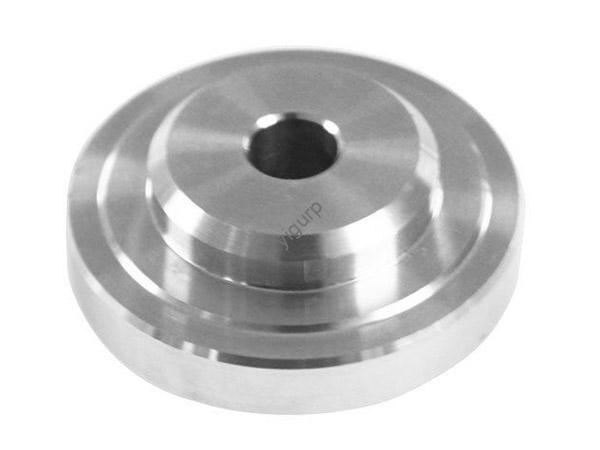
Ultra High Strength Steel (UHSS) is a category of advanced high-strength steels defined by its exceptional tensile strength, typically exceeding 1000 MPa and reaching up to 2000 MPa in the most advanced grades. This level of strength is achieved through a combination of precise chemistry—with controlled additions of carbon, manganese, and microalloys—and specialized processing such as quenching and tempering or thermomechanical rolling. The primary value of UHSS lies in its strength-to-weight ratio. It allows engineers to use significantly thinner sections to carry the same loads as conventional steel, resulting in lighter, more efficient structures. For applications in automotive, aerospace, and heavy machinery where weight reduction and crash safety are paramount, UHSS offers a transformative solution.
Introduction
For decades, the primary trade-off in structural materials was between strength and weight. To make something stronger, you typically had to make it heavier. This trade-off has become increasingly untenable in industries like automotive, where fuel efficiency and emissions regulations demand lighter vehicles, and in aerospace, where every kilogram saved reduces operating costs. Ultra High Strength Steel was developed to break this paradigm. Through advanced metallurgy, UHSS achieves tensile strengths that were once only possible with much heavier sections of conventional steel or with much more expensive materials like titanium. This allows engineers to create structures that are simultaneously lighter, stronger, and safer, meeting the demands of modern engineering for efficiency and performance.
What Are the Key Properties of UHSS?
The performance of UHSS is defined by its chemical composition and the mechanical properties achieved through its specialized processing.
Chemical Composition
The chemistry of UHSS is designed to achieve high strength through hardenability and microstructure refinement.
| Element | Content Range (%) | Its Role in Performance |
|---|---|---|
| Carbon (C) | 0.10 – 0.30 | Provides strength through martensite formation, balanced to avoid brittleness. |
| Manganese (Mn) | 1.50 – 3.00 | Enhances hardenability and tensile strength. |
| Chromium (Cr) | 0.50 – 1.50 | Improves corrosion resistance and hardenability. |
| Molybdenum (Mo) | 0.10 – 0.50 | Increases high-temperature strength and hardenability. |
| Nickel (Ni) | 0.50 – 2.00 | Boosts toughness, especially at low temperatures. |
| Vanadium (V) | 0.02 – 0.10 | Refines grain structure, enhancing fatigue resistance. |
| Phosphorus (P) | ≤ 0.025 | Minimized to prevent cracking. |
| Sulfur (S) | ≤ 0.010 | Kept ultra-low for good weldability and toughness. |
Mechanical Properties
These are the defining characteristics of UHSS, far exceeding those of standard structural steels.
| Property | Typical Range | Why It Matters |
|---|---|---|
| Tensile Strength | 1000 – 2000 MPa | 2-5 times higher than standard carbon steel, allowing for much thinner sections. |
| Yield Strength | 800 – 1800 MPa | Resists permanent deformation under very high loads. |
| Elongation | 5 – 15% | Low ductility is the trade-off for ultra-high strength. |
| Impact Toughness | 20 – 50 J at -40°C | Remains tough in cold climates, critical for safety. |
| Hardness | 30 – 50 HRC | Provides excellent wear resistance. |
| Fatigue Strength | Excellent | Withstands millions of stress cycles, essential for dynamic applications. |
| Density | 7.85 g/cm³ | Standard for steel, but the strength allows for lighter designs. |
- Strength-to-Weight Ratio: This is the standout feature. UHSS allows for 30-50% weight reduction compared to conventional steel for the same load-bearing capacity.
- Weldability: It has poor weldability due to its high strength. Preheating and specialized welding procedures are required.
- Formability: It has poor formability at room temperature and requires specialized techniques like hot stamping to be shaped into complex parts.
Where Is UHSS Used in the Real World?
UHSS is used in applications where weight reduction and high strength are critical.
Automotive Crash Structures and Body Components
This is the largest application area. UHSS is used for B-pillars, door rings, bumpers, and roof rails.
- Case Study: Toyota used UHSS for the B-pillars of its Camry.
- Crash test scores improved by 20% .
- Vehicle weight dropped by 8% .
- Case Study: Volkswagen uses UHSS in the front crash zone of the ID.3 electric vehicle.
- Battery protection was improved.
- Range increased by 5% due to weight savings.
Aerospace and Landing Gear
UHSS is used for landing gear components, engine shafts, and high-strength fasteners.
- Case Study: Airbus integrated UHSS into the A350’s landing gear.
- Weight was reduced by 12% , cutting fuel consumption by 3% .
- Case Study: Boeing used UHSS for the engine shafts of its 787 Dreamliner.
- Shaft lifespan doubled compared to traditional steel.
Heavy Machinery, Pipelines, and Marine Structures
UHSS is used for wind turbine gearboxes, high-pressure pipelines, and offshore platform legs.
- Case Study: A wind turbine manufacturer used UHSS for gearboxes, increasing gear lifespan by 30% .
- Case Study: A Norwegian shipyard used UHSS for offshore platform legs, reducing platform weight by 18% .
How Is UHSS Manufactured?
The manufacturing process for UHSS is designed to create its ultra-high strength through controlled processing and heat treatment.
Steelmaking and Heat Treatment
- Steelmaking: It is typically made in an Electric Arc Furnace (EAF) or Basic Oxygen Furnace (BOF) , with precise control of alloying elements.
- Quenching and Tempering: The steel is heated to 800-900°C, rapidly cooled (quenched), and then reheated (tempered) to 300-500°C. This creates a strong, tough martensitic microstructure.
- Precipitation Hardening: For some grades, elements like copper or aluminum are added to form tiny precipitates that further increase strength.
Forming: Hot Stamping
Due to its poor formability at room temperature, UHSS is often formed using hot stamping.
- Heating: The steel is heated to approximately 900°C , becoming soft and formable.
- Forming: It is stamped into its final shape in a cooled die.
- Quenching: The die rapidly cools the steel, transforming it back into a hard, ultra-high-strength structure.
Finishing
- Cutting and Welding: Specialized techniques, including preheating and low-hydrogen processes, are required.
- Coating: For corrosion protection, coatings like zinc or aluminum-silicon are applied, especially for hot-stamped components.
UHSS vs. Other Engineering Materials
Comparing UHSS to other materials helps clarify its value for high-strength, weight-sensitive applications.
| Material | Tensile Strength | Strength-to-Weight Ratio | Weldability | Relative Cost | Best For |
|---|---|---|---|---|---|
| UHSS | 1000 – 2000 MPa | Excellent | Poor | High | Crash structures, landing gear, high-strength components |
| Carbon Steel (A36) | 400 – 550 MPa | Low | Excellent | Low | General construction, low-stress parts |
| HSLA Steel | 600 – 1000 MPa | Good | Good | Medium | Bridges, truck frames, moderate strength |
| Aluminum (6061) | 310 – 380 MPa | Moderate | Good | 1.8x | Lightweight non-structural parts |
| Stainless (304) | 500 – 700 MPa | Low | Good | 2.5x | Corrosive environments, low stress |
Key Takeaway: UHSS offers an unmatched strength-to-weight ratio for steel. While it is more expensive than conventional steels and more difficult to fabricate, its ability to significantly reduce weight while maintaining or improving structural integrity makes it the optimal choice for safety-critical and efficiency-driven applications.
Conclusion
Ultra High Strength Steel is a transformative material that redefines the possibilities of steel in engineering. Its exceptional strength-to-weight ratio allows for the design of lighter, stronger, and more efficient structures. While it presents challenges in fabrication, requiring specialized processes like hot stamping and welding, its benefits in automotive crash safety, aerospace weight reduction, and heavy equipment durability are unparalleled. For any application where strength and weight are critical, UHSS offers a proven and essential solution.
FAQ About Ultra High Strength Steel (UHSS)
Can UHSS be formed into complex shapes like automotive pillars?
Yes, but it requires specialized techniques. Hot stamping is the most common method. The steel is heated to about 900°C, which softens it for forming, and then quenched in the die to restore its ultra-high strength. This process allows for the creation of complex, high-strength parts like A-pillars and B-pillars.
Is UHSS expensive to use in manufacturing?
UHSS typically costs 2-3 times more than conventional carbon or HSLA steel. However, its higher strength allows for the use of thinner, lighter sections, reducing overall material usage. The long-term benefits—such as improved fuel efficiency in vehicles, lower operating costs in aerospace, and reduced warranty claims—often result in a lower total cost of ownership over the life of the product.
How does UHSS perform in cold weather?
Excellent. UHSS is formulated to maintain high impact toughness (20-50 J at -40°C) , meaning it does not become brittle in freezing temperatures. This makes it suitable for automotive parts in cold regions, aerospace components at high altitudes, and pipelines in northern climates.
Discuss Your Projects with Yigu Rapid Prototyping
At Yigu Rapid Prototyping, we specialize in providing advanced high-strength materials for demanding applications. We have extensive experience with UHSS and the specialized processes required to work with it, including hot stamping and advanced welding. We supply UHSS in sheets, plates, and custom-cut shapes, with full mill test certificates. Our team can provide guidance on forming, welding, and finishing to ensure your components achieve the maximum strength and weight savings. Whether you are designing automotive crash structures, aerospace landing gear, or lightweight industrial components, we are here to help. Contact us today to discuss your project requirements.