
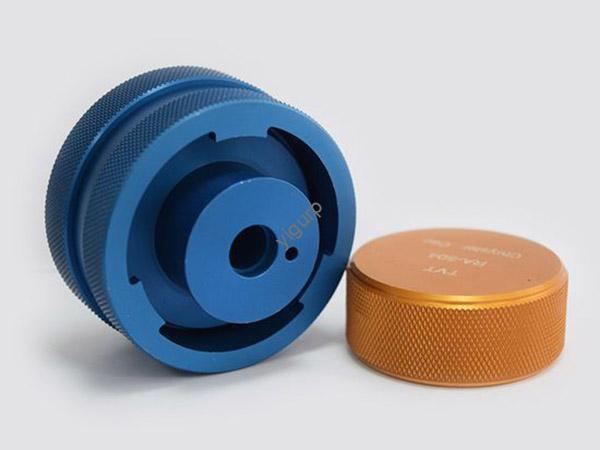
H13 tool steel is a chromium-based, hot-work tool steel widely recognized for its exceptional combination of hot hardness, toughness, and thermal fatigue resistance. It is defined by a balanced chemistry of carbon, chromium, molybdenum, and vanadium, which allows it to retain significant hardness at elevated temperatures (up to 550°C) while resisting the cracking that occurs from repeated heating and cooling cycles. This makes it the industry standard for hot forging dies, aluminum extrusion tools, and high-temperature plastic injection molds. For any application where tools must maintain their shape and strength under sustained high heat, H13 offers a proven and reliable solution.
Introduction
In industries like automotive forging and aluminum extrusion, tools are subjected to a punishing combination of high pressure, intense heat, and repeated thermal cycling. A tool that is too brittle will crack under the stress of forging. A tool that is too soft will deform under the heat of molten aluminum. Standard cold-work tool steels, while hard at room temperature, lose their strength rapidly when heated. H13 was specifically developed to address this. Its chemistry is optimized to form stable, heat-resistant carbides that retain their strength at high temperatures. This allows dies and tools to maintain their shape and resist wear for thousands of cycles, even when in direct contact with hot metal. For high-temperature tooling applications, H13 is the material against which all others are measured.
What Are the Key Properties of H13?
The performance of H13 is defined by its chemical composition and the mechanical properties achieved through precise heat treatment.
Chemical Composition
The combination of chromium, molybdenum, and vanadium is key to its hot hardness and thermal fatigue resistance.
| Element | Content Range (%) | Its Role in Performance |
|---|---|---|
| Carbon (C) | 0.30 – 0.45 | Provides strength and wear resistance while maintaining toughness. |
| Chromium (Cr) | 4.75 – 5.50 | Forms heat-resistant carbides and provides excellent hardenability. |
| Molybdenum (Mo) | 1.10 – 1.75 | Enhances hot hardness and resists thermal fatigue. |
| Vanadium (V) | 0.80 – 1.10 | Refines grain size, improves toughness, and forms hard carbides for wear resistance. |
| Silicon (Si) | 0.15 – 0.35 | Aids in deoxidation and improves high-temperature stability. |
| Manganese (Mn) | 0.20 – 0.60 | Boosts hardenability. |
| Sulfur (S) | ≤ 0.03 | Kept low to maintain toughness. |
Mechanical and Physical Properties
After proper heat treatment (quenching and tempering), H13 achieves the properties required for hot-work applications.
| Property | Typical Value | Why It Matters |
|---|---|---|
| Hardness | 58 – 62 HRC | Provides excellent wear resistance at room temperature. |
| Hot Hardness | ~48 HRC at 550°C | Retains significant strength when in contact with hot metal. |
| Tensile Strength | 1800 – 2000 MPa | Withstands high loads from forging presses and extrusion equipment. |
| Yield Strength | 1400 – 1600 MPa | Resists permanent deformation under high pressure. |
| Impact Toughness | 45 – 55 J/cm² | Higher than many hot-work steels, resisting cracking from forging impacts. |
| Fatigue Strength | 700 – 800 MPa | Withstands millions of thermal cycles without failure. |
| Thermal Conductivity | ~35 W/(m·K) | Helps dissipate heat, reducing thermal gradients and cracking. |
- Thermal Fatigue Resistance: This is a critical property. H13 resists the formation of fine surface cracks (heat checking) that occur from repeated rapid heating and cooling, a common failure mode in hot work dies.
- Weldability: It has fair weldability. Preheating to 300-400°C and the use of low-hydrogen electrodes are required. Post-weld heat treatment is essential to restore the material’s properties.
Where Is H13 Used in the Real World?
H13 is the standard material for a wide range of hot-work tooling applications across many industries.
Hot Forging and Extrusion
This is a primary application. H13 is used for dies that shape hot metal under high pressure.
- Case Study: An automotive forging plant was using H11 tool steel for crankshaft forging dies. The dies were cracking after 10,000 cycles .
- They switched to H13 dies.
- The new dies lasted 15,000 cycles , a 50% increase in life.
- This cut die replacement costs by $25,000 annually .
- Case Study: An aluminum extrusion company used D2 tool steel for extrusion dies producing heat sink profiles. The D2 dies failed after 3,000 cycles due to thermal cracking.
- They switched to H13 dies.
- The H13 dies lasted 8,000 cycles , a 167% increase .
- Replacement costs were cut by 60% , and defective parts dropped by 90% , saving $120,000 annually .
High-Temperature Plastic Molding
H13 is used for injection molds and blow molds for high-temperature engineering plastics like nylon and PEEK.
- Its hot hardness allows it to withstand molding temperatures up to 300°C without deforming.
- Its toughness resists the clamping pressures of large molding machines.
Cutting Tools and Aerospace Components
- Cutting Tools: H13 is used for milling cutters and turning tools for machining heat-resistant alloys like titanium and Inconel. Its hot hardness maintains a sharp edge at 400-500°C cutting temperatures.
- Aerospace: It is used for forging dies for turbine blades and other high-temperature components.
How Is H13 Manufactured?
The manufacturing process for H13 is designed to achieve a uniform microstructure with fine, well-distributed carbides.
Steelmaking and Forming
- Steelmaking: It is typically made in an Electric Arc Furnace (EAF) , allowing for precise control of the alloying elements.
- Hot Rolling: The steel is hot rolled into bars, plates, and blocks, which are the standard forms for die blocks.
- Forging: For large die blocks, forging is used to refine the grain structure and ensure uniform properties.
Heat Treatment
Heat treatment is critical to achieving H13’s hot hardness and toughness.
- Annealing: The steel is heated to 850-900°C and slowly cooled to soften it for machining.
- Quenching: The tool is heated to 1020-1080°C and then rapidly cooled in oil or air. This creates a hard, strong structure.
- Tempering: The quenched tool is then reheated to 500-550°C . This tempering temperature is critical; it reduces brittleness while retaining the high hot hardness needed for service.
Finishing and Surface Treatment
- Machining: In the annealed state, H13 is machined using carbide tools to create die cavities and complex shapes.
- Grinding: After heat treatment, precision grinding is used to achieve final dimensions and surface finishes.
- Nitriding: For applications requiring even higher wear resistance, a nitriding treatment can be applied to create a very hard surface layer (5-10 μm thick) without affecting the tough core.
H13 vs. Other Tool Steels
Comparing H13 to other materials helps clarify its position as the standard hot-work tool steel.
| Material | Hot Hardness (550°C) | Toughness | Wear Resistance | Relative Cost | Best For |
|---|---|---|---|---|---|
| H13 | ~48 HRC | High | Excellent | Medium | Hot forging, extrusion, high-temp molding |
| H11 | ~50 HRC | Moderate | Excellent | 10% Higher | High-hot-hardness, lower-impact applications |
| A2 | ~35 HRC | High | Very Good | 25% Lower | Cold-work applications, moderate heat |
| D2 | ~30 HRC | Low | Excellent | 15% Lower | High-wear, cold-work applications |
| Titanium | ~25 HRC | High | Poor | 4x Higher | Lightweight, corrosion-resistant parts |
Key Takeaway: H13 offers the best balance of high hot hardness, good toughness, and cost for hot-work applications. It is significantly more heat-resistant than cold-work steels like A2 and D2. While H11 has slightly higher hot hardness, H13 has better toughness and is typically more cost-effective. For the vast majority of hot forging, extrusion, and high-temperature molding applications, H13 is the standard and most reliable choice.
Conclusion
H13 tool steel is a proven, reliable material engineered for the demanding conditions of hot-work applications. Its combination of hot hardness, toughness, and thermal fatigue resistance makes it the industry standard for hot forging dies, aluminum extrusion tools, and high-temperature plastic injection molds. For any application where tools must maintain their strength and shape under repeated high-heat cycles, H13 offers a reliable, durable, and cost-effective solution.
FAQ About H13 Tool Steel
Can H13 be used for cold-work applications?
Yes, it can be used for some cold-work applications, but it is not optimized for them. For cold-work applications, lower tempering temperatures (300-400°C) can be used to achieve higher hardness (up to 62 HRC) at the expense of toughness. However, for high-wear cold-work applications, a dedicated cold-work tool steel like D2 or A2 would be a better choice.
What is the maximum service temperature for H13?
H13 can be used for continuous service at temperatures up to 550°C. For short-term exposure, it can withstand up to 600°C. Above this temperature, the material begins to soften rapidly due to over-tempering, leading to loss of hardness and deformation.
What is the difference between H13 and H11 tool steel?
Both are chromium-molybdenum-vanadium hot-work steels. H13 has a slightly higher carbon and vanadium content, giving it better toughness and wear resistance. H11 has a slightly higher molybdenum content, giving it marginally better hot hardness. H13 is generally more cost-effective and is the preferred choice for most hot-work applications, especially those requiring higher impact resistance, such as forging dies.
Discuss Your Projects with Yigu Rapid Prototyping
At Yigu Rapid Prototyping, we have extensive experience working with H13 and other high-performance tool steels for hot-work applications. We understand that for forging dies and extrusion tools, material selection, heat treatment, and surface finishing are critical to achieving maximum service life. We supply H13 in blocks, bars, and custom-machined components, with full heat treatment services to achieve the optimal balance of hot hardness and toughness. Our team can provide guidance on tempering temperatures, welding procedures, and surface treatments like nitriding. Whether you are forging automotive components, extruding aluminum profiles, or molding high-temperature plastics, we are here to help. Contact us today to discuss your project requirements.