
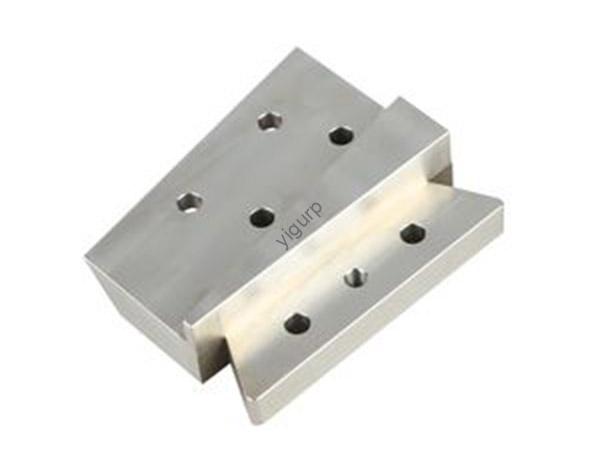
If you work in automotive, construction, or mechanical engineering, S420MC structural steel is a material worth knowing. As a hot-rolled, microalloyed steel, it is prized for its unique combination of high strength and excellent formability. This balance makes it a versatile solution for components that need to be both strong and shaped into complex forms. This guide will break down its key traits, real-world applications, manufacturing steps, and how it stacks up against other materials, helping you make informed choices for your projects.
What Makes S420MC a Versatile Structural Steel?
The performance of S420MC starts with its well-engineered properties. Its carefully controlled chemistry and hot-rolled production process give it the strength of a higher-grade steel with the formability of a much softer one.
Chemical Composition
The elements in S420MC, defined by the EN 10149-2 standard, shape its strength and workability. Microalloying elements like vanadium are key to its refined grain structure.
| Element | Maximum/Typical Content (%) | Key Role |
|---|---|---|
| Carbon (C) | 0.18 | Balances strength and formability; kept low for good weldability. |
| Manganese (Mn) | 2.00 | Boosts tensile strength and ductility. |
| Vanadium (V) | 0.12 | Refines the grain structure, contributing to durability and strength. |
| Silicon (Si) | 0.50 | Enhances heat resistance during rolling. |
| Sulfur (S) | 0.030 | Minimized to avoid brittleness. |
| Phosphorus (P) | 0.030 | Limited to prevent cold cracking. |
Mechanical Properties for Formed Parts
S420MC’s mechanical strength makes it ideal for load-bearing, formed parts. Its high yield strength is its defining characteristic.
| Property | Typical Value | Why It Matters for Your Project |
|---|---|---|
| Yield Strength | ≥ 420 MPa | Resists permanent deformation under load, critical for structural safety in chassis and frames. |
| Tensile Strength | 500 – 650 MPa | Handles pulling forces in automotive frames or industrial parts, providing a safety margin. |
| Elongation | ≥ 18% | This excellent ductility allows it to be bent into complex shapes like suspension components without cracking. |
| Impact Toughness | ≥ 27 J at -40°C | Remains tough in freezing weather, making it perfect for cold-region projects. |
| Hardness | 145 – 190 HB | Balances strength with ease of cutting, drilling, and machining. |
Where Is S420MC Structural Steel Used?
S420MC’s mix of strength and formability makes it a versatile material across several industries. Its ability to be shaped into complex, strong components is a key advantage.
Automotive Industry
This is one of the largest application areas for S420MC. Its combination of high strength and formability is ideal for safety-critical and structural components.
- Vehicle Frames: Ford uses S420MC in the chassis of its F-Series pickup trucks. Its excellent formability allows for the complex bends needed for crash safety structures, while its high yield strength ensures the frame protects passengers under heavy loads.
- Suspension Components: The control arms in the Audi Q7 are made from S420MC. Its ductility helps absorb road shocks, improving ride comfort and durability.
- Transmission Components: Volkswagen uses S420MC gears in its commercial van transmissions. The material’s wear resistance ensures reliable performance under constant use.
Construction and Mechanical Engineering
For structures and machinery that require both strength and complex shapes, S420MC is a reliable choice.
- Industrial Buildings: The “GreenTech Factory” in Munich uses S420MC for its mezzanine floors. Its high yield strength supports heavy equipment, while its formability allowed for custom beam shapes to fit the building’s design.
- Machine Parts: Conveyor belt frames in logistics hubs use S420MC. Its strength carries heavy packages without bending, and its formability allows for custom frame designs.
- Agricultural Machinery: John Deere uses S420MC for tractor cabs. Its formability allows for custom, ergonomic shapes, and with proper painting, its corrosion resistance stands up to soil and outdoor conditions.
How Is S420MC Structural Steel Manufactured?
Producing high-quality S420MC requires precise control. The hot rolling process is critical to achieving its unique combination of strength and formability.
Primary Production and Hot Rolling
The steel is made and then shaped in a process that imparts its final properties.
- Steelmaking: The steel is produced in an Electric Arc Furnace (EAF) or Basic Oxygen Furnace (BOF) . Microalloying elements like vanadium are added to refine the grain structure.
- Hot Rolling: This is the key step. Slabs are heated to 1100–1200°C and rolled into sheets or bars. This process refines the grain structure, achieving the desired strength without the need for subsequent heat treatment. It is what gives S420MC its excellent balance of properties.
- Cold Rolling: For thin sheets used in some automotive parts, cold rolling is used to improve surface smoothness and dimensional accuracy.
Surface Treatment and Quality Control
To ensure long-term performance, S420MC often receives protective treatments and undergoes rigorous testing.
- Galvanizing: For outdoor parts like agricultural machinery frames, a zinc coating is applied to protect against rust.
- Quality Testing: Every batch is tested to meet EN 10149-2 standards. This includes tensile tests to verify strength, impact tests to ensure toughness at -40°C, and non-destructive testing to find any internal defects.
S420MC vs. Other Materials
Choosing the right material involves balancing strength, formability, and cost. This comparison shows where S420MC fits best.
| Material | Yield Strength (MPa) | Formability | Relative Cost | Best Application |
|---|---|---|---|---|
| S420MC Steel | ≥ 420 | Excellent | 100% | Formed parts like automotive frames, suspension components |
| Carbon Steel (S235JR) | ≥ 235 | Good | 75% | Low-load parts like small beams, brackets |
| High-Strength Steel (S690QL) | ≥ 690 | Poor | 180% | Extreme-load parts like offshore platforms |
| Stainless Steel (304) | ≥ 205 | Good | 300% | Corrosive environments like chemical pipes |
| Aluminum (6061-T6) | 276 | Good | 250% | Lightweight parts where strength is secondary |
Conclusion
S420MC structural steel offers a powerful and practical balance of high strength and excellent formability, making it a versatile workhorse for a wide range of industries. Its minimum yield strength of 420 MPa, achieved through a controlled hot rolling process with microalloying elements like vanadium, provides the structural integrity needed for automotive chassis and industrial machinery. Its exceptional ductility (≥18% elongation) allows it to be bent, rolled, and stamped into complex shapes without cracking, a critical advantage over higher-strength, less formable grades. Real-world applications, from Ford truck frames to Audi suspension components, demonstrate its proven performance. While it requires protective coatings for long-term outdoor use and is not suited for extreme corrosive environments, its combination of strength, formability, and cost-effectiveness makes it the superior choice for any project requiring strong, precisely shaped components.
FAQ About S420MC Structural Steel
Can S420MC be used in cold climates?
Yes, it performs very well. S420MC has a guaranteed impact toughness of ≥27 J at -40°C, meaning it remains strong and resists brittle fracture even in freezing weather. This makes it ideal for projects in regions like Canada, Scandinavia, or northern China.
Is S420MC easy to form into complex shapes?
Absolutely. It has excellent formability, thanks to its high elongation (≥18%). It can be bent, rolled, or stamped into curved parts like automotive body panels, chassis rails, and suspension components without cracking, which is a key advantage over many higher-strength steels.
How does S420MC differ from S355MC?
The main difference is strength. S420MC has a higher minimum yield strength (420 MPa vs. 355 MPa) and is typically about 15% more expensive. Use S355MC for medium-load formed parts, such as smaller machine frames. Use S420MC for heavy-load formed parts, such as pickup truck chassis or large industrial equipment components.
What is the best way to protect S420MC for outdoor use?
S420MC has only moderate corrosion resistance. For outdoor applications, a protective coating is essential. Hot-dip galvanizing is a common and effective choice, providing a durable zinc layer that can protect the steel for decades. For less demanding environments, a high-quality paint or powder coating system can also provide effective protection.
Discuss Your Projects with Yigu Rapid Prototyping
Selecting the right material for formed, load-bearing components is critical for performance and safety. At Yigu Rapid Prototyping, we specialize in providing S420MC structural steel for automotive, construction, and mechanical engineering applications. We understand its unique balance of high strength and formability, and we can provide guidance on forming, welding, and protective coatings to ensure your components are both strong and precisely shaped. Contact us today to discuss your project requirements.