
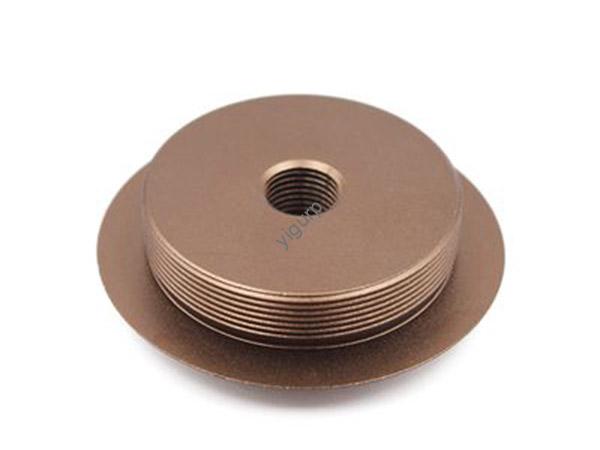
If you need a tool steel that delivers exceptional wear resistance and high edge retention for cold-work applications, D2 tool steel is a top contender. Its unique chemical composition, rich in carbon and chromium, provides long-lasting durability. Its air-hardening capability minimizes distortion during heat treatment, making it ideal for precision tools, cutlery, and molds. This guide covers its properties, applications, and how it compares to other materials.
What are the key properties of D2 tool steel?
D2 tool steel’s performance comes from its precisely calibrated chemical composition. This shapes its mechanical properties, physical traits, and distinct working characteristics.
Chemical composition
D2’s formula is optimized for cold-work applications. The elements work together to form hard carbides that resist wear.
| Element | Content Range | Key Role |
|---|---|---|
| Carbon (C) | ~1.50% | Binds with chromium and vanadium to form hard carbides |
| Chromium (Cr) | 11.00 – 13.00% | Forms chromium carbides, provides good corrosion resistance |
| Molybdenum (Mo) | ~0.50% | Improves hardenability, reduces brittleness |
| Vanadium (V) | 0.75 – 1.00% | Refines grain size, boosts wear resistance |
| Manganese (Mn) | 0.30 – 0.50% | Enhances hardenability |
| Silicon (Si) | 0.30 – 0.50% | Aids deoxidation, stabilizes high-temperature performance |
| Phosphorus (P) | ≤ 0.03% | Controlled to prevent cold brittleness |
| Sulfur (S) | ≤ 0.03% | Minimized to maintain toughness |
Physical properties
D2 has consistent physical characteristics that simplify tooling design.
- Density: ~7.85 g/cm³ – standard for tool steels
- Thermal conductivity: ~35 W/(m·K) at 20°C – higher than many tool steels, enabling faster heat dissipation
- Specific heat capacity: ~0.48 kJ/(kg·K) at 20°C
- Thermal expansion: ~10.2 × 10⁻⁶/°C (20–500°C) – lower than A2, minimizing distortion during heat treatment
- Magnetic properties: Ferromagnetic in all heat-treated states
Mechanical properties
After standard heat treatment, D2 delivers industry-leading wear performance.
| Property | Typical Value |
|---|---|
| Tensile strength | ~2,000 MPa |
| Yield strength | ~1,700 MPa |
| Elongation | ~10% |
| Hardness (HRC) | 60 – 62 |
| Fatigue strength | ~700 MPa (10⁷ cycles) |
| Impact toughness | Moderate |
A knife manufacturer used A2 tool steel for hunting knives. Customers complained about dulling after 2–3 uses. Switching to D2 solved the problem. D2 knives retained sharpness for 8+ hunts. Customer satisfaction rose by 70%, and repeat purchases increased by 40%.
Other key properties
- Wear resistance: Excellent. Carbides resist abrasion, making D2 ideal for cutting and forming hard materials.
- Corrosion resistance: Good. Chromium oxide protects against mild acids and humidity, outperforming plain carbon steels.
- Edge retention: High. Retains sharp edges twice as long as A2 tool steel.
- Machinability: Difficult. High hardness even in the annealed state requires carbide tools and slow cutting speeds.
- Toughness: Low compared to lower-carbon steels. Not recommended for high-impact applications.
Where is D2 tool steel used?
D2’s blend of wear resistance and air-hardening capability makes it ideal for cold-work, cutting, and precision tooling applications.
Cutlery and knives
- Kitchen knives: Mid-to-high-end chef’s knives and butcher knives use D2. High edge retention handles hard ingredients like bones and frozen foods.
- Hunting knives: Skinning and dressing knives rely on wear resistance to handle animal hides and bones.
- Tactical knives: Outdoor and military knives use D2 for durability in rough use like cutting rope and wood.
Forming tools
- Stamping dies: Cold-stamping dies for sheet metal use D2. Wear resistance ensures consistent quality over 100,000+ stampings.
- Punches: Small precision punches for electronics circuit boards use D2. Hardness creates clean holes without edge wear.
- Cold forming tools: Tools for bending or shaping metal rely on D2’s strength to handle cold-working loads.
Cutting tools and mold making
- Cutting tools: Industrial milling cutters and lathe tools for ferrous metals use D2. Wear resistance reduces tool replacement frequency.
- Mold making: Plastic injection molds and die casting molds use D2. Corrosion resistance withstands mold release agents, and wear resistance maintains precision over 50,000+ cycles.
Aerospace and automotive
- Aerospace: Small high-wear components like valve seats use D2. Wear resistance handles high-speed operation.
- Automotive: High-performance racing components like transmission gear teeth use D2 to reduce friction and wear.
How is D2 tool steel manufactured?
Producing D2 requires precision to maintain its chemical balance and ensure optimal heat treatment results.
Steelmaking processes
- Electric arc furnace (EAF): Primary method. Scrap steel and alloys melt at 1,650–1,750°C. Sensors monitor composition to keep elements within fixed ranges.
- Basic oxygen furnace (BOF): For large-scale production. Molten iron mixes with scrap, then oxygen adjusts carbon content. Alloys are added post-blowing.
Rolling processes
- Hot rolling: Cast ingots heat to 1,100–1,200°C and roll into bars, plates, or sheets. This breaks down large carbides and improves uniformity.
- Cold rolling: Used for thin sheets like knife blanks. Improves surface finish and dimensional accuracy. Annealing follows to restore machinability.
Heat treatment (critical for wear performance)
D2’s air-hardening trait is key to its usability.
| Process | Temperature | Result |
|---|---|---|
| Annealing | 850–900°C, slow cool to ~600°C | Reduces hardness to ~250 Brinell for machining |
| Quenching | 950–1,050°C, air cool | Hardens to 62–64 HRC, avoids distortion |
| Tempering | 180–220°C or 300–350°C, 1–2 hours | Reduces brittleness, retains 60–62 HRC |
Forming and surface treatment
- Machining: CNC mills with carbide tools shape annealed D2. Coolant is required. Speeds are 30–40% slower than A2.
- Grinding: After heat treatment, precision grinding with diamond wheels refines edges to tight tolerances of ±0.001 mm.
- Nitriding: For high-wear components. Heated to 500–550°C in nitrogen, forms a hard nitride layer boosting wear resistance by 25%.
- PVD coating: Thin coatings like titanium nitride reduce friction and extend tool life by 2 times.
How does D2 compare to other materials?
Understanding how D2 stacks up helps with material selection for wear-intensive applications.
| Material | Cost vs. D2 | Hardness (HRC) | Wear Resistance | Impact Toughness | Corrosion Resistance | Machinability |
|---|---|---|---|---|---|---|
| D2 | 100% | 60–62 | Excellent | Moderate | Good | Difficult |
| A2 | 80% | 52–60 | Very good | High | Fair | Good |
| CPM S30V | 125% | 58–62 | Excellent | Moderate | Very good | Fair |
| 440C | 90% | 56–58 | Very good | Moderate | Very good | Good |
| Ti-6Al-4V | 450% | 30–35 | Good | High | Excellent | Poor |
Application suitability:
- Cold-stamping dies: D2 is better than A2 for longer life. It’s cheaper than CPM S30V for high-volume stamping.
- Mid-range cutlery: D2 balances wear resistance and cost better than CPM S30V. It has better edge retention than 440C.
- Precision molds: D2 outperforms A2 in wear resistance. It’s more cost-effective than titanium.
- Low-impact cutting tools: D2 is superior to 440C for milling cutters and lathe tools.
Conclusion
D2 tool steel delivers excellent wear resistance and high edge retention for cold-work applications. Its high carbon and chromium content form hard carbides that resist abrasion, while its air-hardening capability minimizes distortion during heat treatment. For stamping dies, cutlery, precision molds, and cutting tools where wear is the primary concern, D2 offers a cost-effective solution. While it lacks the toughness for high-impact uses, its performance in wear-intensive, low-impact scenarios is proven and reliable.
FAQ
Is D2 suitable for high-impact applications?
No. D2 has moderate impact toughness and can chip under sudden force like heavy-duty punches or axes. For high-impact tools, choose A2 for better toughness or S7 for impact resistance. D2 is best for low-impact, wear-intensive uses.
Can D2 be sharpened easily?
Yes, though it’s hard at 60–62 HRC. Use diamond or carbide sharpening tools. D2 retains a sharp edge longer than most steels, so sharpening is less frequent. Use a slow, consistent motion to avoid overheating the edge.
How does D2 compare to CPM S30V for knives?
D2 is about 25% cheaper than CPM S30V with similar wear resistance and edge retention. CPM S30V has better corrosion resistance and more uniform carbides from powder metallurgy, making it better for humid or marine environments. Choose D2 for budget-friendly, durable knives and CPM S30V for premium, corrosion-resistant blades.
What hardness range works best for D2 tools?
The standard hardness range is 60–62 HRC after quenching and tempering. For applications needing more toughness, tempering at 300–350°C reduces hardness to 55–58 HRC while improving impact resistance.
Does D2 require special machining considerations?
Yes. Machine D2 in the annealed state using carbide tools. Use coolant and reduce cutting speeds to 30–40% below those used for A2. After heat treatment, finish with diamond grinding.
Discuss Your Projects with Yigu Rapid Prototyping
At Yigu Rapid Prototyping, we help manufacturers select and process the right tool steels for wear-intensive applications. From D2 stamping dies and cutting tools to custom heat treatment and precision grinding, our team brings practical experience to your project. Contact us to discuss your next cold-work application.