
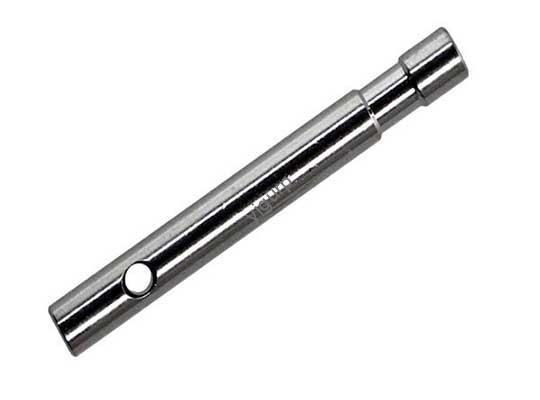
316 stainless steel threaded rod is a high-performance fastener made from a molybdenum-bearing austenitic stainless steel. Its defining characteristic is its exceptional corrosion resistance, particularly in chloride-rich environments, which is significantly superior to that of standard 304 stainless steel. The addition of 2-3% molybdenum provides enhanced resistance to pitting and crevice corrosion, making it the fastener of choice for demanding applications in marine environments, chemical processing plants, and medical facilities. With a minimum tensile strength of 515 MPa and excellent ductility, it offers a reliable combination of strength, formability, and long-term durability. For any project where exposure to saltwater, chemicals, or harsh conditions is a concern, 316 stainless steel threaded rod provides a proven and essential solution.
Introduction
In critical applications such as marine construction, chemical processing, and food production, the integrity of fasteners is as important as the structures they hold together. Standard carbon steel fasteners, even with protective coatings, will corrode over time in wet or chemically aggressive environments, leading to failure, leaks, and safety hazards. Stainless steel, with its inherent corrosion resistance, offers a significant improvement. However, for the most demanding environments, even 304 stainless steel can be susceptible to pitting from chlorides found in seawater and de-icing salts. 316 stainless steel was developed to address this limitation. The addition of molybdenum to its chemistry provides a step-change in corrosion resistance, allowing it to withstand prolonged exposure to saltwater, acids, and industrial chemicals. For engineers and specifiers seeking the highest level of reliability in corrosive environments, 316 stainless steel threaded rod is the standard.
What Are the Key Properties of 316 Stainless Steel Threaded Rod?
The performance of 316 stainless steel threaded rod is defined by its chemical composition and the mechanical properties that result from it.
Chemical Composition
The addition of molybdenum is the key differentiator that gives 316 its superior corrosion resistance.
| Element | Content Range (%) | Its Role in Performance |
|---|---|---|
| Chromium (Cr) | 16 – 18 | Forms a protective passive oxide layer, providing excellent corrosion resistance. |
| Nickel (Ni) | 10 – 14 | Stabilizes the austenitic structure, enhancing ductility and toughness. |
| Molybdenum (Mo) | 2 – 3 | The key element. Provides superior resistance to pitting and crevice corrosion in chloride environments. |
| Manganese (Mn) | ≤ 2.0 | Aids in deoxidation and improves mechanical properties. |
| Carbon (C) | ≤ 0.08 | Kept low to maintain corrosion resistance and weldability. |
| Silicon (Si) | ≤ 0.75 | Contributes to strength and aids in manufacturing. |
Mechanical Properties
316 stainless steel threaded rod provides good strength for a wide range of fastening applications.
| Property | Typical Value | Why It Matters |
|---|---|---|
| Tensile Strength | ≥ 515 MPa | Withstands high pulling forces without breaking. |
| Yield Strength | ≥ 205 MPa | Resists permanent deformation under load. |
| Elongation | ≥ 40% | Provides excellent ductility, allowing for bending and forming. |
| Hardness | ≤ 95 HRB | Balances strength with good workability. |
| Density | 8.0 g/cm³ | Standard for stainless steel. |
- Corrosion Resistance: This is the standout feature. 316 stainless steel offers excellent resistance to saltwater, acids, alkalis, and organic solvents. It significantly outperforms 304 in chloride-rich environments.
- Magnetic Properties: In the annealed condition, it is essentially non-magnetic, though some magnetism may be induced by cold working.
Where Is 316 Stainless Steel Threaded Rod Used?
316 stainless steel threaded rod is used in a wide range of applications where corrosion resistance is critical.
Marine Industry
In marine environments, exposure to saltwater is constant. 316 stainless steel threaded rod is the standard for:
- Boatbuilding: Securing hull components, decks, and fittings.
- Offshore Structures: Fasteners for oil platforms, wind turbines, and buoys.
- Marine Equipment: Pumps, valves, and propeller systems.
Chemical Processing and Industrial
Chemical plants handle corrosive substances that would quickly destroy standard fasteners. 316 stainless steel is used for:
- Storage Tanks: Securing tank walls, lids, and internal components.
- Piping Systems: Connecting pipes, valves, and fittings.
- Reactors: Holding components together in corrosive processing environments.
Medical, Pharmaceutical, and Food Processing
In these industries, cleanliness, corrosion resistance, and biocompatibility are critical.
- Medical Devices: Surgical instruments, imaging equipment, and patient beds.
- Pharmaceutical Manufacturing: Mixing tanks, conveyors, and packaging machinery.
- Food Processing: Machinery, storage tanks, and equipment that require frequent cleaning.
Architectural and Construction
316 stainless steel offers both functionality and aesthetic appeal.
- Curtain Wall Systems: Securing glass panels and facade components.
- Structural Supports: Bridges, buildings, and coastal infrastructure.
How to Select and Install 316 Stainless Steel Threaded Rod
Proper selection and installation are essential to ensure performance and longevity.
Sizing and Thread Types
- Thread Types: Available in Metric, UNC (Unified National Coarse) , and UNF (Unified National Fine) .
- Diameter and Length: Diameters typically range from 1/4 inch (6.35 mm) to 2 inches (50.8 mm) or more. Lengths can vary from a few inches to 10 feet (3.05 meters) .
Installation Steps
- Surface Preparation: Ensure the surface is clean and free of debris.
- Apply Thread Lubricant: Use an anti-seize compound to prevent galling, a common issue with stainless steel threads.
- Insert and Align: Insert the rod and align it correctly.
- Tighten to Torque: Use a wrench to tighten nuts to the recommended torque specification. Over-tightening can damage threads; under-tightening can result in a loose connection.
Torque Specifications (General Guide for UNC)
| Diameter (inch) | Torque (ft-lbs) |
|---|---|
| 1/4 | 10 – 15 |
| 3/8 | 25 – 35 |
| 1/2 | 50 – 70 |
| 5/8 | 90 – 120 |
| 3/4 | 150 – 200 |
Note: These are general guidelines. Always refer to project specifications.
Maintenance and Care
- Cleaning: Use mild detergent and warm water. Avoid abrasive cleaners that can scratch the passive oxide layer.
- Lubrication: Periodic application of anti-seize compound can prevent galling and ease disassembly.
- Inspection: Regularly check for corrosion spots, damaged threads, or loose nuts.
- Storage: Store in a dry, clean environment to prevent contamination.
316 Stainless Steel vs. Other Fastener Materials
Comparing 316 stainless steel to other materials helps clarify its value for corrosive environments.
| Material | Corrosion Resistance | Strength | Relative Cost | Best For |
|---|---|---|---|---|
| 316 Stainless | Excellent (saltwater, chemicals) | 515 MPa | Medium-High | Marine, chemical, medical, coastal construction |
| 304 Stainless | Good | 515 MPa | Medium | General-purpose, mild environments |
| Carbon Steel | Poor (rusts) | 400 – 550 MPa | Low | Indoor, dry applications |
| Alloy Steel | Fair (requires coating) | 700 – 1400 MPa | Medium-High | High-strength, non-corrosive applications |
Key Takeaway: 316 stainless steel threaded rod offers the best combination of corrosion resistance and strength for demanding environments. While it is more expensive than 304 or carbon steel, its superior durability in harsh conditions makes it a cost-effective choice for applications where failure is not an option.
Conclusion
316 stainless steel threaded rod is a premium fastener engineered for the most demanding corrosive environments. Its molybdenum-enhanced chemistry provides exceptional resistance to saltwater, acids, and industrial chemicals, making it the standard choice for marine, chemical processing, and medical applications. While it requires careful installation to prevent galling and is more expensive than standard fasteners, its long-term reliability and durability make it a cost-effective investment for any project where corrosion is a concern.
FAQ About 316 Stainless Steel Threaded Rod
What is the main difference between 316 and 304 stainless steel threaded rod?
The main difference is corrosion resistance. 316 stainless steel contains 2-3% molybdenum, which provides superior resistance to pitting and crevice corrosion in chloride-rich environments like saltwater. 304 stainless steel does not contain molybdenum and is more susceptible to corrosion in these conditions. For marine, coastal, and chemical applications, 316 is the preferred choice.
How do I prevent galling when installing 316 stainless steel threaded rod?
Galling is a common issue with stainless steel threads. To prevent it, use a thread lubricant or anti-seize compound during installation. Tighten nuts slowly and steadily, avoiding high speeds. If galling begins, stop and apply more lubricant. Using different materials for the nut and rod can also help.
Is 316 stainless steel threaded rod magnetic?
In its annealed condition, it is essentially non-magnetic. However, cold working (such as during threading or cutting) can induce some magnetism. This is normal and does not affect the corrosion resistance or strength of the rod.
Discuss Your Projects with Yigu Rapid Prototyping
At Yigu Rapid Prototyping, we specialize in providing high-quality fasteners and components for demanding applications. We supply 316 stainless steel threaded rod in a full range of diameters, thread types, and custom lengths, with full material traceability and certification. Our team can provide guidance on selection, torque specifications, and installation to ensure your project’s success. Whether you are building a marine structure, a chemical processing plant, or a medical facility, we are here to help. Contact us today to discuss your project requirements.