
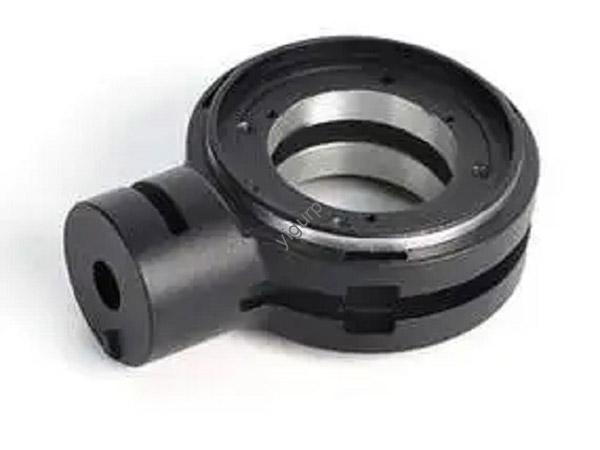
EN19 structural steel is a high-strength, low-alloy steel defined by European standards, most commonly EN 10083-1 for quenched and tempered steels. It is a chromium-molybdenum (Cr-Mo) alloy, with a typical composition including 0.36-0.44% carbon, 0.80-1.10% chromium, and 0.30-0.60% nickel. This chemistry allows it to be heat-treated to achieve an excellent combination of high tensile strength (620-780 MPa) , good ductility, and high fatigue resistance. It is often referred to as a “through-hardening” steel, meaning it can be hardened uniformly throughout its cross-section. This combination of strength, toughness, and workability makes EN19 a versatile material for demanding applications in construction, automotive, and heavy machinery, where components must withstand high stress and fatigue.
Introduction
For many engineering applications, the material must provide a specific combination of properties that standard carbon steels cannot achieve. They may lack the strength for heavy loads, the hardenability for thick sections, or the toughness for dynamic stress. High-alloy steels can meet these requirements but are often expensive and difficult to work with. EN19 was developed to provide a balanced solution. It is a chromium-nickel-molybdenum steel that offers excellent hardenability, allowing it to be uniformly hardened in larger sections. It also provides high strength and good toughness after heat treatment. For engineers designing components that must withstand high stress, fatigue, and wear, EN19 offers a proven, reliable, and cost-effective solution.
What Are the Key Properties of EN19?
The performance of EN19 is defined by its chemical composition and the mechanical properties achieved through its heat treatment.
Chemical Composition
The addition of chromium, nickel, and molybdenum is key to its hardenability and toughness.
| Element | Content Range (%) | Its Role in Performance |
|---|---|---|
| Carbon (C) | 0.36 – 0.44 | Provides high strength and hardness after heat treatment. |
| Chromium (Cr) | 0.80 – 1.10 | Improves hardenability, wear resistance, and provides mild corrosion resistance. |
| Nickel (Ni) | 0.30 – 0.60 | Enhances toughness and impact resistance. |
| Manganese (Mn) | 0.70 – 1.00 | Improves ductility and hardenability. |
| Silicon (Si) | 0.10 – 0.40 | Acts as a deoxidizer and strengthens the steel matrix. |
| Sulfur (S) | ≤ 0.050 | Minimized to prevent brittleness. |
| Phosphorus (P) | ≤ 0.050 | Controlled to prevent cold cracking. |
Mechanical and Physical Properties
After proper heat treatment (quenching and tempering), EN19 achieves a balance of high strength and good ductility.
| Property | Typical Value | Why It Matters |
|---|---|---|
| Tensile Strength | 620 – 780 MPa | Provides high strength for heavy-load components. |
| Yield Strength | ≥ 415 MPa | Resists permanent deformation under high stress. |
| Elongation | ≥ 12% | Provides good ductility for safety and forming. |
| Hardness | 190 – 250 HB | Balances strength with good machinability. |
| Impact Toughness | ≥ 40 J at -20°C | Remains tough in mild cold conditions, preventing brittle failure. |
| Fatigue Strength | ~300 MPa | Withstands repeated stress, critical for rotating and moving parts. |
| Density | 7.85 g/cm³ | Standard for steel. |
- Hardenability: EN19 has excellent hardenability due to its chromium, nickel, and molybdenum content, allowing it to be uniformly hardened in sections up to 50mm or more.
- Weldability: It has good weldability with proper procedures. Preheating to 150-200°C is recommended to prevent cracking.
- Machinability: It has excellent machinability in the annealed or normalized condition.
Where Is EN19 Used in the Real World?
EN19 is used in a wide range of demanding applications across multiple industries.
Construction and Infrastructure
EN19 is used for heavy-duty beams, columns, and structural components in high-rise buildings and bridges.
- Case Study: The Shard in London used EN19 in its core support structures due to its high tensile strength.
- Case Study: The Queensferry Crossing in Scotland used EN19 for parts of its cable-stay system, where it withstands constant traffic loads.
Automotive and Heavy Machinery
EN19 is used for gears, shafts, axle parts, and other high-stress components.
- Case Study: A leading tractor brand uses EN19 for its transmission shafts, taking advantage of its high fatigue strength.
- Case Study: Volkswagen’s Wolfsburg factory uses EN19 for its automated assembly line rails. The steel’s hardness (190-250 HB) and fatigue strength (300 MPa) reduced rail replacement costs by 30% compared to carbon steel.
Industrial and Energy Applications
EN19 is used for crane beams, wind turbine towers, and oil rig platform components.
- Case Study: A German automotive factory used EN19 to build its 5-ton crane beams, leveraging its high strength and weldability.
How Is EN19 Manufactured?
The manufacturing process for EN19 is designed to produce a uniform, high-quality material with consistent hardenability.
Steelmaking and Forming
- Steelmaking: It is typically made in an Electric Arc Furnace (EAF) or Basic Oxygen Furnace (BOF) , with precise control of the chromium, nickel, and molybdenum content.
- Hot Rolling: The steel is hot rolled into bars, plates, and beams.
- Cold Rolling: For thinner sheets and precision parts, cold rolling is used to achieve a smooth surface and tight tolerances.
Heat Treatment
Heat treatment is critical to achieving the desired properties.
- Quenching: The steel is heated to 820-850°C and then rapidly cooled in oil. This creates a hard, strong martensitic structure.
- Tempering: The quenched steel is then reheated to 500-600°C. This reduces brittleness while maintaining the high strength and hardness.
- Annealing: For improved machinability, the steel can be annealed (heated to 820-850°C and slowly cooled) to soften it.
Finishing
- Cutting and Welding: It is easily cut using plasma or oxy-fuel methods. Welding requires preheating to 150-200°C to prevent cracking.
- Corrosion Protection: For outdoor applications, a coating such as paint or galvanizing is applied.
EN19 vs. Other Structural Steels
Comparing EN19 to other materials helps clarify its position as a high-strength, versatile alloy.
| Material | Tensile Strength | Hardenability | Relative Cost | Best For |
|---|---|---|---|---|
| EN19 | 620 – 780 MPa | Excellent | Medium | Gears, shafts, high-strength structural components |
| Carbon Steel (A36) | 400 – 550 MPa | Poor | Lower | General construction, low-stress parts |
| EN24 | 800 – 1000 MPa | Excellent | Higher | Ultra-high-strength components, heavy-duty shafts |
| Stainless Steel (304) | 515 MPa | N/A | 2-3x Higher | Corrosive environments, low-stress |
Key Takeaway: EN19 offers a combination of high strength, good hardenability, and cost-effectiveness that makes it ideal for a vast range of demanding applications. It is significantly stronger than standard carbon steel and more affordable than ultra-high-strength alloys like EN24. For components requiring good strength, toughness, and the ability to be uniformly hardened, EN19 is a reliable and versatile choice.
Conclusion
EN19 structural steel is a versatile, high-performance material that provides an excellent balance of strength, hardenability, and toughness. Its chromium-nickel-molybdenum chemistry allows it to be heat-treated to achieve a wide range of properties, making it suitable for demanding applications in construction, automotive, heavy machinery, and industrial equipment. For engineers seeking a reliable, cost-effective material that can be heat-treated to meet specific strength and toughness requirements, EN19 offers a proven and versatile solution.
FAQ About EN19 Structural Steel
Is EN19 suitable for outdoor use?
Yes, but it requires a protective coating. EN19 has moderate corrosion resistance. For outdoor applications exposed to rain, humidity, or salt, a coating such as paint, epoxy, or hot-dip galvanizing is required to prevent rust. For indoor or protected environments, no coating is necessary.
Can EN19 be welded to other types of steel?
Yes, it welds well to carbon steel (e.g., A36) and most other alloy steels. However, to prevent cracking in the heat-affected zone, you must preheat the EN19 to 150-200°C before welding. Post-weld heat treatment is also recommended to relieve residual stress.
What is the maximum load EN19 can handle?
The load capacity depends on the shape, size, and type of loading. For a 100mm x 100mm EN19 beam, it can support approximately 5 tons of static load. For dynamic loads (such as traffic or machinery vibration), engineers typically apply a safety factor, reducing the allowable load to around 3 tons for the same beam to account for fatigue and impact.
Discuss Your Projects with Yigu Rapid Prototyping
At Yigu Rapid Prototyping, we have extensive experience working with EN19 and other high-performance structural steels. We understand that for demanding applications, the right material selection and heat treatment are critical. We supply EN19 in bars, plates, and custom-machined components, with full heat treatment services to achieve the optimal balance of strength, hardness, and toughness. Our team can provide guidance on heat treatment cycles, welding procedures, and finishing techniques. Whether you are manufacturing gears, shafts, or high-strength structural components, we are here to help. Contact us today to discuss your project requirements.