
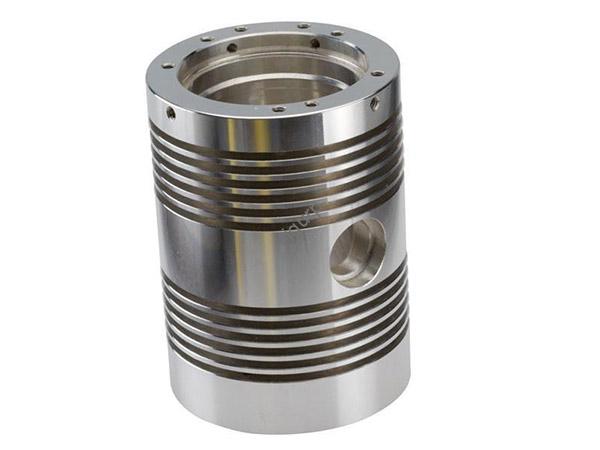
If you’re searching for an alloy steel that excels in making high-wear, high-stress parts—like automotive gears or machinery shafts—GB 20CrMnTi alloy steel is a standout choice. As a widely used Chinese standard carburizing alloy, it combines excellent hardenability, wear resistance, and toughness. This guide covers its chemical composition, real-world performance, and manufacturing methods to help you use it effectively.
What are the key properties of GB 20CrMnTi?
GB 20CrMnTi’s unique performance comes from its carefully balanced properties, all compliant with China’s GB/T 3077 standard. Its strength is fully unlocked after carburizing, quenching, and tempering.
Chemical composition
The elements work together to boost carburizing effect and mechanical strength.
| Element | Composition Range (%) | Key Role |
|---|---|---|
| Carbon (C) | 0.17 – 0.23 | Provides base for carburizing, balances hardness and toughness |
| Chromium (Cr) | 1.00 – 1.30 | Enhances hardenability and wear resistance |
| Manganese (Mn) | 1.00 – 1.30 | Boosts machinability, reduces brittleness after heat treatment |
| Silicon (Si) | 0.17 – 0.37 | Acts as deoxidizer, strengthens alloy without losing ductility |
| Titanium (Ti) | 0.04 – 0.10 | Prevents grain growth during carburizing |
| Sulfur (S) | ≤ 0.035 | Kept low to avoid cracking |
| Phosphorus (P) | ≤ 0.035 | Limited to prevent cold brittleness |
Physical properties
These traits determine how GB 20CrMnTi behaves in different working conditions.
- Density: 7.85 g/cm³ – standard for ferrous alloys
- Melting point: 1,420–1,450°C – high enough for high-temperature applications
- Thermal conductivity: 44 W/(m·K) at 20°C – retains heat well for continuous operation
- Thermal expansion: 12.2 μm/(m·K) – low expansion for precision parts like gears
- Magnetic properties: Ferromagnetic – useful for magnetic clamps and tools
Mechanical properties
GB 20CrMnTi’s mechanical strength is fully unlocked after carburizing, quenching, and tempering.
| Property | Typical Value |
|---|---|
| Tensile strength | ≥ 1,100 MPa |
| Yield strength | ≥ 850 MPa |
| Elongation | ≥ 10% |
| Reduction of area | ≥ 45% |
| Hardness (Brinell) | 280 – 340 HB |
| Hardness (Rockwell C) | 29 – 35 HRC |
| Impact toughness | ≥ 60 J |
| Fatigue strength | ~550 MPa |
A Chinese automotive factory faced problems with carbon steel transmission gears failing after 150,000 km, causing costly recalls. Switching to GB 20CrMnTi solved the issue. Gears now last 300,000 km—double the previous lifespan. Recall costs were cut by ¥250,000 per year. Transmission efficiency improved by 5%, reducing fuel consumption.
Other key properties
- Corrosion resistance: Moderate. Resists mild moisture and industrial oils. Needs zinc plating or paint for outdoor use.
- Wear resistance: Excellent. Carburizing and chromium content make it perfect for moving parts like gears and bearings.
- Machinability: Good. Softer in annealed state. Use high-speed steel or carbide tools with cutting fluid.
- Weldability: Acceptable. Preheat to 250–300°C and post-weld heat treat. Use low-hydrogen electrodes.
- Hardenability: Outstanding. Carburizing penetrates deeply, ensuring a hard outer layer and tough core.
Where is GB 20CrMnTi used?
GB 20CrMnTi’s strength and wear resistance make it ideal for high-stress, high-wear applications.
Automotive industry
Cars and commercial vehicles rely on its durability for key transmission parts.
- Gears: A Chinese automaker uses it for manual transmission gears. Wear resistance extends gear life by 40% versus carbon steel.
- Shafts: Heavy-duty truck manufacturers use it for drive shafts. Fatigue strength at ~550 MPa handles constant torque.
- Axles: Compact SUVs use GB 20CrMnTi axles. Impact toughness at ≥60 J prevents bending during off-road driving.
Mechanical engineering
Industrial machinery benefits from its hardenability.
- Bearings: A manufacturing plant uses it for conveyor belt bearings. The carburized layer reduces maintenance downtime by 30%.
- Rollers: Printing machinery uses it for pressure rollers. Hardness at 280–340 HB resists wear from paper friction.
- Bolts and fasteners: High-speed machine tools use it for critical bolts. Tensile strength at ≥1,100 MPa resists vibration loosening.
Heavy machinery
For large-scale equipment, it provides reliable performance.
- Springs: Construction excavators use it for bucket springs. Elasticity from tempering withstands over 10,000 compression cycles.
- Structural components: Mining machinery uses it for crusher shafts. Hardenability ensures uniform strength in thick sections.
How is GB 20CrMnTi manufactured?
To maximize GB 20CrMnTi’s performance, follow these industry-proven manufacturing steps.
Steelmaking and heat treatment
- Steelmaking: Electric arc furnace (EAF) is most common for medium batches. Chromium, manganese, and titanium are added to reach target composition.
- Annealing: Heat to 820–850°C, cool slowly. Softens alloy for easier machining, cutting tool wear by 35%.
- Carburizing: Heat to 900–950°C in carbon-rich atmosphere. Creates 0.8–1.2 mm hard outer layer for wear resistance.
- Quenching: Cool rapidly in oil from 830–850°C. Hardens carburized layer to HRC 58–62.
- Tempering: Heat to 180–220°C, cool in air. Reduces brittleness while keeping outer layer hard.
Forming and machining
- Forging: Hammered or pressed at 1,100–1,200°C. Aligns grain, increasing tensile strength by 15% versus cast parts.
- Turning: Uses lathe to make cylindrical parts like shafts. Use cutting fluid to prevent overheating.
- Milling: Uses rotating cutter to shape gear teeth. Carbide tools work best for precision with tolerance of ±0.02 mm.
- Grinding: Smooths carburized surface to tight tolerances. Improves wear resistance by reducing surface friction.
How does GB 20CrMnTi compare to other materials?
Understanding how GB 20CrMnTi stacks up helps with material selection for high-wear applications.
| Material | Tensile Strength | Wear Resistance | Corrosion Resistance | Cost vs. 20CrMnTi | Best For |
|---|---|---|---|---|---|
| 20CrMnTi | ≥ 1,100 MPa | Excellent | Moderate | 100% | High-wear parts like gears and bearings |
| 304 stainless | 515 MPa | Good | Excellent | 180% | Food and chemical equipment |
| 45# carbon | 600 MPa | Low | Low | 50% | Low-stress parts like brackets |
| 40Cr alloy | 980 MPa | Good | Moderate | 80% | General machinery parts |
| Titanium Grade 5 | 1,100 MPa | Good | Excellent | 800% | Lightweight aerospace parts |
Key takeaways:
- GB 20CrMnTi has better wear resistance than 40Cr and carbon steel thanks to carburizing
- It’s cheaper than stainless steel and titanium, making it the best value for high-wear, high-stress applications
- Its combination of hard outer layer and tough core makes it ideal for parts under both wear and impact
Conclusion
GB 20CrMnTi alloy steel delivers excellent wear resistance, hardenability, and toughness for high-stress mechanical parts. Its carburizing capability creates a hard outer layer up to HRC 62 while maintaining a tough core, making it ideal for gears, shafts, and bearings. For automotive transmission components, industrial machinery, and heavy equipment where wear and fatigue are primary concerns, it offers reliable performance at a cost-effective price.
FAQ
Can GB 20CrMnTi be used in high-temperature environments?
Yes. Its melting point of 1,420–1,450°C allows reliable operation up to 300°C. For temperatures between 300–400°C, adjust the tempering process to 250–300°C to boost heat stability.
Why is titanium added to GB 20CrMnTi?
Titanium prevents grain growth during carburizing. Without it, grains would become large, reducing impact toughness and making parts prone to cracking. Titanium ensures a fine-grain structure for uniform strength.
How can I improve GB 20CrMnTi’s corrosion resistance?
Add a protective coating. Zinc plating works for outdoor parts like bolts. Powder coating suits structural components. Chrome plating works for moving parts like bearings. These treatments extend service life in humid environments by 5–10 years.
What’s the typical carburized layer depth for GB 20CrMnTi?
Standard carburizing at 900–950°C for 4–6 hours creates a hard outer layer of 0.8–1.2 mm. Carbon content in this layer reaches 0.8–1.0%. Deeper layers up to 2.0 mm are possible with extended carburizing time.
Does GB 20CrMnTi require special welding procedures?
Yes. Preheat to 250–300°C before welding. Use low-hydrogen electrodes. After welding, perform post-weld heat treatment at 550–650°C to relieve stress and prevent cracking in the heat-affected zone.
Discuss Your Projects with Yigu Rapid Prototyping
At Yigu Rapid Prototyping, we supply GB 20CrMnTi alloy steel for automotive gears, machinery shafts, and heavy equipment components. Our material meets GB/T 3077 standards, and we offer custom carburizing, quenching, and tempering services. Contact us to discuss your next high-wear, high-stress application.