
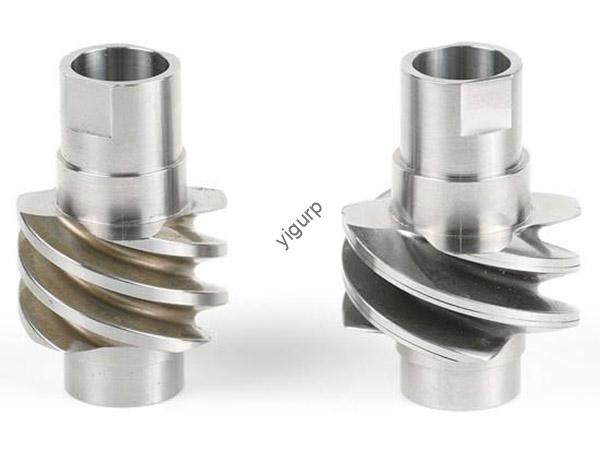
Nitronic 60 stainless steel is a high-performance austenitic alloy engineered for applications that demand a superior combination of strength, corrosion resistance, and wear resistance. It is a nitrogen-strengthened grade with a significant addition of molybdenum (2-3%) , which sets it apart from other Nitronic alloys and standard stainless steels. This chemistry gives it a minimum yield strength of 450-600 MPa, approximately double that of 304 stainless steel, while providing excellent resistance to pitting, crevice corrosion, and stress corrosion cracking in harsh environments. Its high tensile strength (750-950 MPa) , combined with good ductility and excellent weldability, makes it the material of choice for critical components in industrial equipment, chemical processing, marine systems, and aerospace applications.
Introduction
In demanding industrial environments, equipment is often subjected to a punishing combination of corrosive media, high stress, and wear. Standard stainless steels like 304 or 316 may offer adequate corrosion resistance but often lack the strength and wear resistance for heavy-duty service. High-strength alloys like duplex stainless steels or titanium provide superior performance but at a significantly higher cost and with increased fabrication complexity. Nitronic 60 was developed to bridge this performance gap. Its unique chemistry, with molybdenum for enhanced pitting resistance and nitrogen for high strength, provides a balanced set of properties that is not found in other materials. For engineers designing components such as pump shafts, valve stems, and marine hardware that must survive in corrosive, high-stress environments, Nitronic 60 offers a proven and cost-effective solution.
What Are the Key Properties of Nitronic 60?
The performance of Nitronic 60 is defined by its unique chemical composition and the mechanical properties that result from it.
Chemical Composition
The addition of molybdenum and nitrogen, along with high manganese content, is key to its superior properties.
| Element | Content Range (%) | Its Role in Performance |
|---|---|---|
| Chromium (Cr) | 16 – 18 | Forms a protective oxide layer, providing core corrosion resistance. |
| Nickel (Ni) | 8 – 10 | Stabilizes the austenitic structure, ensuring ductility and toughness. |
| Manganese (Mn) | 7 – 9 | Works with nitrogen to boost strength without reducing ductility. |
| Molybdenum (Mo) | 2 – 3 | A key addition. Provides superior resistance to pitting and crevice corrosion in chlorides. |
| Nitrogen (N) | 0.15 – 0.30 | The primary strengthening element. Increases tensile strength and pitting resistance. |
| Carbon (C) | ≤ 0.10 | Low to minimize intergranular corrosion. |
| Silicon (Si) | ≤ 1.0 | Aids in deoxidation. |
| Sulfur (S) | ≤ 0.03 | Minimized to maintain corrosion resistance. |
Mechanical and Physical Properties
Nitronic 60 achieves significantly higher strength than standard austenitic stainless steels.
| Property | Typical Value | Why It Matters |
|---|---|---|
| Tensile Strength | 750 – 950 MPa | 45-84% higher than 316 stainless steel (515 MPa). |
| Yield Strength | 450 – 600 MPa | Approximately double the yield strength of 304 and 316. |
| Elongation | 25 – 35% | Maintains excellent ductility for forming and fabrication. |
| Hardness | 200 – 240 HB | Provides good wear resistance. |
| Fatigue Strength | 320 – 380 MPa | Withstands repeated stress cycles, ideal for rotating components. |
| Impact Toughness | 100 – 160 J | Excellent resistance to cracking from sudden impacts. |
| Density | 7.8 g/cm³ | Slightly lower than standard stainless steels. |
- Corrosion Resistance: It offers excellent resistance to seawater, acids, and industrial chemicals. The molybdenum content provides superior pitting resistance in chloride-rich environments.
- Wear Resistance: Its higher hardness compared to 304 and 316 makes it suitable for components that experience friction.
- Weldability: It has excellent weldability. Standard MIG and TIG welding methods can be used without preheating, and the weld zones maintain good strength and corrosion resistance.
- Magnetic Properties: It is non-magnetic, even after cold working.
Where Is Nitronic 60 Used in the Real World?
Nitronic 60 is used in a wide range of demanding applications across multiple industries.
Industrial Equipment and Chemical Processing
Nitronic 60 is used for pump shafts, impellers, valve stems, and other components that must withstand corrosive fluids and mechanical stress.
- Case Study: A wastewater treatment plant was using 316 stainless steel pump impellers. They were failing after 8 months due to corrosion and wear.
- They switched to Nitronic 60 impellers .
- The new impellers lasted 24 months , a 300% increase in service life.
- This saved $60,000 annually in maintenance costs.
Marine and Seawater Systems
Nitronic 60 is used for heat exchangers, seawater intake pipes, and ship components where resistance to pitting and crevice corrosion is critical.
- Case Study: A shipbuilding company was using 316 stainless steel heat exchangers in cargo ships. The 316 exchangers developed pitting corrosion after 14 months in seawater.
- They switched to Nitronic 60 heat exchangers .
- After 30 months , the Nitronic 60 exchangers showed no pitting or rust .
- This saved $180,000 per ship annually in replacement costs.
Aerospace, Automotive, and Food Processing
- Aerospace: Used for fasteners and engine brackets where high strength-to-weight ratio and corrosion resistance are required.
- Automotive: Used for turbocharger housings and high-performance exhaust systems that must withstand extreme heat and vibration.
- Food Processing: Used for equipment that handles acidic foods, as it resists corrosion from food acids and is easy to sanitize.
How Is Nitronic 60 Manufactured?
The manufacturing process for Nitronic 60 is designed to ensure the nitrogen and molybdenum are properly incorporated and uniformly distributed.
Steelmaking and Forming
- Steelmaking: It is typically made in an Electric Arc Furnace (EAF) . Nitrogen gas is injected into the molten alloy to achieve the target 0.15-0.30% content.
- Hot Rolling: The steel is hot rolled into bars, plates, and sheets.
- Cold Rolling: For thin sheets and precision components, cold rolling is used to achieve a smooth surface finish and tight tolerances.
Heat Treatment
- Solution Annealing: The steel is heated to 1050-1150°C and then rapidly cooled (water quenched). This process dissolves any precipitated carbides, restoring the material’s full corrosion resistance and ductility.
- Stress Relief Annealing: For welded or heavily formed components, a stress relief anneal at 800-900°C can be performed to reduce residual stress.
Finishing
- Machining: Nitronic 60 has moderate machinability. Sharp carbide tools and proper cooling are recommended.
- Passivation: A nitric acid treatment is often used to enhance the natural chromium oxide layer for maximum corrosion resistance.
Nitronic 60 vs. Other Common Materials
Comparing Nitronic 60 to other materials helps clarify its position as a high-performance, cost-effective alloy.
| Material | Yield Strength | Corrosion Resistance (Seawater) | Relative Cost | Best For |
|---|---|---|---|---|
| Nitronic 60 | 450 – 600 MPa | Excellent | Medium | High-strength, corrosive environments |
| 316 Stainless | 205 MPa | Good | Low | General marine applications, moderate corrosion |
| Nitronic 40 | 400 – 550 MPa | Very Good | 85% | High-strength applications with less severe corrosion |
| Nitronic 50 | 500 – 650 MPa | Excellent | 20% Higher | Ultra-high-strength, severe corrosion applications |
| Duplex 2205 | 450 MPa | Excellent | 15% Higher | High-strength, high-corrosion applications |
| Titanium (Ti-6Al-4V) | 795 MPa | Excellent | 4x Higher | Aerospace, extreme corrosion applications |
Key Takeaway: Nitronic 60 offers an exceptional balance of high strength, excellent corrosion resistance, and cost. It provides double the yield strength of 316 stainless steel with comparable or better corrosion resistance at a modest cost premium. While Nitronic 50 offers slightly higher strength, Nitronic 60 is more cost-effective and has better wear resistance. For applications requiring a step up in performance from 316 without the cost of duplex or titanium, Nitronic 60 is the ideal choice.
Conclusion
Nitronic 60 stainless steel is a high-performance material that provides an exceptional balance of strength, corrosion resistance, and wear resistance. Its unique chemistry, featuring molybdenum and nitrogen, delivers approximately double the yield strength of standard 316 stainless steel while providing superior resistance to pitting and crevice corrosion. For demanding applications in industrial equipment, marine systems, chemical processing, and beyond, Nitronic 60 offers a proven, reliable, and cost-effective solution that bridges the gap between standard stainless steels and high-cost specialty alloys.
FAQ About Nitronic 60 Stainless Steel
Is Nitronic 60 stainless steel magnetic?
No, Nitronic 60 is non-magnetic. Its austenitic structure, stabilized by nickel and nitrogen, remains non-magnetic even after cold working, unlike ferritic or martensitic stainless steels.
What makes Nitronic 60 better than 316 stainless steel for marine use?
Nitronic 60 has added molybdenum (2-3%) and a higher nitrogen content. This provides significantly better resistance to pitting and crevice corrosion in seawater. Additionally, its yield strength is approximately double that of 316, meaning it can withstand higher stresses without permanent deformation. This combination results in a much longer service life in marine environments.
Can Nitronic 60 be used for food processing equipment?
Yes, it is excellent for food processing. It resists corrosion from food acids (such as tomato sauce and citrus), meets global food safety standards (FDA, EU 10/2011), and its smooth surface is easy to sanitize, preventing bacterial buildup. Its higher strength also allows for thinner, lighter equipment designs.
Discuss Your Projects with Yigu Rapid Prototyping
At Yigu Rapid Prototyping, we have extensive experience working with Nitronic 60 and other high-performance alloys. We understand that for demanding applications, material selection is critical to long-term reliability. We supply Nitronic 60 in bars, plates, and custom-machined components, with full mill test certificates. Our team can provide guidance on machining, welding, and finishing techniques to ensure your components achieve the maximum possible service life. Whether you are designing pump shafts for chemical plants, heat exchangers for marine applications, or components for food processing equipment, we are here to help. Contact us today to discuss your project requirements.