
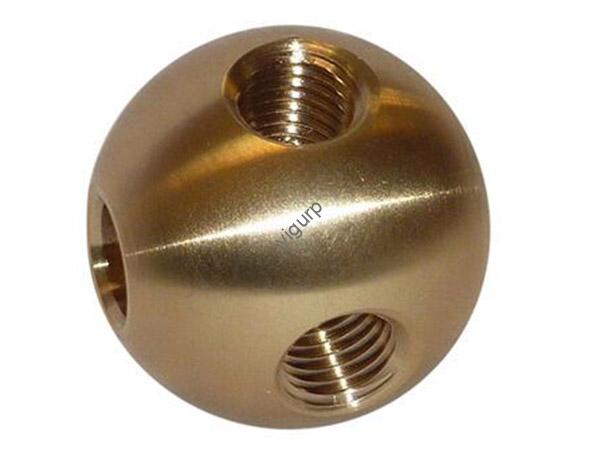
This guide covers everything you need to know about 316 stainless steel—the molybdenum-enhanced alloy that stands up to saltwater, chemicals, and demanding industrial environments. You’ll learn about its chemical composition, mechanical properties, corrosion resistance, fabrication techniques, and real-world applications across marine, pharmaceutical, and food processing industries. By the end, you’ll understand why 316 is often called the gold standard for corrosive environments and how to select the right grade for your specific project.
Introduction
When your project faces harsh conditions—salt spray, chlorine, or industrial chemicals—ordinary stainless steel won’t last. That’s where 316 stainless steel comes in. Its molybdenum content sets it apart from common grades like 304, providing superior resistance to pitting and crevice corrosion in chloride environments.
But 316 isn’t a single material. It comes in variants like 316L, 316H, and 316Ti, each optimized for different applications. From coastal architecture to surgical implants, from brewery piping to pharmaceutical tanks, this alloy delivers reliable performance where failure isn’t an option.
This guide draws on years of hands-on experience with 316 across hundreds of projects. We’ll walk you through the technical details in plain language, share real-world examples, and help you make informed decisions for your next project.
What Makes 316 Stainless Steel Different?
A Chemical Formula Built for Harsh Environments
316’s performance starts with its precise alloy composition. The key differentiator? Molybdenum.
| Element | 316 (UNS S31600) | 316L (UNS S31603) | 316H (UNS S31609) | What It Does |
|---|---|---|---|---|
| Chromium | 16.0–18.0% | 16.0–18.0% | 16.0–18.0% | Forms the passivation layer—the invisible film that prevents rust |
| Nickel | 10.0–14.0% | 10.0–14.0% | 10.0–14.0% | Stabilizes the austenitic structure; keeps the steel non-magnetic |
| Molybdenum | 2.0–3.0% | 2.0–3.0% | 2.0–3.0% | The game-changer—blocks chloride attack in saltwater and chemicals |
| Carbon | ≤0.08% | ≤0.03% | 0.04–0.10% | 316L prevents weld decay; 316H handles high-temperature strength |
| Titanium | — | — | — | Added only in 316Ti (EN 1.4571) to stabilize against carbide formation |
The molybdenum content is what separates 316 from 304. Without it, chloride ions penetrate the passive layer and cause pitting. With it, the steel resists attack even in marine environments.
Which Grade Should You Choose?
Pick 316L for welded parts. The low carbon content prevents chromium carbide formation during welding—a phenomenon called weld decay that creates corrosion weak spots. A marine hardware manufacturer learned this lesson the hard way. After switching from 316 to 316L for welded boat fittings, corrosion at weld joints dropped by 60%.
Pick 316H for high-temperature equipment. With higher carbon content, it maintains strength up to 870°C (1,600°F). A refinery uses 316H for heat exchanger tubes exposed to continuous high heat—they last three times longer than 316L in the same application.
Pick 316Ti for extreme heat applications like boiler tubes or exhaust systems. The titanium addition stabilizes the structure, preventing carbide precipitation even under prolonged heating.
How Strong Is 316 Stainless Steel?
Mechanical Properties You Can Count On
In its annealed condition, 316 offers a balanced set of properties that make it suitable for both structural and precision applications:
| Property | Typical Value (316L) | What It Means in Practice |
|---|---|---|
| Tensile Strength | 515 MPa (74,700 psi) | Strong enough for marine cleats and deck hardware |
| Yield Strength | 170 MPa (24,700 psi) | Resists permanent bending in pharmaceutical tank walls |
| Elongation at Break | 40% (in 50mm) | Bends without cracking—ideal for forming tubing |
| Hardness | 95 HRB / 190 BHN | Soft enough to machine, tough enough for wear |
| Density | 7.98 g/cm³ | Lighter than carbon steel; good for architectural panels |
| Modulus of Elasticity | 200 GPa (29,000 ksi) | Predictable deflection for structural calculations |
| Magnetic Permeability | 1.02 μr (annealed) | Non-magnetic—critical for medical and electronic applications |
How Temperature Affects Performance
316L maintains good properties up to about 760°C (1,400°F). Above that, strength drops significantly. For continuous high-temperature service, 316H is the better choice—it retains useful strength up to 870°C.
One manufacturer learned this distinction after installing 316L heat exchangers in a high-temperature process. Within months, the tubes began sagging. Switching to 316H solved the problem entirely.
Why Does 316 Resist Corrosion So Well?
The Science Behind the Superiority
316’s corrosion resistance comes down to one element: molybdenum. Here’s how it performs in standardized tests:
| Test | Result | Practical Meaning |
|---|---|---|
| Pitting Resistance Equivalent Number (PREN) | ~31 for 316L | Far higher than 304 (PREN ~18)—resists pitting in saltwater |
| Salt Spray Test (ASTM B117) | 1,000+ hours with no red rust | Won’t rust on boats, coastal buildings, or offshore platforms |
| Chloride Stress Corrosion Cracking | Resistant up to 60°C (140°F) | Safe for swimming pool equipment and marine pipes |
| ASTM G48 Method A (pitting test) | Passes 72 hours at 50°C | Withstands acid exposure in chemical plants |
Real-World Corrosion Performance
A coastal hotel installed 316 stainless steel railings facing the Atlantic Ocean. After ten years of constant salt spray exposure, the railings showed no rust, no pitting, and no structural degradation. Meanwhile, a nearby hotel that used 304 railings needed complete replacement after just five years—the pitting had compromised both appearance and safety.
This difference translates directly to total cost of ownership. While 316 costs more upfront, its lifespan in corrosive environments often exceeds 304 by 100% or more.
Can You Weld and Machine 316?
Welding Guidelines That Preserve Corrosion Resistance
Welding 316 requires attention to detail. Done wrong, you create weak spots that corrode faster than the base metal.
Filler metal: Use ER316L when welding 316L to maintain low carbon content. For 316, ER316 works, but ER316L is often preferred as a safe choice.
Method: TIG welding produces the cleanest, most corrosion-resistant welds. MIG works for thicker sections where appearance is less critical.
Post-weld treatment: 316L rarely needs post-weld heat treatment. The low carbon content prevents chromium carbide formation. For standard 316, thick sections may require heat treatment to restore corrosion resistance.
Machining Tips for Better Results
316 has a machinability rating of about 40% (compared to 100% for B1112 steel). It machines slower than free-machining grades like 303 but better than 304.
Tooling: Use carbide tools with sharp edges. High-speed steel tools wear too quickly.
Speed and feed: Cut at 30–40 m/min. Use soluble oil coolant to prevent galling—a common problem with austenitic stainless steels.
Tool life: Expect 20–30% longer tool life than 304. The molybdenum content actually helps by reducing adhesion and built-up edge formation.
Cold Forming and Bending
316 forms readily in the annealed condition. For bending, use a radius of at least 1.5 times the material thickness to avoid cracking.
A HVAC manufacturer regularly forms 316L tubing into tight coils for heat exchangers. With proper tooling and radius control, they achieve consistent results without cracking—even on complex bends.
What Surface Finishes Are Available?
Balancing Aesthetics and Function
316 can achieve a wide range of surface finishes, each suited to different applications:
| Finish | Description | Typical Applications |
|---|---|---|
| 2B Mill Finish | Smooth, matte; Ra 0.4–1.6 µm | Pharmaceutical tanks, industrial equipment |
| #4 Brushed | Fine linear texture; Ra 0.8–1.6 µm | Appliances, handrails, watch cases |
| Mirror Polish | High-gloss; Ra ≤0.1 µm | Architectural cladding, luxury furniture |
| Bead-Blasted | Uniform matte texture | Marine hardware (hides scratches well) |
| Electropolished | Ultra-smooth, hygienic surface | Surgical implants, food processing equipment |
Why Electropolishing Matters
Electropolishing does more than improve appearance. It removes a thin layer of surface material, eliminating microscopic burrs and impurities. The result is a smoother surface that resists bacterial growth and cleans more easily.
A medical device manufacturer electropolishes 316L surgical instruments to meet FDA hygiene standards. The process improves corrosion resistance by about 30% compared to mechanically polished surfaces—a critical factor for tools that undergo repeated sterilization.
What Forms and Sizes Are Available?
Standard Product Forms
316 stainless steel comes in a wide range of forms to suit any fabrication need:
| Form | Typical Sizes | Key Standards |
|---|---|---|
| Sheets and Plates | 0.5–50mm thickness; 1x2m to 3x6m | ASTM A240, EN 10088-2 |
| Round Bars | 5–300mm diameter; 1–6m length | ASTM A276, EN 10278 |
| Pipes and Tubing | 6–600mm OD; seamless or welded | ASTM A312 (pipes), ASTM A269 (tubing) |
| Angles and Channels | 20x20mm to 200x200mm | ASTM A480, EN 10056-1 |
Tolerances and Precision
For precision machining applications, tolerances matter. EN 10278 specifies ±0.1mm tolerance for 316 round bars—tight enough for gear shafts, valve stems, and other components where fit matters.
Always confirm the applicable standard with your supplier. Different standards specify different tolerances, and using the wrong one can lead to parts that don’t fit or perform as expected.
Where Is 316 Stainless Steel Used?
Industry Applications That Rely on 316
316’s combination of corrosion resistance, strength, and cleanability makes it indispensable across multiple industries:
Marine: Boat fittings, propeller shafts, offshore platform railings, dock hardware. The molybdenum content provides essential resistance to saltwater corrosion.
Pharmaceutical: Stainless steel tanks, mixing equipment, piping systems. 316 meets strict hygiene requirements and resists cleaning chemicals.
Food and Beverage: Brewery piping, dairy tanks, food processing equipment. Resists organic acids and cleans easily to prevent contamination.
Medical: Surgical implants, instrument trays, orthopedic hardware. 316L is biocompatible and non-magnetic—safe for MRI environments.
Chemical Processing: Heat exchangers, valve bodies, reactor vessels. Resists sulfuric acid, nitric acid, and other aggressive chemicals.
Architecture: Coastal building cladding, outdoor sculptures, handrails. Maintains appearance without rust in salt spray environments.
Case Study: Brewery Piping Upgrade
A craft brewery used 304 stainless steel for its beer transfer lines. Over time, the acidic nature of beer caused pitting inside the pipes, creating crevices where bacteria could hide. Cleaning frequency was monthly—and even then, sanitation was never certain.
The brewery switched to 316L piping. After two years of operation, inspection showed no pitting, no corrosion, and no bacterial contamination issues. Cleaning frequency dropped to quarterly, and product quality improved measurably.
How Is 316 Verified and Certified?
Quality Control That Ensures Performance
When you buy 316, you need to know you’re getting the real thing—not a substitute. Reputable suppliers use these verification methods:
| Test | Method | What It Confirms |
|---|---|---|
| PMI Testing | X-ray fluorescence (XRF) | Actual alloy composition; verifies molybdenum content |
| MTR (Mill Test Report) | Documentation from mill | Mechanical properties and chemical analysis |
| EN 10204 3.1 Certificate | Third-party or mill certification | Material meets ordered specifications |
| Ultrasonic Testing | Sound wave inspection | Internal defects in bars, pipes, and plates |
Why PMI Testing Matters
Positive Material Identification (PMI) is non-negotiable for critical applications. A handheld XRF analyzer scans the material and confirms its composition in seconds. Without PMI, you risk receiving lower-grade material—and in corrosive environments, that mistake can be catastrophic.
A pharmaceutical client once ordered 316L for a purification tank. The supplier delivered what appeared to be the correct material, but PMI testing revealed low molybdenum content—it was actually 304. The tank would have corroded within months, potentially contaminating product worth millions.
Always ask for PMI verification on critical orders. It’s a small step that prevents huge problems.
How Much Does 316 Cost?
Price Comparison with 304
316 costs more than 304—sometimes significantly more. Here are typical price ranges (2024 estimates):
| Product | 316 Price per kg | 304 Price per kg | Price Difference |
|---|---|---|---|
| Sheets (2B finish) | $5.50–$7.00 | $3.00–$4.50 | 50–60% higher |
| Round Bars (10mm) | $6.00–$7.50 | $3.50–$5.00 | 45–55% higher |
| Pipes (25mm OD) | $7.00–$8.50 | $4.00–$5.50 | 55–65% higher |
What Drives 316 Prices?
Nickel is the main cost driver. Nickel makes up about 10–14% of 316’s composition, and nickel prices on the London Metal Exchange fluctuate significantly. When nickel prices rise, 316 prices follow.
In 2023, the LME nickel index rose 15%, pushing 316 prices up about 10%. For large projects, tracking nickel trends helps with budget planning—and sometimes timing purchases to capture lower prices.
How Does 316 Compare to Other Stainless Steels?
Choosing the Right Grade for Your Application
Different applications call for different materials. Here’s how 316 stacks up:
| Grade | Corrosion Resistance | Strength | Cost vs. 316 | Best Application |
|---|---|---|---|---|
| 304 | Lower (no molybdenum) | Similar | 40–60% less | Indoor appliances, dry structural parts |
| 316L | Same as 316 | Slightly lower | Same | Welded parts—prevents weld decay |
| 904L | Higher | Similar | 200% higher | Extreme chemicals like concentrated sulfuric acid |
| Duplex 2205 | Higher | 70% higher | 50% higher | High-pressure pipes, offshore structures |
| 17-4 PH | Lower | 2x higher | Same | High-strength parts like valve stems and shafts |
When to Choose 304 Instead
Despite 316’s advantages, 304 remains the better choice for many applications. If your project doesn’t face chlorides, saltwater, or aggressive chemicals, 304 delivers adequate corrosion resistance at a much lower cost. Indoor equipment, decorative trim, and structural components in normal environments rarely need the extra protection that 316 provides.
Conclusion
316 stainless steel earns its reputation as the gold standard for corrosive environments. Its molybdenum-enhanced chemistry provides superior resistance to pitting, crevice corrosion, and chloride attack—properties that translate directly to longer service life and lower maintenance costs in demanding applications.
Selecting the right variant matters. Choose 316L for welded components to prevent weld decay. Choose 316H for high-temperature service. And always verify material through PMI testing and proper certification—especially when performance is critical.
While 316 costs more upfront than 304, the total cost of ownership often favors the higher-grade material in harsh environments. The coastal hotel that installed 316 railings didn’t pay more—they paid once. The nearby hotel that chose 304 paid twice.
For marine, pharmaceutical, food processing, and chemical applications, 316 stainless steel delivers the reliability that demanding projects require.
FAQ
Is 316 stainless steel safe for surgical implants?
Yes. 316L is the standard implant-grade stainless steel, meeting ASTM F138 specifications. It is biocompatible, non-toxic, and corrosion-resistant in body fluids. Common applications include hip implants, bone screws, fracture fixation plates, and surgical instruments.
Can 316 stainless steel be used in swimming pools?
Absolutely. 316’s molybdenum content provides excellent resistance to chloride stress corrosion cracking from pool chemicals. Use 316L for welded components like ladder rungs and handrails to avoid weld decay. For comparison, 304 typically shows pitting within two to three years in pool environments.
Why is 316L more expensive than standard 316?
316L requires tighter manufacturing controls to achieve its lower carbon content (≤0.03% versus ≤0.08%). This additional processing adds about 5–10% to the cost. However, for welded applications, the improved corrosion resistance makes 316L worth the premium.
What is the maximum temperature for 316 stainless steel?
316L maintains useful strength up to about 760°C (1,400°F). Above this temperature, strength drops significantly, and oxidation becomes a concern. For continuous high-temperature service, consider 316H, which maintains strength up to 870°C (1,600°F).
Does 316 stainless steel rust?
In normal environments, no. The chromium content forms a passive oxide layer that prevents rust. However, in severely reducing environments or with surface contamination, corrosion can occur. Proper cleaning and passivation maintain the protective layer.
How do I identify 316 stainless steel?
Visual inspection cannot reliably distinguish 316 from 304. Use a PMI (Positive Material Identification) tester—a handheld XRF analyzer that reads alloy composition. For field testing, a molybdenum spot test can indicate presence of molybdenum, but PMI is the definitive method.
Discuss Your Projects with Yigu Rapid Prototyping
Selecting the right stainless steel grade is only the first step. Fabrication, welding, finishing, and quality verification all affect final performance. At Yigu Rapid Prototyping, we work with 316 and 316L daily—from precision machined components to welded assemblies for demanding environments.
Our services include CNC machining, laser cutting, welding, and surface finishing. We provide full material traceability with EN 10204 3.1 certificates and offer PMI verification on every critical order. Whether you’re prototyping a new medical device, building coastal structures, or upgrading food processing equipment, we can help you specify the right material and execute the project to exacting standards.
Contact our engineering team to discuss your requirements. We’ll help you navigate the trade-offs between cost, corrosion resistance, and manufacturability—and deliver components that perform as promised.