
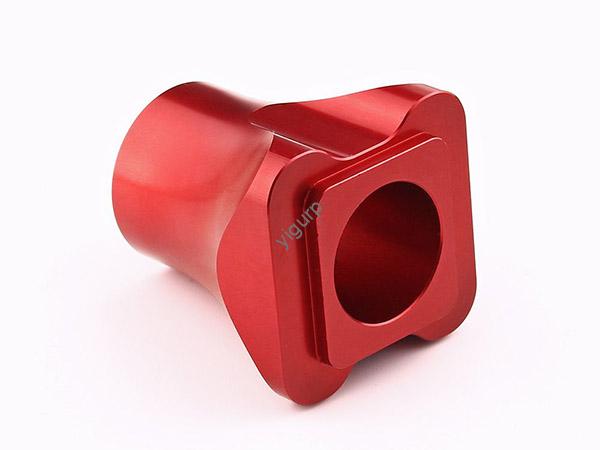
If you are designing well casing for a deep sour gas well, a pipeline for an offshore platform, or heavy machinery for an oilfield, you need a steel that can handle extreme pressure, corrosive fluids, and mechanical stress. Standard structural steels often fail in these environments. L80 structural steel is engineered specifically for these demanding conditions. Defined by API 5CT standards, it offers a minimum yield strength of 552 MPa and comes in specialized grades designed to resist sweet corrosion, sour gas (H₂S), and the harsh conditions of downhole drilling. This guide breaks down its properties, applications, and how to select the right grade for your project.
Introduction
For engineers in the oil and gas industry, material failure is not an option. A failed casing string can ruin a well. A corroded pipeline can cause an environmental disaster. L80 steel was developed to provide a reliable, high-strength solution for these high-stakes applications. It is a medium-carbon steel that is heat-treated to achieve a precise balance of strength, toughness, and hardness. Its most critical feature is its availability in different grades tailored to specific environments. L80-1 is the standard grade for sweet (non-sour) oil and gas wells. L80-9Cr and L80-13Cr contain increasing amounts of chromium, providing exceptional resistance to carbon dioxide (CO₂) and hydrogen sulfide (H₂S) corrosion, making them the go-to choice for sour gas fields and deep, high-temperature wells.
What Defines L80 Steel?
The performance of L80 is a direct result of its carefully controlled chemistry and mandatory heat treatment. It is designed to be strong, tough, and resistant to the specific types of corrosion found in oil and gas production.
What Is in the Alloy?
The chemical composition of L80 varies by grade, but all versions adhere to strict API 5CT limits to ensure consistent performance. The table below shows typical ranges for the key elements.
| Element | L80-1 Content (%) | L80-13Cr Content (%) | Its Role in the Steel |
|---|---|---|---|
| Carbon (C) | 0.25 – 0.35 | 0.15 – 0.22 | Provides high strength. Lower in 13Cr to maintain corrosion resistance. |
| Chromium (Cr) | 0.50 – 1.00 | 11.50 – 13.50 | The key corrosion fighter. In 13Cr, it provides excellent resistance to CO₂ and H₂S. |
| Manganese (Mn) | 0.90 – 1.60 | 0.30 – 0.60 | Enhances strength and hardenability. |
| Molybdenum (Mo) | 0.15 – 0.30 | 0.15 – 0.30 | Boosts high-temperature strength and resistance to pitting. |
| Nickel (Ni) | 0.10 – 0.50 | 0.10 – 0.50 | Improves toughness, especially in colder environments. |
| Sulfur (S) | ≤ 0.030 | ≤ 0.030 | Kept low to prevent cracking in high-pressure environments. |
What Are Its Key Mechanical Properties?
All L80 grades share a common minimum yield strength, which is the basis for their pressure-holding capability. However, their ductility and hardness vary.
| Property | L80-1 (Standard) | L80-13Cr (Corrosion-Resistant) | Why This Matters |
|---|---|---|---|
| Yield Strength | ≥ 552 MPa | ≥ 552 MPa | The minimum stress to cause permanent deformation. This high value is critical for withstanding downhole pressures. |
| Tensile Strength | 655 – 827 MPa | 655 – 827 MPa | Provides a wide safety margin before failure. |
| Elongation | ≥ 18% | ≥ 15% | Ductility. L80-1 is more ductile, allowing for bending during well installation. L80-13Cr is slightly less ductile but offers superior corrosion resistance. |
| Hardness (HB) | 180 – 240 | 200 – 260 | Hardness is controlled to prevent sulfide stress cracking (SSC) in sour environments. |
| Impact Toughness | ≥ 34 J at 0°C | ≥ 40 J at -40°C | L80-13Cr is specifically designed to remain tough in very cold conditions, important for arctic drilling. |
A key example of L80’s performance comes from a Chevron sour gas pipeline in Texas. They used L80-13Cr steel for a 300-km pipeline transporting gas with 5% hydrogen sulfide (H₂S). The high chromium content prevented sulfide stress cracking, a common failure mode for standard steels in this environment. After 15 years of operation at 10,000 psi, the pipeline had zero leaks, saving an estimated $8 million in maintenance costs compared to using a lower-grade steel with chemical corrosion inhibitors.
Where Is L80 Steel Used?
L80 steel is synonymous with the oil and gas industry, but its strength also makes it valuable for other heavy-duty applications.
Oil and Gas Drilling and Production
This is the primary market for L80. Its strength and corrosion resistance are critical for the integrity of the well.
- Well Casing: L80 is used to line the wellbore, preventing it from collapsing and protecting groundwater from contamination. ExxonMobil used L80-9Cr casing for a 6,000-meter well in the Niger Delta. The well had downhole temperatures of 160°C and high salinity. The L80-9Cr casing resisted this harsh environment, extending its lifespan by 10 years compared to standard L80-1.
- Production Tubing: This is the pipe through which oil and gas flow to the surface. L80’s smooth bore and corrosion resistance ensure efficient flow.
- Wellhead Equipment: Valve bodies and other components that must withstand extreme pressures are often forged from L80.
Pipelines and Offshore Structures
For transporting corrosive hydrocarbons, L80 is a trusted material.
- Sour Gas Pipelines: As seen in the Chevron example, L80-13Cr is the standard for pipelines carrying gas with H₂S.
- Offshore Platforms: A Norwegian shipyard used L80-1 for internal framing on offshore supply vessels. The steel’s strength and corrosion resistance have provided a service life of over 20 years in the harsh North Sea environment.
Heavy Machinery and Other Industries
The strength of L80 makes it suitable for other demanding applications.
- Oilfield Service Trucks: A Canadian manufacturer uses L80-1 for the chassis frames of trucks that haul drilling mud and casing over rough wellsite terrain.
- Railway Infrastructure: Russian Railways uses L80-1 for track supports in Siberian oilfields, where the steel must withstand temperatures as low as -50°C.
How Is L80 Steel Manufactured?
Producing L80 steel requires precision to meet API 5CT standards, which are mandatory for oilfield equipment.
Steelmaking and Rolling
The steel is made in an electric arc furnace (EAF) or basic oxygen furnace (BOF), with careful control over the chromium content, especially for the 9Cr and 13Cr grades. It is then hot-rolled into the required shapes, such as seamless pipes for casing or bars for valve bodies. Hot rolling at 1150-1250°C ensures a uniform grain structure.
The Critical Heat Treatment
Unlike many structural steels, L80 must undergo a specific heat treatment to achieve its required properties. This is what gives it the strength and hardness for high-pressure service.
- Quenching and Tempering: The steel is heated to 830-870°C and then rapidly cooled (quenched) in oil. This creates a very hard, strong structure. It is then reheated (tempered) to 550-650°C, which reduces brittleness while maintaining high strength. This process creates a material with a hard, wear-resistant surface and a tough, impact-resistant core.
Fabrication and Welding
Working with L80 requires specialized knowledge, especially for the 13Cr grades.
- Welding: L80-1 can be welded with standard techniques and preheating. However, L80-13Cr requires careful welding with specialized low-carbon electrodes and post-weld heat treatment to prevent the formation of chromium carbides, which would reduce its corrosion resistance.
- Machining: L80 is machinable but its hardness means that sharp, carbide tools are necessary for cutting threads on casing and tubing, which are critical for leak-free connections.
How Does L80 Compare to Other Materials?
Choosing the right material for an oil and gas application often means comparing L80 to its alternatives.
| Material | Yield Strength | Key Advantage | Key Disadvantage | Best Application |
|---|---|---|---|---|
| L80-1 | ≥ 552 MPa | Good strength and weldability; lower cost | Poor resistance to sour gas | Sweet oil and gas wells |
| L80-13Cr | ≥ 552 MPa | Excellent sour gas and CO₂ resistance | Higher cost; requires special welding | Sour gas wells, offshore pipelines |
| X65 Pipeline Steel | ≥ 448 MPa | Lower cost; good for onshore pipelines | Lower strength; poor sour gas resistance | Onshore sweet gas transmission |
| J55 Casing | ≥ 379 MPa | Lower cost; good ductility | Lower strength | Shallow, low-pressure wells |
| 316L Stainless Steel | ≥ 205 MPa | Very good corrosion resistance | Lower strength; more expensive than 13Cr | Low-pressure, highly corrosive environments |
Analysis: For a deep, high-pressure sour gas well, L80-13Cr is the superior choice. Its combination of high strength and corrosion resistance is unmatched. For a shallow, low-pressure sweet oil well, the cheaper J55 or L80-1 would be more cost-effective.
Conclusion
L80 structural steel is a specialized material designed to meet the extreme demands of the oil and gas industry. Its high yield strength of 552 MPa makes it capable of withstanding the immense pressures found in deep wells and high-pressure pipelines. Its true value, however, lies in its versatility. The L80-1 grade provides a reliable, cost-effective solution for sweet environments, while the chromium-rich L80-9Cr and L80-13Cr grades offer exceptional resistance to the corrosive effects of CO₂ and H₂S, ensuring the integrity of sour gas wells and pipelines. While it requires careful handling during welding and fabrication, its proven performance in critical applications—from the Permian Basin to the North Sea—makes it a trusted and essential material for high-stakes projects where failure is not an option.
FAQ
Which L80 grade is best for sour oil and gas wells?
For wells containing hydrogen sulfide (H₂S), you should choose L80-13Cr. Its high chromium content (11.5-13.5%) provides excellent resistance to sulfide stress cracking (SSC). For sweet wells with no H₂S, the standard L80-1 grade is sufficient and more cost-effective.
Can L80 steel be used for offshore pipelines?
Yes. L80-1 is suitable for offshore sweet oil pipelines, especially when paired with a protective coating like zinc. For offshore sour gas pipelines, L80-13Cr is the better choice. Both grades offer good resistance to saltwater corrosion, with the 13Cr grade requiring less maintenance over the long term.
Is L80 more difficult to weld than standard carbon steel?
Yes, L80 requires more careful welding, especially the 13Cr grades. For L80-13Cr, you must preheat to 200-250°C, use specialized low-carbon electrodes, and often perform a post-weld heat treatment. This is necessary to prevent cracking and to maintain the steel’s corrosion resistance. L80-1 is easier to weld but still benefits from preheating for thick sections.
What is the main difference between L80 and J55 casing?
The main difference is strength and application. L80 has a minimum yield strength of 552 MPa, making it suitable for deep, high-pressure wells. J55 has a lower yield strength of 379 MPa and is typically used for shallow, low-pressure wells. L80 also has stricter hardness controls to prevent cracking in sour environments.
Does L80-13Cr require special handling during machining?
Yes, due to its higher hardness (200-260 HB), L80-13Cr is more difficult to machine than L80-1. It requires sharp, coated carbide tools and appropriate speeds and feeds. This is especially important when cutting threads for casing and tubing connections, where precision is critical for a leak-free seal.
Discuss Your Projects with Yigu Rapid Prototyping
Selecting the right material for oil and gas applications is a critical decision that impacts safety, performance, and long-term costs. At Yigu Rapid Prototyping, we have extensive experience with L80 and other API 5CT grades. Whether you need custom-machined wellhead components, certified casing, or guidance on welding procedures for 13Cr steel, our team is here to help. Contact us to discuss your next project.