
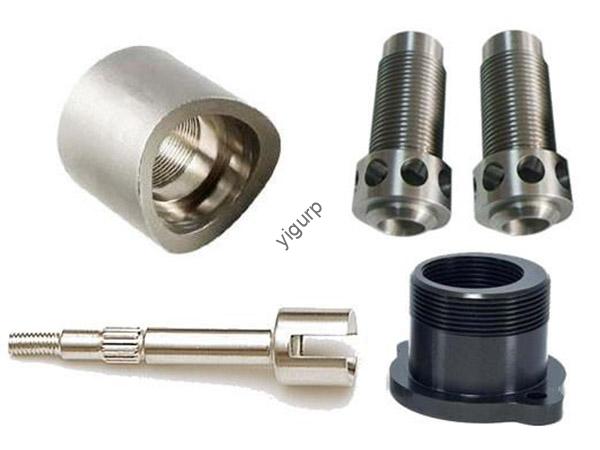
UNS N07001 Waspaloy is a nickel-based superalloy engineered for the most extreme high-temperature environments. It is designed to maintain exceptional strength, resist corrosion, and resist creep at temperatures up to 870°C (1600°F) . This makes it a critical material for critical applications like jet engine turbines and gas turbine components. This guide will explore its properties, how it is used, and why it is a top choice for industries that demand long-term reliability under intense heat.
Introduction
When operating temperatures exceed 700°C, standard stainless steels and even many nickel alloys begin to lose strength and succumb to creep. For components like turbine blades that must spin at high speeds while exposed to hot combustion gases, this is a critical failure point. Waspaloy was developed to address this gap. Through a precise combination of nickel, chromium, cobalt, and molybdenum, and a specialized age-hardening heat treatment, it achieves a unique balance of high-temperature strength, creep resistance, and oxidation resistance. For engineers working on next-generation power and propulsion systems, understanding this material is essential.
What Are the Key Properties of Waspaloy?
The exceptional performance of Waspaloy is rooted in its carefully controlled chemistry and the mechanical properties achieved through a specific heat treatment process.
Chemical Composition
Every element in Waspaloy contributes to its ability to withstand extreme conditions.
| Element | Content Range (%) | Its Role in Performance |
|---|---|---|
| Nickel (Ni) | 57 – 59 | The base metal, providing high-temperature stability and ductility. |
| Chromium (Cr) | 18 – 20 | Provides oxidation resistance, forming a protective layer at high temperatures. |
| Cobalt (Co) | 12 – 14 | Improves creep resistance, preventing deformation under long-term heat and stress. |
| Molybdenum (Mo) | 3.0 – 3.5 | Boosts high-temperature strength and corrosion resistance. |
| Aluminum (Al) | 1.2 – 1.6 | Enables age hardening, forming precipitates that dramatically increase strength. |
| Titanium (Ti) | 2.7 – 3.2 | Works with aluminum to form the strengthening precipitates. |
| Carbon (C) | 0.04 – 0.08 | Strengthens grain boundaries, preventing cracking at high temperatures. |
Mechanical and Physical Properties
The properties below are for the age-hardened condition, which is the standard state for service.
| Property | Room Temperature | At 800°C | Why It Matters |
|---|---|---|---|
| Tensile Strength | ≥ 1240 MPa | 650 MPa | Maintains high strength even at extreme temperatures. |
| Yield Strength | ≥ 895 MPa | 550 MPa | Resists permanent deformation under load at high heat. |
| Elongation | ≥ 15% | 20% | Retains ductility, preventing brittle failure. |
| Creep Resistance | – | Excellent up to 870°C | Withstands long-term stress without slowly deforming. |
| Fatigue Strength | 550 MPa (10⁷ cycles) | 280 MPa (10⁷ cycles) | Resists failure from repeated stress cycles. |
- Oxidation Resistance: It resists scaling and oxidation in air up to 870°C for long periods. This is critical for components exposed to hot combustion gases.
- Density: It has a density of 8.2 g/cm³, which is typical for high-performance superalloys.
- Magnetic Properties: It is non-magnetic, which is important for aerospace applications where magnetic interference must be avoided.
Where Is Waspaloy Used in the Real World?
Waspaloy is reserved for the most demanding applications where other materials simply cannot survive. Its high cost is justified by its unparalleled performance and long service life.
Aerospace and Jet Engines
This is the primary application for Waspaloy. It is used in the hottest sections of the engine.
- Case Study: A U.S. aerospace manufacturer was using Inconel 718 for jet engine turbine blades. The blades were failing after 5,000 flight hours due to creep deformation at 800°C.
- They switched to Waspaloy blades.
- The new blades have lasted 8,000 flight hours with no signs of creep or cracking.
- The higher strength of Waspaloy allowed the engine to run at a 50°C higher temperature, improving thrust by 8% and fuel efficiency by 5% .
- Replacement costs dropped by 40% due to the longer blade life.
- Other applications include combustion chambers, engine shafts, and afterburner parts.
Gas Turbines for Power Generation
Industrial gas turbines used in power plants face similar challenges to jet engines: high heat, high stress, and long operating hours.
- Case Study: A power plant in Saudi Arabia used stainless steel buckets (blades) in their industrial gas turbines. The buckets lasted only 3 years in the 820°C operating environment.
- They switched to Waspaloy buckets.
- The new buckets have operated for 5 years without wear, significantly reducing maintenance downtime and costs.
Defense and High-Performance Automotive
- Missile Components: Defense contractors use Waspaloy for missile engine nozzles. The alloy can withstand the extreme heat of rocket fuel combustion, which can reach 1300°C for short bursts.
- Turbochargers: A luxury car brand uses Waspaloy for high-performance turbocharger rotors. The rotors handle 750°C exhaust gas temperatures and last 3 times longer than aluminum rotors, while also improving fuel efficiency by 10%.
How Is Waspaloy Manufactured and Processed?
Working with Waspaloy requires specialized techniques. Its high strength and unique chemistry demand careful control at every step.
Forging and Heat Treatment
- Forging: The alloy is hot forged at 1150-1200°C. This process refines the grain structure, which is essential for achieving optimal creep resistance.
- Solution Annealing: The part is heated to 1065°C and then rapidly cooled. This softens the material and prepares it for the aging process.
- Aging (Precipitation Hardening) : This is the critical step that gives Waspaloy its strength. The part undergoes a two-step aging process:
- Heated to 760°C for 4 hours.
- Then heated to 650°C for 16 hours.
This process creates a dense network of intermetallic precipitates that block dislocation movement, dramatically increasing high-temperature strength and creep resistance.
Machining and Welding
- Machining: Waspaloy is challenging to machine. It work-hardens rapidly. Use sharp carbide tools, slow cutting speeds, and plenty of coolant to prevent the material from hardening as you cut.
- Welding: It can be welded using Gas Tungsten Arc Welding (GTAW) . Use matching filler metals like ERNiCrCoMo-1. Pre-weld annealing is recommended to reduce the risk of cracking.
Surface Treatment
- Shot Peening: This process, which blasts the surface with small metal balls, is often used on critical components like turbine blades. It creates compressive residual stresses on the surface, significantly improving fatigue resistance.
Waspaloy vs. Other High-Temperature Materials
Comparing Waspaloy to other superalloys helps clarify its position as a premium material for extreme conditions.
| Material | Max Service Temp | Tensile Strength (RT) | Creep Resistance | Relative Cost | Best For |
|---|---|---|---|---|---|
| Waspaloy | 870°C | ≥ 1240 MPa | Excellent | Very High | Jet engine turbines, gas turbine buckets |
| Inconel 718 | 650°C | 1310 MPa | Good | High | Lower-temperature jet engine parts, fasteners |
| Hastelloy X | 1090°C | 700 MPa | Good | High | High-temperature sheet metal, furnace components |
| Stainless Steel 316 | 870°C | 515 MPa | Poor | Low | Low-stress, high-temperature applications |
| Titanium (Ti-6Al-4V) | 400°C | 860 MPa | Fair | Medium | Low-temperature aerospace structures |
Key Takeaway: Waspaloy offers the best combination of high-temperature strength and creep resistance for applications up to 870°C. It outperforms Inconel 718 in creep resistance and can operate at higher temperatures. While Hastelloy X can handle higher temperatures, it is significantly weaker in terms of tensile strength. For rotating components that must maintain strength under stress at extreme temperatures, Waspaloy is the superior choice.
Conclusion
UNS N07001 Waspaloy is a premier nickel-based superalloy engineered for the most demanding high-temperature environments. Its exceptional creep resistance, oxidation resistance, and high tensile strength at temperatures up to 870°C make it indispensable for critical aerospace and power generation applications. While its cost is high and its fabrication requires specialized techniques, the long-term benefits in terms of reliability, extended service life, and improved performance make it a cost-effective investment for projects where failure is not an option.
FAQ About UNS N07001 Waspaloy
Can Waspaloy handle temperatures above 870°C?
It can withstand short bursts of higher temperatures, up to about 1000°C. However, it is designed for long-term, continuous service at 870°C. For applications with sustained temperatures above 900°C, an alloy like Hastelloy X, which is optimized for higher temperatures, would be a better choice.
Is Waspaloy suitable for use in marine environments?
Yes. Its good resistance to pitting and corrosion makes it suitable for marine gas turbines. It outperforms stainless steel and even some Inconel alloys in salty, coastal environments.
What is the typical lifespan of Waspaloy in a jet engine?
In critical applications like turbine blades and combustion chambers, Waspaloy parts typically last between 8,000 and 10,000 flight hours. This is approximately 20-40% longer than comparable parts made from Inconel 718, provided they are properly maintained and inspected.
Discuss Your Projects with Yigu Rapid Prototyping
At Yigu Rapid Prototyping, we have extensive experience working with advanced superalloys like Waspaloy. We understand the critical importance of precise heat treatment, proper machining techniques, and rigorous quality control. Whether you need custom-forged turbine components, precision-machined parts for gas turbines, or any other high-temperature application, our team is here to help. We provide expert guidance on material selection, processing, and post-treatment to ensure your components meet the highest standards of performance and reliability. Contact us today to discuss your project requirements.